

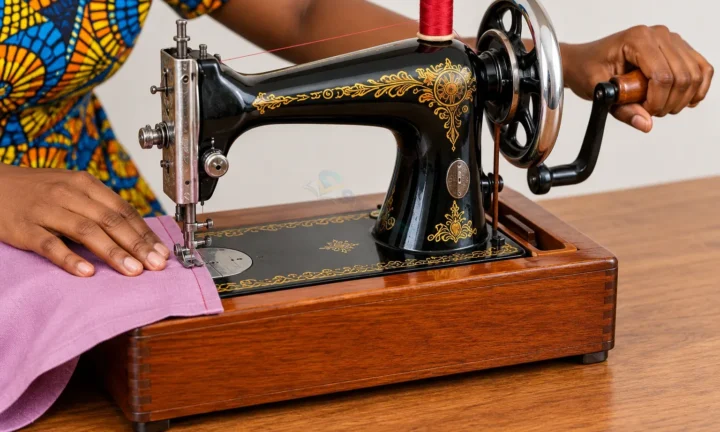
Types, Parts and Uses of Sewing Machines for JSS 1
Sewing machines join fabrics with stitches. Hand-operated, treadle and electric machines differ in power source, speed and the settings they require.
Read guide
Teacher/Educational Writer
Royal Alikor is an educator with six years of classroom teaching and three years of elementary school leadership experience and is still teaching. He develops and reviews practical, curriculum-aligned learning materials for Nigerian schools and teachers.
Lessons ◉ 0 views
Sewing machines join fabrics with stitches. Hand-operated, treadle and electric machines differ in power source, speed and the settings they require.
Read guide→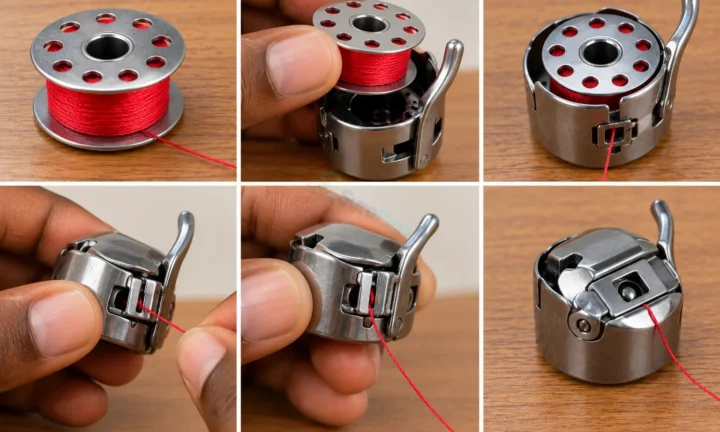 Lessons ◉ 0 views
The needle carries thread through fabric, feed dogs move the cloth and the presser foot holds it in place. Correct threading supports even…
Read guide→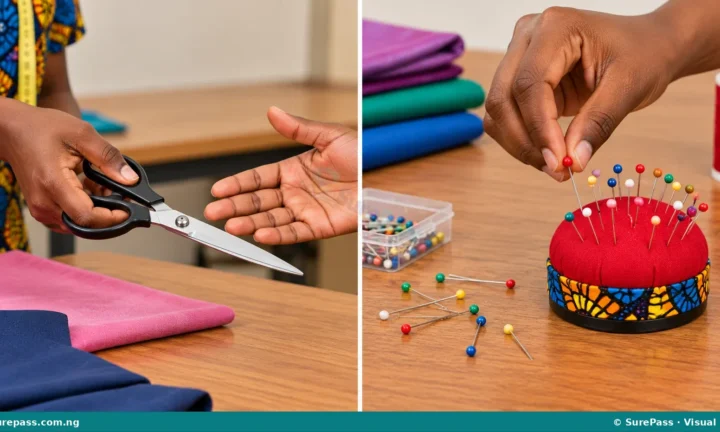 Lessons ◉ 1 views
Store sharp sewing tools securely and switch off machines before cleaning or changing needles. Regular dust removal and proper oiling protect equipment.
Read guide→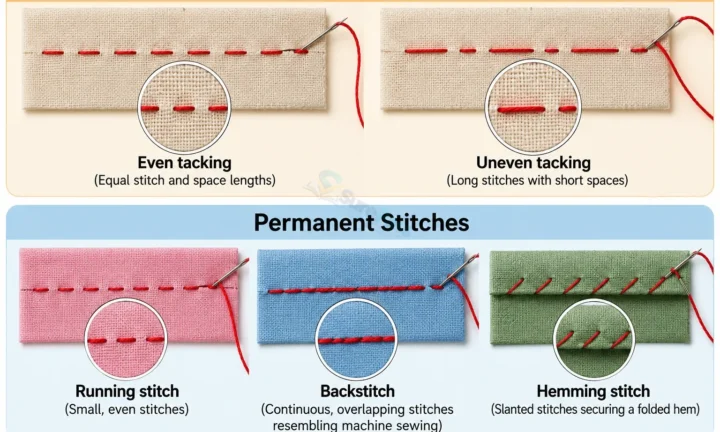 Lessons ◉ 0 views
Running stitches are useful for temporary seams, while backstitches provide stronger joins. Neat seam allowances help garment pieces fit together correctly.
Read guide→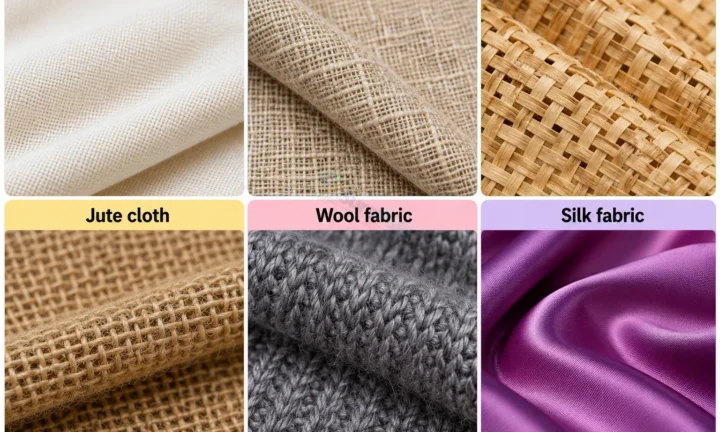 Lessons ◉ 0 views
Cotton and wool are natural fibres, while polyester is manufactured. Fabric texture, strength and absorbency influence the garments each material suits.
Read guide→ Lessons ◉ 0 views
Three-dimensional solids have length, width and height. A cuboid's volume is length × width × height; a cube's volume is side × side…
Read guide→
Lessons ◉ 0 views
A ruler, compass and set square help construct parallel and perpendicular lines. Compass arcs can also produce standard angles without guessing.
Read guide→
Lessons ◉ 0 views
Angles are measured in degrees with a protractor. Acute angles are below 90°, right angles equal 90°, and obtuse angles lie between 90°…
Read guide→
Lessons ◉ 0 views
Tables and charts turn collected numbers into patterns that can be compared. Read the labels and scale carefully before drawing conclusions from a…
Read guide→
Lessons ◉ 0 views
In binary subtraction, 1−0=1 and 1−1=0. If a column requires 0−1, borrow from the next higher place, which has a value of two.
Read guide→
Lessons ◉ 1 views
Binary multiplication uses just 0 and 1: multiplying by 0 gives 0, while multiplying by 1 copies the number. Add shifted partial products.
Read guide→
Lessons ◉ 1 views
An open sentence contains a missing value, often represented by a box or letter. Substituting the correct number makes its mathematical statement true.
Read guide→Pick your class and subject. SurePass opens the matching lesson shelf and keeps the clock with you as you move around the site.
You stayed with it for 25 focused minutes. That counts.