


ARTICLE CONTENTSOn this page 4 sections
Sewing Machine
Performance Objectives
By the end of the lesson, students should be able to:
- explain the sewing machine and types.
Meaning of a Sewing Machine
A sewing machine is a mechanical or electrical device used to stitch fabric, leather and other materials together with thread.
Before the invention of the sewing machine, all garments and household textile items were stitched entirely by hand. The introduction of the sewing machine revolutionized garment making by making the process much faster, stronger and more uniform. It is an essential tool for fashion designers, tailors and garment makers in Nigeria and across the world.
Types of Sewing Machines
Sewing machines are classified based on how they are powered and the specific functions they perform. The main types of sewing machines are:
- Hand sewing machine
- Treadle sewing machine
- Electric sewing machine
- Specialized sewing machines
Hand Sewing Machine
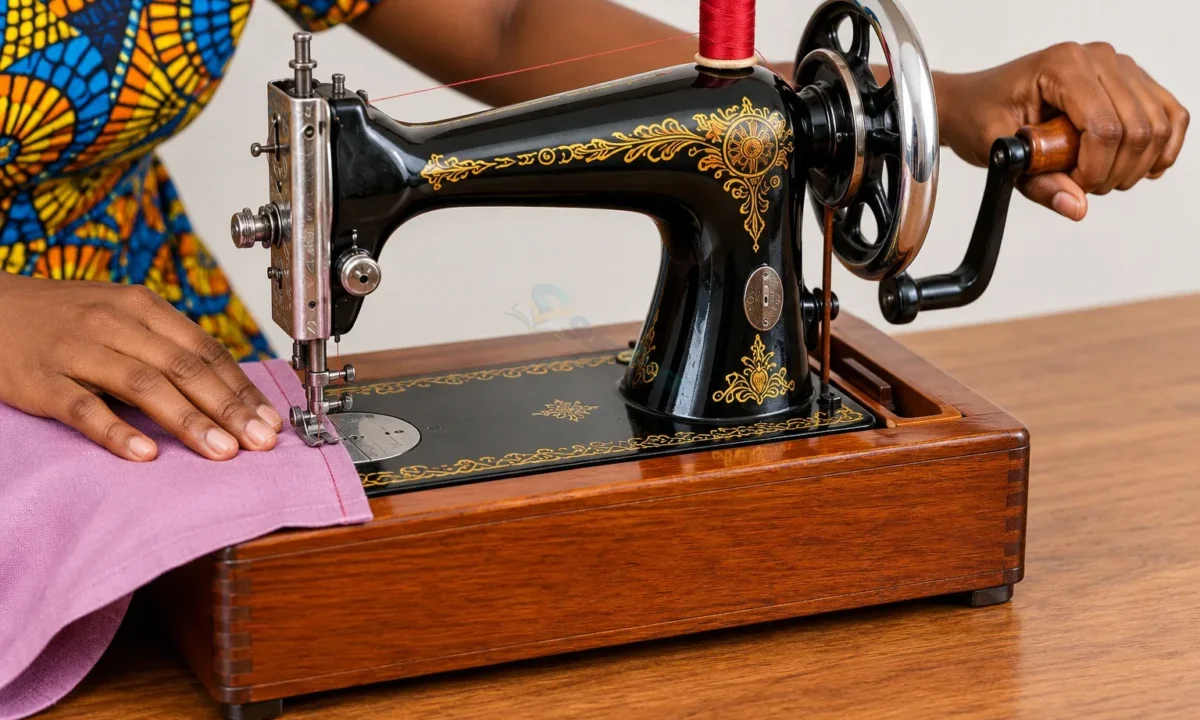
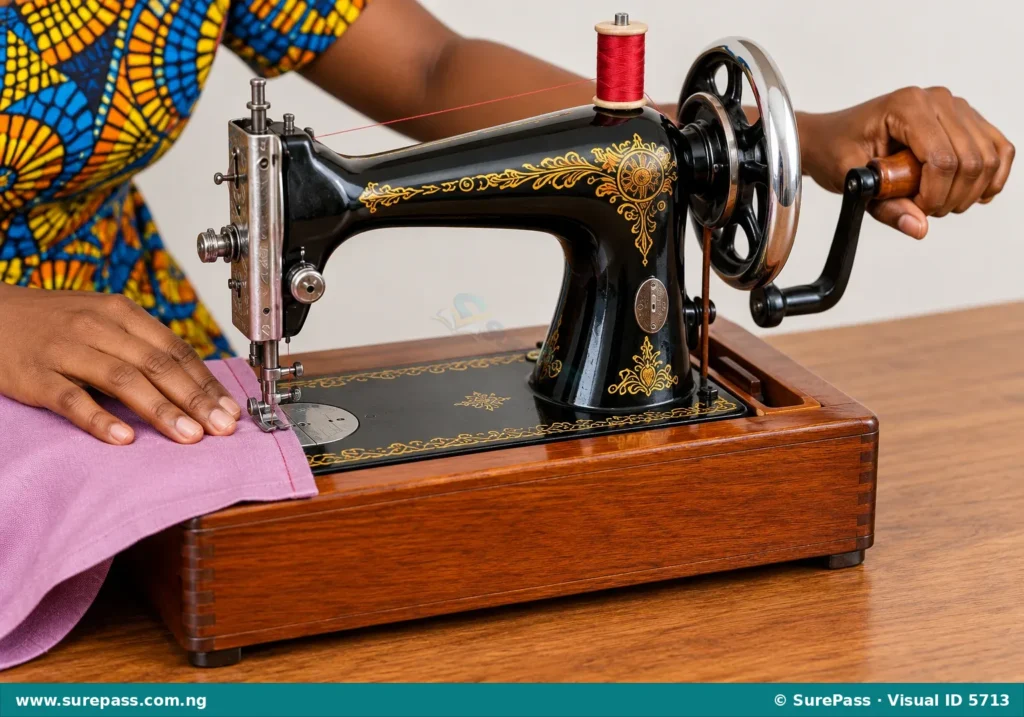
A hand sewing machine is a manual machine operated by turning a hand crank attached to the balance wheel.
The operator uses one hand to turn the crank to drive the needle up and down, while using the other hand to guide the fabric under the presser foot. Because one hand is constantly occupied with turning the wheel, guiding the fabric can be slow and requires practice to maintain straight, even stitches.
This type of machine is highly portable, durable and does not require electricity. It is commonly used in homes and areas without access to stable electrical power.
Look at the diagram below to see the structure of a hand sewing machine.
Treadle Sewing Machine
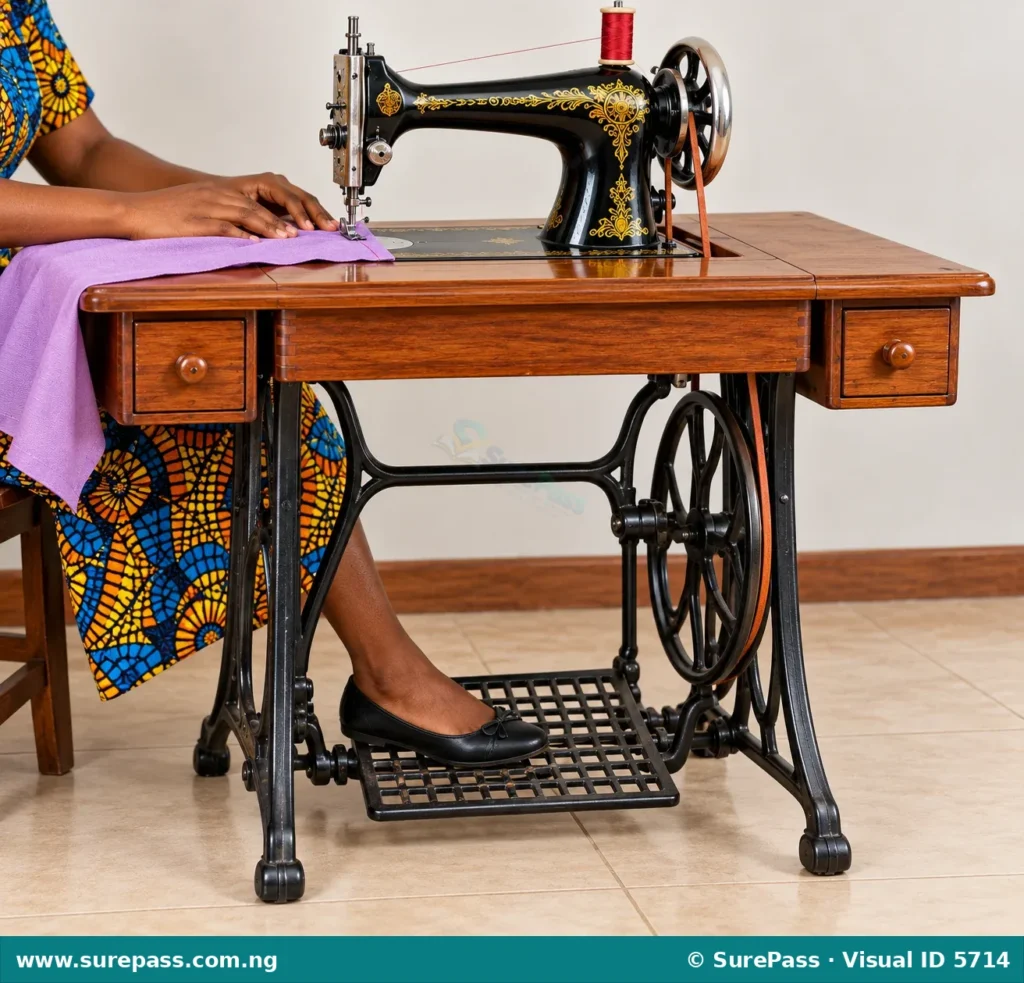
A treadle sewing machine is a mechanically operated machine powered by a foot pedal called a treadle.
The machine head is mounted on a wooden stand supported by a sturdy metal frame. At the bottom of the frame is a wide foot pedal. The operator rocks their feet back and forth on this pedal to rotate a large drive wheel. A leather belt connects this drive wheel to the balance wheel of the machine head, causing the needle to move up and down.
This machine allows the operator to use both hands to guide the fabric, which makes sewing faster and more accurate than using a hand machine. It does not require electricity, making it a highly popular and reliable choice for tailors and dressmakers in many Nigerian communities.
Observe the image below to see the parts of a treadle sewing machine stand.
Electric Sewing Machine
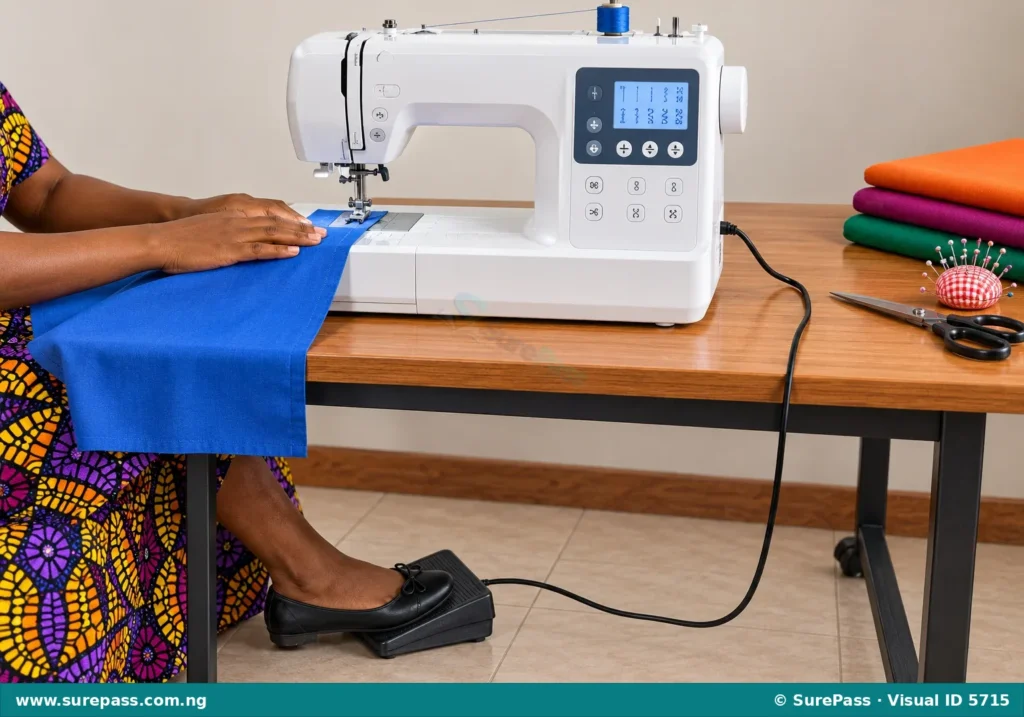
An electric sewing machine is a modern machine powered by an electric motor.
Instead of manual cranking or foot rocking, the operator presses an electric foot controller placed on the floor. The foot controller acts like an accelerator, regulating the speed of the motor. Pressing harder makes the machine sew faster, while releasing pressure slows it down or stops it completely.
This type of machine is very fast, efficient and leaves both hands completely free to control and guide the fabric. It requires a reliable source of electricity to function and is common in modern homes and fashion design studios.
The diagram below shows a modern domestic electric sewing machine.
Specialized Sewing Machines
Specialized sewing machines are machines designed to perform specific, advanced garment-making tasks rather than general stitching.
These machines are commonly found in commercial tailoring shops, fashion design studios and garment factories. They help to improve the speed, durability and neatness of finished garments.
The main types of specialized sewing machines include:
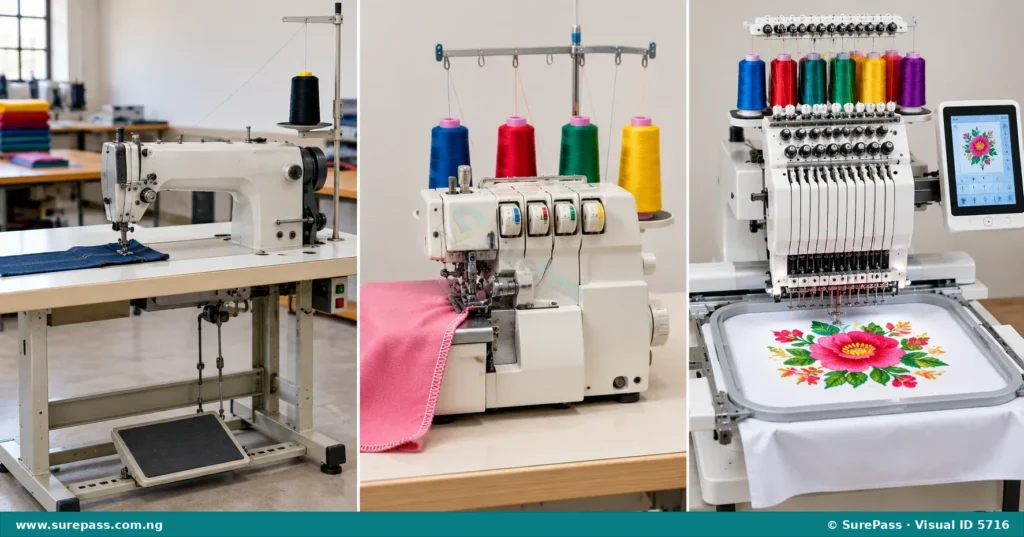
- Industrial sewing machine: This is a heavy-duty machine built for high-speed, continuous sewing. It is much faster and stronger than domestic machines and can easily sew thick fabrics like denim, canvas and leather. It is mounted on a large, specialized power table.
- Interlocking (overlocking) machine: This machine is used to trim and finish the raw edges of fabric. It sews an overlock stitch over the edge of the fabric to prevent fraying, giving the inside of the garment a neat, professional appearance.
- Embroidery machine: This machine is used to create decorative patterns, designs, logos and monograms on fabric. Modern embroidery machines are often computerized, allowing the operator to select pre-programmed designs that the machine stitches automatically.
Look at the image below to compare the different specialized sewing machines.



0 comments
Open the discussion when you need it. Comments stay collapsed until requested so the initial article remains light.