


ARTICLE CONTENTSOn this page 11 sections
Methods of Obtaining Pattern
Performance Objectives
By the end of the lesson, students should be able to:
- Identify the methods of obtaining patterns.
- Expatiate on advantages and disadvantages of each method.
Meaning of a Garment Pattern
A garment pattern is a template or guide made of paper, cardboard or fabric from which the parts of a garment are traced onto fabric and cut out.
Patterns are essential tools in fashion design and garment making. They act as blueprints for clothing, ensuring that different pieces of fabric fit together accurately to form a complete, well-fitting garment. Using patterns helps to prevent fabric wastage and ensures consistency when making multiple copies of the same design.
Methods of Obtaining Patterns
There are four primary methods used by fashion designers and tailors to obtain garment patterns. These methods are:
- The draping method
- The flat method (which includes commercial and drafted patterns)
- The knock-off method
- The computer-aided method
The Draping Method
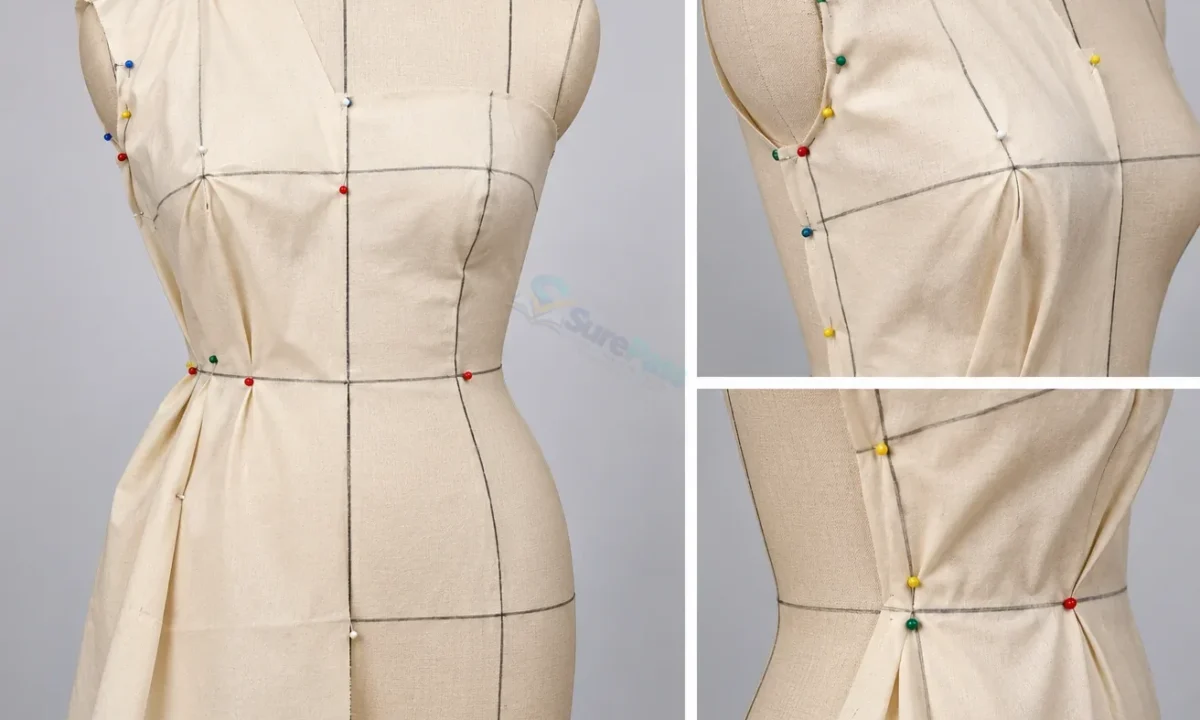
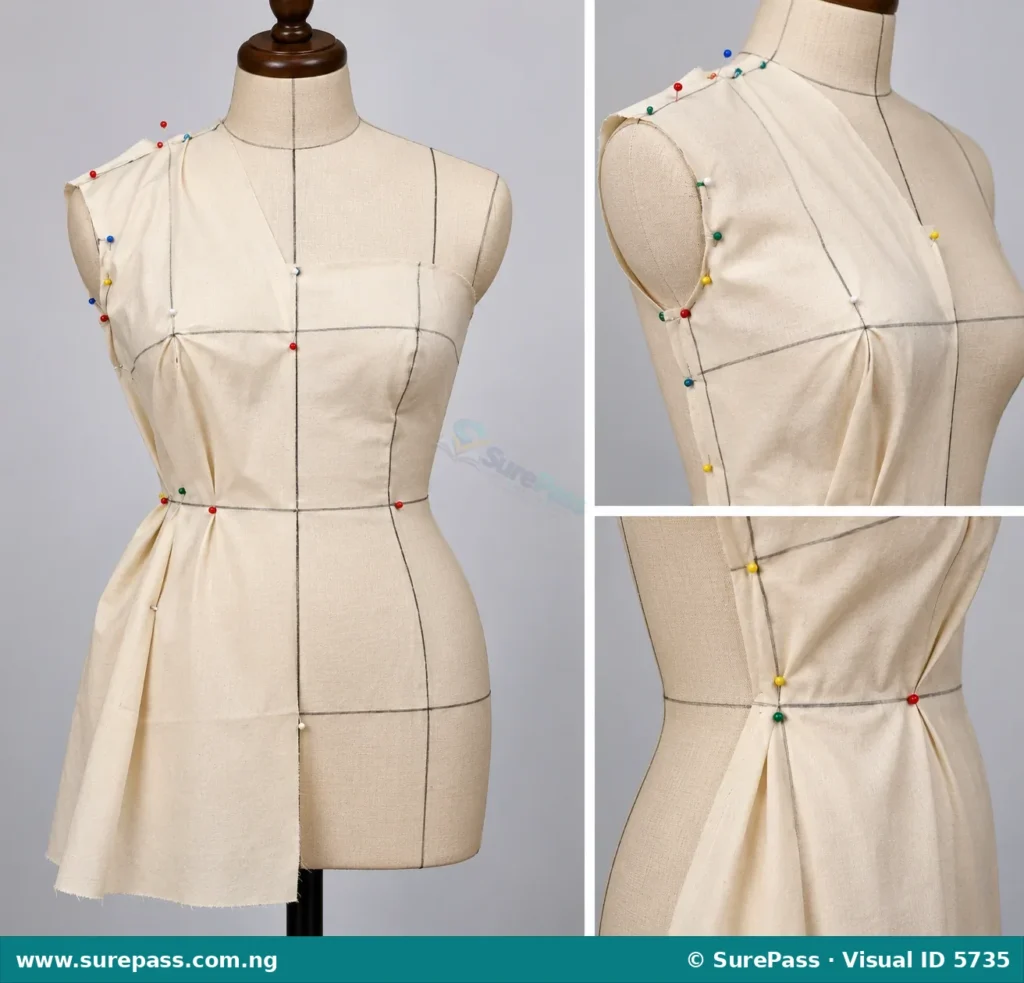
Draping is the process of positioning, pinning and shaping fabric directly onto a three-dimensional dress form or mannequin to create a garment pattern.
In this method, a designer uses a cheap trial fabric, such as muslin or calico, to drape over the dress form. The fabric is pinned, tucked and marked along the seam lines. Once the desired shape is achieved, the fabric is removed from the dress form, laid flat, and the markings are transferred onto paper to create the final pattern.
The advantages of the draping method include:
- It allows the designer to see the three-dimensional shape and fit of the garment immediately.
- It is excellent for creating unique, flowing, and highly creative designs.
- It does not require complex mathematical calculations or flat drafting skills.
The disadvantages of the draping method include:
- It requires an expensive dress form or mannequin.
- It consumes more fabric during the trial and draping stage.
- It is time-consuming compared to other pattern-making methods.
The Flat Method
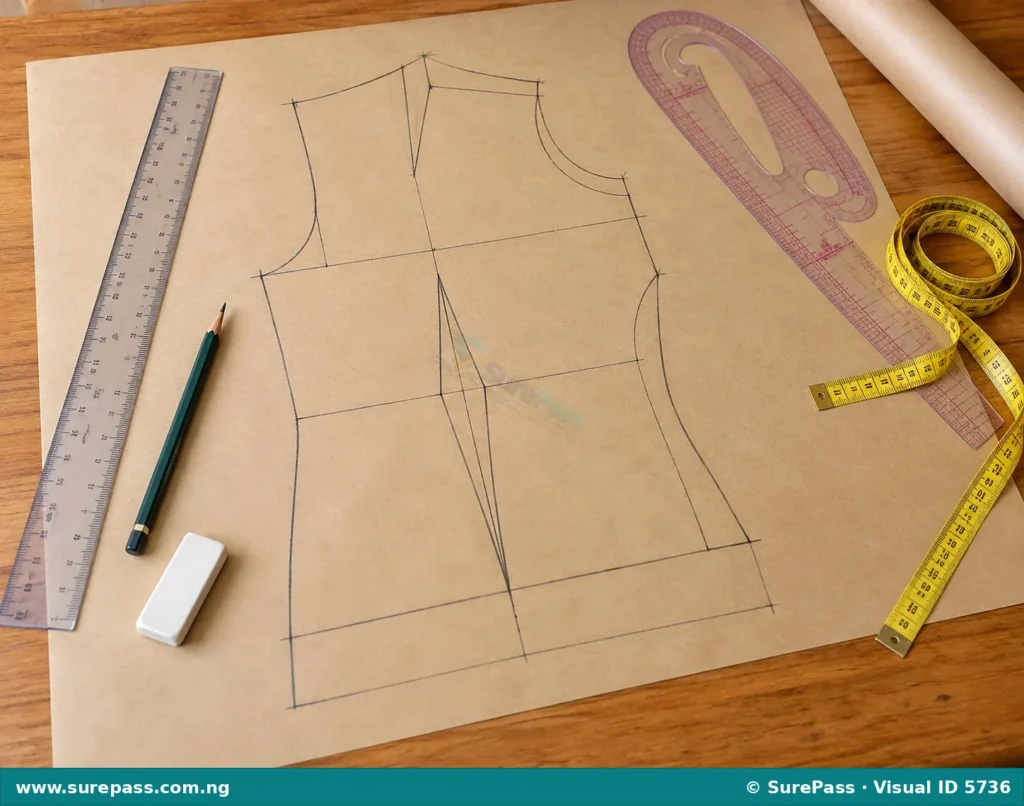
The flat method is the process of creating patterns on a flat surface, such as a cutting table, using body measurements, rulers, and drafting tools.
This method is highly systematic and relies on accurate measurements of the human body. The flat method is divided into two main categories:
- Drafted Patterns: These are patterns drawn from scratch on paper using specific body measurements and drafting tools like rulers, French curves, and pencils.
- Commercial Patterns: These are ready-made patterns designed by pattern manufacturing companies in standard sizes. They are printed on thin tissue paper and sold in envelopes with sewing instructions.
The advantages of the flat method include:
- It is highly accurate and ensures consistent sizing.
- Patterns can be easily modified, adjusted, and reused multiple times.
- Commercial patterns save a significant amount of time because they are already prepared and graded into different sizes.
The disadvantages of the flat method include:
- Drafting patterns from scratch requires advanced technical skills and accurate mathematical calculations.
- Commercial patterns are designed for standard body shapes and may require adjustments to fit non-standard body shapes perfectly.
- It requires specialized drafting tools such as L-squares, French curves, and pattern paper.
The Knock-Off Method
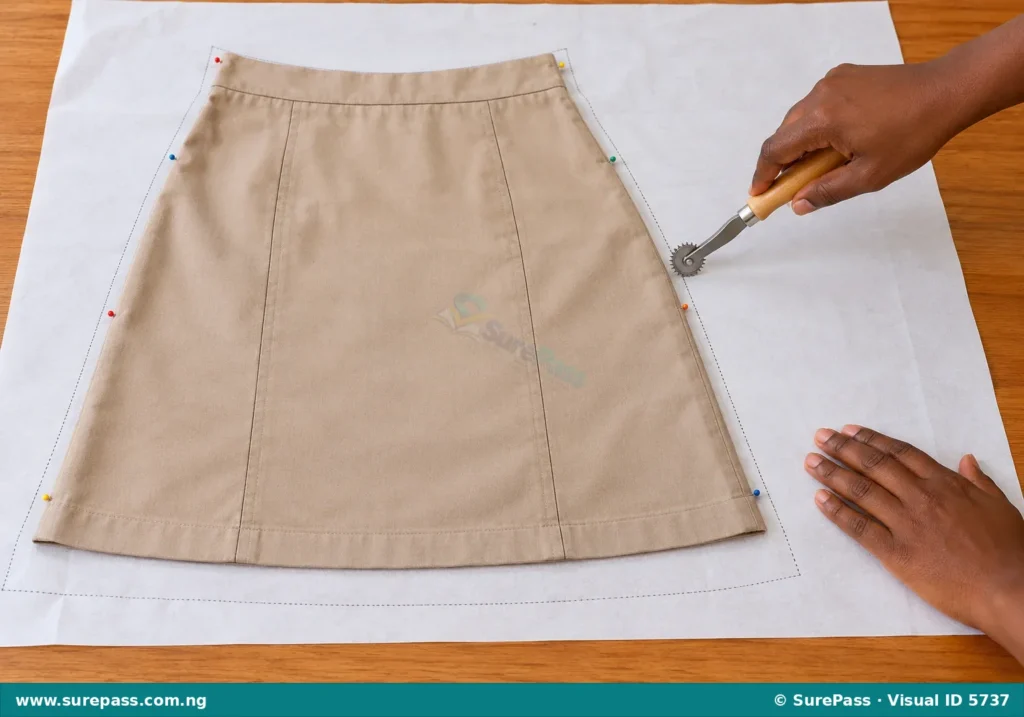
The knock-off method is the process of copying the pattern of an existing ready-made garment without taking the garment apart.
This method is also known as the “rub-off” or “trace-off” method. The existing garment is laid flat on a sheet of pattern paper. Pins or a tracing wheel are used to transfer the seam lines, darts, and outlines of the garment onto the paper underneath. Seam allowances are then added to the traced lines to complete the pattern.
The advantages of the knock-off method include:
- It does not require advanced drafting skills or complex body measurements.
- It is a very fast and simple way to obtain a pattern.
- It guarantees that the new garment will have the exact same fit and style as the original garment.
The disadvantages of the knock-off method include:
- It is limited to copying existing designs and does not encourage original creativity.
- It can be difficult to copy complex garments with hidden seams, linings, or multiple layers.
- Using this method to copy and sell commercial designs without permission can lead to copyright issues.
The Computer-Aided Method
The computer-aided method is the process of using specialized Computer-Aided Design (CAD) software to create, modify, and resize garment patterns digitally.
In modern garment manufacturing, designers use computers to draft patterns from scratch or input physical patterns into the computer using a digitizing tablet. The software allows the designer to easily change styles, add seam allowances, and automatically resize the pattern for different body sizes (a process called pattern grading). The final digital patterns are printed out using large printers called plotters.
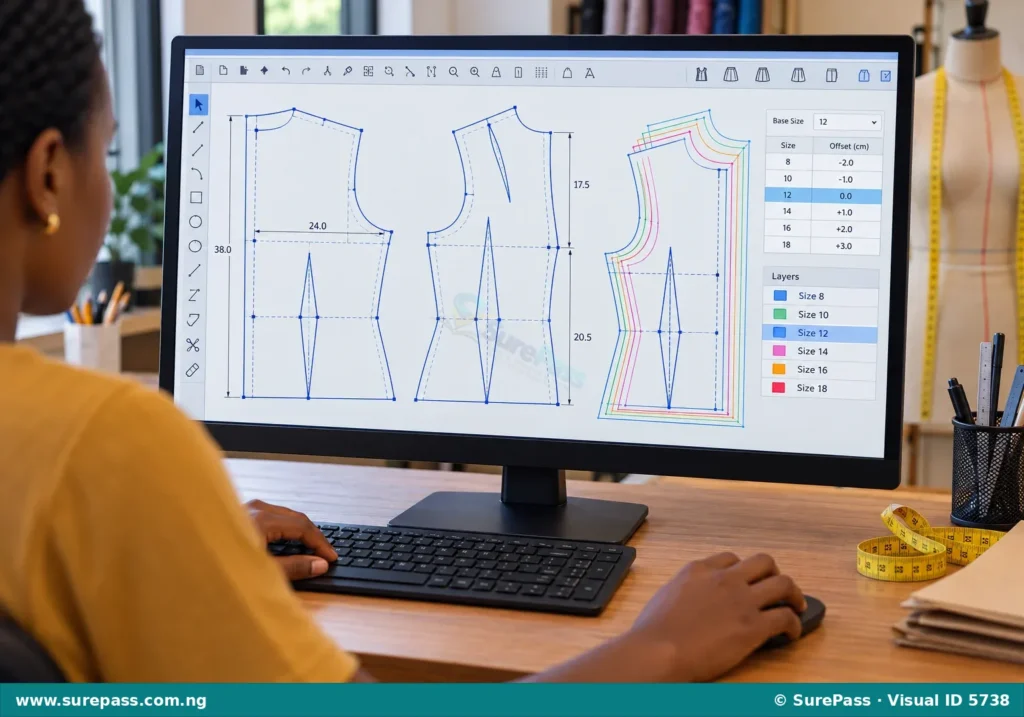
The advantages of the computer-aided method include:
- It is extremely fast, highly accurate, and reduces human error.
- Patterns are stored digitally, which saves physical storage space and prevents damage to paper patterns.
- It makes pattern grading (resizing) for mass production very easy and efficient.
The disadvantages of the computer-aided method include:
- The computer hardware, software, and plotters are very expensive to purchase and maintain.
- It requires specialized training and computer literacy to operate the software.
- The process is fully dependent on electricity and computer systems, making it vulnerable to power failures or system crashes.
Practical Guide: Obtaining Patterns
This section provides step-by-step procedures for obtaining patterns using the flat method and the knock-off method, as commonly practiced in the workshop.
How to Obtain a Pattern using the Flat Method (Drafting a Simple Patch Pocket)
A patch pocket is a simple flat-drafted pattern suitable for beginners. The procedure involves the following steps:
- Place a sheet of pattern paper flat on the worktable and secure the corners with weights or tape.
- Using a pencil and a ruler, draw a rectangle measuring 15 centimetres wide and 18 centimetres long. This represents the finished size of the pocket.
- Draw a line 3 centimetres above the top edge of the rectangle. This represents the top hem allowance.
- Draw a line 1.5 centimetres wide around the remaining three sides (the sides and the bottom) of the rectangle. This represents the seam allowance.
- Use paper scissors to cut along the outermost lines to obtain the completed flat-drafted patch pocket pattern.
- Label the pattern clearly with the name “Patch Pocket Pattern” and indicate the grain line.
How to Obtain a Pattern using the Knock-Off Method (Tracing a Simple Skirt Front)
This procedure explains how to copy the pattern of an existing simple straight skirt. The procedure involves the following steps:
- Lay a large sheet of pattern paper flat on a padded tracing table or cardboard surface.
- Fold the existing skirt exactly in half along the centre front line.
- Place the folded skirt flat on the pattern paper, aligning the folded centre front edge with the straight edge of the paper.
- Pin the skirt securely to the paper along the edges to prevent it from moving.
- Using a pencil or a tracing wheel, carefully trace along the waistline, side seam, and hemline of the skirt.
- Remove the skirt from the paper.
- Using a ruler, add 1.5 centimetres of seam allowance along the waistline and side seam, and add 4 centimetres of hem allowance at the bottom.
- Cut out the traced pattern along the outer seam allowance lines using paper scissors.
- Label the pattern “Skirt Front – Cut 1 on Fold”.
Summary of Pattern Obtaining Methods
The table below provides a quick comparison of the four methods of obtaining patterns:
| Method | Key Feature | Best Used For | Main Requirement |
|---|---|---|---|
| Draping | Working directly on a 3D dress form | Creative, flowing, and custom designs | Mannequin and trial fabric |
| Flat | Drafting on paper or using ready-made patterns | Standard sizes and accurate, reusable designs | Body measurements and drafting tools |
| Knock-off | Copying an existing garment | Replicating a favorite clothing item quickly | An existing garment and tracing tools |
| Computer-Aided | Designing digitally using software | Mass production and industrial manufacturing | Computer, CAD software, and training |
Review Questions
The following questions are designed to test the understanding of the topic:
- Define a garment pattern.
- List the four main methods of obtaining garment patterns.
- State two advantages and two disadvantages of the draping method.
- Differentiate between drafted patterns and commercial patterns under the flat method.
- Explain the knock-off method of obtaining patterns.
- Why is the computer-aided method preferred in large garment factories?



0 comments
Open the discussion when you need it. Comments stay collapsed until requested so the initial article remains light.