



ARTICLE CONTENTSOn this page 6 sections
Introduction to ICT in Biology
Performance Objectives
By the end of the lesson, students should be able to:
- identify ICT tools used in biology;
- explain the uses of ICT tools in Biology;
- describe ethical and safety considerations in the utilization of ICT in biology.
Understanding Information and Communication Technology (ICT)
Information and Communication Technology (ICT) refers to all the tools and resources used to create, store, manage, and exchange information. These tools include computers, the internet, software applications, and various digital devices.
In the field of Biology, ICT plays a crucial role in enhancing how living organisms are studied, understood, and managed. It provides powerful ways to observe, analyse, learn, and share biological information, making complex concepts more accessible and research more efficient.
Identification of ICT Tools Used in Biology
Modern biology relies on a variety of ICT tools to perform tasks that were once difficult or impossible. These tools help biologists and students explore the microscopic world, simulate experiments, analyse vast amounts of data, and collaborate effectively.
Digital Microscopes
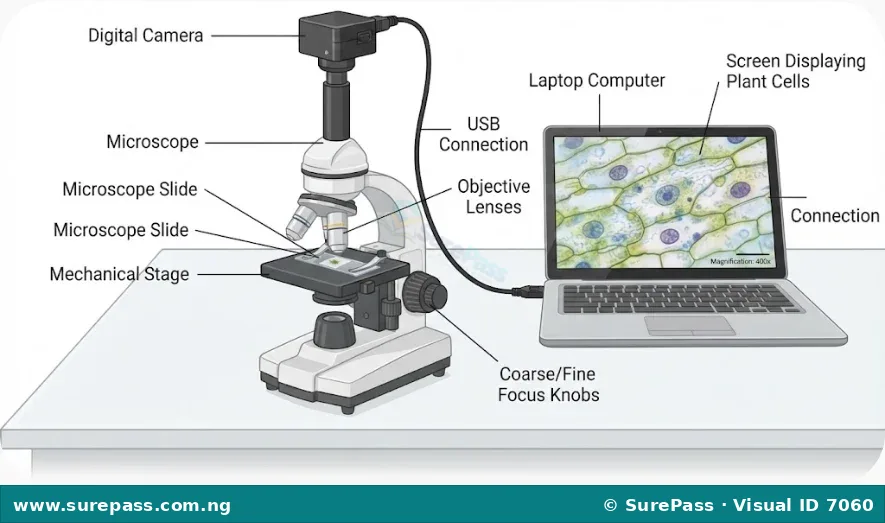
A digital microscope is a type of microscope that connects to a computer, tablet, or screen, allowing users to view, capture, and share magnified images and videos of specimens. Unlike traditional optical microscopes, digital microscopes convert the optical image into a digital signal.
These microscopes are used in biology to observe cells, tissues, microorganisms, and other tiny structures with greater ease. The digital images can be stored, processed, measured, and shared with others for discussion or further analysis.
Virtual Biology Labs
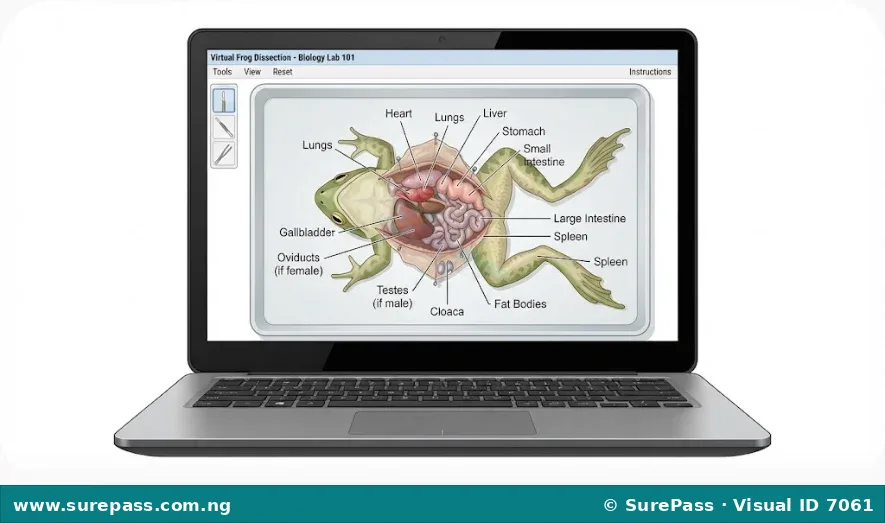
Virtual biology labs are computer-based simulations that allow learners to conduct experiments, dissections, and investigations in a digital environment. These labs mimic real-world laboratory experiences without the need for physical equipment, chemicals, or biological specimens.
They provide a safe and cost-effective way to practice experimental procedures, explore complex biological processes, and understand concepts like genetics, ecology, or human anatomy through interactive simulations. Learners can repeat experiments multiple times to master techniques and observe different outcomes.
Data Analysis Tools
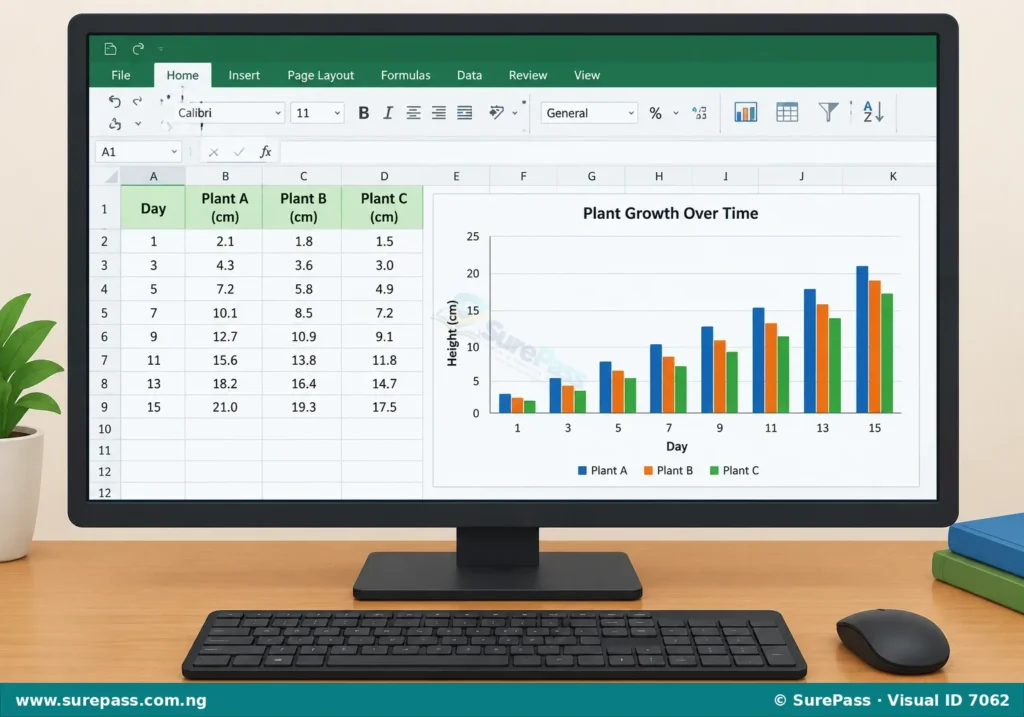
Data analysis tools are software applications designed to collect, organise, process, interpret, and visualise large datasets. These tools range from simple spreadsheet programs to more advanced statistical software.
In biology, these tools are essential for making sense of experimental results, population studies, genetic sequences, and environmental monitoring data. They help identify patterns, trends, and relationships within biological information, leading to scientific discoveries and informed decisions.
Google Classroom
Google Classroom is a free web service developed by Google for schools that aims to simplify creating, distributing, and grading assignments. It serves as a platform for online learning and collaboration.
Biology teachers and students use Google Classroom to share course materials, submit assignments, conduct online quizzes, facilitate discussions, and communicate effectively. It helps organise learning resources and promotes a more interactive and accessible learning environment.

Artificial Intelligence (AI)
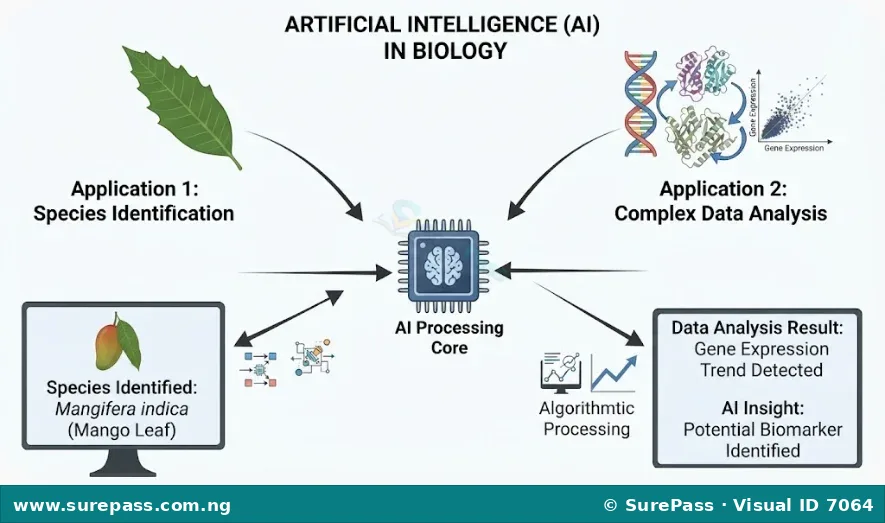
Artificial Intelligence (AI) refers to the development of computer systems that can perform tasks that typically require human intelligence. These tasks include learning, problem-solving, decision-making, and understanding language or images.
In biology, AI is used for various applications, such as identifying species from images or sounds, analysing complex genetic data, predicting protein structures, and assisting in drug discovery. AI tools can process vast amounts of information much faster than humans, helping to accelerate biological research and understanding.
Uses of ICT Tools in Biology
The ICT tools identified above have transformed how biology is taught, learned, and researched. Their applications span various aspects of the discipline, making processes more efficient and outcomes more insightful.
Data Analysis
ICT tools are extensively used for data analysis in biology. Biologists collect data from experiments, field observations, and surveys. This data can be about plant growth, animal populations, genetic variations, or environmental factors. Spreadsheet software like Microsoft Excel or Google Sheets, and statistical packages, help to:
- Organise and store large amounts of numerical and textual data.
- Perform calculations to find averages, percentages, and other statistical measures.
- Create graphs and charts (e.g., bar charts, line graphs, pie charts) to visualise data, making trends and patterns easier to understand.
- Identify correlations and relationships between different biological variables.
For example, a student studying the effect of fertiliser on plant height can use a spreadsheet to record daily measurements and then generate a graph to show the growth rate of plants under different fertiliser conditions.
Interactive Learning
ICT tools make learning biology more engaging and interactive for students. Traditional methods can sometimes be abstract, but digital tools bring concepts to life. Examples of interactive learning include:
- Virtual Dissections: Students can perform dissections of organisms like frogs or rats on a computer screen, learning anatomy without harming real animals or needing expensive equipment.
- 3D Models and Simulations: Complex biological structures, such as the human heart, DNA, or cell organelles, can be viewed as interactive 3D models. Simulations can show processes like photosynthesis, respiration, or blood circulation in action.
- Educational Videos and Animations: Online platforms provide access to a wealth of videos and animations that explain difficult biological concepts in an easy-to-understand visual format.
- Online Quizzes and Games: Interactive quizzes and educational games help students test their knowledge and reinforce learning in a fun way.
These methods cater to different learning styles and allow students to explore biological phenomena at their own pace.
Research
ICT tools are indispensable for biological research, from planning experiments to publishing findings. They streamline various stages of the research process:
- Information Gathering: Researchers use the internet to access scientific journals, databases, and online libraries to find existing studies and information relevant to their research questions.
- Data Collection: Digital sensors and data loggers can automatically collect environmental data (e.g., temperature, pH, light intensity) over long periods, providing accurate and consistent measurements for ecological studies.
- Collaboration: Online platforms and communication tools allow researchers from different locations to collaborate on projects, share data, and discuss findings in real-time.
- Presentation of Findings: Software for presentations (e.g., Microsoft PowerPoint, Google Slides) and scientific poster design helps researchers effectively communicate their results at conferences and to the wider scientific community.
Through these applications, ICT accelerates the pace of discovery and innovation in biology.
Ethical and Safety Considerations in the Utilization of ICT in Biology
While ICT offers immense benefits in biology, its use also comes with important ethical and safety considerations that must be understood and followed to ensure responsible and effective practice.
Data Privacy and Security
Biological data, especially when it involves human health or sensitive environmental information, must be handled with care. Ethical considerations include:
- Protecting Personal Information: When dealing with genetic data or medical records, ensuring the privacy of individuals is paramount. This means anonymising data where possible and obtaining informed consent.
- Securing Sensitive Data: Data related to endangered species locations, valuable biological resources, or proprietary research needs to be protected from unauthorised access, theft, or misuse.
- Responsible Data Sharing: Deciding who has access to data and under what conditions is an ethical responsibility. Data should be shared in a way that benefits science and society without compromising privacy or security.
Safety measures involve using strong passwords, encrypting sensitive files, backing up data regularly, and using secure networks to prevent data breaches.
Avoiding Plagiarism
The vast amount of information available online through ICT tools makes it easy to access others’ work. However, it also increases the risk of plagiarism, which is presenting someone else’s ideas or work as your own without proper acknowledgment.
Ethical use of ICT in biology requires:
- Proper Citation: Always citing the sources of information, images, or data used in reports, presentations, or research papers.
- Understanding Copyright: Being aware of copyright laws and obtaining permission when necessary to use copyrighted material.
- Using Plagiarism Checkers: Utilising online tools that help identify instances of unoriginal content in written work, ensuring academic integrity.
Avoiding plagiarism is crucial for maintaining honesty and credibility in academic and scientific work.
Designing Inclusive Learning Experiences
ICT tools have the potential to make learning more accessible, but it is important to design experiences that are inclusive of all learners. Ethical considerations include:
- Accessibility for Learners with Disabilities: Ensuring that digital content, virtual labs, and online platforms are accessible to students with visual, auditory, or motor impairments. This might involve providing screen readers, captions for videos, or keyboard navigation options.
- Addressing Digital Divide: Recognising that not all students have equal access to computers, internet connectivity, or digital literacy skills. Teachers should design learning experiences that offer alternatives or support for those with limited access.
- Culturally Relevant Content: Selecting or creating digital resources that are culturally appropriate and relevant to the diverse backgrounds of students.
Inclusive design ensures that ICT truly benefits everyone in the learning process.
Understanding Limitations
While ICT tools are powerful, they are not perfect and have limitations. It is important to understand these limitations to use them effectively and ethically:
- Virtual vs. Real Experience: Virtual labs and simulations can never fully replace hands-on practical experience. They are excellent for preparation and understanding concepts, but real-world experiments involve tactile skills, unexpected challenges, and sensory experiences that simulations cannot replicate.
- Data Accuracy and Bias: The output from data analysis tools or AI systems is only as good as the data fed into them. If the input data is inaccurate, incomplete, or biased, the results will also be flawed.
- Over-reliance on Technology: Excessive dependence on ICT tools can sometimes hinder critical thinking or problem-solving skills if students do not also learn the underlying biological principles or manual techniques.
- Technical Glitches and Failures: ICT tools can experience technical problems, software bugs, or internet outages, which can disrupt learning or research activities.
A critical approach to using ICT, combined with traditional biological methods, ensures a well-rounded and robust understanding of the subject.





0 comments
Open the discussion when you need it. Comments stay collapsed until requested so the initial article remains light.