



ARTICLE CONTENTSOn this page 6 sections
Organic Manure Production
Performance Objectives
By the end of the lesson, students should be able to:
- explain organic manure;
- identify types of organic manure;
- state the steps of producing organic manure.
Meaning of Organic Manure
Organic manure is a type of fertiliser derived from plant and animal remains that have undergone decomposition.
It is rich in organic matter and essential nutrients that improve soil fertility and structure, supporting healthy plant growth. Unlike chemical fertilisers, organic manure releases nutrients slowly and enhances the soil’s ability to hold water and air.
Types of Organic Manure
Organic manure can be categorised based on its source and method of preparation. Each type contributes to soil health in slightly different ways.
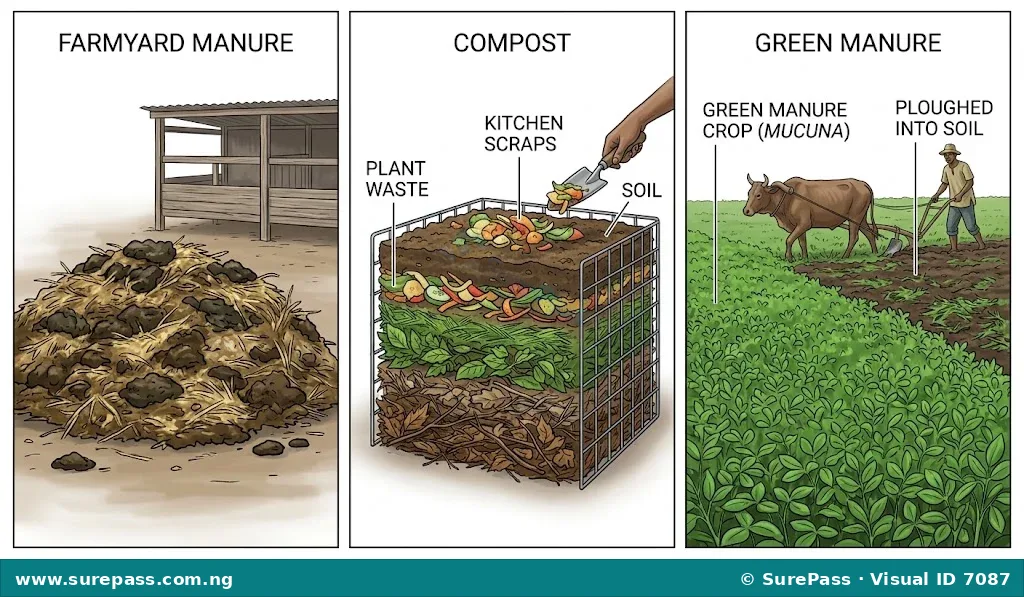
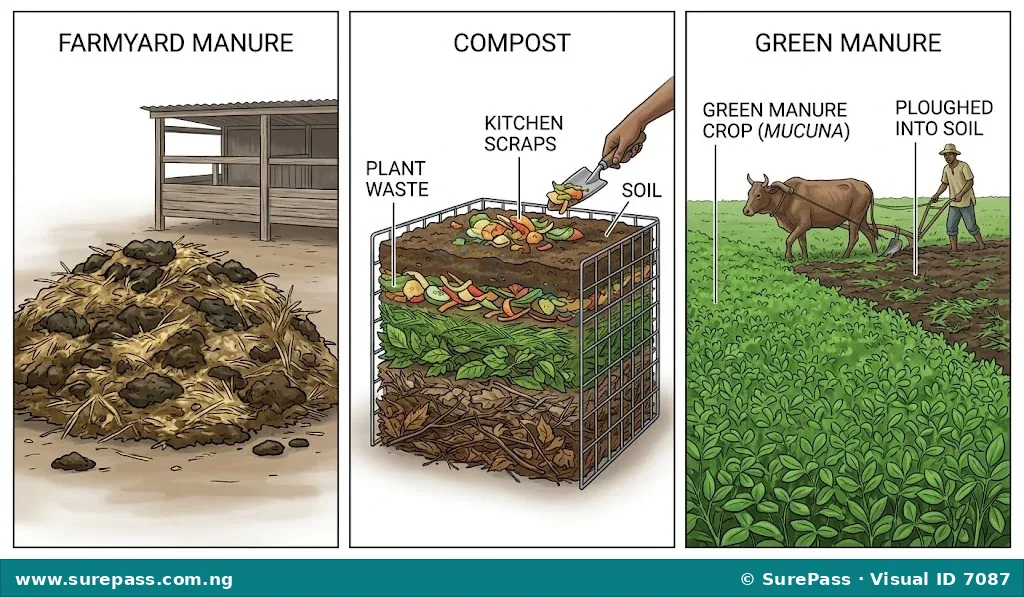
- Farmyard Manure (FYM): This is a mixture of animal dung, urine, and bedding materials (like straw or dry leaves) that have been allowed to decompose. It is commonly obtained from livestock farms and is a rich source of nutrients for the soil.
- Compost Manure: This is produced from the decomposition of various organic materials such as crop residues, kitchen waste, weeds, leaves, and sometimes animal waste. These materials are piled up and allowed to decompose under controlled conditions.
- Green Manure: This involves growing specific plants (often legumes like mucuna or sunn hemp) for a short period and then ploughing them directly into the soil while they are still green. These plants add organic matter and nutrients, especially nitrogen, to the soil as they decompose.
Production of Organic Manure: Composting
The production of organic manure, particularly compost, involves a natural process of decomposition carried out by microorganisms such as bacteria and fungi. This process transforms raw organic materials into a dark, nutrient-rich substance called humus.
Steps in Producing Compost Manure
Composting is a practical way to convert various organic wastes into valuable manure. The following steps outline the general process:
- Site Selection: Choose a suitable location for the compost heap. It should be a shaded area to prevent excessive drying, well-drained to avoid waterlogging, and easily accessible for adding materials and turning the heap.
- Gathering Materials: Collect a variety of organic materials. These include plant remains (dry leaves, grass clippings, crop residues, weeds), kitchen waste (fruit and vegetable peels, food scraps), and animal wastes (poultry droppings, cow dung). It is important to have a good mix of “green” (nitrogen-rich) and “brown” (carbon-rich) materials.
- Preparation of Materials: Chop larger materials into smaller pieces to speed up decomposition. This increases the surface area for microorganisms to act upon.
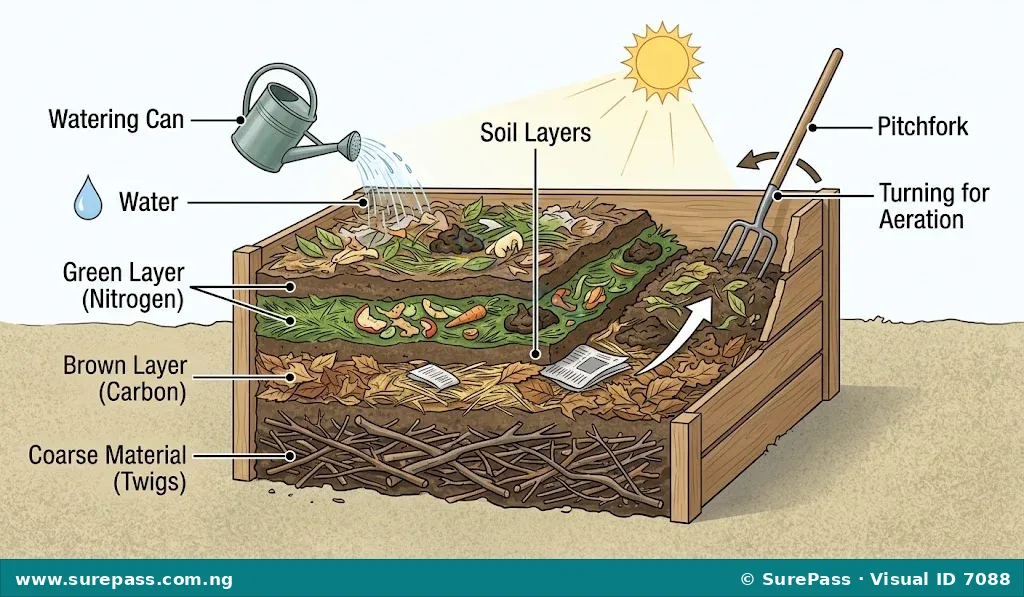
- Layering the Heap: Start the compost heap with a base layer of coarse materials like twigs or corn stalks to ensure good aeration. Then, alternate layers of “brown” materials (e.g., dry leaves, straw) and “green” materials (e.g., fresh grass, kitchen waste, animal dung). A thin layer of soil can be added between layers to introduce microorganisms.
- Moistening: Each layer should be moistened with water, but not soaked. The compost heap needs to be consistently moist, like a wrung-out sponge, to support microbial activity.
- Aeration (Turning): Regularly turn the compost heap with a fork or shovel every few weeks. This introduces air, which is essential for aerobic decomposition, and helps to mix the materials, ensuring even decomposition. Turning also prevents the heap from becoming too compact and smelly.
- Maturation: Allow the materials to decompose fully. The decomposition process generates heat, which helps to kill weed seeds and pathogens. Over several weeks to months, the heap will shrink, cool down, and the materials will transform into a dark, crumbly, earthy-smelling compost.
Skill: Preparing Compost Manure
Preparing compost manure is a valuable skill for improving soil fertility in gardens and farms. It involves carefully selecting and layering organic materials to encourage decomposition.
Materials Required:
- Various organic wastes: dry leaves, grass clippings, crop residues, weeds, fruit and vegetable peels, food scraps, animal dung.
- Simple farm tools: shovel, hoe, pitchfork, watering can.
- Water.
- A small amount of soil (optional, to introduce microorganisms).
Procedure for Building a Compost Heap:
- Choose a Location: Select a shaded, well-drained spot in your garden or farm. Ensure it is not too close to your living area to avoid any potential odour, although a well-managed compost heap should not smell bad.
- Prepare the Base: Lay a foundation of coarse, woody materials like small branches or corn stalks about 15-20 cm thick. This allows air to circulate from below.
- Add Brown Layers: Spread a layer of “brown” materials (e.g., dry leaves, straw, shredded paper) about 15 cm thick over the base.
- Add Green Layers: On top of the brown layer, add a layer of “green” materials (e.g., fresh grass clippings, kitchen waste, fresh weeds, animal dung) about 10 cm thick.
- Add Soil (Optional): Sprinkle a thin layer of garden soil (about 2-3 cm) over the green layer. This helps to introduce beneficial microorganisms that start the decomposition process.
- Moisten Each Layer: Lightly water each layer as you add it, ensuring it is damp but not waterlogged.
- Repeat Layers: Continue alternating brown, green, and optional soil layers, moistening each one, until the heap reaches a height of about 1 to 1.5 metres. A good size helps the heap retain heat for decomposition.
- Cover the Heap: Cover the top of the heap with a layer of soil, straw, or a tarpaulin to retain moisture and heat, and to prevent pests.
- Maintain Moisture: Check the moisture level regularly. If the heap feels dry, add water using a watering can.
- Turn the Heap: After about two to three weeks, use a pitchfork or hoe to turn the entire heap. Mix the outer materials into the centre and vice versa. This provides aeration and ensures even decomposition. Repeat this turning process every 2-4 weeks.
- Harvest the Compost: The compost is ready when it is dark brown, crumbly, has an earthy smell, and the original materials are no longer recognisable. This usually takes 2-4 months, depending on the materials and conditions. The finished compost can be removed from the bottom or sides of the heap.
Safety Precautions when Preparing Manure:
- Always wear gloves when handling organic waste, especially animal manure, to protect your hands from germs.
- Use farm tools like shovels and pitchforks carefully to avoid injuries.
- Wash your hands thoroughly with soap and water after handling manure or working with compost.
- Avoid composting diseased plants, as the pathogens might survive and spread to healthy plants when the compost is used.
- Do not add meat, dairy products, or oily foods to the compost heap, as they can attract pests and create foul odours.




0 comments
Open the discussion when you need it. Comments stay collapsed until requested so the initial article remains light.