




ARTICLE CONTENTSOn this page 10 sections
Citizenship and Civic Participation
Performance Objectives
By the end of the lesson, students should be able to:
- explain the meaning of citizenship;
- discuss the legal provisions in the Nigerian constitution related to citizenship;
- explain the ways of acquiring citizenship in Nigeria;
- explain the meaning and examples of civic participation;
- state the importance of civic engagement;
- list the communication tools for raising awareness of social issues;
- discuss the rights, duties and responsibilities of a citizen;
- plan and execute a community service project that addresses a local need or concern.
Meaning of Citizenship
Citizenship is the legal status of being a member of a country. It grants an individual certain rights and responsibilities within that country.
A citizen is a person who is legally recognised as belonging to a particular country. This legal connection means the person is entitled to protection from the country and is expected to obey its laws and contribute to its well-being.
For example, a person born in Nigeria to Nigerian parents is a Nigerian citizen. This status gives them the right to vote, hold a Nigerian passport, and live freely in Nigeria, among other things. In return, they are expected to pay taxes, obey laws, and participate in national development.
Legal Provisions in the Nigerian Constitution Related to Citizenship
The Constitution of the Federal Republic of Nigeria is the supreme law of the land. It contains specific legal provisions that define who a Nigerian citizen is and how citizenship can be acquired or lost.
These legal provisions are crucial because they establish a clear framework for national identity. They prevent confusion about who belongs to the nation, ensure that all citizens are treated equally under the law, and provide a basis for the rights and duties of individuals within the country.
Chapter III of the 1999 Constitution of the Federal Republic of Nigeria (as amended) specifically addresses citizenship. It outlines the different ways a person can become a Nigerian citizen and the conditions attached to each method.

The importance of these constitutional provisions includes:
- Defining National Identity: They clearly state who is a Nigerian, fostering a sense of belonging and national unity.
- Protecting Rights: They ensure that citizens have fundamental rights and freedoms that cannot be easily taken away.
- Establishing Duties: They outline the responsibilities citizens have towards their country, promoting active participation in national life.
- Preventing Statelessness: They provide clear pathways to citizenship, helping to avoid situations where individuals do not belong to any country.
- Ensuring Legal Order: They provide a legal basis for the government to protect its citizens and for citizens to seek justice.
Ways of Acquiring Citizenship in Nigeria
The Nigerian Constitution outlines three main ways through which an individual can acquire Nigerian citizenship:
- Citizenship by Birth:
- They were born in Nigeria before or on the date of independence (October 1, 1960), and either of their parents or any of their grandparents belonged to an indigenous community of Nigeria.
- They were born in Nigeria after the date of independence, and either of their parents or any of their grandparents is a citizen of Nigeria.
- They were born outside Nigeria, and either of their parents is a citizen of Nigeria.
- Citizenship by Registration:
- Any woman who is or has been married to a citizen of Nigeria. Such a woman can apply to be registered as a citizen.
- Any person of full age (18 years or older) and capacity born outside Nigeria, any of whose grandparents is a citizen of Nigeria.
- Citizenship by Naturalisation:
- Be of full age and capacity (18 years or older).
- Be of good character.
- Show a clear intention to reside in Nigeria.
- Take the Oath of Allegiance.
- Have resided in Nigeria for a continuous period of fifteen years immediately preceding the date of their application, or for a period amounting to twenty years in total over the last twenty years, with at least twelve months of continuous residence immediately before the application.
- Be able to contribute to the advancement, progress, and well-being of Nigeria.
This is the most common way to become a citizen. A person is considered a Nigerian citizen by birth if:
This means that if at least one of a person’s parents is a Nigerian citizen, that person is automatically a Nigerian citizen, regardless of where they were born.
This method is available to certain individuals who are not citizens by birth but have a close connection to Nigeria. It applies to:
For registration, the applicant must show a clear intention to reside in Nigeria, take the Oath of Allegiance, and satisfy the President that they are of good character.
This is a process by which a foreign national can become a Nigerian citizen. It is usually granted to individuals who have lived in Nigeria for a significant period and meet specific conditions. To be eligible for naturalisation, a person must:
The President of Nigeria has the authority to grant citizenship by naturalisation if these conditions are met.
Meaning and Examples of Civic Participation
Civic participation refers to the ways in which citizens take part in the life of their community and country. It involves actions that aim to identify and address issues of public concern.
It is about individuals and groups working together to make a difference in the civic life of their communities and developing the knowledge, skills, values, and motivation to make that difference. Civic participation is essential for a healthy democracy and for national development.
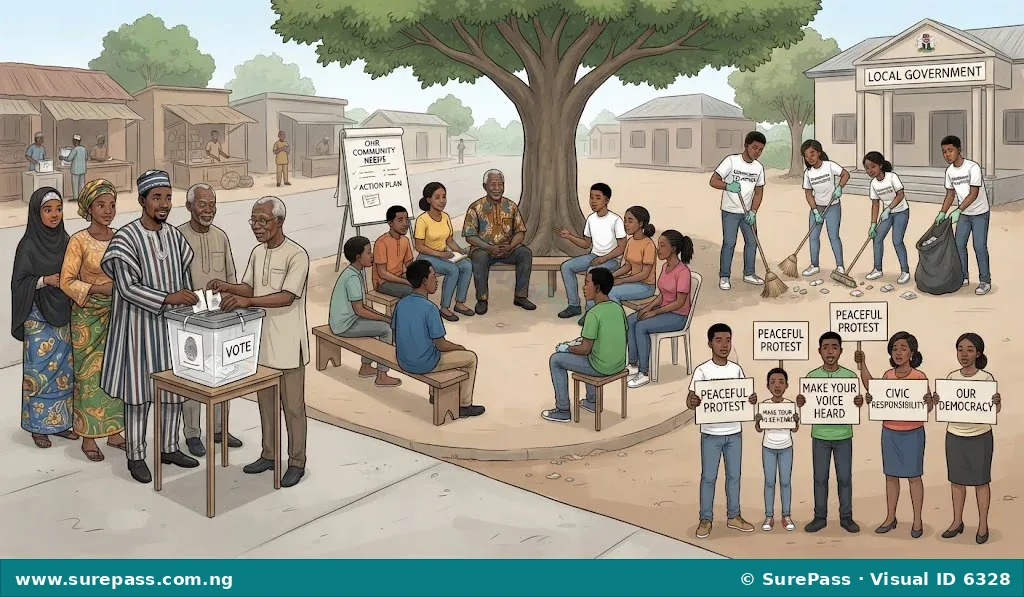
Examples of civic participation that contribute to national development include:
- Voting in Elections: Citizens participate by choosing their leaders at local, state, and national levels. This ensures that leaders are accountable to the people and that government policies reflect the will of the citizens.
- Community Service: Volunteering time and effort to improve the local community, such as participating in clean-up exercises, building public facilities, or assisting the less privileged. This directly addresses local needs and improves living conditions.
- Attending Public Meetings: Participating in town hall meetings, community development association meetings, or public hearings to discuss local issues and contribute ideas for solutions. This helps in local governance and decision-making.
- Advocacy and Peaceful Protests: Expressing opinions on public policies or social issues through petitions, peaceful demonstrations, or engaging with elected representatives. This influences policy-making and holds leaders accountable.
- Paying Taxes: Fulfilling the duty to pay taxes, which provides the government with funds to develop infrastructure, provide public services, and implement development projects.
- Obeying Laws: Adhering to the laws of the land, which maintains peace, order, and stability, creating an environment conducive for development.
- Joining Civil Society Organisations: Becoming a member of groups like youth associations, women’s groups, or environmental clubs that work towards specific social or developmental goals. These organisations often drive positive change.
Importance of Civic Engagement
Civic engagement is a broader concept than civic participation. It refers to the active involvement of citizens in the public life of their communities and nation, working to improve conditions for others or to shape the future of the community.
Civic engagement is vital for a country’s growth and development because it ensures that citizens are not just passive recipients of government services but active contributors to their own well-being and the nation’s progress.
The importance of civic engagement for a country’s growth and development includes:
- Strengthening Democracy: Engaged citizens hold leaders accountable, demand transparency, and ensure that government actions serve the public interest. This strengthens democratic institutions.
- Promoting Good Governance: When citizens are engaged, they can monitor government performance, report corruption, and advocate for policies that lead to better public services and efficient resource management.
- Fostering Community Development: Active participation in community projects and initiatives directly addresses local problems, improves infrastructure, and enhances the quality of life for residents.
- Encouraging Social Cohesion: When people work together on common goals, it builds trust, understanding, and a sense of shared responsibility, leading to a more united and peaceful society.
- Driving Economic Growth: Engaged citizens can advocate for policies that support local businesses, improve education, and create job opportunities, all of which contribute to economic prosperity.
- Raising Awareness of Issues: Citizens can bring attention to pressing social, environmental, or economic issues that might otherwise be ignored, prompting action from authorities and the public.
- Developing Future Leaders: Participation in civic activities helps young people develop leadership skills, critical thinking, and a sense of responsibility, preparing them to be effective future leaders.
Communication Tools for Raising Awareness of Social Issues
Raising awareness about social issues is a key aspect of civic engagement. Effective communication tools help to inform the public, mobilise support, and encourage action on important matters affecting the community or nation.
The communication tools for raising awareness of social issues include:
- Social Media Platforms: Websites and apps like Facebook, Twitter (now X), Instagram, and WhatsApp allow for rapid sharing of information, news, and opinions. Campaigns can go viral, reaching a large audience quickly.
- Radio: Radio remains a powerful tool, especially in rural areas where internet access may be limited. Public service announcements, talk shows, and news segments can inform listeners about various issues.
- Television: TV broadcasts, documentaries, news reports, and public awareness adverts can reach a wide audience with visual and audio messages, making complex issues easier to understand.
- Newspapers and Magazines: Print media provides detailed articles, editorials, and investigative reports that can educate the public on social issues and influence public opinion.
- Posters and Fliers: These physical materials can be distributed in public places, schools, and community centres to convey key messages concisely and visually.
- Public Meetings and Town Halls: Organising gatherings where community members can discuss issues, share experiences, and collectively seek solutions. These allow for direct interaction and feedback.
- Workshops and Seminars: Educational sessions designed to provide in-depth information about specific social issues, equip participants with skills, and encourage active involvement.
- Community Outreach Programs: Direct engagement with people in their neighbourhoods through door-to-door campaigns, street plays, or mobile information units to spread awareness.
- Music and Drama: Using creative arts like songs, plays, and skits to tell stories, highlight social problems, and convey messages in an engaging and memorable way.
Rights, Duties, and Responsibilities of a Citizen
As members of a country, citizens have certain entitlements (rights) and obligations (duties and responsibilities) that are crucial for the functioning of society and national development.
Rights of a Citizen
Rights are fundamental entitlements that every citizen is guaranteed by the constitution and laws of the country. These rights protect individuals from abuse and ensure their freedom and dignity.
Examples of rights of a Nigerian citizen include:
- Right to Life: Every person has the right to live and not be unlawfully killed.
- Right to Dignity of Human Person: Citizens have the right to be treated with respect and not be subjected to torture, inhuman, or degrading treatment.
- Right to Personal Liberty: Individuals have the right to freedom of movement and not to be unlawfully detained.
- Right to Fair Hearing: Every person accused of a crime has the right to a fair and public hearing within a reasonable time by an independent and impartial court.
- Right to Private and Family Life: Citizens have the right to privacy in their homes, correspondence, and communications.
- Right to Freedom of Thought, Conscience, and Religion: Individuals can choose and practice any religion or belief without interference.
- Right to Freedom of Expression and the Press: Citizens can express their opinions and ideas freely, and the press can operate without undue censorship.
- Right to Peaceful Assembly and Association: People can gather peacefully and form or join associations, unions, or political parties.
- Right to Freedom of Movement: Citizens can move freely throughout Nigeria and reside in any part of it, and they can leave and return to Nigeria.
- Right to Own Immovable Property: Every citizen has the right to acquire and own property anywhere in Nigeria.
Duties of a Citizen
Duties are legal obligations that citizens are required to perform by law. Failure to perform duties can lead to legal consequences.
Examples of duties of a Nigerian citizen include:
- Obeying the Law: All citizens must respect and abide by the laws of the land.
- Paying Taxes: Citizens are legally required to pay their taxes to the government, which funds public services and development projects.
- Registering to Vote: Eligible citizens have a duty to register and participate in elections.
- Serving on a Jury (if required): In some legal systems, citizens may be called upon to serve as jurors.
- National Service (if applicable): In some countries, citizens may have a duty to perform military or other forms of national service.
Responsibilities of a Citizen
Responsibilities are moral or civic obligations that citizens are expected to fulfil to contribute to the well-being of their community and nation. While not always legally enforceable, they are crucial for a healthy society.
Examples of responsibilities of a Nigerian citizen include:
- Respecting National Symbols: Showing respect for the national flag, anthem, and coat of arms.
- Promoting National Unity: Working towards peace, understanding, and cooperation among different ethnic and religious groups.
- Participating in Community Development: Volunteering for community projects, attending local meetings, and contributing to local initiatives.
- Protecting the Environment: Taking care of public spaces, disposing of waste properly, and advocating for environmental conservation.
- Reporting Crimes: Informing law enforcement agencies about criminal activities to help maintain law and order.
- Being Informed: Staying updated on current affairs, government policies, and social issues to make informed decisions and participate effectively.
- Supporting Education: Encouraging children to attend school and supporting educational initiatives in the community.
Interaction and Impact on National Development
The rights, duties, and responsibilities of a citizen are interconnected and collectively impact national development. Rights empower citizens, duties ensure order, and responsibilities foster active participation.
- Rights and Development: When citizens’ rights are protected, they are free to pursue education, engage in economic activities, express their views, and participate in governance. This freedom fuels innovation, economic growth, and political stability. For example, the right to education leads to a skilled workforce, while freedom of expression allows for public discourse on developmental challenges.
- Duties and Development: Fulfilling duties like paying taxes provides the government with the necessary resources for infrastructure development, healthcare, and education. Obeying laws ensures a stable environment where businesses can thrive and citizens can live safely, which are prerequisites for development.
- Responsibilities and Development: Active civic responsibilities, such as community service and environmental protection, directly contribute to improving living conditions and sustainable development. Promoting national unity reduces conflicts, allowing resources to be channeled into productive sectors rather than conflict resolution.
When citizens understand and balance their rights with their duties and responsibilities, they become active agents of change, contributing positively to the growth, stability, and overall development of Nigeria.
Planning and Executing a Community Service Project
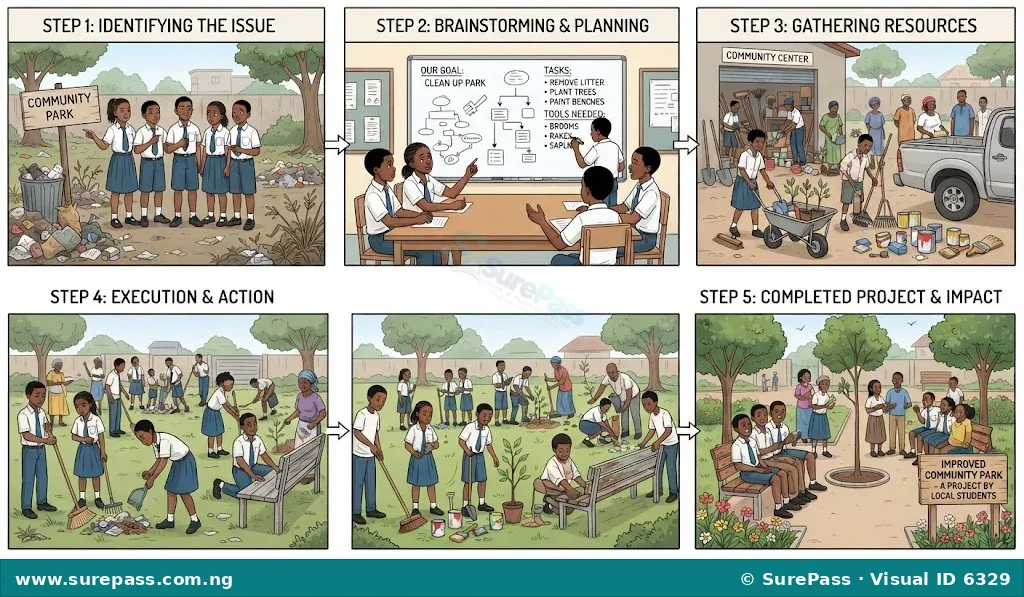
Planning and executing a community service project is a practical way for citizens to address local needs and concerns, demonstrating active civic participation and engagement. This skill involves identifying a problem, organising resources, and carrying out actions to bring about positive change.
Steps for Planning and Executing a Community Service Project
The procedure involves the following steps:
- Identify a Local Need or Concern:
Observe your community to find a problem that needs solving. This could be a dirty public space, lack of access to clean water, a need for educational support, or an issue affecting vulnerable groups. Discuss with community members to understand their most pressing needs.
Example: A local primary school playground is overgrown with weeds and has broken equipment, making it unsafe for children.
- Define the Project Goal:
Clearly state what your project aims to achieve. The goal should be specific, measurable, achievable, relevant, and time-bound (SMART).
Example: To clear the overgrown weeds and repair two broken swings in the primary school playground within one month, making it safe for children.
- Form a Team and Assign Roles:
Gather a group of interested individuals (friends, classmates, community members). Assign specific roles such as project coordinator, communication lead, fundraising lead, and logistics manager.
- Develop a Plan of Action:
Break down the project into smaller, manageable tasks. For each task, determine:
- What needs to be done?
- Who will do it?
- When will it be done (timeline)?
- What resources are needed?
Example Tasks: Get permission from school authorities, gather tools (cutlasses, rakes, shovels), seek donations for swing repair parts, organise volunteers for specific dates, arrange for waste disposal.
- Gather Resources:
Identify and acquire the necessary materials, tools, and funds. This may involve seeking donations from local businesses, community leaders, or through small fundraising activities. Ensure all tools are safe and appropriate for the task.
Required materials may include:
- Cutlasses
- Rakes
- Shovels
- Wheelbarrows
- Gloves
- Safety boots
- First aid kit
- Repair parts for swings (e.g., chains, seats)
- Waste bags or bins
- Seek Permissions:
If the project involves public property or a specific institution (like a school), obtain formal permission from the relevant authorities before starting any work.
- Execute the Project:
Carry out the planned activities according to the timeline. Ensure all team members understand their roles and work together effectively. Prioritise safety during execution, especially when using tools or working in potentially hazardous areas.
Safety Precautions:
- Always wear protective gloves and appropriate footwear.
- Use tools carefully and as intended.
- Ensure adult supervision when using sharp tools like cutlasses.
- Stay hydrated and take regular breaks.
- Have a first aid kit readily available for minor injuries.
- Do not lift heavy objects alone; seek help.
- Monitor and Evaluate Progress:
Regularly check if the project is on track and if the goals are being met. Make adjustments to the plan if necessary. After completion, assess the impact of the project on the community.
Example: Observe if children are now safely using the repaired playground. Gather feedback from school staff and parents.
- Report and Celebrate:
Share the results of your project with the community and stakeholders. Thank all volunteers and contributors. This helps to inspire others and shows accountability.



0 comments
Open the discussion when you need it. Comments stay collapsed until requested so the initial article remains light.