


ARTICLE CONTENTSOn this page 7 sections
Social vices: Drug and substance abuse
Performance Objectives
By the end of the lesson, students should be able to:
- explain the meaning and types of drugs and substance abuse;
- discuss the ways of abusing drugs and substances;
- discuss the symptoms of drug and substance abuse;
- discuss the effects of drugs and substance abuse;
- discuss how to prevent and treat drug/substance abuse.
Meaning and Types of Drugs and Substance Abuse
Meaning of Key Terms
A drug is any chemical substance that, when taken into the body, alters the normal functioning of the body or mind.
Drugs can be beneficial when used under proper medical supervision to treat, cure, or prevent diseases. However, when used incorrectly, they pose severe risks to health and social order.
Drug abuse is the deliberate, non-medical use of a chemical substance in a way that harms an individual’s physical, mental, or emotional well-being.
This includes using prescription medications without a doctor’s guidance or consuming illegal substances solely for their mind-altering effects.
Substance abuse is the harmful or hazardous use of psychoactive substances, including illicit drugs, alcohol, tobacco, and household chemicals, for non-medical purposes.
Substance abuse is a broader term that encompasses not only conventional drugs but also other chemical agents, such as industrial solvents, inhalants, and alcohol, which can cause intoxication and dependency.
Types of Abused Drugs and Substances
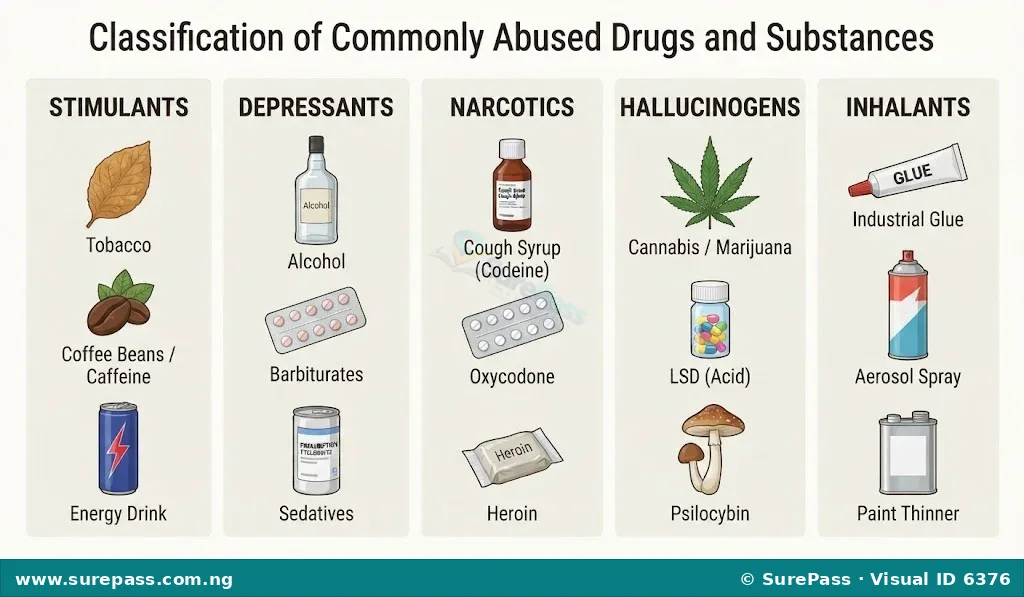
Abused substances are generally classified based on their chemical properties and their specific effects on the central nervous system. The major categories of abused drugs and substances include:
- Stimulants: These are substances that speed up the activities of the central nervous system, increasing alertness, heart rate, and energy. Examples include cocaine, amphetamines, nicotine (found in tobacco), and caffeine.
- Depressants: These substances slow down brain activity and bodily functions, inducing relaxation or sleep. Examples include alcohol, barbiturates, and benzodiazepines (commonly used as sleeping pills or sedatives).
- Narcotics (Opiates): These are powerful pain-relieving drugs derived from opium or synthetically produced. They produce a feeling of euphoria and are highly addictive. Examples include heroin, morphine, codeine, and tramadol.
- Hallucinogens: These substances alter an individual’s perception of reality, causing them to see, hear, or feel things that do not exist. Examples include Lysergic Acid Diethylamide (LSD), ecstasy, and cannabis (Indian hemp), which can act as both a depressant and a hallucinogen.
- Inhalants and Solvents: These are volatile chemical substances found in common household or industrial products. The vapours are inhaled to produce rapid intoxication. Examples include solvent glue, petrol, aerosol sprays, and paint thinners.
Ways of Abusing Drugs and Substances
Drug and substance abuse occurs through various patterns of misuse. Understanding these patterns helps in identifying and addressing the vice within communities. Common ways through which drugs and substances are abused include:
- Self-Medication: This involves taking medications to treat self-diagnosed illnesses without consulting a qualified medical professional. This practice often leads to incorrect dosages and prolonged usage.
- Using Excess Dosages: This occurs when an individual deliberately takes a higher dose of a prescribed medication than recommended by a doctor, believing it will speed up recovery or produce a stronger effect.
- Using Illicit Drugs: This is the consumption of substances that are completely banned by law, such as cocaine, heroin, and cannabis, due to their high potential for addiction and harm.
- Inhaling Volatile Solvents: This involves sniffing or huffing industrial chemicals, such as glue, petrol, or cleaning fluids, to achieve a quick, temporary state of euphoria.
- Polydrug Use (Mixing Substances): This is the dangerous practice of combining different drugs, or mixing drugs with alcohol, to intensify the psychoactive effects. An example is mixing codeine cough syrup with soft drinks or alcohol.
- Using Drugs for Performance Enhancement: This includes the misuse of anabolic steroids by athletes to build muscle mass, or the abuse of stimulants by students to stay awake for long periods during examinations.
Symptoms of Drug and Substance Abuse
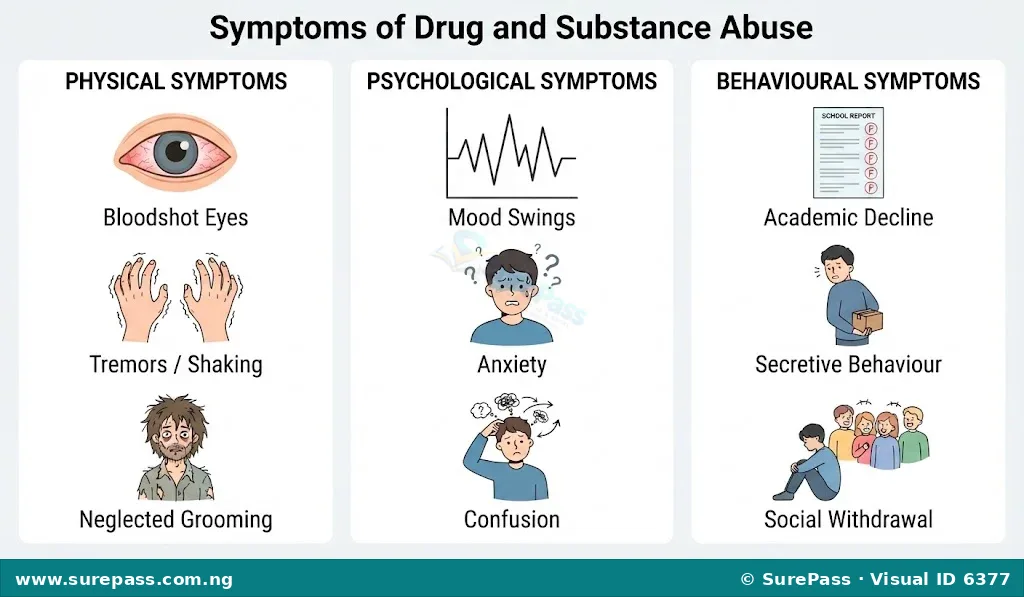
An individual abusing drugs or substances usually exhibits noticeable changes. These warning signs are categorized into physical, psychological, and behavioural symptoms.
Physical Symptoms
Physical symptoms refer to the visible changes in the body and physiological functions of the individual. Common physical symptoms of drug and substance abuse include:
- Bloodshot or Red Eyes: The blood vessels in the eyes often become dilated, giving them a red or glassy appearance.
- Sudden Weight Fluctuations: Rapid and unexplained weight loss or weight gain is common, often due to changes in appetite caused by the substances.
- Unusual Pupil Size: Pupils may appear extremely dilated (enlarged) or constricted (pinpoint-sized), depending on the type of drug consumed.
- Tremors and Slurred Speech: The individual may experience shaking hands, loss of physical coordination, or difficulty speaking clearly.
- Neglect of Personal Hygiene: There is often a noticeable decline in grooming habits, physical appearance, and cleanliness.
Psychological Symptoms
Psychological symptoms relate to changes in the mental state, emotions, and cognitive functions of the individual. Common psychological symptoms of drug and substance abuse include:
- Sudden Mood Swings: The individual may rapidly shift from extreme happiness (euphoria) to deep sadness, irritability, or outbursts of anger.
- Paranoia and Anxiety: Unexplained fear, extreme suspicion of others, and constant anxiety without any logical cause are frequent.
- Lack of Motivation: A general loss of interest in life, lethargy, and a lack of drive to accomplish daily tasks or long-term goals.
- Hallucinations and Delusions: Seeing, hearing, or believing things that are not real, which is particularly common with hallucinogen and stimulant abuse.
- Confusion and Memory Loss: Difficulty concentrating, impaired judgment, and inability to recall recent events.
Behavioural Symptoms
Behavioural symptoms involve changes in how the individual interacts with others and conducts daily activities. Common behavioural symptoms of drug and substance abuse include:
- Decline in Academic or Work Performance: Frequent absenteeism, skipping classes, and a sudden drop in grades or productivity.
- Social Withdrawal: Avoiding family members, old friends, and positive social gatherings, often replacing them with a new, secretive group of peers.
- Secretive and Suspicious Behaviour: Locking doors frequently, telling lies about whereabouts, and acting defensively when questioned.
- Financial Difficulties and Stealing: Constantly borrowing money, selling personal belongings, or stealing valuable items from home or school to fund the drug habit.
- Involvement in Criminal Activities: Engaging in social vices such as cultism, fighting, vandalism, and other unlawful acts.
Effects of Drug and Substance Abuse
The consequences of drug and substance abuse are devastating and extend far beyond the individual user, affecting families, communities, and the nation at large.
Effects on the Individual
The physical and health effects on the individual include:
- Organ Damage: Chronic abuse of substances leads to severe health conditions, such as liver cirrhosis (from alcohol), lung cancer (from smoking), and cardiovascular diseases (from stimulants).
- Mental Health Disorders: Drug abuse can trigger or worsen psychiatric conditions, including depression, anxiety disorders, and drug-induced psychosis.
- Risk of Infectious Diseases: Sharing needles or syringes for intravenous drug use increases the risk of contracting blood-borne infections such as HIV/AIDS and Hepatitis B and C.
- Overdose and Death: Consuming high concentrations of toxic substances can lead to respiratory failure, coma, or sudden death.
The emotional and psychological effects on the individual include:
- Loss of Self-Esteem: Individuals often experience feelings of guilt, shame, and worthlessness as their lives become dominated by substance dependence.
- Emotional Instability: The inability to regulate emotions leads to constant stress, frustration, and a feeling of helplessness.
Effects on the Family and Society
The social and economic effects on the family and society include:
- Family Breakdown: Drug abuse often leads to domestic violence, neglect of parental responsibilities, emotional trauma for children, and divorce.
- Economic Drain: Families suffer financial ruin due to the high cost of purchasing drugs and paying for medical treatments or rehabilitation.
- Loss of Productivity: The national workforce is weakened when young, energetic individuals become incapacitated or lose their jobs due to addiction.
- Increase in Crime Rates: To sustain their habits, drug users may resort to armed robbery, burglary, prostitution, and fraud, which threatens public safety.
- Pressure on Healthcare Systems: Public health resources are strained by the high volume of emergency cases, psychiatric admissions, and chronic illnesses resulting from substance abuse.
Prevention and Treatment of Drug and Substance Abuse
Addressing the menace of drug and substance abuse requires a combination of preventive measures to stop the vice before it starts, and treatment strategies to help those already affected.
Prevention Strategies
Prevention focuses on reducing the demand for and supply of illicit substances while building resilience in individuals. Effective prevention strategies include:
- Public Enlightenment and Education: Conducting continuous awareness campaigns in schools, religious institutions, and communities about the dangers of drug abuse. Government agencies like the National Drug Law Enforcement Agency (NDLEA) play a vital role in this.
- Strict Law Enforcement: Strengthening regulatory bodies such as the National Agency for Food and Drug Administration and Control (NAFDAC) and the NDLEA to monitor drug manufacturing, import, and distribution, and to prosecute drug traffickers.
- Parental Guidance and Supervision: Parents should maintain open communication with their children, monitor their peer groups, and provide a supportive home environment.
- Peer Education and Resistance Training: Equipping young people with life skills and assertiveness training to help them resist negative peer pressure and say “No” to drugs.
- Provision of Recreational Facilities: Creating sports centres, youth clubs, and vocational training programs to keep young people productively engaged and away from idle habits.
Treatment and Rehabilitation Options
For individuals already struggling with addiction, recovery is possible through structured medical and psychological interventions. The primary options for treating and rehabilitating individuals affected by drug abuse include:
- Detoxification: This is the initial medical process of clearing toxins from the patient’s body under strict medical supervision. It helps manage withdrawal symptoms safely.
- Psychological Counselling and Therapy: Professional therapists use techniques like Cognitive Behavioural Therapy (CBT) to help patients understand the root causes of their addiction, develop coping mechanisms, and rebuild their mental health.
- Rehabilitation Centres: These are specialized residential facilities where recovering individuals live for a period to receive comprehensive care, medical treatment, counselling, and vocational training.
- Support Groups: Participating in peer-led recovery groups provides individuals with continuous encouragement, shared experiences, and accountability during the recovery journey.
- Social Reintegration: Assisting recovered individuals to acquire skills, secure employment, and re-enter society without facing stigma, ensuring they do not relapse into drug use.




0 comments
Open the discussion when you need it. Comments stay collapsed until requested so the initial article remains light.