


ARTICLE CONTENTSOn this page 9 sections
Interfaith Relationships
Performance Objectives
By the end of the lesson, students should be able to:
- explain the core tenets, beliefs, and practices of major religions in Nigeria;
- discuss the commonalities, differences, and potential sources of misunderstanding among these religions; and
- discuss the challenges and opportunities related to interfaith relationships in Nigeria.
Meaning of Interfaith Relationships
An interfaith relationship is the interaction, co-existence, and mutual engagement between individuals, groups, or communities who adhere to different religious faiths and belief systems.
Nigeria is a highly pluralistic society characterized by deep religious diversity. The daily interactions of citizens in schools, workplaces, markets, and government institutions require a structured understanding of how different faith communities relate to one another. Fostering healthy interfaith relationships is essential for maintaining social stability, national integration, and peaceful co-existence.
Major Religions in Nigeria: Core Tenets, Beliefs, and Practices
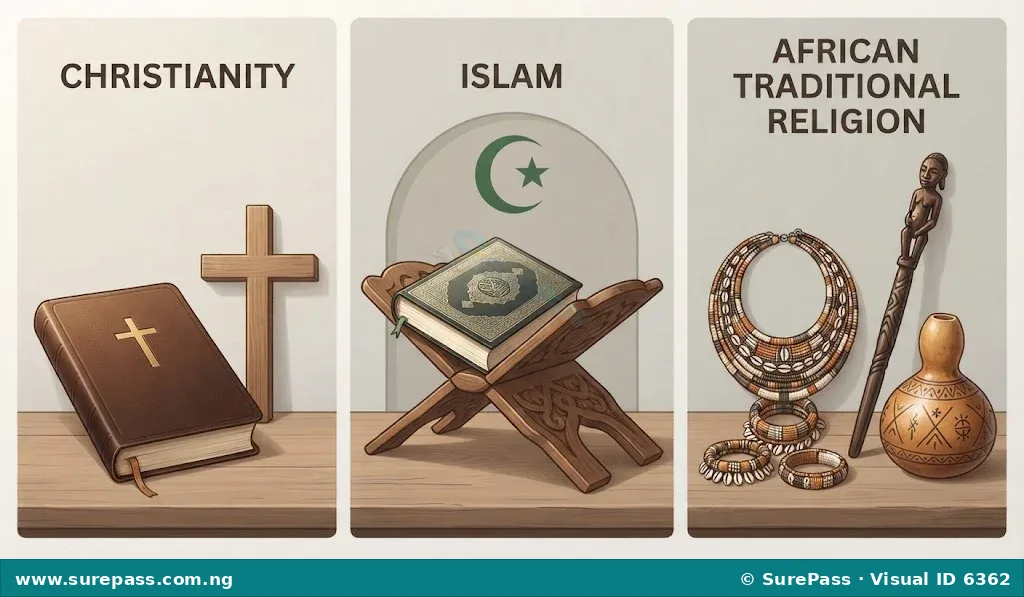
Nigeria is primarily home to three major religious traditions: Christianity, Islam, and African Traditional Religion (ATR). Each of these religions has distinct doctrines, foundational beliefs, and ceremonial practices that guide the lives of its adherents.
Christianity
Christianity is a monotheistic religion based on the life, teachings, death, and resurrection of Jesus Christ.
The core beliefs of Christianity include:
- The Trinity: Belief in one God who exists in three distinct persons: God the Father, God the Son (Jesus Christ), and God the Holy Spirit.
- The Divinity of Jesus Christ: Belief that Jesus Christ is the Son of God, who came to the world to redeem humanity from sin through his death on the cross and subsequent resurrection.
- The Holy Bible: The sacred scripture consisting of the Old and New Testaments, which serves as the ultimate authority on faith and Christian living.
- Salvation and Eschatology: Belief in salvation by grace through faith in Jesus Christ, the resurrection of the dead, a final judgment, and eternal life.
The core practices of Christianity include:
- Worship Services: Gathering in churches for congregational worship, prayers, sermons, and singing, predominantly on Sundays.
- Sacraments: Observing holy rites, most notably Baptism (the rite of admission into the Christian church) and the Holy Communion or Eucharist (the memorial of the Last Supper).
- Fasting and Prayer: Engaging in spiritual disciplines, including personal prayers and seasonal fasting periods such as Lent.
- Festivals: Celebrating major holy days, including Christmas (the birth of Jesus Christ) and Easter (the resurrection of Jesus Christ).
- Evangelism: Sharing the Christian gospel with non-adherents to convert them to the faith.
Islam
Islam is a monotheistic religion revealed through the Prophet Muhammad, emphasizing absolute submission to the will of Allah.
The core beliefs of Islam, known as the Articles of Faith (Iman), include:
- Tawhid: The absolute oneness and uniqueness of Allah, who has no partners, equals, or offspring.
- Belief in Angels: Spiritual beings created by Allah to carry out divine duties, such as the Angel Gabriel who delivered revelations.
- Belief in Holy Books: Divine scriptures revealed to prophets, including the Torah (Tawrat), the Psalms (Zabur), the Gospel (Injeel), and the Holy Quran, which is held as the final, unaltered word of Allah.
- Belief in the Prophets: Messengers sent by Allah to guide humanity, starting from Adam and including Noah, Abraham, Moses, and Jesus, with Muhammad being the seal of the prophets.
- Belief in the Day of Judgment: A final day when all human beings will be resurrected and judged by Allah based on their deeds.
- Belief in Divine Decree (Qadar): The belief that Allah has ultimate knowledge and control over everything that occurs in the universe.
The core practices of Islam are structured around the Five Pillars of Islam:
- Shahadah: The sincere declaration of faith, testifying that there is no deity worthy of worship except Allah, and Muhammad is His messenger.
- Salat: Performing the five obligatory daily prayers at prescribed times, facing the direction of the Kaaba in Mecca.
- Zakat: Giving a mandatory percentage of one’s accumulated wealth to assist the poor and needy.
- Sawm: Fasting from dawn to sunset during the holy month of Ramadan, abstaining from food, drink, and unethical behavior.
- Hajj: Undertaking the pilgrimage to the holy city of Mecca at least once in a lifetime for those who are physically and financially able.
African Traditional Religion (ATR)
African Traditional Religion refers to the indigenous spiritual beliefs and practices of African peoples, which are deeply integrated into their cultural heritage and social structures.
The core beliefs of African Traditional Religion include:
- The Supreme Being: Belief in a high creator God who is supreme, omnipotent, and transcendent, known by various indigenous names such as Olodumare in Yoruba, Chineke or Chukwu in Igbo, and Osanobua in Edo.
- Divinities and Deities: Belief in lesser spiritual beings or deities who act as intermediaries between the Supreme Being and humans, often associated with natural phenomena like rivers, thunder, and iron.
- Ancestral Veneration: Belief that deceased ancestors continue to exist in the spiritual realm, watch over their living descendants, and can act as mediators or protectors.
- The Spiritual World: Belief that the physical world is closely linked to the spiritual world, and that human actions can affect spiritual harmony.
- Moral Retribution: Belief in immediate justice and moral accountability, where good deeds bring blessings and evil deeds bring curses or misfortune in the present life.
The core practices of African Traditional Religion include:
- Sacrifices and Offerings: Presenting food, drinks, or animals to deities and ancestors at shrines to seek protection, blessings, or atonement.
- Consultation of Oracles: Seeking guidance, healing, or revelation from spiritual diviners, such as the Ifa priests among the Yoruba.
- Festivals: Celebrating seasonal and cultural festivals, such as the New Yam Festival, the Osun-Osogbo festival, and various masquerade displays.
- Rites of Passage: Performing traditional rituals to mark critical transitions in human life, including birth, naming ceremonies, initiation into adulthood, marriage, and funeral rites.
Commonalities, Differences, and Sources of Misunderstanding
Understanding the relationships between these religions requires an objective analysis of where they align, where they diverge, and what factors trigger friction among their adherents.
Commonalities among the Major Religions
Despite theological differences, Christianity, Islam, and African Traditional Religion share significant common ground. These shared values provide a foundation for interfaith harmony.
The primary commonalities include:
- Belief in a Supreme Creator: All three religions acknowledge a supreme, ultimate source of creation who governs the universe.
- Emphasis on Moral Values: Each religion promotes ethical behavior, including honesty, justice, respect for elders, charity to the poor, and the preservation of human life.
- Belief in the Spiritual Dimension: All three systems recognize that human existence extends beyond the physical body, incorporating beliefs in a soul, spirits, and life after death.
- The Practice of Prayer and Devotion: Adherents of all three religions engage in communication with the divine realm to seek guidance, protection, and blessings.
Differences among the Major Religions
Distinct theological boundaries separate the three religions, shaping how their respective followers view salvation, worship, and spiritual authority.
The key differences are summarized in the table below:
| Feature | Christianity | Islam | African Traditional Religion |
|---|---|---|---|
| Concept of God | Monotheistic (One God in Trinity: Father, Son, Holy Spirit) | Strictly Monotheistic (Tawhid: One absolute God, Allah) | Belief in a Supreme Being served by lesser deities |
| Sacred Text | The Holy Bible | The Holy Quran | No single written text; preserved through oral tradition |
| Central Figure | Jesus Christ (Son of God and Saviour) | Prophet Muhammad (The final messenger of Allah) | Ancestors, divinities, and traditional priests |
| Place of Worship | Church | Mosque (Masjid) | Shrines, sacred groves, and ancestral altars |
| Way of Salvation | Faith in the death and resurrection of Jesus Christ | Submission to Allah, faith, and righteous deeds | Maintaining harmony with ancestors, deities, and nature |
Potential Sources of Misunderstanding
Friction between religious groups in Nigeria often arises from theological misinterpretations, social biases, and competitive practices.
The main sources of religious misunderstanding include:
- Religious Exclusivism: The doctrinal claim by some adherents that their religion is the only true path to God, leading to the dismissal or demonization of other faith systems.
- Aggressive Proselytization: Using coercive, disrespectful, or highly provocative methods to convert members of other faiths, which often breeds resentment.
- Ignorance of Other Faiths: A lack of basic knowledge about the beliefs and practices of other religions, which fosters stereotypes, prejudice, and fear.
- Misinterpretation of Sacred Texts: Isolating scriptural passages out of context to justify hostility, discrimination, or superiority over other religious groups.
- Syncretism Accusations: Tension arising when individuals incorporate elements of African Traditional Religion into their Christian or Islamic practices, often leading to condemnation from orthodox religious leaders.
Challenges and Opportunities of Interfaith Relationships in Nigeria
Interfaith relations in Nigeria present both significant challenges to national security and unique opportunities for social development and peacebuilding.
Challenges of Interfaith Relationships
Several systemic issues hinder the development of peaceful interfaith relations in the country.
The major challenges include:
- Religious Extremism and Fanaticism: The rise of radical groups that use violence, terror, and hate speech to enforce their religious ideologies, causing loss of lives and displacement of communities.
- Politicization of Religion: The manipulation of religious identities by politicians to gain power, secure votes, or distribute public resources, which deepens divisions among citizens.
- Socio-Economic Marginalization: High levels of poverty and unemployment, which make vulnerable youths easy targets for recruitment by extremist religious organizations.
- Media Sensationalism: Media reporting that exaggerates religious conflicts, uses inflammatory language, and spreads unverified rumors, thereby escalating local tensions.
- Historical Prejudices: Deep-seated suspicions and historical grievances passed down through generations, which prevent communities from trusting one another.
Opportunities in Interfaith Relationships
Despite these challenges, Nigeria possesses numerous avenues to leverage its religious diversity for positive national growth.
The key opportunities include:
- Interfaith Dialogue Platforms: Organizations such as the Nigeria Inter-Religious Council (NIREC) provide structured spaces for Christian and Muslim leaders to meet, discuss national issues, and resolve conflicts before they escalate.
- Joint Social Action: Collaborative community projects where different religious groups work together to build schools, hospitals, clean water systems, and provide disaster relief, fostering unity through shared labor.
- National Integration Spaces: Shared institutions such as unity schools, the National Youth Service Corps (NYSC), and public workplaces, which allow young Nigerians of different faiths to live, work, and build lifelong friendships together.
- Constitutional Protection: Section 38 of the 1999 Constitution of the Federal Republic of Nigeria guarantees freedom of thought, conscience, and religion, providing a solid legal framework to protect religious minorities and promote equal rights.
- Shared Cultural Heritage: Many Nigerian families are religiously mixed, with Christians, Muslims, and ATR practitioners co-existing within the same household, creating natural opportunities for tolerance during festive celebrations.

Promotion of Interfaith Relationships
Promoting interfaith harmony requires deliberate actions from individuals, religious institutions, and the government to build trust and mutual respect.
Effective strategies for promoting interfaith relationships include:
- Inclusive Civic Education: Teaching comparative religious studies in schools to help students understand and respect the beliefs of others from an early age.
- Advocacy for Tolerance: Encouraging religious leaders to focus their sermons on peace, love, charity, and the golden rule, rather than emphasizing divisive doctrines.
- Community Peace Committees: Establishing local, grassroots committees comprising leaders from different faiths to monitor tensions, counter hate speech, and resolve disputes peacefully.
- Interfaith Youth and Sports Programs: Organizing sports tournaments, debates, and cultural festivals that bring youths from different religious backgrounds together to interact and collaborate.
- Strict Enforcement of the Law: Ensuring that individuals or groups who incite religious violence or discriminate against others based on faith are prosecuted according to the laws of the land.
Summary
Interfaith relationships in Nigeria are vital for national survival and progress. While Christianity, Islam, and African Traditional Religion have distinct beliefs and practices, they share core moral values that can serve as a bridge for unity. By addressing the challenges of extremism and political manipulation, and embracing opportunities like interfaith dialogue and joint social action, Nigeria can transform its religious diversity into a powerful tool for national development.
Evaluation Guide
Answer the following questions to review the lesson:
- Define the term interfaith relationship.
- State three core beliefs and two major practices of Christianity.
- List the Five Pillars of Islam.
- Explain the role of ancestors and divinities in African Traditional Religion.
- Identify three commonalities shared by the three major religions in Nigeria.
- Discuss three potential sources of religious misunderstanding in Nigeria.
- Explain two major challenges facing interfaith relationships in Nigeria.
- Describe two opportunities that can be utilized to promote interfaith harmony in the country.



0 comments
Open the discussion when you need it. Comments stay collapsed until requested so the initial article remains light.