


ARTICLE CONTENTSOn this page 10 sections
Elections
Performance Objectives
By the end of the lesson, students should be able to:
- discuss the meaning and purpose of election;
- explain the procedure of voting in an election;
- discuss the roles of citizens in elections;
- discuss the roles and responsibilities of election officials and materials;
- organise enlightenment programme on elections and the need for people to participate in elections.
Meaning of Election
An election is a formal and democratic process by which citizens select individuals to hold public office or represent them in government.
Through this process, the electorate exercises its sovereign power to choose leaders who will make decisions, enact laws, and manage public affairs on behalf of the entire population. In a representative democracy, elections serve as the primary mechanism for citizens to influence government policy and ensure that public administration reflects the will of the majority.
Purpose of Elections
Elections serve several vital functions in a democratic society. The primary purposes of conducting elections include:
- Peaceful Transition of Power: Elections provide a structured, legal, and peaceful method for changing political leadership, thereby preventing civil unrest, coups, or political instability.
- Representation: Since every citizen cannot participate directly in lawmaking, elections allow the population to choose representatives who will speak and act on their behalf in legislative and executive arms of government.
- Accountability: Elections act as a tool for citizens to evaluate the performance of public officers. Leaders who perform well can be re-elected, while those who fail to meet expectations can be voted out of office.
- Legitimacy: A government chosen through a free, fair, and credible election enjoys the consent of the governed. This legitimacy makes it easier for the government to enforce laws and maintain social order.
- Popular Participation: Elections encourage citizens to get involved in the political affairs of their country, fostering a sense of civic responsibility and national belonging.
- Choice of Alternative Policies: Different political parties present distinct manifestos and programmes. Elections allow voters to choose the political ideology and development plan that best aligns with their aspirations.
Procedure of Voting in an Election
The voting procedure refers to the systematic steps that a registered voter must follow to cast a valid ballot on election day. In Nigeria, the Independent National Electoral Commission (INEC) establishes guidelines to ensure the process is orderly, transparent, and secure.
The standard procedure of voting at a polling unit involves the following steps:
- Arrival at the Polling Unit: Voters arrive at their designated polling units during the official hours specified by the electoral commission. They join an orderly queue separated into lines where necessary to facilitate smooth movement.
- Presentation of the Permanent Voter’s Card (PVC): The voter presents the Permanent Voter’s Card to the election officials. This card serves as proof of registration and eligibility to vote at that specific polling unit.
- Accreditation and Verification: The election official uses a biometric device, such as the Biometric Voter Accreditation System (BVAS), to scan the voter’s fingerprint or face. This step verifies that the voter is the rightful owner of the PVC and prevents multiple voting.
- Issuance of Ballot Paper: Once successfully accredited, the voter’s name is ticked on the register of voters. The official then issues a stamped and signed ballot paper to the voter, indicating the specific election being contested.
- Marking the Ballot Paper: The voter proceeds to a private voting cubicle. In the cubicle, the voter secretly marks the ballot paper next to the symbol of their preferred political party, usually using a thumbprint with indelible ink.
- Casting the Ballot: The voter folds the marked ballot paper carefully to keep the choice secret and prevent ink smudging. The voter then drops the folded ballot paper into the designated ballot box in full view of officials and observers.
- Departure or Orderly Observation: After casting the vote, the voter is marked with indelible ink on a finger to show that voting has occurred. The voter then leaves the immediate voting area or stands at a designated distance to observe the counting process peacefully.
Roles of Citizens in Elections
Citizens are the primary stakeholders in any electoral process. The success and credibility of an election depend heavily on how citizens perform their duties. The roles of citizens can be categorized into three phases:
Before the Election
The responsibilities of citizens prior to election day include:
- Voter Registration: Eligible citizens must register during continuous voter registration exercises to obtain their Permanent Voter’s Cards.
- Civic Education: Citizens should educate themselves on the electoral laws, the voting process, and the manifestos of various political parties and candidates.
- Attending Campaign Rallies: Participating in peaceful political rallies and debates helps citizens assess the suitability of candidates seeking public office.
During the Election
The responsibilities of citizens on election day include:
- Orderly Conduct: Voters must maintain order, follow instructions from election officials, and avoid disruptive behavior at the polling unit.
- Casting the Vote: Citizens must turn out in large numbers to cast their votes according to their conscience, without fear or intimidation.
- Protecting the Vote: Citizens should remain vigilant and report any suspicious activities or attempts to manipulate the voting process to security agents.
- Avoiding Electoral Malpractice: Voters must refuse to engage in illegal acts such as vote-buying, vote-selling, snatching of ballot boxes, or impersonation.
After the Election
The responsibilities of citizens following the conclusion of voting include:
- Accepting Results Peacefully: Citizens should accept the official results declared by the electoral commission. Any grievances must be channeled through the appropriate legal tribunals rather than resorting to violence.
- Holding Elected Leaders Accountable: Citizens must monitor the performance of elected officials to ensure they fulfill their campaign promises and govern in the public interest.
Election Officials and Materials
The conduct of a successful election requires trained personnel and specialized equipment. These officials and materials ensure that the process is transparent, accurate, and secure.
Election Officials and Their Roles
The key election officials and their specific responsibilities include:
- Chief Electoral Commissioner: This official heads the national electoral body (such as the INEC Chairman in Nigeria). The commissioner oversees the entire electoral process, formulates policies, and declares the final results of presidential elections.
- Resident Electoral Commissioner (REC): A REC is deployed to supervise electoral operations, staff, and materials within a specific state of the federation.
- Electoral Officer (EO): The EO is responsible for organizing and supervising elections within a specific Local Government Area. The EO coordinates the distribution of materials and the deployment of ad-hoc staff to polling units.
- Returning Officer (RO): The RO is responsible for collating the votes cast across various polling units or wards, certifying the final figures, and declaring the winner of the election for a specific constituency.
- Presiding Officer (PO): The PO is the head official at a specific polling unit. The PO oversees the conduct of voting, manages other polling staff, resolves minor disputes, and counts the votes at the end of the poll.
- Assistant Presiding Officer (APO): The APO works directly under the Presiding Officer. The duties of the APO include verifying voter details on the register, operating the biometric accreditation devices, and issuing ballot papers.
- Poll Clerk: The Poll Clerk assists in maintaining order, checking the voter register, and ensuring that voters follow the correct queue system.
- Security Agents: Police officers and other security personnel are deployed to polling units to maintain law and order, protect election officials and materials, and prevent violence or intimidation.
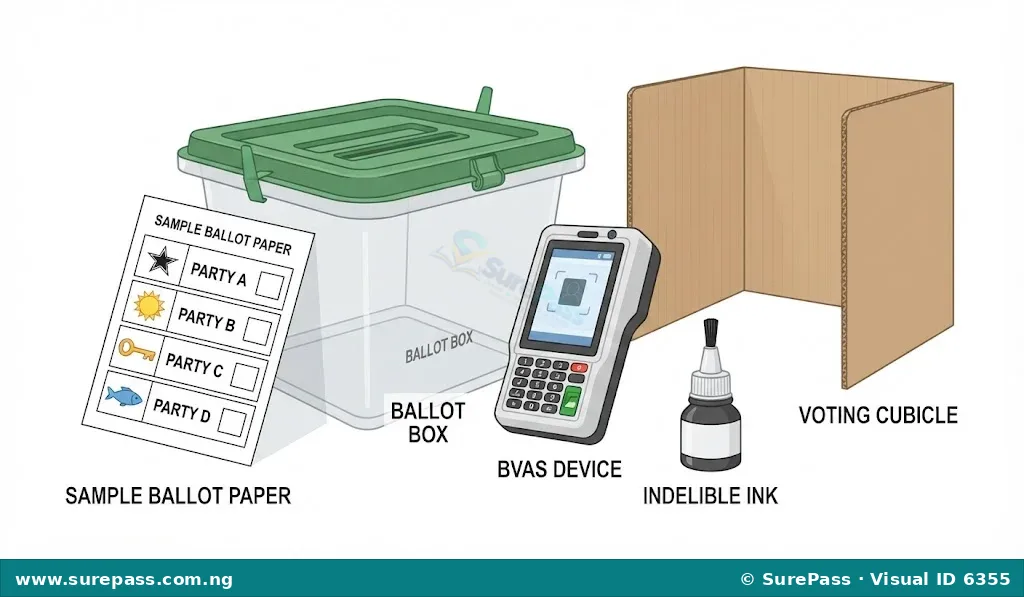
Election Materials and Their Uses
The essential instruments and materials used during elections include:
- Voter Register: A comprehensive list containing the names, photographs, and biometric details of all registered voters in a specific polling unit. It is used to verify eligibility before voting.
- Permanent Voter’s Card (PVC): A plastic card issued to registered voters, containing their biometric data. It serves as the primary identity document for voting.
- Biometric Voter Accreditation System (BVAS): An electronic device used to read the PVC, verify the voter’s identity through fingerprint or facial recognition, and upload polling unit results directly to the central server.
- Ballot Paper: A printed sheet of paper showing the names and symbols of political parties. Voters mark this paper to indicate their choice.
- Ballot Box: A secure, tamper-proof container with a narrow slot at the top, used to hold cast ballot papers until they are ready to be counted.
- Voting Cubicle: A temporary, screened structure that provides privacy for voters while they mark their ballot papers, ensuring the secrecy of the vote.
- Indelible Ink: A semi-permanent dye applied to a voter’s finger after voting. It remains visible for several days to prevent individuals from voting more than once.
- Result Sheets (Form EC8A Series): Official documents used by the Presiding Officer to record the final votes counted at the polling unit. These sheets must be signed by the PO and party agents.
Organising an Election Enlightenment Programme
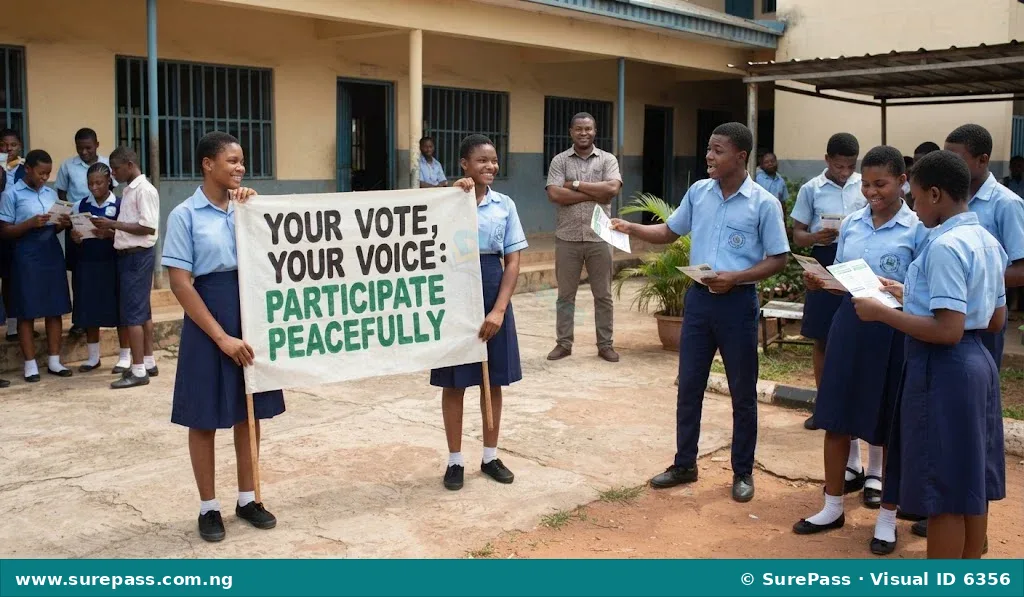
An election enlightenment programme is a civic campaign designed to educate members of a community or school about the importance of elections, the voting process, and the need for active participation. Organising such a programme helps reduce voter apathy and promotes peaceful conduct during elections.
The procedure for planning and executing an election enlightenment programme involves the following steps:
- Define the Objectives: Establish clear goals for the programme. The objectives may include educating peers on how to register to vote, explaining the step-by-step voting process, or highlighting the dangers of vote-buying and electoral violence.
- Identify the Target Audience: Determine who the programme is for. The audience could be senior secondary school students, members of a local community, or youth groups.
- Form a Planning Committee: Assign specific roles to team members. The committee should include coordinators, researchers, publicity officers, and logistics managers.
- Develop the Content and Messages: Prepare simple, accurate, and non-partisan educational materials. The messages should focus on civic duties, the power of a single vote, and peaceful participation.
- Select the Venue and Date: Choose an accessible location, such as the school assembly hall, a community centre, or an open field. Secure the necessary permissions from school authorities or community leaders.
- Create Publicity Materials: Design posters, handbills, and banners containing key messages. These materials should be placed in strategic locations to attract attendees.
- Execute the Programme: Conduct the event using engaging methods. The programme can include short speeches, a drama presentation demonstrating the voting process, a question-and-answer session, and the distribution of educational flyers.
- Evaluate the Outcome: Assess the success of the programme by gathering feedback from the audience through simple questions or discussions to measure their understanding of the topics presented.
Summary of Key Concepts
The following table summarises the roles of key election officials and the corresponding materials they use during the voting process:
| Election Official | Primary Responsibility | Key Materials Used |
|---|---|---|
| Presiding Officer (PO) | Manages the polling unit, counts votes, and records results. | Ballot Box, Result Sheets (Form EC8A), Indelible Ink |
| Assistant Presiding Officer (APO) | Accredits voters and issues ballot papers. | BVAS, Voter Register, Ballot Papers |
| Returning Officer (RO) | Collates results from multiple units and declares the winner. | Collation Sheets, Calculator, Official Stamp |
| Security Agent | Maintains order and protects lives and property. | Communication Radio, Identification Badge |
Review Questions
To evaluate understanding of this unit, answer the following questions:
- Define the term “election” and explain four purposes of conducting elections in a democratic state.
- Describe the step-by-step procedure a voter must follow to cast a ballot on election day.
- Discuss three roles of a citizen before an election and three roles during an election.
- Identify four election officials and explain their specific responsibilities in the electoral process.
- State five essential election materials and describe how each is used during voting.
- Outline the steps required to successfully plan and execute a voter enlightenment campaign in a school.



0 comments
Open the discussion when you need it. Comments stay collapsed until requested so the initial article remains light.