


ARTICLE CONTENTSOn this page 9 sections
Major ethnic groups and their cultural practices
Performance Objectives
By the end of the lesson, students should be able to:
- discuss the names, geographical locations and cultural features of major ethnic groups in Nigeria;
- discuss the similarities and differences among the major ethnic groups in Nigeria;
- explain how ethnic diversity contributes to national unity and development;
- discuss the cultural values that promote unity and peace;
- create a portfolio of ethnic groups in Nigeria.
Major Ethnic Groups in Nigeria: Names, Locations and Cultural Features
An ethnic group is a social group of people who share a common culture, language, history, ancestral origin and geographical territory.
Nigeria is a multi-ethnic nation with over two hundred and fifty distinct ethnic groups. Among these, three are recognized as the largest or major ethnic groups due to their population size and geographical spread. These are the Hausa, the Yoruba and the Igbo. Other highly prominent groups that contribute significantly to the nation’s cultural landscape include the Fulani, Ijaw, Kanuri, Tiv and Ibibio.
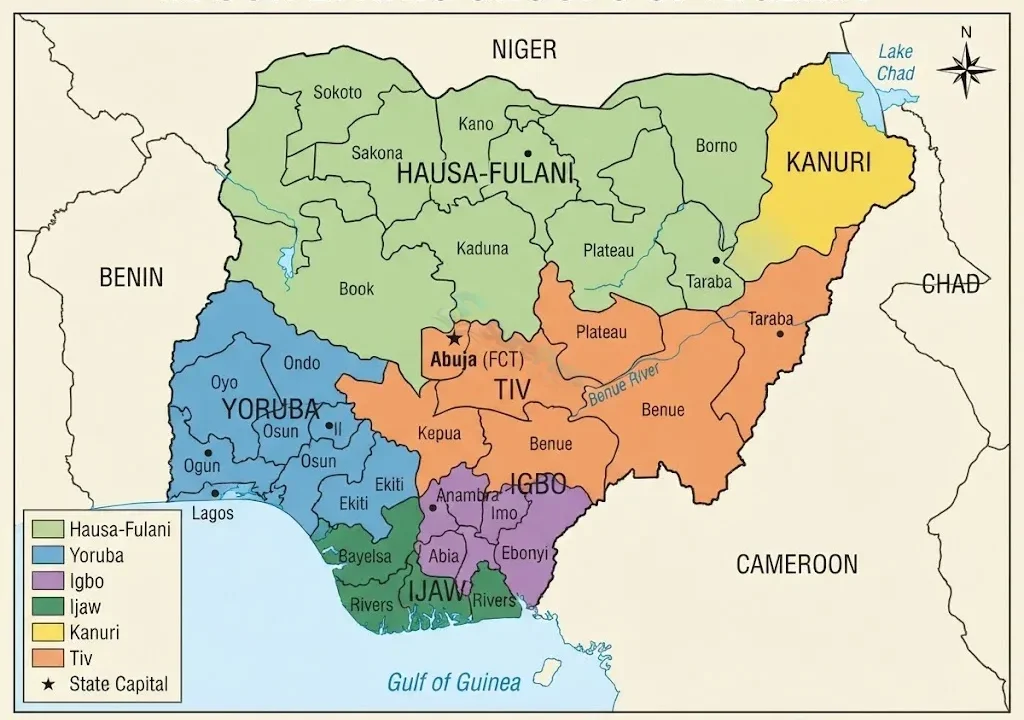
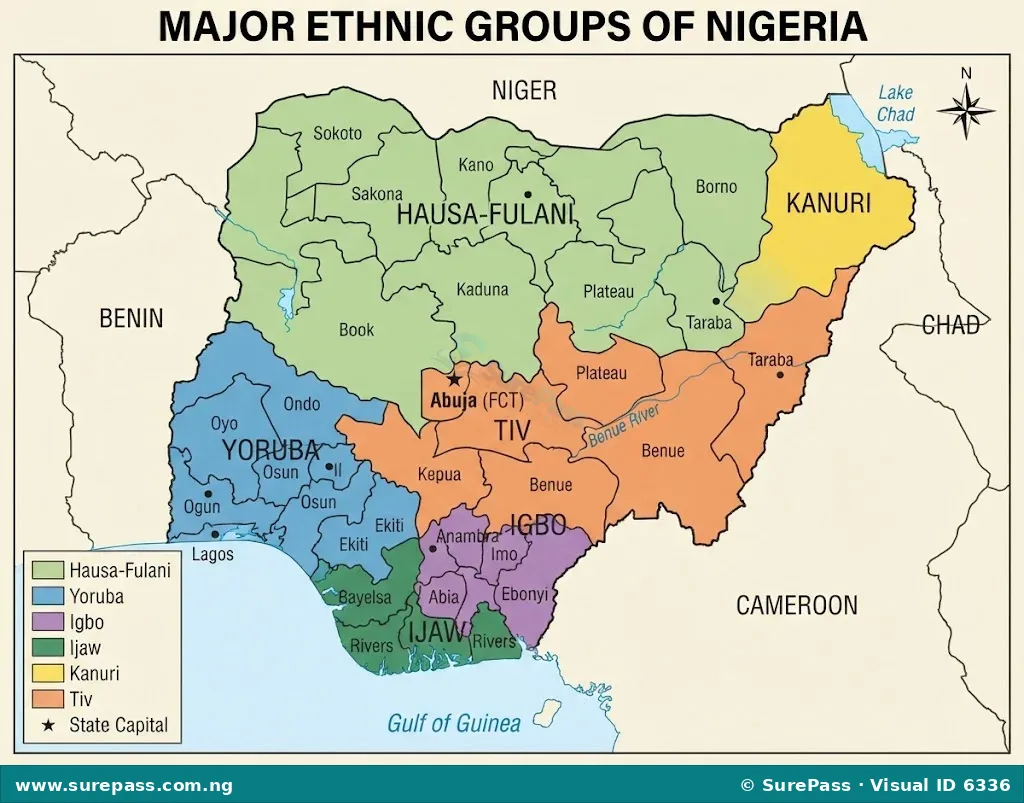
Observe the map below to understand the geographical distribution of these groups across Nigeria.
1. The Hausa
The Hausa people primarily inhabit the northern part of Nigeria, a region characterized by savannah vegetation. They are concentrated in states such as Kano, Kaduna, Sokoto, Katsina, Jigawa, Zamfara and Kebbi.
The language spoken by this group is Hausa, which serves as a major lingua franca across West Africa. Historically, the Hausa people have been organized into city-states, known as the Hausa Bakwai.
The primary traditional occupations of the Hausa include:
- Agriculture (farming of grains like millet, sorghum and maize).
- Animal husbandry (often in close association with the Fulani).
- Trading and commerce.
- Craftsmanship, particularly leatherwork, weaving and dyeing.
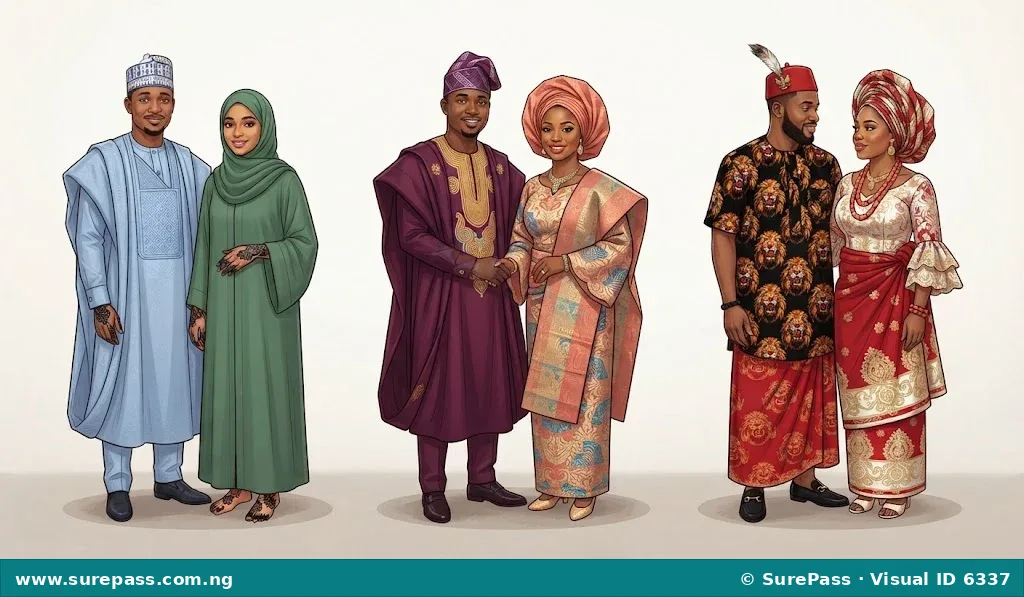
The traditional attire of Hausa men is the Babban Riga, a large flowing robe worn over a long shirt and trousers, accompanied by a decorated cap called a Fula. Women wear colorful wrappers, blouses and head ties, often accompanied by a shawl or veil (hijab) and intricate henna designs (lalle) on their hands and feet.
The staple foods of the Hausa include:
- Tuwo Shinkafa (rice meal) and Tuwo Masara (corn meal), usually served with Miyan Kuka (baobab leaf soup) or Miyan Taushe (pumpkin soup).
- Masa or Waina (rice cakes).
- Suya and Kilishi (spiced, skewered or dried meat).
A major cultural feature of the Hausa is the Durbar Festival. This is an equestrian (horse-riding) celebration held at the end of Ramadan (Eid al-Fitr) and Eid al-Kabir. It features a colorful parade of the Emir, his noblemen and cavalrymen dressed in magnificent traditional regalia, demonstrating military strength and loyalty to the traditional stool.
2. The Yoruba
The Yoruba people predominantly occupy the southwestern part of Nigeria. This region includes states such as Oyo, Ogun, Osun, Ondo, Ekiti, Lagos and parts of Kwara and Kogi states.
The language spoken is Yoruba, which has various regional dialects. Historically, the Yoruba lived in powerful kingdoms, such as the Oyo Empire, governed by traditional rulers known as Obas.
The primary traditional occupations of the Yoruba include:
- Farming (cultivation of cash crops like cocoa and food crops like yam and cassava).
- Weaving (production of the prestigious Aso-Oke fabric).
- Blacksmithing and wood carving.
- Trading, particularly among women in urban markets.
The traditional attire for Yoruba men is the Agbada, a wide-sleeved flowing gown worn over a buba (shirt) and sokoto (trousers), completed with a cap called a Fila. Women wear the Iro (wrapper), Buba (blouse), Gele (head tie) and Ipele (shoulder sash), often made from Aso-Oke or lace fabrics.
The staple foods of the Yoruba include:
- Amala (yam flour meal) served with Ewedu and Gbegiri (bean soup).
- Iyan (pounded yam) served with Egusi or Efo Riro (vegetable soup).
- Asaro (yam pottage).
A major cultural feature of the Yoruba is the celebration of festivals such as the Osun-Osogbo Festival and the Eyo Festival. The Osun-Osogbo festival is an annual week-long event held at the sacred Osun Grove to honor the river goddess, attracting tourists globally. The Eyo Festival, unique to Lagos, features masquerades clad in white robes and hats, carrying decorated staff (Opa Ambata).
3. The Igbo
The Igbo people primarily inhabit the southeastern part of Nigeria, a region east of the Niger River. This area comprises Abia, Anambra, Ebonyi, Enugu and Imo states, as well as parts of Delta and Rivers states.
The language spoken is Igbo. Historically, the Igbo operated a highly decentralized, democratic and republican political system, often described as acephalous (headless), where decisions were made by councils of elders, age grades and titleholders (such as the Ozo title) rather than a single monarch.
The primary traditional occupations of the Igbo include:
- Root-crop farming, with yam being the most significant crop.
- Trading and commerce.
- Craftsmanship, including bronze casting (as seen in Igbo-Ukwu art), pottery and smithing.
- Fishing in the riverine areas.
The traditional attire for Igbo men consists of the Isiagu shirt (a shirt patterned with lion heads), worn over a wrapper or trousers, accompanied by a red or black cap and a traditional walking stick. Women wear double wrappers (George or Akwete fabric), a fitted blouse and a matching head tie.
The staple foods of the Igbo include:
- Akpu (fufu made from cassava) or Pounded Yam, served with rich traditional soups such as Oha, Onugbu (bitter leaf), Egusi or Okazi soup.
- Ji (yam), prepared in various ways, including Ji Mmiri Oku (yam pepper soup).
- Abacha (African salad made from shredded cassava).
A major cultural feature of the Igbo is the New Yam Festival (Iri Ji). This annual harvest festival is held at the end of the rainy season to thank the deities and ancestors for a bountiful harvest. It is marked by the roasting of new yams, cultural dances, masquerade displays and community feasts.
4. Other Prominent Ethnic Groups
Beyond the three largest groups, several other ethnic groups possess rich cultural heritages:
- The Fulani: Spread across northern Nigeria, traditionally nomadic pastoralists (cattle herders) or settled scholars. They speak Fulfulde. Their culture emphasizes modesty, endurance and cattle rearing.
- The Ijaw: Inhabiting the coastal Niger Delta region (Bayelsa, Rivers, Delta states). Their traditional occupation is fishing and boat building. Men wear the Etibo, a long white shirt worn over a wrapper, topped with a bowler hat.
- The Kanuri: Located mainly in Borno and Yobe states. They speak Kanuri and have a rich history tied to the ancient Kanem-Bornu Empire. Their women are famous for elaborate hair braiding and incense production (Humra).
- The Tiv: Located in the Benue River valley (mainly Benue State). They are renowned farmers, often called the “Food Basket of the Nation.” Their traditional attire is the Anger, a handwoven fabric with distinctive black and white stripes.
Observe the illustration below showing the traditional attires of the three major ethnic groups in Nigeria.
Similarities and Differences Among Major Nigerian Ethnic Groups
Despite the diversity in language and geography, Nigerian ethnic groups share fundamental cultural values, while maintaining distinct identities.
Similarities
The common cultural threads that bind Nigerian ethnic groups include:
- Respect for Elders: In all major Nigerian cultures, high value is placed on respecting elders. This is shown through greetings (such as prostrating among the Yoruba, bowing among the Hausa and kneeling or bowing among the Igbo) and obeying parental authority.
- Communalism: Traditional society is built on the principle of collective responsibility. Extended family systems, age grades and community unions ensure that individuals support one another during celebrations, farming seasons or times of grief.
- Marriage Rites: Marriage is viewed not just as a union between two individuals, but as a formal alliance between two families. Traditional marriage rites in all cultures involve formal introductions, payment of bride price or dowry, and presentation of gifts.
- Belief in a Supreme Being: Before the widespread adoption of Christianity and Islam, all major ethnic groups believed in a supreme creator deity (known as Chukwu in Igbo, Olodumare in Yoruba and Allah/Ubangiji in Hausa), supported by intermediary deities or ancestors.
- Celebration of Harvests: Traditional festivals across these groups are heavily tied to agricultural cycles, celebrating the harvest of crops or the change of seasons.
Differences
The distinct characteristics that differentiate these groups include:
- Language: The languages belong to different linguistic families. Hausa belongs to the Afroasiatic family, while Yoruba and Igbo belong to the Niger-Congo language family.
- Traditional Political Systems: The Hausa operated a highly centralized emirate system. The Yoruba operated a constitutional monarchy with checks and balances (the Oba and the Oyo Mesi). The Igbo operated a decentralized, republican system based on consensus and age grades.
- Traditional Attire: The materials, styles and symbolic meanings of clothing differ significantly, reflecting regional climates and historical trade contacts.
- Dietary Habits: Food choices are influenced by local ecology. The northern savannah favors grain-based meals (Tuwo), the western forests favor yam and cassava products (Amala, Pounded Yam), and the eastern forest and riverine areas favor root crops and rich vegetable soups.
The table below summarizes the key differences among the three major ethnic groups:
| Feature | Hausa | Yoruba | Igbo |
|---|---|---|---|
| Geographical Region | Northern Nigeria | Southwestern Nigeria | Southeastern Nigeria |
| Traditional Ruler | Emir | Oba | Eze / Igwe (Modern adaptation) |
| Traditional Political Structure | Centralized (Emirate) | Constitutional Monarchy | Decentralized / Republican |
| Major Traditional Festival | Durbar Festival | Osun-Osogbo / Eyo Festival | New Yam Festival (Iri Ji) |
| Key Traditional Attire | Babban Riga and Fula | Agbada, Iro and Buba | Isiagu and George Wrapper |
| Staple Food | Tuwo Shinkafa / Masara | Amala and Ewedu | Akpu and Oha / Onugbu Soup |
How Ethnic Diversity Contributes to National Unity and Development
Ethnic diversity is a source of strength, creativity and development for Nigeria rather than a cause of division.
The main ways ethnic diversity contributes to national unity and development include:
- Cultural Tourism and Economic Growth: The unique festivals, arts, crafts and historical sites of different ethnic groups attract local and international tourists. Events like the Argungu Fishing Festival, the Osun-Osogbo Festival and the Calabar Carnival generate revenue and create jobs.
- Rich Human Resources and Skills: Different ethnic groups bring unique traditional skills and knowledge systems to the nation. For instance, the trading and entrepreneurial networks of the Igbo, the administrative and academic strengths of the Yoruba, and the agricultural and livestock expertise of the Hausa-Fulani combine to build a robust national economy.
- Inter-Ethnic Marriages: Marriages across different ethnic boundaries foster strong family ties between different regions. This reduces ethnic prejudice, promotes mutual understanding and builds a more integrated national identity.
- Diverse Agricultural Products and Trade: The varying ecological zones inhabited by different ethnic groups allow for the production of diverse agricultural goods. The exchange of northern cattle, onions and grains for southern tubers, palm oil and fruits encourages internal trade and national interdependence.
- National Symbols and Sports: In international sports, arts and literature, Nigeria is represented as a single, diverse unit. The combination of different cultural expressions in music (such as Afrobeats), Nollywood films and literature showcases Nigeria’s rich heritage to the world, fostering national pride.
Cultural Values That Promote Unity and Peace
To harness the benefits of diversity, certain shared cultural values must be practiced by all citizens.
The key cultural values that promote unity and peace include:
- Tolerance and Accommodation: This is the willingness to accept and respect the cultural practices, religious beliefs and opinions of others, even when they differ from one’s own. It prevents communal clashes and fosters peaceful co-existence.
- Respect for Other Cultures: Recognizing that no culture is superior to another. Valuing the language, dress, food and traditions of other ethnic groups builds mutual trust and national pride.
- Communalism and Solidarity: The traditional African belief in collective welfare, often expressed as “I am because we are.” This value encourages citizens to support one another during national emergencies, economic challenges or community development projects.
- Social Justice and Fairness: Ensuring equal opportunities, rights and resources for all citizens, regardless of their ethnic background. This reduces feelings of marginalization and promotes loyalty to the nation.
- Honesty and Integrity: Traditional societies heavily penalize theft, falsehood and betrayal. Upholding these values in public and private life reduces corruption and builds a stable, prosperous nation.
How to Create a Portfolio of Ethnic Groups in Nigeria
A portfolio is a curated collection of documents, pictures, drawings and written descriptions that showcases information about a specific subject.
Creating an ethnic group portfolio allows students to gather, organize and present detailed information about the diverse cultures of Nigeria, fostering research skills and cultural appreciation.
The required materials are:
- A cardboard folder or a three-ring binder.
- A4 paper (blank or ruled).
- Colored pens, pencils and markers.
- Printed pictures, newspaper cut-outs or drawings of traditional attires, foods, festivals and maps.
- Glue stick or adhesive tape.
- Scissors (to be used carefully).
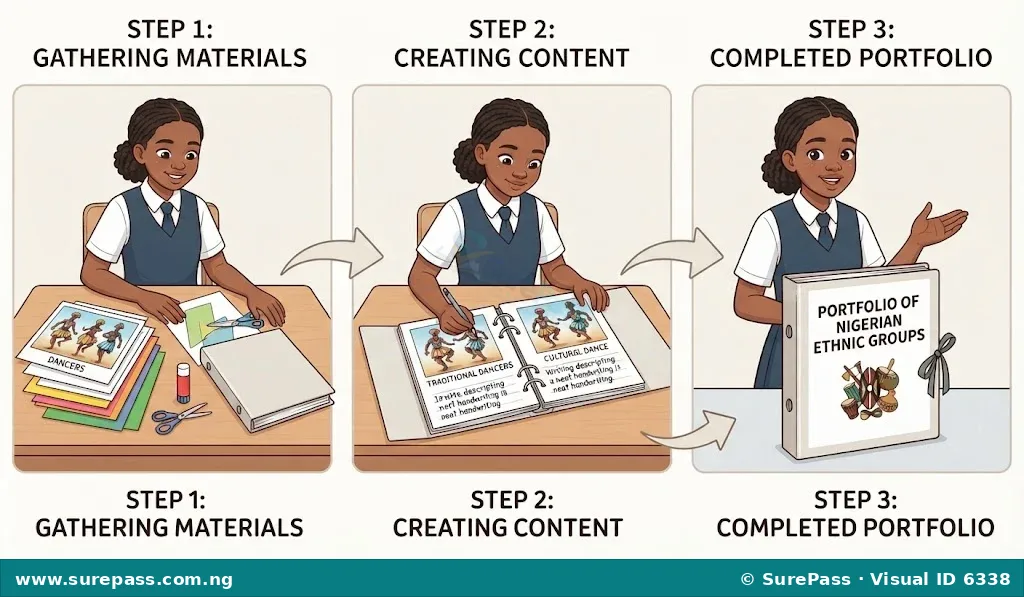
The procedure involves the following steps:
- Step 1: Planning and Research: Select at least four Nigerian ethnic groups (including the three major ones and one minority group). Research their geographical location, language, traditional attire, food, occupation and major festivals.
- Step 2: Designing the Cover Page: Write the title clearly on the front cover of the folder or binder. The title should be “Portfolio of Ethnic Groups in Nigeria.” Include the student’s name, class and date. Decorate the cover with drawings or symbols representing Nigerian unity.
- Step 3: Creating Profile Pages: Dedicate at least two pages to each selected ethnic group. At the top of each page, write the name of the ethnic group in bold letters.
- Step 4: Adding Content and Visuals: Write short, neat paragraphs describing the group’s location, language and cultural features. Paste relevant pictures or draw illustrations next to the descriptions (e.g., paste a picture of a Yoruba man in Agbada on the Yoruba profile page).
- Step 5: Including a Comparison Section: Create a page in the portfolio containing a comparison table or a short essay highlighting the similarities and differences among the studied groups.
- Step 6: Adding a Reflection Page: Write a concluding page explaining how the diversity of these groups contributes to national unity and how citizens can promote peace.
- Step 7: Binding and Reviewing: Secure all pages neatly inside the folder or binder. Review the portfolio to ensure there are no spelling errors and that all pictures are firmly attached.
Observe the visual guide below to understand how to assemble the portfolio.
Summary
Nigeria’s strength lies in its rich cultural diversity. The major ethnic groups—Hausa, Yoruba and Igbo—alongside numerous other groups, possess unique geographical locations, languages, occupations, attires, foods and festivals. While differences exist in their political structures and languages, they share deep similarities in their values of respect, communalism and family systems. By practicing tolerance, mutual respect and social justice, Nigerians can harness this ethnic diversity to promote national unity, economic development and lasting peace.
Questions for Evaluation
Answer the following questions to assess understanding of the topic:
- Define the term “ethnic group” and name the three major ethnic groups in Nigeria.
- State the primary geographical locations and traditional occupations of the Hausa, Yoruba and Igbo people.
- Describe one major traditional festival associated with each of the three major ethnic groups.
- Identify three cultural similarities shared by major Nigerian ethnic groups.
- Explain three differences between the traditional political systems of the Yoruba and the Igbo.
- Discuss three ways in which Nigeria’s ethnic diversity can be used to promote national development.
- List and explain three cultural values necessary for maintaining peace and unity in a multi-ethnic nation like Nigeria.
- What is a cultural portfolio, and what are the key steps involved in creating one?




0 comments
Open the discussion when you need it. Comments stay collapsed until requested so the initial article remains light.