



ARTICLE CONTENTSOn this page 10 sections
Retail Trade
Performance Objectives
By the end of the lesson, students should be able to:
- state the meaning of retailing;
- explain the Characteristics and functions of various types of retail trade;
- discuss the factors to consider in setting- up a retail trade;
- describe customer relationship management in retailing;
- set up and manage a small retail store
- using digital technology in retailing.
Meaning of Retailing
Retailing is the process of selling goods and services directly to the final consumer for their personal, non-business use.
It represents the last stage in the distribution channel, where products move from the hands of producers or wholesalers to the people who will actually use them. Retailers act as intermediaries, connecting manufacturers and wholesalers with individual customers.
Characteristics of Retail Trade
Retail trade has several distinct characteristics that set it apart from other forms of trade. Understanding these characteristics helps to appreciate the role of retailers in the economy.
- Direct Sale to Consumers: Retailers sell goods directly to the end-users, not to other businesses for resale.
- Sale in Small Quantities: While retailers buy in bulk from wholesalers or manufacturers, they sell products in smaller, convenient quantities that individual consumers need.
- Wide Variety of Goods: Many retailers offer a broad range of products from different manufacturers, allowing consumers to choose from various options in one place.
- Convenient Locations: Retail outlets are often located in easily accessible areas such as residential neighbourhoods, market squares, or shopping centres, making it easy for customers to reach them.
- Customer Service Focus: Retailers often provide services like product information, demonstrations, after-sales support, and sometimes credit facilities to attract and retain customers.
- Personal Contact: There is often direct interaction between the retailer or sales staff and the customer, which helps in understanding customer needs and building relationships.
- Cash or Digital Transactions: Most retail transactions involve immediate payment, either in cash or through digital payment methods like POS, mobile transfers, or online banking.
- Risk Bearing: Retailers bear risks such as spoilage of perishable goods, changes in fashion, theft, and price fluctuations.
Functions of Retail Trade
Retailers perform several important functions that benefit both consumers and producers in the economy.
- Breaking Bulk: Retailers purchase goods in large quantities from wholesalers or manufacturers and then divide them into smaller units that are suitable for individual consumers. This makes products accessible to people who do not need or cannot afford to buy in bulk.
- Holding Stock: Retailers maintain a ready supply of various goods, ensuring that products are available to consumers whenever they need them. This saves consumers from having to buy and store large quantities of items.
- Providing Variety: Retailers offer a wide selection of goods from different producers, giving consumers choices in terms of brands, quality, and price. This allows customers to compare and select products that best meet their needs.
- Providing Information: Retailers gather feedback from customers about product preferences, quality, and demand. This information is valuable to producers for improving their products and planning production. They also inform customers about new products, features, and prices.
- Offering Credit Facilities: Some retailers, especially those dealing with higher-value goods or having long-standing relationships with customers, may offer credit facilities, allowing customers to pay for goods over time.
- Risk Bearing: Retailers take on various risks associated with holding stock, such as damage, spoilage, theft, and changes in market demand or prices.
- Grading and Packaging: In some cases, retailers may perform minor grading, sorting, or packaging of goods to make them more attractive and convenient for consumers.
- Convenience: By locating stores close to residential areas and offering flexible operating hours, retailers provide convenience to customers, saving them time and effort.
Types of Retailing
Retail trade can be categorised into different types based on factors such as the scale of operation, the method of selling, and the range of products offered. For SS1, we will focus on common types found in Nigeria.
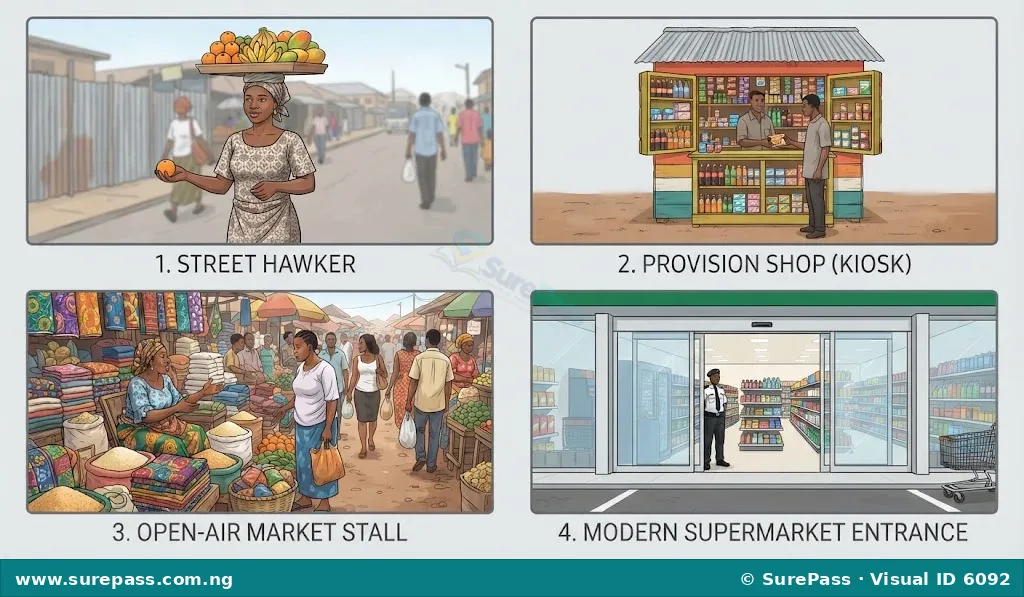
Small-Scale Retailing
Small-scale retailers operate with limited capital, a small number of staff (often family members), and a narrow range of goods. They typically serve a local community and offer personalised service.
- Hawkers and Street Vendors:
These retailers sell goods by moving from place to place, often carrying their merchandise or using simple carts. They sell items like fruits, snacks, newspapers, and small household goods. Their characteristics include mobility, low overhead costs, and direct interaction with customers in various locations.
- Kiosks and Small Shops (Provision Stores):
These are small, fixed retail outlets, often found in residential areas or busy streets. They sell everyday necessities like provisions, toiletries, soft drinks, and stationery. Characteristics include convenience for local residents, extended operating hours, and a limited range of fast-moving consumer goods.
- Market Stalls:
Retailers in open-air markets operate from temporary or semi-permanent stalls. They sell a wide variety of goods, including fresh produce, clothing, household items, and electronics. Their characteristics include competitive pricing, a wide selection of goods, and a vibrant, often noisy, shopping environment.
Large-Scale Retailing
Large-scale retailers operate with significant capital, a large workforce, and a wide range of goods. They often serve a broader customer base and may offer more sophisticated services.
- Supermarkets:
These are large self-service stores offering a wide variety of food and household products, typically organised into departments. Customers select items themselves and pay at a central checkout point. Characteristics include a wide selection, competitive pricing, organised display, and often additional services like parking.
- Department Stores:
These are large retail establishments that offer a wide range of consumer goods, organised into separate departments, each specialising in a particular product category (e.g., clothing, electronics, home furnishings). They often provide high levels of customer service. While less common in Nigeria compared to supermarkets, they represent a significant large-scale retail format globally.
- Chain Stores:
These are multiple retail outlets owned and operated by the same company, selling similar products under a common brand name. Examples include popular fast-food chains or electronics stores with branches across different cities. Characteristics include standardised operations, centralised purchasing, and strong brand recognition.
Non-Store Retailing
Non-store retailing involves selling goods and services without a physical storefront. This method relies on various channels to reach customers.
- Online Retailing (E-commerce):
This involves selling products through the internet via websites or mobile applications. Customers browse products online, place orders, and make payments digitally, with goods delivered to their doorstep. Characteristics include global reach, 24/7 availability, convenience, and a wide product selection.
- Direct Selling (Door-to-Door):
In this method, sales representatives sell products directly to consumers in their homes or workplaces, often through demonstrations. Examples include cosmetics, household products, or educational materials. Characteristics include personalised sales pitches and direct customer interaction.
- Vending Machines:
These are automated machines that dispense products like snacks, drinks, or newspapers when money is inserted. They offer convenience and 24/7 availability without the need for sales staff. While not as widespread in Nigeria as in some other countries, they are a form of non-store retailing.
Factors to Consider in Setting Up a Retail Trade
Starting a retail business requires careful planning. Several factors must be considered to ensure the success and sustainability of the venture.
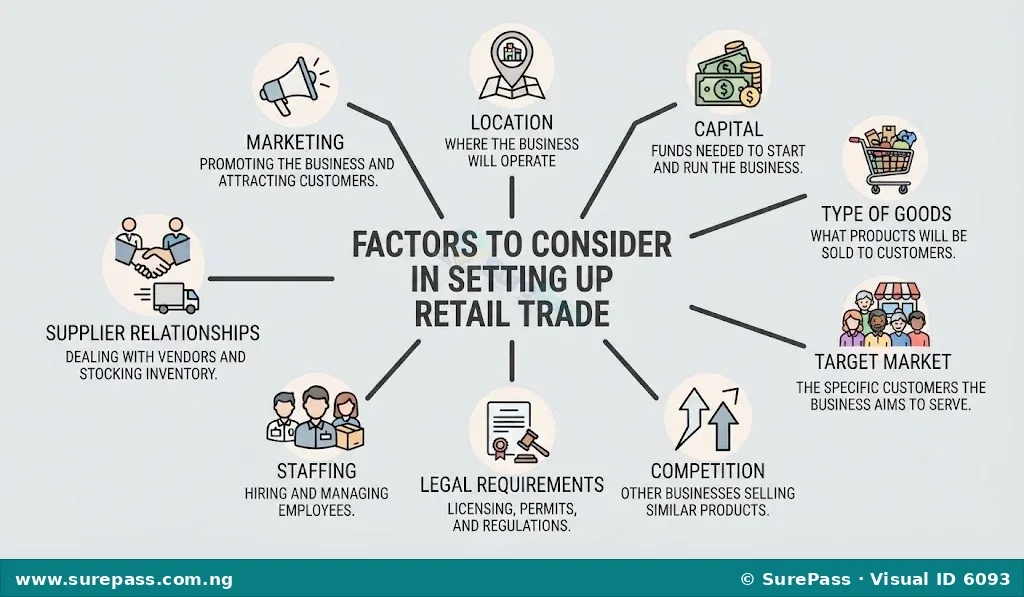
- Location: The choice of location is critical. A good location should be easily accessible to the target customers, have sufficient foot traffic or visibility, and be safe. Factors like proximity to competitors, availability of parking, and rent costs also play a role.
- Capital: Adequate financial resources are needed to cover initial expenses such as rent, inventory, equipment, licenses, and operating costs until the business becomes profitable.
- Type of Goods to Sell: The retailer must decide what products to offer. This decision should be based on market demand, profit margins, shelf life, and the retailer’s interest or expertise.
- Target Market: Identifying the specific group of customers the business aims to serve (e.g., students, families, high-income earners) helps in selecting products, pricing strategies, and marketing efforts.
- Competition: Understanding the existing competition is important. Retailers need to assess the number of competitors, their strengths and weaknesses, and how to differentiate their own business.
- Legal Requirements: Obtaining necessary licenses, permits, and registering the business with relevant authorities (e.g., Corporate Affairs Commission, local government) is essential for legal operation.
- Staffing: If the business requires employees, considerations include the number of staff needed, their skills, training, and fair compensation.
- Supplier Relationships: Establishing reliable relationships with suppliers is crucial for consistent access to quality goods at favourable prices.
- Marketing and Promotion: Planning how to attract customers through advertising, social media, promotions, and customer service is vital for generating sales.
- Pricing Strategy: Determining how to price products to cover costs, achieve profit margins, and remain competitive is a key factor.
Customer Relationship Management (CRM) in Retailing
Customer Relationship Management (CRM) in retailing refers to the strategies and technologies used by retailers to manage and analyse customer interactions and data throughout the customer lifecycle.
The goal of CRM is to improve business relationships with customers, assist in customer retention, and drive sales growth. It focuses on understanding customer needs and preferences to provide better service and build loyalty.
Importance of CRM in Retailing
- Building Customer Loyalty: By understanding and meeting customer needs consistently, retailers can foster strong relationships, encouraging customers to return repeatedly.
- Increased Sales: Loyal customers are more likely to make repeat purchases and may also recommend the business to others, leading to increased sales.
- Better Understanding of Customers: CRM helps retailers collect and analyse data about customer purchasing habits, preferences, and feedback, enabling them to tailor products and services more effectively.
- Improved Customer Service: With a better understanding of individual customers, retailers can offer personalised service, address complaints efficiently, and provide relevant product recommendations.
- Effective Marketing: CRM data allows retailers to target marketing campaigns more precisely, sending relevant offers and promotions to specific customer segments, which increases their effectiveness.
- Competitive Advantage: Businesses that excel at CRM often gain an advantage over competitors by providing a superior customer experience.
Methods of Implementing CRM in Retailing
- Personalised Service: Greeting customers by name, remembering their preferences, and offering tailored recommendations.
- Loyalty Programs: Offering discounts, points, or special benefits to frequent customers to reward their loyalty. Examples include loyalty cards or membership schemes.
- Feedback Mechanisms: Providing channels for customers to give feedback, such as suggestion boxes, online surveys, or direct conversations, and actively using this feedback for improvement.
- Effective Complaint Handling: Addressing customer complaints promptly, courteously, and fairly to resolve issues and maintain satisfaction.
- Regular Communication: Keeping customers informed about new products, sales, or special events through SMS, email newsletters, or social media.
Setting Up and Managing a Small Retail Store
Setting up and managing a small retail store involves practical steps to bring the business idea to life and ensure its smooth operation. This skill is essential for aspiring entrepreneurs.
Steps to Set Up a Small Retail Store
The procedure involves the following steps:
- Develop a Business Idea: Decide what kind of products or services to sell (e.g., provisions, fashion, electronics). Consider what is in demand in your community.
- Conduct Market Research: Find out who your potential customers are, what they need, and what competitors are offering. Visit local markets and talk to people.
- Create a Simple Business Plan: Outline your business goals, target market, products, pricing, marketing strategy, and estimated costs. This helps to guide your decisions.
- Secure a Location: Find a suitable shop space or stall. Consider visibility, accessibility, rent, and safety. Ensure it is appropriate for the goods you plan to sell.
- Obtain Necessary Licenses and Permits: Register your business with the Corporate Affairs Commission (CAC) if required, and obtain local government permits to operate legally.
- Source Goods and Suppliers: Identify reliable wholesalers or manufacturers who can supply your products at good prices. Build a good relationship with them.
- Set Up the Store Layout: Arrange your products attractively and logically. Ensure shelves are clean, products are well-displayed, and the store is welcoming to customers.
- Determine Pricing: Set prices that cover your costs, allow for a profit, and are competitive with other retailers.
- Market Your Store: Inform people about your new store. Use simple methods like word-of-mouth, flyers, local posters, or social media.
- Hire and Train Staff (if needed): If you need help, recruit reliable individuals and train them on product knowledge and customer service.
Managing a Small Retail Store
Effective management ensures the store runs smoothly and profitably.
- Stock Management: Regularly check your inventory. Order new stock before you run out, and avoid overstocking, especially for perishable goods. Keep track of what sells well and what does not.
- Sales and Customer Service: Always be polite and helpful to customers. Answer their questions, assist them in finding products, and handle complaints professionally. Good customer service encourages repeat business.
- Financial Management: Keep accurate records of all sales and expenses. Monitor your cash flow, manage your budget, and ensure you are making a profit.
- Marketing and Promotion: Continuously look for ways to attract new customers and retain existing ones. This could involve special offers, loyalty programs, or community engagement.
- Store Maintenance: Keep the store clean, organised, and safe. Ensure all equipment (e.g., refrigerators, lighting) is in good working order.
- Adaptation: Be ready to adapt to changes in customer preferences, market trends, and competition. Regularly review your business performance and make necessary adjustments.
Using Digital Technology in Retailing
Digital technology has transformed how retail businesses operate, offering new ways to reach customers, manage operations, and process transactions. For SS1 learners, understanding basic applications is important.
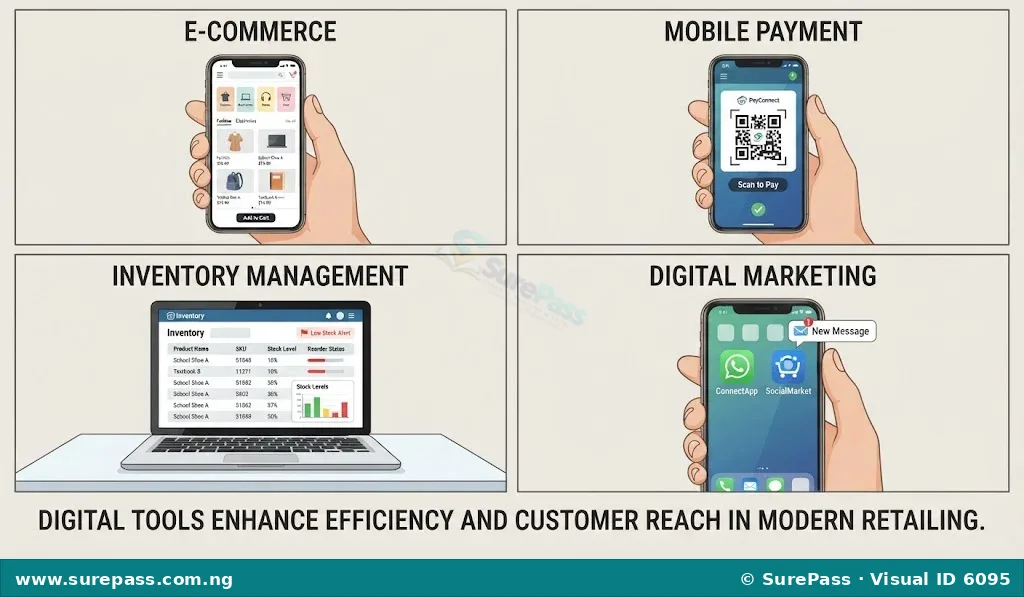
- Online Presence and E-commerce:
Retailers can create simple websites or use social media platforms (like Instagram, Facebook, or WhatsApp Business) to display their products, take orders, and interact with customers online. This expands their reach beyond their physical location.
- Mobile Payments and Point-of-Sale (POS) Systems:
Digital payment methods such as mobile transfers, USSD codes, and POS terminals allow customers to pay without cash. POS systems also help in recording sales, tracking inventory, and generating receipts quickly and accurately.
- Digital Marketing:
Retailers can use social media advertising, WhatsApp broadcast messages, and email newsletters to promote their products, announce sales, and communicate with customers. This is often more cost-effective than traditional advertising.
- Inventory Management Software:
Even small retailers can use simple software or spreadsheet applications to track their stock levels. This helps them know what products are available, what needs to be reordered, and what is selling slowly, reducing waste and ensuring popular items are always in stock.
- Customer Communication:
Digital tools like WhatsApp, SMS, and email allow retailers to communicate quickly and efficiently with customers for order confirmations, delivery updates, special offers, or to gather feedback.
- Data Analysis:
Digital sales records and online interactions can provide valuable data about customer preferences and sales trends. Analysing this data helps retailers make informed decisions about product selection, pricing, and marketing.




0 comments
Open the discussion when you need it. Comments stay collapsed until requested so the initial article remains light.