



ARTICLE CONTENTSOn this page 10 sections
Wholesale Trade
Performance Objectives
By the end of the lesson, students should be able to:
- state the meaning of wholesaling and wholesalers;
- discuss the types and functions of wholesalers;
- explain the channels of distribution in wholesaling;
- differentiate between wholesaling and retailing.
- discuss the environmental issues in wholesaling;
- use digital technology in performing wholesale functions.
Meaning of Wholesaling and Wholesalers
Wholesaling is the business activity of selling goods in large quantities to retailers, industrial users, commercial users, institutional users, or other wholesalers, but not directly to the final consumer.
Wholesalers are intermediaries in the channel of distribution who buy goods in large quantities from manufacturers and sell them in smaller quantities to retailers or other businesses.
Wholesalers act as a link between manufacturers and retailers. They help to bridge the gap between the large-scale production of goods and the small-scale purchasing needs of retailers and other businesses.
Importance of Wholesalers
Wholesalers play a crucial role in the distribution of goods, benefiting manufacturers, retailers, and the overall commercial system. Their activities help to ensure that products move efficiently from production points to the market.
The importance of wholesalers can be seen in their ability to facilitate trade, reduce costs for other businesses, and provide essential services that keep the supply chain running smoothly.
Types of Wholesalers
Wholesalers can be categorised based on the range of services they offer and the ownership structure. Different products and market conditions often require different types of wholesalers to ensure efficient distribution.
-
Merchant Wholesalers: These are independent businesses that take title to the goods they handle. This means they own the products they buy and resell. They assume the risks associated with ownership, such as damage or obsolescence.
Merchant wholesalers can be further divided into:
-
Full-Service Wholesalers: These provide a complete range of services, including carrying stock, providing credit, offering delivery services, and assisting with sales and promotion. They are common for products that require extensive support, such as hardware, groceries, and pharmaceuticals.
Observe the image below, which illustrates a full-service wholesaler’s warehouse, showing goods being stored and prepared for distribution.
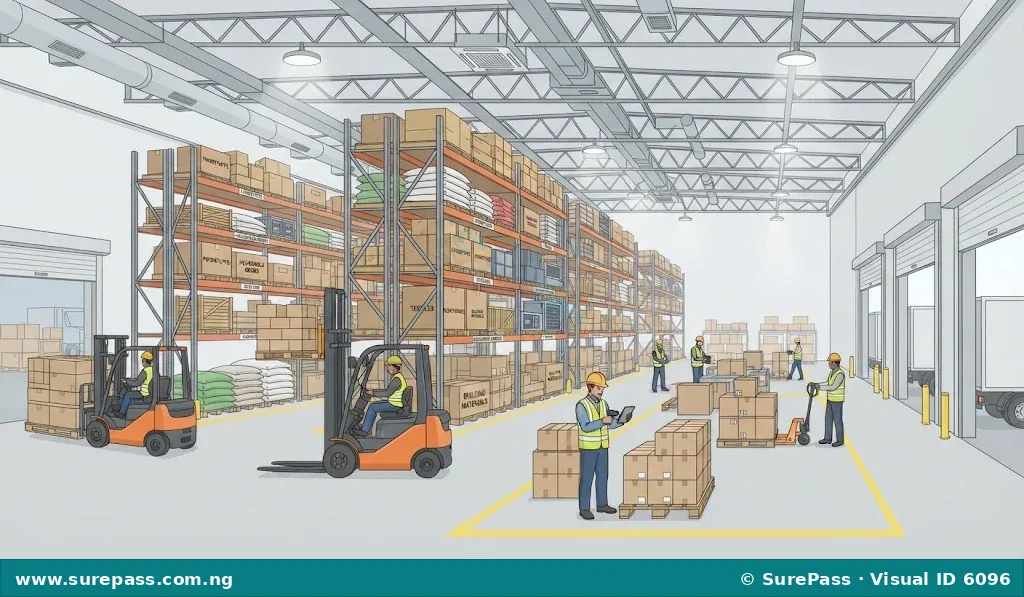
A typical full-service wholesaler’s warehouse, where goods are stored and prepared for distribution. -
Limited-Service Wholesalers: These offer fewer services than full-service wholesalers. They may not provide credit or delivery, or they might specialise in a particular function. Examples include cash-and-carry wholesalers, who sell to retailers who pay cash and transport the goods themselves, and drop shippers, who take orders but do not physically handle the goods.
-
-
Agents and Brokers: These wholesalers do not take title to the goods. Instead, they facilitate sales between buyers and sellers, earning a commission on the transactions. They typically do not carry inventory or assume financial risks.
-
Agents: These represent either the buyer or the seller on a more permanent basis. For example, a manufacturer’s agent represents a manufacturer in a specific territory, selling their products to wholesalers and retailers.
-
Brokers: These bring buyers and sellers together for a specific transaction. They are often used in industries like real estate, insurance, and commodities, where negotiations are complex and market knowledge is crucial.
-
Functions of Wholesalers
Wholesalers perform several vital functions that benefit both manufacturers and retailers, contributing significantly to the efficiency of the distribution channel.
The key functions of wholesalers include:
-
Bulk Breaking: Wholesalers buy goods in large quantities (bulk) from manufacturers and then break them down into smaller, more manageable quantities for retailers. This allows retailers to purchase only what they need, reducing their storage costs and risks.
-
Warehousing and Storage: Wholesalers provide storage facilities for goods, holding inventory until retailers are ready to purchase them. This reduces the need for manufacturers to maintain large warehouses and ensures a steady supply of products for retailers.
-
Transportation: Wholesalers often arrange for the transportation of goods from manufacturers to their warehouses and then to retailers. This saves manufacturers and retailers the cost and effort of managing their own logistics.
-
Financing: Wholesalers often provide credit facilities to retailers, allowing them to buy goods on credit and pay later. This helps retailers manage their cash flow. They also pay manufacturers promptly, providing them with working capital.
-
Risk Bearing: By taking title to goods, merchant wholesalers assume risks such as spoilage, damage, theft, and obsolescence. This reduces the risk burden on manufacturers and retailers.
-
Market Information: Wholesalers are close to the market and can provide valuable information to manufacturers about consumer preferences, market trends, and competitor activities. They also inform retailers about new products and pricing.
-
Selling and Promotion: Wholesalers have sales teams that promote products to retailers. They can also assist manufacturers in launching new products and expanding their market reach.
-
Grading and Packaging: Some wholesalers perform grading, sorting, and packaging functions, especially for agricultural products, to meet the specific requirements of retailers or consumers.
Channels of Distribution in Wholesaling
Channels of distribution describe the path or route through which goods and services move from the producer to the final consumer. In wholesaling, these channels typically involve one or more intermediaries between the manufacturer and the retailer or end-user.
The common channels of distribution involving wholesalers include:
-
Manufacturer → Wholesaler → Retailer → Consumer: This is a traditional and very common channel. The manufacturer sells in bulk to wholesalers, who then sell in smaller quantities to various retailers. Retailers then sell individual items to consumers.
-
Manufacturer → Agent/Broker → Wholesaler → Retailer → Consumer: In this channel, an agent or broker acts as an intermediary between the manufacturer and the wholesaler, especially when the manufacturer wants to reach a wide market without having their own sales force.
-
Manufacturer → Wholesaler → Industrial User: Some wholesalers specialise in selling to industrial users (businesses that use the products in their own production or operations) rather than to retailers. Examples include wholesalers of raw materials, machinery parts, or office supplies.
-
Manufacturer → Wholesaler → Institutional User: This channel involves wholesalers supplying goods to institutions such as schools, hospitals, hotels, or government agencies. These institutions often buy in larger quantities than individual consumers but not always through traditional retailers.
The diagram below illustrates the common channels of distribution involving wholesalers.
Wholesaler -> Retailer -> Consumer. Channel 2: Manufacturer -> Agent/Broker -> Wholesaler -> Retailer -> Consumer. Each step is represented by a distinct box, and arrows connect them in sequence. alt: Flowchart showing two distribution channels. First channel: Manufacturer to Wholesaler to Retailer to Consumer. Second channel: Manufacturer to Agent/Broker to Wholesaler to Retailer to Consumer. caption: Common channels of distribution involving wholesalers. aspect_ratio: 16:9 –>Differences Between Wholesaling and Retailing
Wholesaling and retailing are both crucial parts of the distribution process, but they differ significantly in their operations, customer base, and scale of transactions. Understanding these differences helps to clarify their distinct roles in commerce.
The table below highlights the key differences between wholesaling and retailing:
| Feature | Wholesaling | Retailing |
|---|---|---|
| Customer Base | Sells to retailers, industrial users, institutions, or other wholesalers. | Sells directly to the final consumer. |
| Quantity of Goods | Deals in large quantities (bulk). | Deals in small quantities (individual units). |
| Purpose of Purchase | Customers buy for resale or for business/institutional use. | Customers buy for personal consumption. |
| Geographical Area | Covers a wider geographical area. | Covers a smaller, local geographical area. |
| Pricing | Offers lower prices per unit due to bulk purchases. | Offers higher prices per unit to cover operating costs and profit margin. |
| Location | Often operates from warehouses or industrial areas. | Operates from shops, malls, markets, or online platforms accessible to consumers. |
| Marketing Focus | Focuses on business-to-business (B2B) marketing. | Focuses on business-to-consumer (B2C) marketing. |
| Capital Required | Requires significant capital for large inventory and warehousing. | Requires less capital compared to wholesaling, though still substantial for larger stores. |
Environmental Issues in Wholesaling
The operations of wholesalers, like any large-scale commercial activity, can have significant impacts on the environment. Addressing these issues is crucial for sustainable business practices.
Environmental issues in wholesaling include:
-
Energy Consumption: Wholesalers operate large warehouses that require substantial energy for lighting, heating, cooling, and operating machinery like forklifts and conveyor belts. This leads to greenhouse gas emissions if the energy comes from fossil fuels.
-
Transportation Emissions: The movement of goods from manufacturers to wholesalers and then to retailers involves extensive transportation, often by trucks, ships, or aircraft. These vehicles release pollutants and greenhouse gases into the atmosphere, contributing to air pollution and climate change.
-
Waste Generation: Wholesaling activities generate various types of waste, including packaging materials (cardboard, plastic wraps, pallets), damaged goods, and obsolete inventory. Improper waste disposal can lead to land and water pollution.
-
Water Usage: While not as intensive as manufacturing, some wholesale operations, especially those dealing with fresh produce or requiring cleaning, may consume significant amounts of water. Wastewater discharge can also be an issue if not properly treated.
-
Land Use and Habitat Destruction: The construction of large warehouses and distribution centres requires significant land, which can lead to habitat destruction and loss of biodiversity, especially if built in undeveloped areas.
-
Noise Pollution: The constant movement of heavy vehicles, forklifts, and machinery in and around wholesale facilities can generate noise pollution, affecting nearby communities.
-
Chemical Storage and Spills: Wholesalers dealing with chemicals, fuels, or other hazardous materials face risks of spills or leaks, which can contaminate soil and water, posing serious environmental and health hazards.
To mitigate these issues, wholesalers are increasingly adopting sustainable practices, such as using renewable energy, optimising logistics for fuel efficiency, recycling waste, and implementing green building designs for their facilities.
Using Digital Technology in Performing Wholesale Functions
Digital technologies have transformed the wholesale industry, making operations more efficient, accurate, and responsive. Wholesalers now rely on various digital tools to manage their inventory, orders, customer relationships, and overall supply chain.
Digital technologies are used in performing wholesale functions in the following ways:
-
Inventory Management Systems (IMS): Wholesalers use software to track inventory levels in real-time. This helps them know exactly how much stock they have, where it is located, and when to reorder. This reduces waste and ensures products are available when needed.
-
Order Processing Systems: Digital systems allow retailers to place orders online or through electronic data interchange (EDI). Wholesalers can then process these orders quickly, generate invoices, and track shipments, reducing manual errors and speeding up delivery.
-
Customer Relationship Management (CRM) Software: CRM systems help wholesalers manage their interactions with retailers. They store customer contact information, purchase history, and communication records, enabling personalised service and targeted marketing efforts.
-
Warehouse Management Systems (WMS): These systems optimise warehouse operations, including receiving goods, putting them away, picking orders, and packing them for shipment. WMS uses technologies like barcode scanners and RFID (Radio-Frequency Identification) to improve accuracy and speed.
-
E-commerce Platforms: Many wholesalers now operate online B2B (business-to-business) e-commerce websites where retailers can browse products, check prices, and place orders 24/7. This expands the wholesaler’s reach and convenience for customers.
-
Supply Chain Management (SCM) Software: SCM tools help wholesalers coordinate with manufacturers and logistics providers. They provide visibility into the entire supply chain, allowing for better planning, forecasting, and problem-solving.
-
Data Analytics and Business Intelligence: Wholesalers use data analytics to analyse sales trends, customer behaviour, and operational efficiency. This helps them make informed decisions about pricing, product assortment, and marketing strategies.
-
Mobile Applications: Sales representatives can use mobile apps to take orders, access product information, and manage customer accounts while on the go. Retailers can also use apps to track their orders and communicate with wholesalers.
The use of these digital tools enhances efficiency, reduces operational costs, improves customer satisfaction, and provides wholesalers with a competitive edge in the market.




0 comments
Open the discussion when you need it. Comments stay collapsed until requested so the initial article remains light.