



ARTICLE CONTENTSOn this page 8 sections
Career Opportunities in Commerce
Performance Objectives
By the end of the lesson, students should be able to:
- state the meaning of career and career opportunities;
- assess the career fields in commerce;
- predict emerging and future opportunities in technology and artificial intelligence- driven commerce;
- explain the factors to consider in choosing a career in commerce;
- create a personal resume in response to a given opportunity.
Understanding Career and Career Opportunities
A career is a long-term journey of professional growth and development that an individual undertakes in a particular field or industry.
It involves a series of jobs, experiences, and learning opportunities that build upon each other over time, leading to advancement and specialisation. A career is more than just a job; it is a path chosen for a significant portion of one’s working life, often aligning with personal interests, skills, and values.
Career opportunities refer to the available positions, roles, or paths within a specific industry or field that individuals can pursue to develop their careers.
These opportunities can range from entry-level jobs to senior management positions, offering different levels of responsibility, skill development, and potential for advancement. They represent the various avenues through which individuals can apply their knowledge and skills to contribute to an organisation or economy.
Career Fields in Commerce
Commerce is a broad field that involves the exchange of goods and services, encompassing all activities related to buying, selling, and distributing products from producers to consumers. This wide scope creates numerous career paths for individuals with diverse interests and skills. Understanding these fields helps in assessing potential career directions.
Some common career fields in commerce include:
- Marketing and Sales: This field focuses on promoting products and services, understanding customer needs, and driving sales. Professionals in this area work on advertising, market research, brand management, and direct sales.
- Accounting and Finance: This involves managing money, recording financial transactions, preparing financial statements, and providing financial advice. Careers here include accountants, auditors, financial analysts, and investment bankers.
- Banking and Insurance: This sector deals with financial services such as managing deposits, loans, investments, and providing protection against financial risks. Roles include bank tellers, loan officers, insurance agents, and actuaries.
- Human Resources: This field focuses on managing an organisation’s workforce. Professionals handle recruitment, training, employee relations, compensation, and benefits.
- Logistics and Supply Chain Management: This involves planning, implementing, and controlling the efficient flow and storage of goods, services, and related information from the point of origin to the point of consumption. Careers include logistics managers, procurement specialists, and supply chain analysts.
- Entrepreneurship: This involves starting and managing one’s own business ventures. Entrepreneurs identify market needs, develop products or services, and take on financial risks in the hope of profit.
- Retail Management: This field focuses on overseeing the daily operations of retail stores, including managing staff, inventory, sales, and customer service.
- International Trade: This involves facilitating the exchange of goods and services across national borders. Professionals in this area deal with import/export regulations, international finance, and global logistics.
Emerging and Future Opportunities in Technology and AI-Driven Commerce
Technology, especially Artificial Intelligence (AI), is rapidly transforming the landscape of commerce, creating new and exciting career opportunities. These advancements are changing how businesses operate, interact with customers, and manage their operations. Predicting these emerging opportunities is crucial for students planning their future careers.

Some key emerging opportunities driven by technology and AI in commerce include:
- Chatbots and Virtual Assistants: These are AI-powered programs designed to simulate human conversation. In commerce, they are used for customer service, sales support, and providing information.
Career opportunities in this area include developing, training, and managing these AI tools to improve customer experience and operational efficiency. Roles might involve AI trainers, conversational AI designers, and customer support automation specialists.
- Predictive Analytics: This involves using data, statistical algorithms, and machine learning techniques to identify the likelihood of future outcomes based on historical data. In commerce, it helps businesses forecast sales, understand customer behaviour, and personalise marketing efforts.
Professionals in predictive analytics work as data scientists, business intelligence analysts, and market researchers, using complex data to make informed business decisions.
- Smart Supply Chain Management: This refers to the use of technology like AI, the Internet of Things (IoT), and big data to optimise the entire supply chain, from sourcing raw materials to delivering finished products. It aims to improve efficiency, reduce costs, and enhance transparency.
Career paths include supply chain technologists, logistics optimisers, and inventory management specialists who use AI tools to manage and improve the flow of goods.
Factors to Consider in Choosing a Career in Commerce
Choosing a career path is an important decision that requires careful thought. For students considering a career in commerce, several factors should be evaluated to ensure a fulfilling and successful professional journey.
The factors to consider in choosing a career in commerce include:
- Interest and Skills:
It is important to choose a career that aligns with personal interests and natural abilities. If a student enjoys problem-solving, working with numbers, or interacting with people, certain commerce fields might be a better fit. Identifying existing skills, such as communication, analytical thinking, or creativity, can help narrow down options. Pursuing a career that genuinely interests a person often leads to greater job satisfaction and motivation.
- Industry Trends:
The commerce landscape is constantly evolving, influenced by technology, global events, and consumer behaviour. Researching current and future industry trends helps in identifying fields with high growth potential and stability. For example, understanding the rise of e-commerce or AI-driven logistics can guide a student towards emerging opportunities rather than declining sectors.
- Salary and Benefits:
While not the only factor, the potential salary and benefits associated with a career path are important considerations. Different commerce fields offer varying compensation packages. Researching average salaries, bonus structures, health insurance, and retirement plans can help in making an informed decision about financial stability and future prospects.
Predicting Emerging and Future Job Opportunities
The ability to predict emerging and future job opportunities is a valuable skill in today’s dynamic job market. This involves observing trends, understanding technological advancements, and anticipating changes in consumer needs and business practices.
To predict emerging and future job opportunities, consider the following approaches:
- Stay Informed About Technology: Regularly read news and articles about new technologies like Artificial Intelligence, blockchain, and automation. Understand how these technologies are being applied in different industries, especially in commerce.
- Observe Industry Changes: Pay attention to how businesses are adapting. Are new types of services being offered? Are traditional roles changing? For example, the growth of online shopping has created new roles in digital marketing and e-commerce logistics.
- Analyse Labour Market Reports: Look for reports from government agencies, research firms, and educational institutions that forecast job growth in various sectors. These reports often highlight areas with high demand for specific skills.
- Follow Economic Trends: Understand broader economic shifts, such as globalisation, sustainability initiatives, and changes in consumer spending habits. These trends often drive the creation of new job roles.
- Network and Talk to Professionals: Engage with people working in different commerce fields. They can offer insights into current challenges and future directions of their industries, which often point to new opportunities.
Creating a Personal Resume
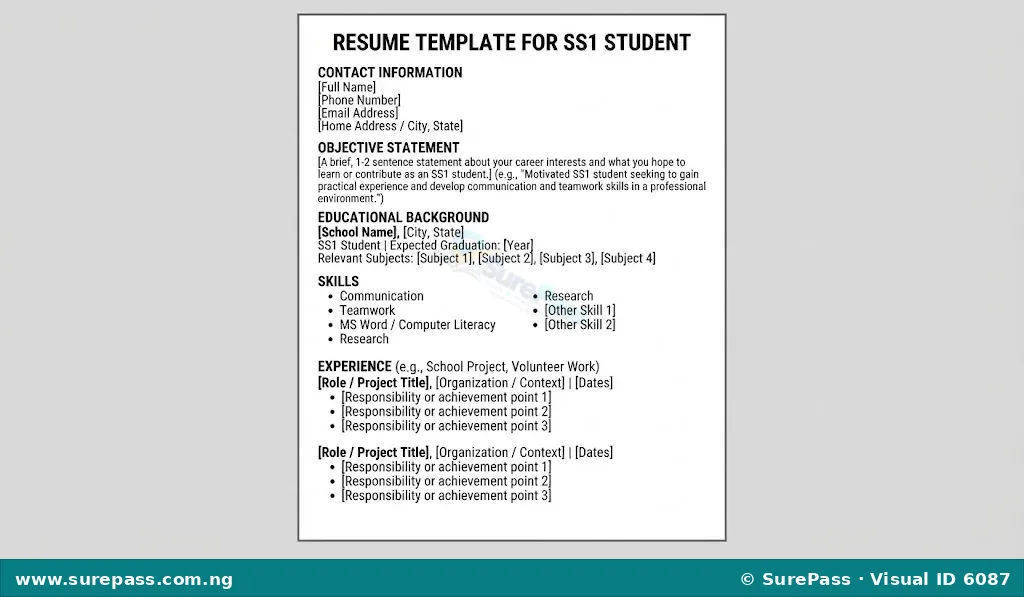
A resume (or CV, Curriculum Vitae) is a document that summarises a person’s education, skills, experiences, and achievements. It is often the first impression an employer has of a job applicant. Creating a well-structured resume is a crucial skill for anyone seeking career opportunities.
The procedure for creating a basic personal resume involves the following steps:
- Choose a Format: Select a clean and easy-to-read format. For SS1 students, a simple chronological format is usually best, listing education and experience in reverse order.
- Contact Information: At the top of the resume, include your full name, phone number, email address, and residential address. Ensure this information is accurate and professional.
- Objective or Summary Statement: Write a brief statement (1-2 sentences) that clearly states your career goals or summarises your key skills and what you hope to achieve. For SS1, an objective statement is more common, e.g., “A highly motivated SS1 student seeking an opportunity to gain practical experience in commerce and apply learned skills.”
- Educational Background: List your current school, the year you are in (SS1), and any notable academic achievements or subjects you excel in. Include expected graduation date.
Example:
[Your School Name], [City, State]
Senior Secondary School Certificate (Expected: [Year])
Currently in SS1
Relevant Courses: Commerce, Economics, Business Studies
- Skills: Create a section for your skills. These can be academic skills (e.g., strong in Mathematics, good research skills), computer skills (e.g., Microsoft Word, internet research), or soft skills (e.g., teamwork, communication, problem-solving, leadership).
- Experience (if any): Even as an SS1 student, you might have relevant experiences. This could include:
- Volunteer work (e.g., helping at school events, community service).
- School projects (e.g., leading a group project in Commerce, organising a school fair).
- Part-time jobs (e.g., helping in a family business, running errands).
For each experience, state your role, the organisation/project name, dates, and a brief description of your responsibilities and achievements using action verbs.
Example:
Project Lead | School Commerce Club | [Month, Year] – [Month, Year]
• Organised a successful school market day, managing a team of 5 students.
• Handled basic accounting for sales and expenses.
- Awards and Achievements (Optional): If you have received any awards, scholarships, or special recognition (academic or extracurricular), list them here.
- Review and Proofread: Carefully check your resume for any spelling errors, grammatical mistakes, or formatting issues. Ask a teacher or parent to review it as well. A clean, error-free resume shows attention to detail.





0 comments
Open the discussion when you need it. Comments stay collapsed until requested so the initial article remains light.