



ARTICLE CONTENTSOn this page 8 sections
Financial Technology (Fintech)
Performance Objectives
By the end of the lesson, students should be able to:
- state the meaning of financial technology;
- identify digital tools for managing money;
- describe the benefits of digital finance;
- discuss the dangers of poor digital finance habits;
- explain safe online financial practices;
- use digital financial technology tools in commercial activities.
Meaning of Financial Technology (Fintech)
Financial technology, often shortened to Fintech, refers to the use of technology to improve and automate the delivery and use of financial services.
Fintech combines the words “financial” and “technology.” It involves using computers, smartphones, and the internet to make banking, payments, and other financial activities easier, faster, and more accessible. Fintech has changed how people manage their money, pay for goods, and access financial services.
Digital Tools for Managing Money
Digital tools for managing money are applications and platforms that use technology to help individuals and businesses handle their finances. These tools make financial transactions and management more convenient and efficient.
Common digital tools for managing money include:
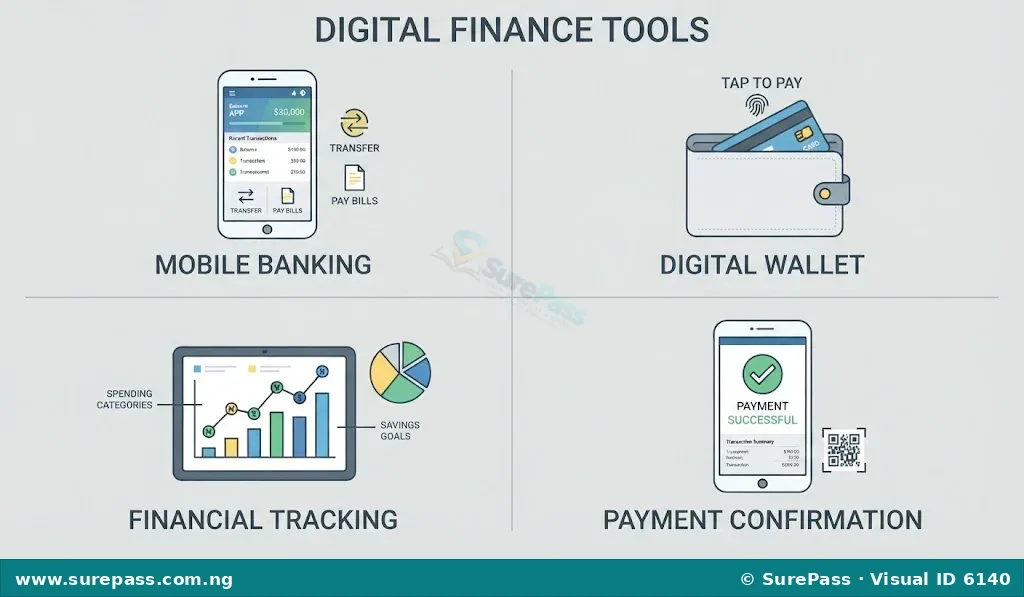
- Mobile Banking: This allows customers to perform financial transactions on a mobile device such as a smartphone or tablet. Mobile banking apps are provided by traditional banks and allow users to check account balances, transfer funds, pay bills, and view transaction history from anywhere with an internet connection.
- Fintech Apps: These are applications developed by financial technology companies that offer specific financial services. Examples in Nigeria include OPay, Kuda Bank, PalmPay, and Moniepoint. These apps often provide services like easy account opening, free transfers, savings options, and virtual cards, sometimes with lower fees or better interest rates than traditional banks.
- Digital Wallets: A digital wallet is an electronic device or online service that allows an individual to make electronic transactions. This can include purchasing items online with a computer or using a smartphone to pay for things in physical stores. Examples include services integrated into mobile banking apps or standalone apps that store payment card information for quick transactions.
- Personal Finance Management Apps: These applications help individuals track their income, expenses, and savings. They often include features for budgeting, setting financial goals, and categorising spending. These apps help users understand where their money goes and make better financial decisions.
Benefits of Digital Finance
Digital finance offers several advantages that make managing money easier and more effective for individuals and businesses.
The key benefits of digital finance include:
- Convenience: Digital finance tools allow people to perform financial transactions from anywhere at any time, using a smartphone or computer. This means there is no need to visit a physical bank branch or stand in long queues. For example, bills can be paid, and money can be transferred even late at night or on public holidays.
- Accessibility: Digital finance makes financial services available to more people, especially those in remote areas who may not have easy access to traditional banks. All that is often needed is a smartphone and internet access. This helps more people participate in the formal financial system.
- Tracking: Digital finance tools automatically record all transactions, making it easy to track income and expenses. Users can view detailed statements, categorise spending, and monitor their financial habits. This helps in budgeting, identifying unnecessary expenses, and planning for the future.
Dangers of Poor Digital Finance Habits
While digital finance offers many benefits, poor habits can lead to significant risks and financial losses.
The dangers of poor digital finance habits include:
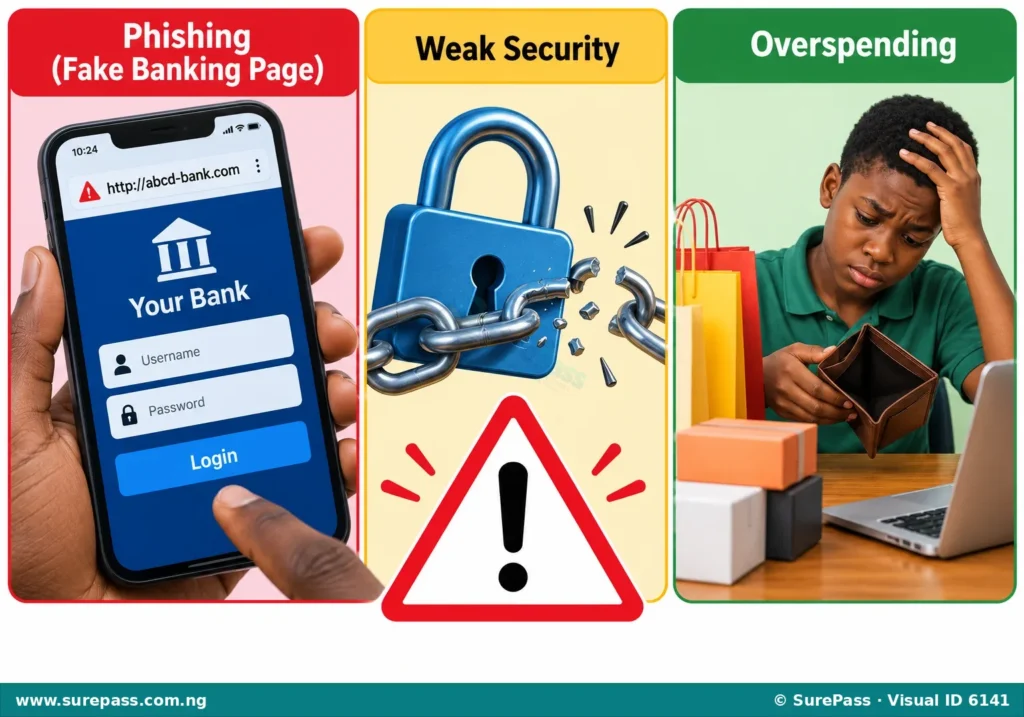
- Cybersecurity and Fraud: This is a major risk where criminals use technology to steal money or personal information.
- Phishing: This involves tricking people into revealing sensitive information like passwords or bank details through fake emails, text messages, or websites that look legitimate.
- Scams: These are deceptive schemes designed to trick people into sending money or giving away personal information, often by promising false rewards or threatening consequences.
- Malware: Malicious software can be installed on devices to steal information or gain unauthorised access to financial accounts.
- Overspending: The ease and speed of digital transactions can make it difficult to keep track of spending. With just a few clicks, money can be spent, leading to impulse purchases and exceeding budgets. This can result in debt and financial instability, especially for young people who are still learning to manage their money.
Safe Online Financial Practices
To protect finances and personal information when using digital tools, it is important to adopt safe online financial practices.
Important safe online financial practices include:
- Use Strong, Unique Passwords and PINs: Create complex passwords that combine uppercase and lowercase letters, numbers, and symbols. Avoid using easily guessable information like birth dates or names. Use a different password for each financial account.
- Enable Two-Factor Authentication (2FA): This adds an extra layer of security by requiring a second form of verification, such as a code sent to a mobile phone, in addition to a password. This makes it much harder for unauthorised users to access accounts even if they have the password.
- Be Wary of Suspicious Links and Messages: Do not click on links or open attachments from unknown senders. Always verify the sender’s identity before providing any personal or financial information. Legitimate organisations will rarely ask for sensitive details via email or text.
- Regularly Check Bank Statements: Review bank and digital wallet statements frequently to identify any unauthorised transactions. Report any suspicious activity to the financial institution immediately.
- Use Secure Networks: Avoid conducting financial transactions over public Wi-Fi networks, as these are often unsecured and can be easily intercepted by criminals. Use a secure, private network or mobile data for sensitive transactions.
- Keep Software Updated: Ensure that operating systems, web browsers, and financial apps on smartphones and computers are always updated. Updates often include security patches that protect against new threats.
- Do Not Share Personal Financial Details: Never share passwords, PINs, or full card details with anyone, even if they claim to be from a bank or a trusted organisation. Banks will never ask for such information over the phone or email.
Using Digital Financial Technology Tools in Commercial Activities
Digital financial technology tools are widely used in various commercial activities, making transactions faster, more secure, and more convenient for both businesses and customers.
Examples of how digital financial technology tools are used in commercial activities include:
- Making Payments for Goods and Services: Customers use mobile banking apps, fintech apps, or digital wallets to pay for items purchased online or in physical stores. For instance, a student buying textbooks online can use a mobile banking app to transfer funds directly to the vendor or use a digital wallet to complete the purchase.
- Receiving Payments for Sales: Small business owners or individuals selling products (e.g., handmade crafts, farm produce) can receive payments directly into their mobile banking or fintech app accounts. This eliminates the need for cash and provides instant confirmation of payment.
- Transferring Money: Businesses use digital tools to transfer funds to suppliers, pay salaries to employees, or send money between different business accounts. Individuals can also transfer money to family members or friends for commercial purposes, such as contributing to a group project or purchasing items on behalf of others.
- Managing Business Expenses: Entrepreneurs and small businesses use personal finance management features within fintech apps or dedicated apps to track their business income and expenses. This helps in budgeting for supplies, monitoring cash flow, and preparing financial reports.
- Online Shopping and E-commerce: Digital wallets and payment gateways integrated into e-commerce websites allow customers to make quick and secure payments for online purchases. This supports the growth of online businesses by providing a seamless payment experience.
- Paying Utility Bills: Individuals and businesses use mobile banking and fintech apps to pay for electricity, water, and internet services. This saves time and ensures that bills are paid promptly, avoiding service interruptions.




0 comments
Open the discussion when you need it. Comments stay collapsed until requested so the initial article remains light.