


ARTICLE CONTENTSOn this page 7 sections
Entrepreneurial Opportunities in Commerce
Performance Objectives
By the end of the lesson, students should be able to:
- explain the meaning entrepreneurial opportunities;
- identify sources of entrepreneurial opportunities;
- identify entrepreneurial opportunities in commerce;
- explain the criteria for selecting a viable business opportunity;
- select a viable business opportunity for commercial activities.
Entrepreneurship is about identifying needs and creating solutions. In the world of commerce, this means finding ways to buy, sell, and distribute goods and services effectively. This unit explores what entrepreneurial opportunities are, where they come from, specific examples within commerce, and how to choose the best one to pursue.
Meaning of Entrepreneurial Opportunities
An entrepreneurial opportunity is a favourable set of circumstances that creates a need for a new product, service, or business, or a new way of doing things.
These opportunities exist when there is a gap in the market, a problem that needs solving, or an unmet demand that can be satisfied by a new venture. Identifying such opportunities is the first step for any aspiring entrepreneur.
Sources of Entrepreneurial Opportunities
Entrepreneurial opportunities do not just appear; they often arise from various sources that keen observers can identify. Understanding these sources helps individuals to actively look for business ideas.
Personal Skills, Talents, and Interests
Many successful businesses begin with what an individual is naturally good at, enjoys doing, or has a deep understanding of. Personal skills, talents, and interests can be powerful starting points for identifying business opportunities.
For example, a person who is skilled in baking can start a small bakery. Someone with a talent for fashion design might open a clothing boutique. An interest in technology could lead to a business repairing smartphones or setting up computer networks for small businesses.
Observation of Needs and Problems in the Environment
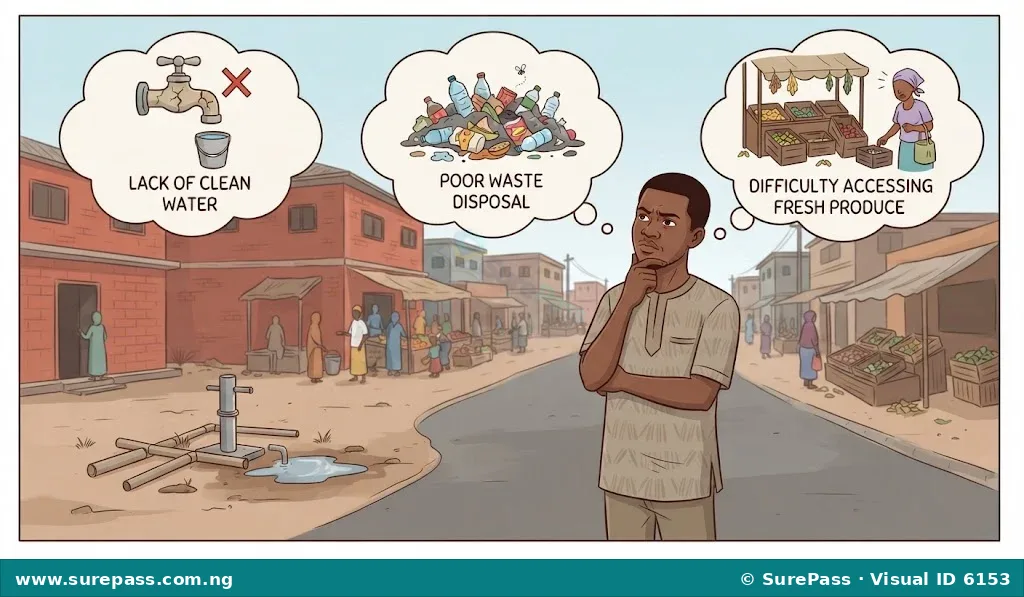
Paying close attention to the daily lives of people in the community can reveal many unmet needs or existing problems that require solutions. These observations often lead to innovative business ideas.
For instance, if people in a neighbourhood struggle to find clean drinking water, an entrepreneur might start a water purification and delivery service. If traffic congestion makes commuting difficult, a transport service offering alternative routes or carpooling options could emerge. Observing that many small businesses lack online presence might lead to a web design and digital marketing agency.
Market Research and Customer Feedback
Systematic investigation into a market and listening to what customers say are crucial for uncovering entrepreneurial opportunities. Market research involves gathering information about customer preferences, market trends, and competitor activities.
Customer feedback, obtained through surveys, interviews, or reviews, directly highlights what customers like, dislike, or wish was available. For example, if market research shows a growing demand for organic food products, a business could be started to supply them. If customers complain about the slow delivery of goods from online stores, an entrepreneur might create a faster local delivery service.
Entrepreneurial Opportunities in Commerce
Commerce involves all the activities that facilitate the exchange of goods and services from producers to consumers. Within this broad field, numerous opportunities exist for entrepreneurs.
Retailing and Wholesaling
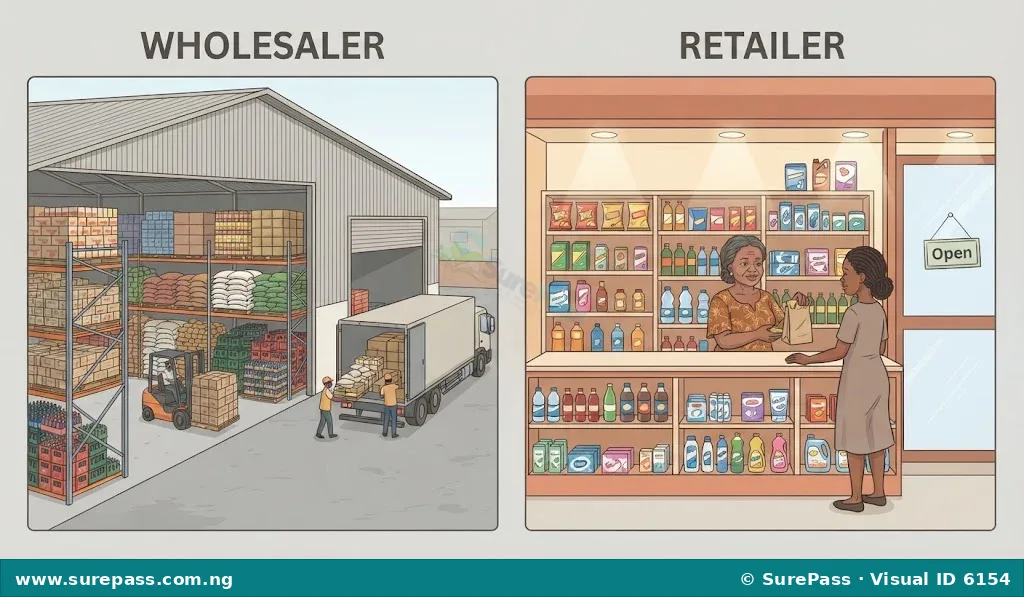
Retailing involves selling goods directly to the final consumer for personal use, usually in small quantities. Wholesaling involves selling goods in large quantities to retailers, other businesses, or industrial users, rather than to individual consumers.
-
Retailing: Entrepreneurs can open various retail businesses such as grocery stores, fashion boutiques, electronics shops, pharmacies, or online stores. Examples in Nigeria include local provision stores, roadside kiosks, and modern supermarkets.
-
Wholesaling: Opportunities exist in supplying goods to these retailers. An entrepreneur might become a wholesaler for agricultural produce, building materials, imported electronics, or packaged food items, buying directly from manufacturers or large distributors and selling to smaller businesses.
Transportation and Logistics
Transportation involves moving goods and people from one place to another. Logistics is the detailed planning, management, and execution of the entire process of moving goods, from the point of origin to the point of consumption.
-
Transportation: Entrepreneurs can start businesses offering various transport services. This includes commercial motorcycle (okada) or tricycle (keke napep) services, taxi services, bus companies for inter-state travel, or haulage companies that transport goods using trucks. Delivery services for e-commerce businesses also fall under this category.
-
Logistics: Opportunities exist in managing the flow of goods. This could involve setting up a courier service, providing supply chain consulting, or offering freight forwarding services that handle customs clearance and international shipping for businesses.
Warehousing and Inventory Management
Warehousing involves storing goods safely before they are distributed or sold. Inventory management is the process of overseeing and controlling the ordering, storage, and use of components and products.
-
Warehousing: Entrepreneurs can establish businesses that provide storage facilities for other companies. This is especially useful for businesses that do not have their own large storage spaces or need temporary storage for seasonal goods. These warehouses can be general storage, cold storage for perishable goods, or specialised storage for hazardous materials.
-
Inventory Management: Opportunities exist in offering services to help businesses manage their stock efficiently. This could involve consulting services to optimise stock levels, implementing inventory tracking systems, or providing third-party inventory management where an entrepreneur manages another company’s stock on their behalf.
Criteria for Selecting a Viable Business Opportunity
Not every identified opportunity is suitable for everyone or guaranteed to succeed. Entrepreneurs need to evaluate potential business ideas against specific criteria to select a viable one.
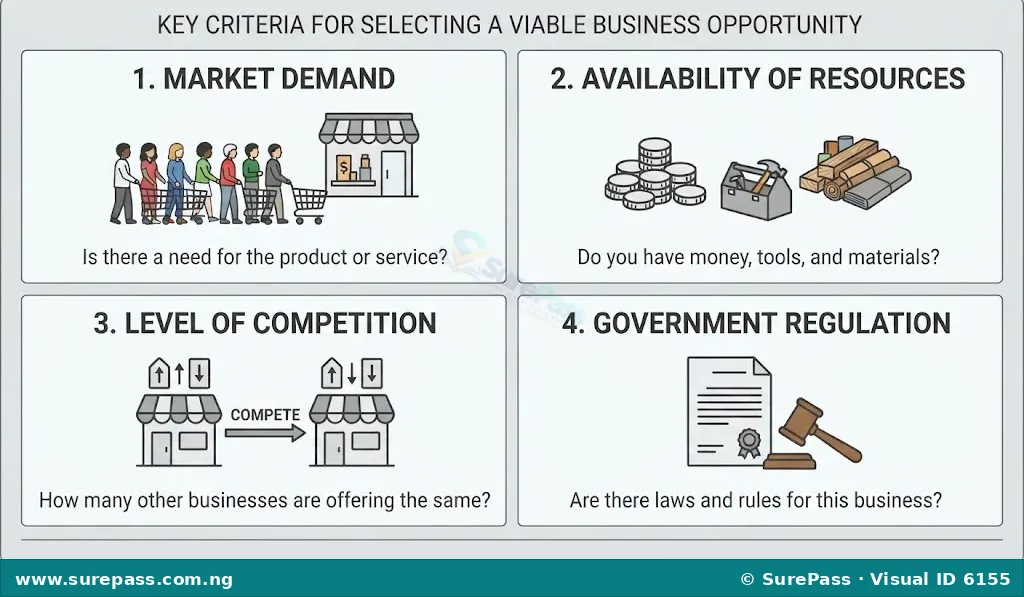
Market Demand
Market demand refers to the total quantity of a product or service that consumers are willing and able to buy at a given price and time. A viable business opportunity must have a clear and sufficient market demand.
Before starting a business, an entrepreneur should ask: Is there a real need for this product or service? Are enough people willing to pay for it? Without adequate demand, even the best product or service will struggle to find customers and generate revenue.
Availability of Resources
Resources include everything needed to start and run a business, such as capital (money), human resources (skilled labour), raw materials, equipment, and technology. A business opportunity is viable only if the necessary resources are available or can be realistically acquired.
An entrepreneur must assess if they have access to the required funds, if skilled workers can be hired, and if raw materials or equipment are readily available at a reasonable cost. Lack of critical resources can quickly halt a promising venture.
Level of Competition
Competition refers to other businesses offering similar products or services in the same market. The level of competition significantly impacts the viability of a new business.
High competition can make it difficult for a new business to attract customers and gain market share, especially if existing competitors are well-established. An entrepreneur should research competitors, understand their strengths and weaknesses, and identify how their own business can offer something unique or better to stand out. Sometimes, a niche market with less competition can be more viable.
Government Regulation
Government regulation includes the laws, rules, and policies that businesses must follow. These can include licensing requirements, health and safety standards, environmental regulations, tax laws, and import/export restrictions.
A viable business opportunity must operate within the legal framework. Entrepreneurs need to research and understand all relevant government regulations for their chosen industry. Non-compliance can lead to fines, legal issues, or even the closure of the business. Some industries are more heavily regulated than others, which can affect the ease of starting and operating a business.
How to Select a Viable Business Opportunity for Commercial Activities
Selecting a viable business opportunity requires careful thought and a systematic approach. This process involves evaluating potential ideas against the criteria discussed earlier to make an informed decision.
The procedure for selecting a viable business opportunity involves the following steps:
-
Brainstorm Potential Ideas: Start by listing several business ideas based on your personal skills, observations of needs, or market research. Do not filter ideas at this stage; write down everything that comes to mind.
-
Conduct Initial Research: For each idea, perform quick research to get a basic understanding of the market. Look for information on potential customers, existing solutions, and general industry trends. Use resources like the internet, local newspapers, and conversations with people in the community.
-
Assess Market Demand: For each idea, consider if there is a real and significant demand for the product or service. Ask yourself:
- Who are the potential customers?
- How many of them exist?
- Are they willing to pay for this?
- What problem does this solve for them?
-
Evaluate Resource Availability: Determine what resources would be needed for each idea. Consider:
- How much capital is required to start and operate?
- Are the necessary raw materials or goods easily accessible?
- Do you have the skills, or can you find people with the skills, to run this business?
- Is the required equipment or technology available?
-
Analyse Competition: Investigate the competitive landscape for each idea. Identify:
- Who are the main competitors?
- What are their strengths and weaknesses?
- How can your business be different or better?
- Is the market saturated, or is there room for a new entrant?
-
Consider Government Regulations: Briefly research the key regulations that would apply to each business idea. Look into:
- What licenses or permits are needed?
- Are there specific industry standards to follow?
- What are the tax implications?
-
Compare and Select: After evaluating each idea against these criteria, compare them. Use a simple scoring system or a pros and cons list to weigh the options. Choose the opportunity that best aligns with your resources, has strong market demand, manageable competition, and clear regulatory pathways.
-
Develop a Basic Business Plan: Once an opportunity is selected, create a simple plan outlining the business idea, target market, resources needed, and how it will operate. This helps to solidify the decision and prepare for the next steps.




0 comments
Open the discussion when you need it. Comments stay collapsed until requested so the initial article remains light.