



ARTICLE CONTENTSOn this page 8 sections
Warehousing
Performance Objectives
By the end of the lesson, students should be able to:
- explain the meaning of warehousing;
- describe types of warehousing and their unique features;
- discuss the functions of warehousing;
- manage inventory;
- store goods;
- dispatch and deliver goods.
Meaning of Warehousing
Warehousing refers to the act of storing goods in a dedicated space called a warehouse.
It involves all the activities related to storing, handling, and managing goods from the time they are received until they are dispatched. Warehousing is an essential part of commerce, ensuring that products are available when needed and protected from damage or loss.
Types of Warehousing and Their Unique Features
Different types of warehouses serve various business needs. Each type has unique features that make it suitable for specific purposes.
Private Warehouse
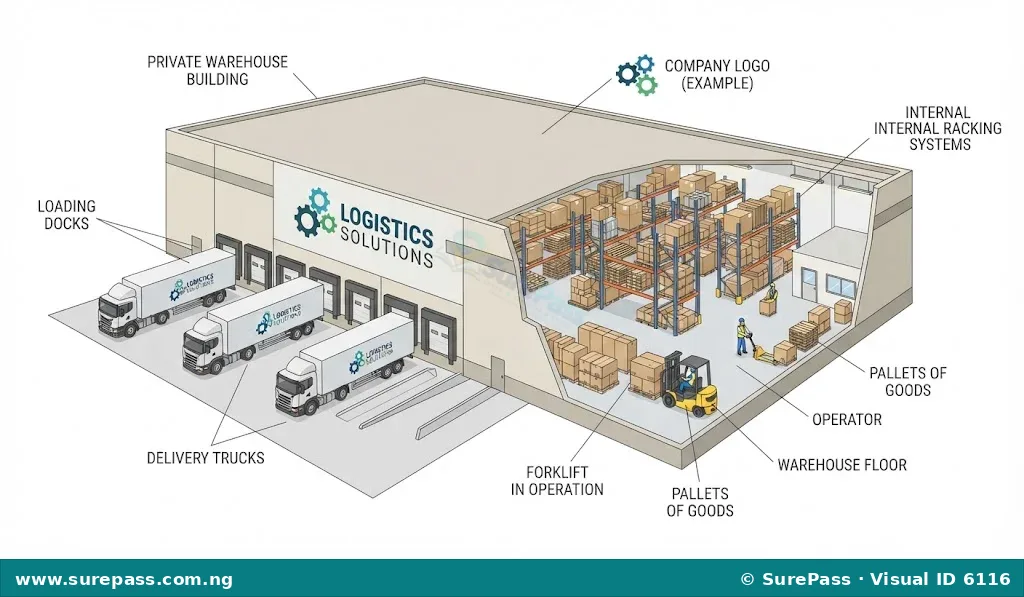
A private warehouse is owned and operated by a single company for its own storage needs.
These warehouses are typically used by large manufacturers, wholesalers, or retailers to store their raw materials, finished products, or goods for distribution. The company has full control over the warehouse operations, including layout, security, and inventory management. This type of warehouse offers flexibility and customisation but requires significant capital investment.
Smart Warehouse
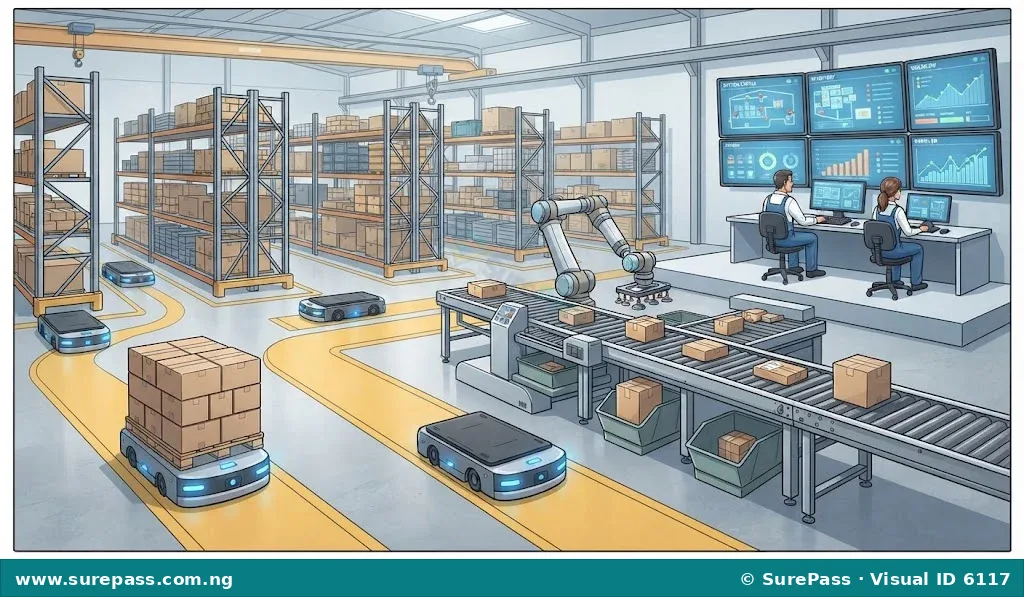
A smart warehouse uses advanced technology and automation to improve efficiency and accuracy in storage and retrieval operations.
These warehouses often incorporate technologies such as robotics, artificial intelligence, automated guided vehicles (AGVs), and sophisticated inventory management systems. The goal is to minimise human error, speed up processes, and optimise space utilisation. Smart warehouses are designed for high-volume operations and can significantly reduce operational costs in the long run, though they require a high initial investment.
Bonded Warehouse
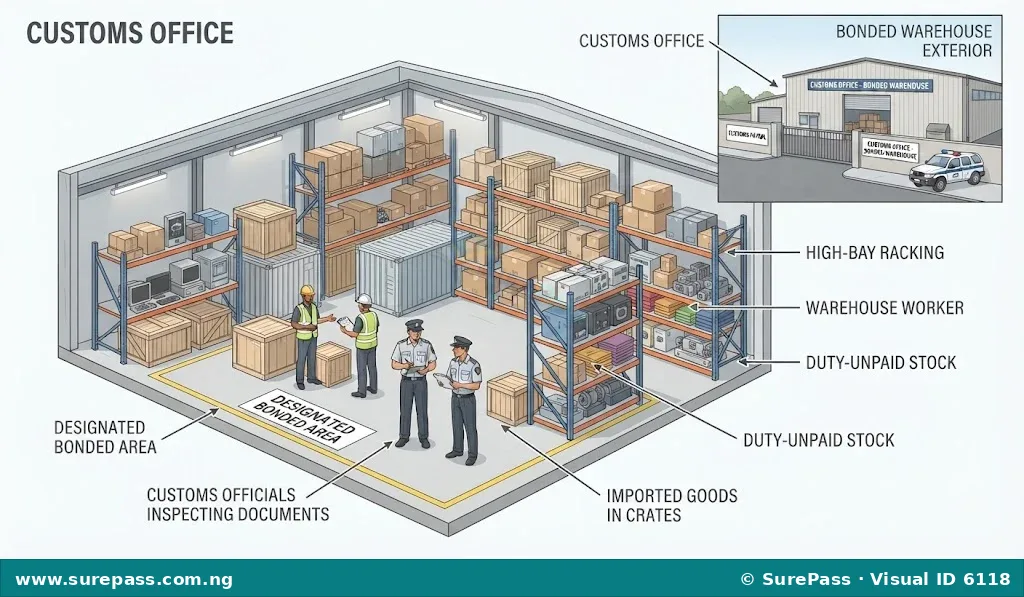
A bonded warehouse is a secure facility authorised by customs authorities for storing imported goods before customs duties and taxes are paid.
These warehouses allow importers to defer payment of duties until the goods are withdrawn for consumption or re-export. Goods can be stored for an extended period, and some processing or repackaging may be allowed within the warehouse under customs supervision. Bonded warehouses are particularly useful for international trade, helping businesses manage cash flow and comply with import regulations.
Cooperative Warehouse
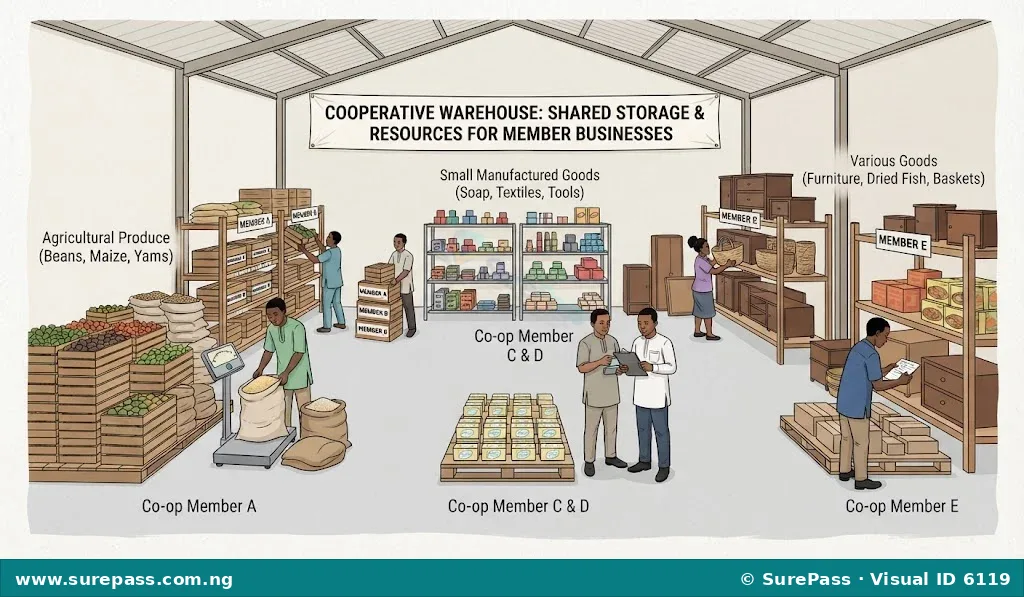
A cooperative warehouse is owned and operated by a group of businesses or individuals who pool their resources to store their goods collectively.
This type of warehouse is common among farmers, small businesses, or producers who may not have enough volume or capital to operate their own private warehouses. Members share the costs and benefits of the warehouse, including storage space, equipment, and labour. Cooperative warehouses help reduce individual storage costs and provide access to better facilities than members might afford alone.
Public Warehouse
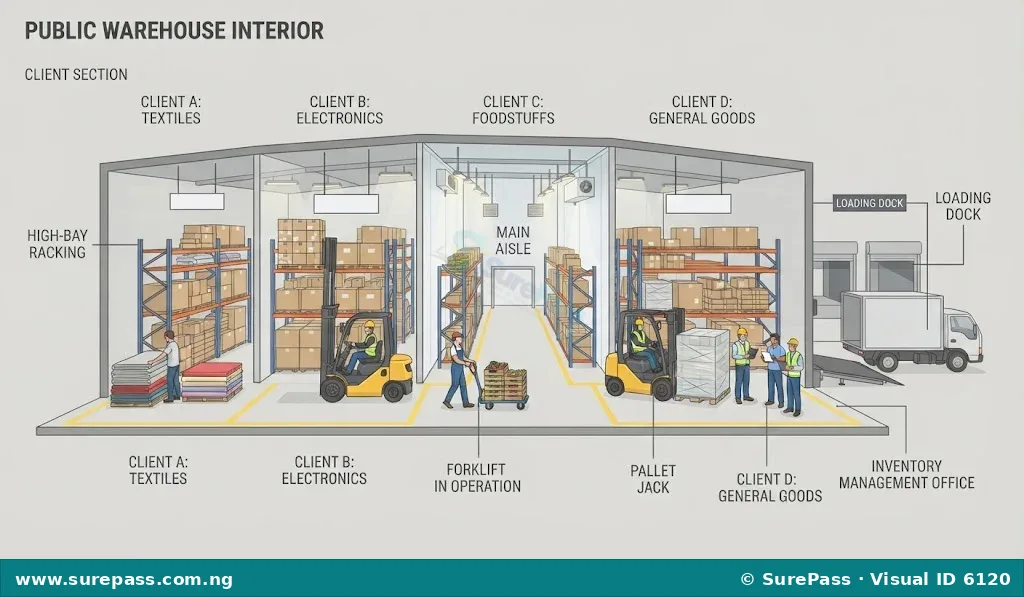
A public warehouse is a commercial facility that offers storage services to multiple businesses or individuals for a fee.
These warehouses are ideal for businesses that do not have enough goods to justify a private warehouse, or those that need flexible storage solutions for varying inventory levels. Public warehouses provide services such as storage, handling, packing, and distribution. They offer cost-effective solutions as businesses only pay for the space and services they use, without the need for capital investment in facilities or equipment.
Functions of Warehousing
Warehousing performs several critical functions that support commercial activities and ensure the smooth flow of goods in the supply chain.
- Storage of Goods: This is the primary function of a warehouse. It provides a safe and secure place to hold raw materials, semi-finished products, and finished goods until they are needed by manufacturers, retailers, or consumers. This function helps to bridge the time gap between production and consumption.
- Protection of Goods: Warehouses protect goods from damage, theft, spoilage, and environmental factors such as extreme temperatures, humidity, and pests. Modern warehouses often have climate control systems, security measures, and proper handling equipment to ensure goods remain in good condition.
- Aid Inventory Process: Warehouses play a crucial role in managing inventory. They help businesses keep track of the quantity, location, and movement of goods. This information is vital for efficient stock control, order fulfilment, and preventing stockouts or overstocking.
- Consolidation: Warehouses can consolidate small shipments from various suppliers into larger, more economical shipments for onward transportation. This reduces transport costs and improves efficiency in logistics.
- Break-Bulk: Conversely, warehouses can receive large bulk shipments and then break them down into smaller, individual orders for distribution to different customers or retail outlets. This is particularly useful for wholesalers and distributors.
- Value-Added Services: Many warehouses offer additional services beyond basic storage. These can include packaging, labelling, kitting (assembling multiple items into a single package), quality control, and minor repairs. These services help prepare goods for final sale or distribution.
- Price Stabilisation: By storing goods when supply is high and releasing them when demand increases, warehouses help to stabilise prices in the market. This prevents gluts and shortages, ensuring a more consistent supply of products.
- Risk Bearing: While goods are stored in a warehouse, the warehouse owner or operator bears certain risks, such as loss due to fire, theft, or damage. Insurance is often taken to mitigate these risks.
Managing Inventory
Managing inventory effectively is crucial for any business that stores goods. It involves keeping track of stock levels, knowing where items are located, and ensuring that goods are available when needed without holding too much excess stock.
The process of managing inventory involves the following steps:
- Receiving Goods: When goods arrive at the warehouse, they are checked against purchase orders to ensure the correct quantity and quality. Any discrepancies are noted.
- Putting Away: After receiving, goods are moved to their designated storage locations within the warehouse. Proper organisation ensures that items can be easily found and retrieved later.
- Tracking Stock Levels: Inventory management systems (manual or computerised) are used to record how much of each item is in stock, its location, and when it was received. This helps in monitoring stock movement.
- Order Picking: When a customer places an order, the required items are located and retrieved from their storage positions. This process needs to be accurate and efficient to fulfil orders quickly.
- Packing and Labelling: Once picked, items are packed securely for dispatch and labelled with the correct delivery information.
- Stock Auditing: Regular checks, such as cycle counting or physical inventory counts, are performed to verify the accuracy of inventory records against the actual physical stock in the warehouse.
Storing Goods
Storing goods properly in a warehouse involves careful planning and execution to ensure their safety, accessibility, and preservation.
The procedure for storing goods effectively involves the following steps:
- Prepare the Storage Area: Ensure the storage area is clean, dry, well-ventilated, and free from pests. Check for any potential hazards or obstructions.
- Categorise Goods: Group similar items together. For example, perishable goods, fragile items, and heavy items should be stored in appropriate sections.
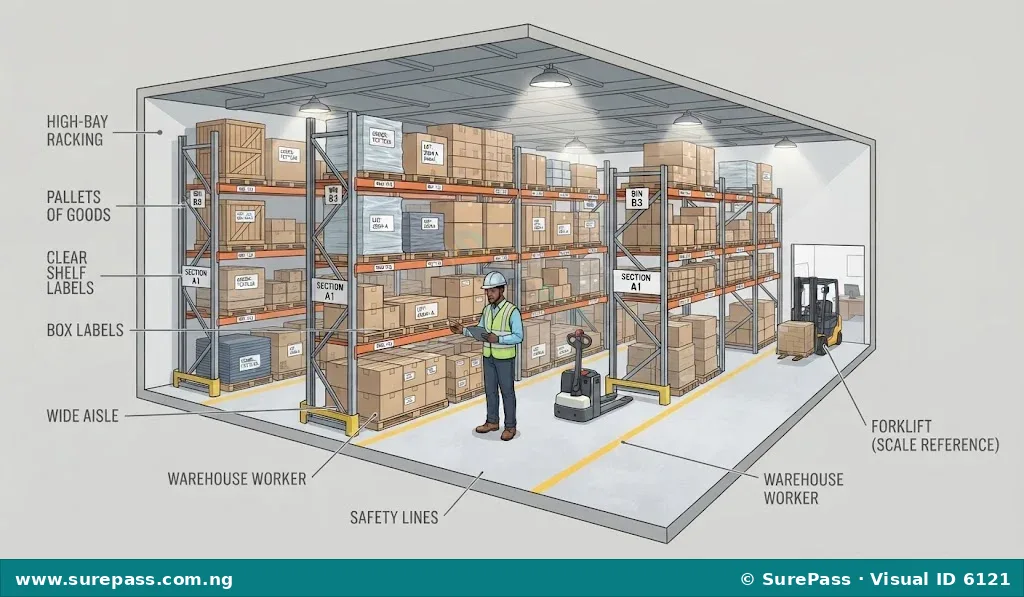
- Use Appropriate Storage Equipment: Utilise shelves, racks, pallets, and containers suitable for the type and weight of the goods. Heavy items should be stored on lower shelves for safety.
- Label Clearly: Each storage location and item should be clearly labelled with product codes, descriptions, and quantities. This helps in quick identification and retrieval.
- Maintain Proper Spacing: Ensure there is enough space between items and aisles for easy movement of personnel and equipment like forklifts. This also allows for proper air circulation.
- Implement First-In, First-Out (FIFO): For most goods, especially those with expiry dates, ensure that older stock is moved out before newer stock. This prevents spoilage and obsolescence.
- Monitor Environmental Conditions: For sensitive goods, regularly check and maintain temperature and humidity levels as required.
- Ensure Security: Implement security measures such as surveillance cameras, access controls, and regular patrols to prevent theft and unauthorised access.
Dispatching and Delivering Goods
Dispatching and delivering goods are the final stages of the warehousing process, ensuring that products reach customers or their next destination efficiently and accurately.
The process of dispatching and delivering goods involves the following steps:
- Order Verification: Before dispatch, the order is verified against the picked items to ensure accuracy and completeness.
- Packaging: Goods are carefully packaged to protect them during transit. This may involve using appropriate boxes, cushioning materials, and sealing.
- Documentation: Prepare all necessary documents, such as delivery notes, invoices, waybills, and shipping labels. These documents provide details about the shipment and its destination.
- Loading: Goods are loaded onto appropriate transport vehicles (e.g., trucks, vans) in a systematic manner to prevent damage and ensure efficient unloading at the destination. Heavy items are usually loaded first.
- Route Planning: For deliveries, the most efficient route is planned to minimise travel time and fuel costs.
- Transportation: The goods are transported to the customer’s location or the next point in the supply chain.
- Delivery Confirmation: Upon arrival, the recipient verifies the goods against the delivery documents and signs to confirm receipt. Any damages or discrepancies are noted.
- Returns Handling: If goods are returned, they are processed according to company policy, which may involve inspection, restocking, or disposal.




0 comments
Open the discussion when you need it. Comments stay collapsed until requested so the initial article remains light.