



ARTICLE CONTENTSOn this page 9 sections
Investing in the Capital Market
Performance Objectives
By the end of the lesson, students should be able to:
- describe the various investments that can be made in the capital market;
- state the meaning and types of derivatives;
- discuss the responsibilities of investors in the capital market;
- explain the benefits and challenges of investing in different types of securities;
- state the meaning and importance of stock market information.
Understanding the Capital Market
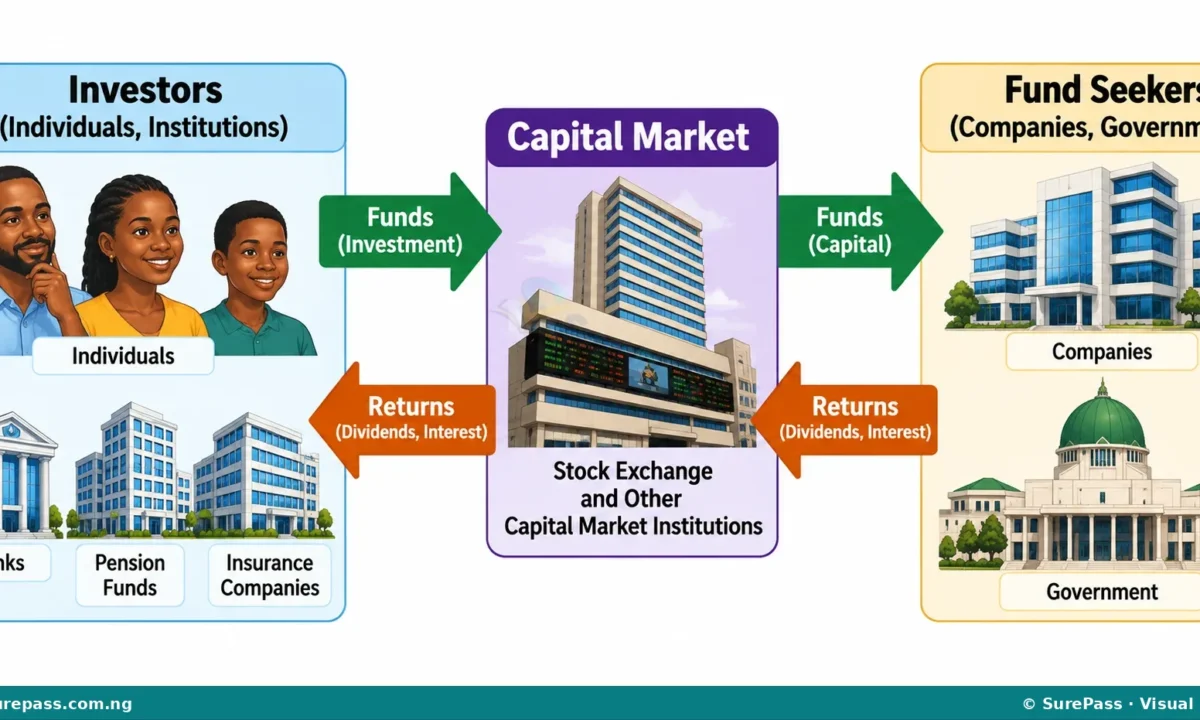
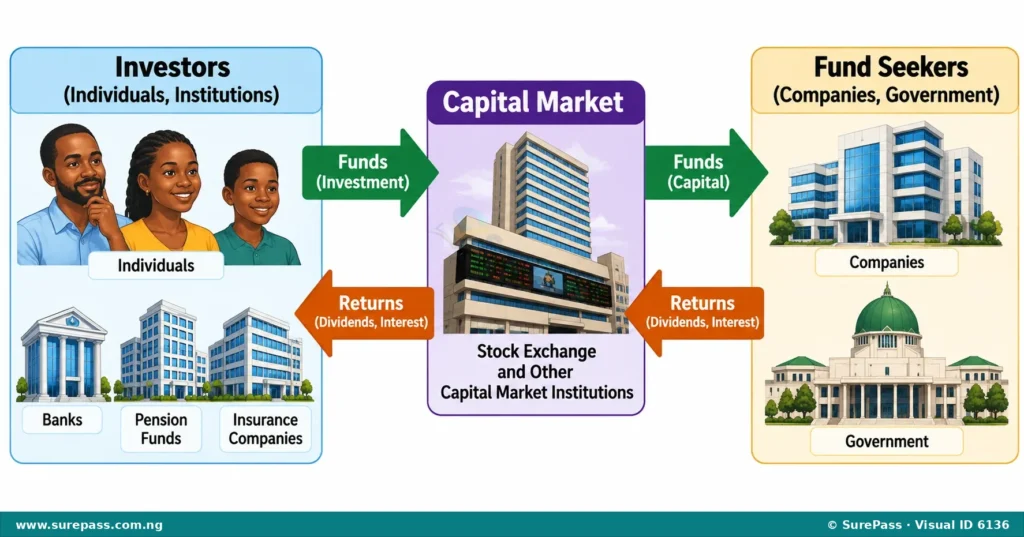
The capital market is a financial market where long-term funds are raised and invested.
It is a place where individuals, companies, and governments can obtain long-term financing for their projects and operations. It also provides opportunities for investors to put their money into various long-term assets with the expectation of earning returns.
Investment Options in the Capital Market
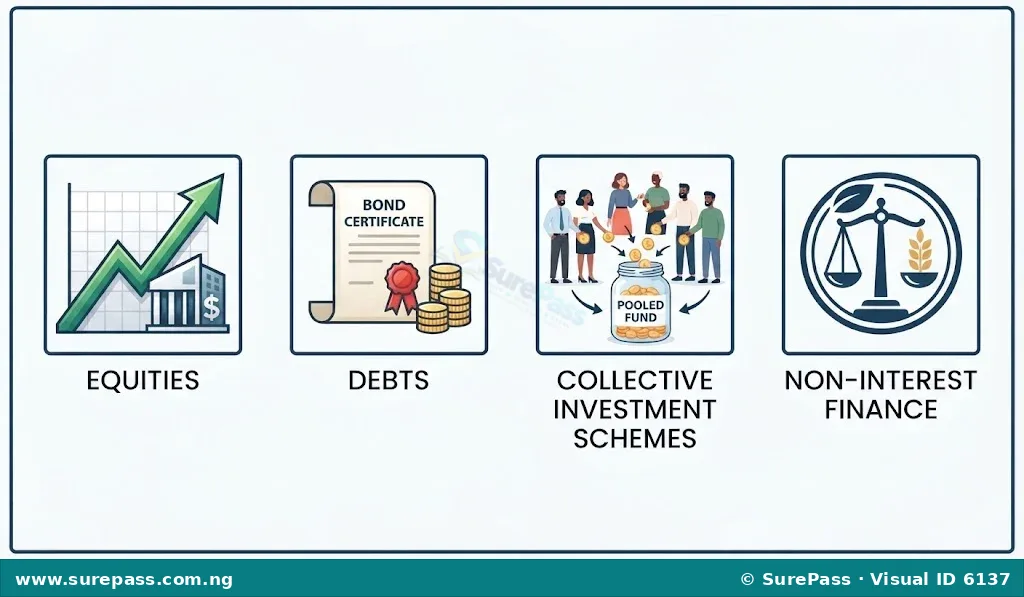
Investors can choose from various options when investing in the capital market. These options allow investors to put their money into different types of assets, each with its own characteristics regarding risk and potential return.
Equities (Shares)
Equities, commonly known as shares, represent ownership in a company.
When an investor buys shares of a company, they become a part-owner of that company. The value of shares can increase or decrease depending on the company’s performance and market conditions. Investors in shares can earn money through dividends (a share of the company’s profits) and capital gains (selling shares for a higher price than they bought them).
Examples of companies whose shares can be bought on the Nigerian Exchange Group (NGX) include:
- Dangote Cement Plc
- Guaranty Trust Holding Company Plc (GTCO)
- MTN Nigeria Communications Plc
- Nigerian Breweries Plc
Debts (Bonds/Debentures)
Debts, such as bonds and debentures, represent a loan made by an investor to a borrower, which can be a company or the government.
When an investor buys a bond or debenture, they are lending money to the issuer for a specific period. In return, the issuer promises to pay regular interest payments to the investor and repay the original amount (principal) at the end of the loan period. Bonds are generally considered less risky than shares because the interest payments and principal repayment are usually guaranteed.
Examples of debt instruments include:
- Federal Government of Nigeria Bonds (FGN Bonds)
- State Government Bonds
- Corporate Bonds (issued by companies)
Collective Investment Schemes (Venture Capital)
Collective Investment Schemes (CIS) are investment vehicles that pool money from many investors to invest in a diversified portfolio of securities.
Instead of investing directly in individual shares or bonds, investors buy units in a CIS. Professional fund managers then manage the pooled money. Venture capital is a specific type of collective investment scheme that focuses on investing in new or growing businesses with high growth potential, often in exchange for an equity stake.
Other examples of Collective Investment Schemes include:
- Mutual Funds
- Unit Trusts
Non-Interest Finance
Non-interest finance refers to financial products and services that comply with ethical and religious principles, particularly those that prohibit the charging or receiving of interest (riba).
Instead of interest, these investments use profit-sharing, leasing, or other permissible contracts to generate returns. This option caters to investors who prefer to invest in a manner consistent with their beliefs.
Examples of non-interest finance instruments include:
- Sukuk (Islamic bonds)
- Takaful (Islamic insurance)
- Murabaha (cost-plus financing)
Derivatives
Meaning of Derivatives
A derivative is a financial contract whose value is derived from an underlying asset, group of assets, or benchmark.
The underlying assets can include stocks, bonds, commodities, currencies, interest rates, or market indices. Investors use derivatives to manage risk, speculate on future price movements, or gain exposure to an asset without directly owning it.
Types of Derivatives
Common types of derivatives include:
- Futures: These are contracts to buy or sell an asset at a predetermined price on a specific future date.
- Options: These contracts give the buyer the right, but not the obligation, to buy or sell an underlying asset at a specific price on or before a certain date.
- Forwards: Similar to futures, but they are customised, private agreements between two parties, rather than standardised exchange-traded contracts.
- Swaps: These are agreements between two parties to exchange financial instruments, cash flows, or other financial obligations over a specified period.
Responsibilities of Investors in the Capital Market
Investing in the capital market comes with certain responsibilities. Investors should take these seriously to protect their investments and make informed decisions.
Key responsibilities of investors include:
- Conducting Due Diligence: Investors should thoroughly research any investment opportunity before committing funds. This involves understanding the company, its financial health, the industry, and the specific security being offered.
- Understanding Risks: Every investment carries some level of risk. Investors must understand the potential risks associated with each investment option, including the possibility of losing their capital.
- Seeking Professional Advice: For complex investments or if unsure, investors should seek advice from qualified financial advisors, stockbrokers, or investment professionals.
- Monitoring Investments: Investors should regularly monitor the performance of their investments and stay informed about market conditions and any news that might affect their holdings.
- Keeping Records: Maintaining accurate records of all investment transactions, including purchase and sale dates, prices, and any income received, is crucial for tax purposes and tracking performance.
- Avoiding Speculation Beyond Means: Investors should not invest more money than they can afford to lose, especially in high-risk ventures.
- Being Aware of Fraud: Investors should be cautious of unrealistic promises of high returns and verify the legitimacy of investment schemes and operators with regulatory bodies like the Securities and Exchange Commission (SEC).
Benefits of Investing in the Capital Market
Investing in the capital market offers significant benefits to various participants in the economy.
Benefits to Individual Investors
Individual investors can gain several advantages from participating in the capital market:
- Wealth Creation: Over the long term, investments in shares and other securities can grow significantly, helping individuals build wealth.
- Income Generation: Investments like bonds pay regular interest, and shares can pay dividends, providing a steady stream of income.
- Diversification: The capital market offers a wide range of investment options, allowing investors to spread their risk across different assets and industries.
- Inflation Hedge: Successful investments can grow faster than the rate of inflation, protecting the purchasing power of an individual’s savings.
Benefits to Companies
Companies rely heavily on the capital market for their growth and operations:
- Access to Long-Term Capital: Companies can raise large amounts of long-term capital by issuing shares or bonds, which is essential for expansion, research, and development.
- Increased Visibility and Reputation: Being listed on a stock exchange can enhance a company’s public profile and credibility, attracting more customers and business partners.
- Improved Corporate Governance: Companies listed on the capital market are often subject to stricter regulatory requirements, which can lead to better management practices and transparency.
- Mergers and Acquisitions: The capital market facilitates mergers and acquisitions, allowing companies to grow by combining with or acquiring other businesses.
Benefits to Government
The government also benefits from a well-functioning capital market:
- Funding for Development Projects: Governments can raise funds by issuing bonds (e.g., FGN Bonds) to finance infrastructure projects, education, healthcare, and other public services.
- Economic Growth: A vibrant capital market encourages investment, which drives economic growth, creates jobs, and improves living standards.
- Privatisation: The capital market provides a platform for governments to privatise state-owned enterprises by selling shares to the public, leading to increased efficiency and revenue.
- Foreign Investment: A strong capital market can attract foreign investors, bringing in foreign exchange and boosting the national economy.
Challenges in the Capital Market
Despite its benefits, investing in the capital market also presents several challenges that investors and regulators must address.
Some of these challenges include:
- Market Volatility: The prices of securities can fluctuate rapidly due to economic news, political events, or investor sentiment, leading to potential losses for investors.
- Lack of Information: Some investors, especially those in remote areas, may lack access to timely and accurate information needed to make informed investment decisions.
- Fraud and Scams: The capital market can be susceptible to fraudulent activities and scams, where unscrupulous individuals or organisations deceive investors into parting with their money.
- Liquidity Risk: For some less popular securities, it might be difficult to find buyers quickly, meaning investors may not be able to sell their investments when they want or at a fair price.
- Regulatory Challenges: Ensuring effective regulation and enforcement to protect investors and maintain market integrity can be complex, especially in rapidly evolving financial markets.
- Economic Instability: Broader economic challenges such as high inflation, currency devaluation, or recession can negatively impact investment returns and investor confidence.
Interpretation of Stock Market Information
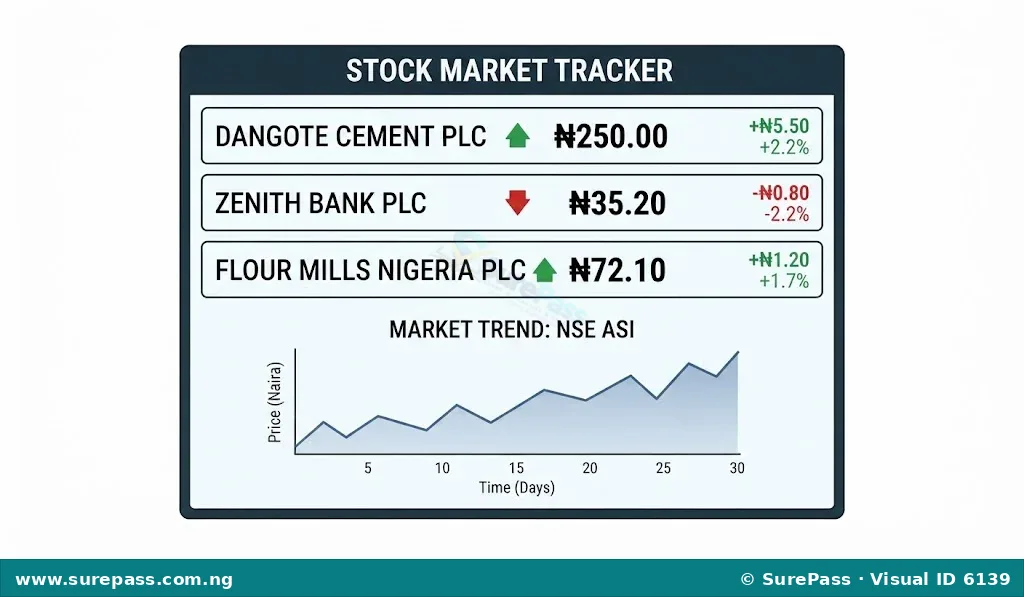
Stock market information refers to all data, news, and reports related to the trading of shares and other securities on a stock exchange.
This information includes current share prices, trading volumes, company financial reports, economic indicators, and news headlines. Interpreting this information correctly is crucial for investors to make sound decisions.
The importance of stock market information to investors includes:
- Informed Decision-Making: Timely and accurate information helps investors decide which shares to buy, hold, or sell, based on their understanding of a company’s performance and market trends.
- Risk Assessment: By analysing market data and company reports, investors can better assess the risks associated with an investment and adjust their portfolios accordingly.
- Identifying Opportunities: Information about market movements and company news can help investors identify potential investment opportunities before they become widely known.
- Performance Monitoring: Investors use stock market information to track the performance of their existing investments and compare them against market benchmarks.
- Understanding Market Sentiment: News and reports can reveal the general mood of the market, which influences investor behaviour and security prices.





0 comments
Open the discussion when you need it. Comments stay collapsed until requested so the initial article remains light.