


ARTICLE CONTENTSOn this page 9 sections
International (Foreign) Trade
Performance Objectives
By the end of the lesson, students should be able to:
- explain the core concepts in international trade;
- discuss the benefits of international trade;
- explain the barriers in international trade;
- describe international payment systems;
- explain the roles of WTO, IMF and World Bank in managing international trade;
- discuss the role of e-commerce in international trade.
Introduction to International Trade
International trade, also known as foreign trade, involves the exchange of goods and services between different countries. It is a vital part of the global economy, allowing countries to obtain products they cannot produce efficiently themselves and to sell their surplus goods to other nations.
This exchange helps countries specialise in what they do best, leading to greater efficiency and a wider variety of goods and services available to consumers worldwide. For example, Nigeria might export crude oil, while importing cars or electronics from other countries.
Core Concepts in International Trade
Understanding international trade requires familiarity with several key terms that describe the movement of goods and services across national borders.
Import
An import refers to goods and services brought into a country from another country.
When Nigeria buys cars from Japan or mobile phones from China, these goods are considered imports for Nigeria. Imports allow consumers to access a wider range of products and often at competitive prices.
Export
An export refers to goods and services sold by a country to another country.
When Nigeria sells crude oil to the United States or cocoa beans to European countries, these goods are considered exports for Nigeria. Exports generate income for the exporting country and help to create jobs.
Comparative Advantage
Comparative advantage is the ability of a country to produce a particular good or service at a lower opportunity cost than another country.
Opportunity cost is what a country gives up to produce one good instead of another. For example, if Nigeria can produce oil more efficiently than Ghana, and Ghana can produce cocoa more efficiently than Nigeria, both countries benefit by specialising and trading. Nigeria focuses on oil, Ghana on cocoa, and they exchange their products.
Absolute Advantage
Absolute advantage is the ability of a country to produce a good or service using fewer resources (e.g., less labour or land) than another country.
If Nigeria can produce a barrel of oil with less labour and capital than any other country, Nigeria has an absolute advantage in oil production. A country with an absolute advantage can produce more of a good with the same amount of resources, or the same amount of a good with fewer resources.
Balance of Trade
The balance of trade is the difference between a country’s total value of exports and its total value of imports over a specific period.
If a country’s exports are greater than its imports, it has a trade surplus. If its imports are greater than its exports, it has a trade deficit. A trade surplus means the country is earning more from selling goods abroad than it is spending on buying goods from abroad, while a trade deficit indicates the opposite.
Benefits of International Trade
International trade offers numerous benefits to participating countries, contributing to economic growth and improved living standards.
- Access to a Wider Variety of Goods and Services: Countries can obtain goods and services that they cannot produce domestically or can only produce at a higher cost. This gives consumers more choices and potentially lower prices.
- Specialisation and Efficiency: Countries can specialise in producing goods and services where they have a comparative or absolute advantage. This leads to more efficient use of resources and higher overall production.
- Increased Competition: International trade introduces foreign competition, which can encourage domestic industries to become more efficient, innovate, and offer better quality products at lower prices.
- Economic Growth and Job Creation: Exporting goods and services can boost a country’s economy, leading to increased production, investment, and the creation of new jobs in export-oriented industries.
- Transfer of Technology and Knowledge: Through trade, countries can gain access to new technologies, production methods, and management techniques developed in other nations, fostering innovation and development.
Trade Barriers
Trade barriers are government policies or regulations that restrict or impede international trade between countries. These barriers are often implemented to protect domestic industries, generate revenue, or achieve other economic or political goals.
Tariffs
Tariffs are taxes imposed on imported goods and services.
When a country imposes a tariff, the price of the imported good increases in the domestic market. This makes imported goods more expensive and less competitive compared to locally produced goods, thereby protecting domestic industries. For example, Nigeria might place a tariff on imported rice to encourage local rice farming.
Quotas
Quotas are quantitative limits on the amount of specific goods that can be imported into a country during a certain period.
Unlike tariffs, quotas do not directly increase the price of imports but restrict their availability. By limiting the quantity of imports, quotas aim to reduce foreign competition and support domestic producers. For instance, a country might set a quota on the number of imported cars allowed each year.
Product Standards
Product standards are regulations that specify the quality, safety, or environmental requirements that imported goods must meet before they can be sold in a country.
While often implemented for legitimate reasons like consumer safety or environmental protection, product standards can also act as a barrier to trade if they are overly strict, complex, or discriminatory against foreign producers. For example, imported food products might need to meet specific health and hygiene standards set by the importing country.
International Payment Systems
International payment systems are mechanisms and procedures used to facilitate financial transactions between buyers and sellers in different countries. These systems ensure that payments are made securely and efficiently across borders.
The following are common methods used for international payments:
- Bills of Exchange: A bill of exchange is a written order by one party (the drawer) to another party (the drawee) to pay a specified sum of money to a third party (the payee) on a specific date or on demand. In international trade, an exporter (drawer) can draw a bill on an importer (drawee) for payment.
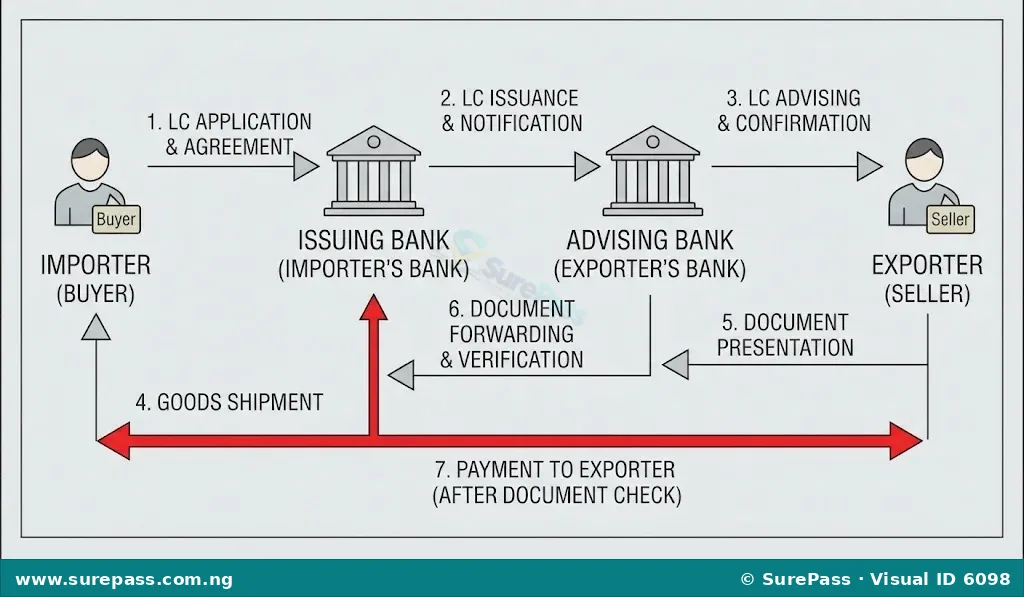
- Documentary Credits (Letters of Credit): A documentary credit, commonly known as a Letter of Credit (LC), is a written undertaking by a bank (issuing bank) on behalf of the buyer (importer) to pay the seller (exporter) a specified sum of money, provided the seller presents the required documents within a stipulated time. This offers security to both parties, as the exporter is assured of payment and the importer is assured that goods have been shipped as agreed.
- Bank Drafts: A bank draft is a cheque drawn by a bank on itself or on another bank, usually in a foreign currency. It is a secure method of payment as the funds are guaranteed by the issuing bank. An importer can purchase a bank draft from their bank and send it to the exporter as payment.
- Telegraphic Transfer (Wire Transfer): A telegraphic transfer, also known as a wire transfer or electronic funds transfer (EFT), is an electronic method of transferring funds directly from one bank account to another, typically across international borders. It is a fast and efficient way to send money, making it popular for urgent international payments.
Roles of WTO, IMF and World Bank in Managing International Trade
Several international organisations play crucial roles in regulating, facilitating, and stabilising the global economic environment, which in turn impacts international trade.
World Trade Organization (WTO)
The World Trade Organization (WTO) is an international organisation that deals with the rules of trade between nations.
Its main function is to ensure that trade flows as smoothly, predictably, and freely as possible. The WTO works to reduce trade barriers, administer trade agreements, act as a forum for trade negotiations, and provide a mechanism for resolving trade disputes among its member countries. By promoting free and fair trade, the WTO helps to expand international trade opportunities.
International Monetary Fund (IMF)
The International Monetary Fund (IMF) is an international organisation that promotes global monetary cooperation, secures financial stability, facilitates international trade, promotes high employment and sustainable economic growth, and reduces poverty around the world.
In relation to international trade, the IMF helps to stabilise exchange rates and provides financial assistance to countries facing balance of payments problems. By maintaining stability in the international monetary system, the IMF indirectly supports smooth international trade transactions and prevents financial crises that could disrupt global commerce.
World Bank
The World Bank is an international financial institution that provides financial and technical assistance to developing countries around the world.
While its primary focus is on poverty reduction and development, the World Bank’s activities indirectly support international trade by funding infrastructure projects (like roads, ports, and power plants) that facilitate trade, and by supporting economic reforms that create a more favourable environment for business and investment. These improvements make it easier and cheaper for countries to participate in global trade.
Role of E-commerce in International Trade
E-commerce, or electronic commerce, refers to the buying and selling of goods and services over the internet. Its rise has significantly transformed international trade, making it more accessible and efficient for businesses of all sizes.
- Wider Market Reach: E-commerce platforms allow businesses, including small and medium-sized enterprises (SMEs), to reach customers in different countries without needing a physical presence. This expands their potential market far beyond national borders.
- Reduced Costs: Online platforms can significantly lower the costs associated with international trade, such as marketing, distribution, and establishing foreign sales offices. This makes it easier for businesses to enter new markets.
- Simplified Transactions: E-commerce facilitates easier and faster processing of international orders and payments. Online payment gateways and digital documentation streamline the entire transaction process.
- Increased Transparency: Online platforms often provide tools for tracking shipments, managing orders, and communicating with international customers, leading to greater transparency and trust in cross-border transactions.
- Access to Information: E-commerce platforms provide businesses with valuable data on international market trends, consumer preferences, and competitor activities, helping them make informed decisions about their international trade strategies.



0 comments
Open the discussion when you need it. Comments stay collapsed until requested so the initial article remains light.