


ARTICLE CONTENTSOn this page 9 sections
Bank Reconciliation Statement
Performance Objectives
By the end of the lesson, students should be able to:
- state the meaning and importance of Bank reconciliation;
- identify documents used in bank reconciliation and their importance;
- explain the reasons for discrepancy between the cash book and bank statement;
- prepare Adjusted cash book;
- prepare a bank reconciliation statement.
Meaning of Bank Reconciliation
Bank reconciliation is the process of comparing the cash book balance with the bank statement balance to identify and explain any differences between them.
Businesses and individuals often keep their money in a bank account. They record all their bank transactions (money paid in and money paid out) in a record called a cash book. At the same time, the bank also keeps a record of these transactions in an account for the customer, which is provided as a bank statement. Ideally, the balance shown in the cash book should match the balance shown in the bank statement. However, in practice, these balances often differ. Bank reconciliation helps to find out why these differences exist and to correct any errors.
Importance of Bank Reconciliation
Bank reconciliation is an important accounting process for several reasons:
- Detects Errors: It helps to identify errors made by the business in its cash book or by the bank in the bank statement.
- Prevents Fraud: Regular reconciliation can help detect unauthorised transactions or fraudulent activities, as all transactions are checked against two independent records.
- Ensures Accuracy: It ensures that the cash book balance accurately reflects the true cash position of the business, which is crucial for financial reporting.
- Facilitates Control: It provides better control over cash and bank transactions, ensuring that all receipts are deposited and all payments are properly authorised.
- Updates Records: It helps to update the cash book with items that the bank has recorded but the business was not yet aware of, such as bank charges or interest.
Bank Documents and Their Importance
Several documents are used in bank transactions and are essential for bank reconciliation. These documents provide evidence of transactions and help in comparing records.
- Deposit Slips:
- Withdrawal Slips:
- Cheques:
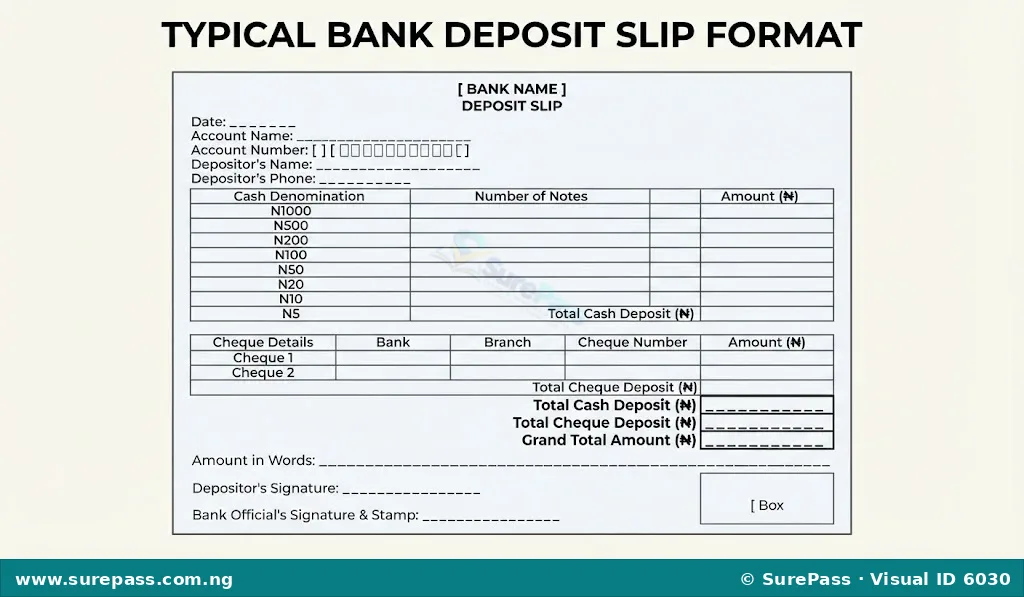
A deposit slip is a small paper form that customers fill out when depositing money into a bank account. It lists the amount of cash and cheques being deposited.
Importance: Deposit slips serve as proof that money has been paid into the bank. They help the business record the correct amount and date of deposits in its cash book and can be compared with the bank statement to ensure all deposits have been credited.
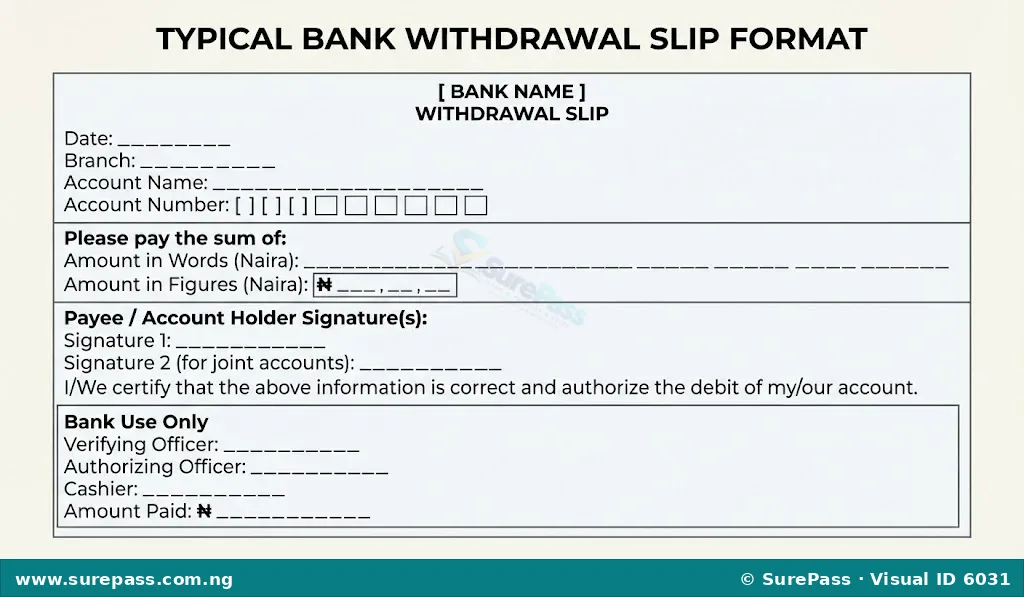
A withdrawal slip is a form used to take money out of a bank account. It requires the account holder’s signature and specifies the amount to be withdrawn.
Importance: Withdrawal slips provide evidence of cash withdrawals from the bank. They help the business verify that all withdrawals recorded in the cash book were indeed made and can be cross-checked against the bank statement.
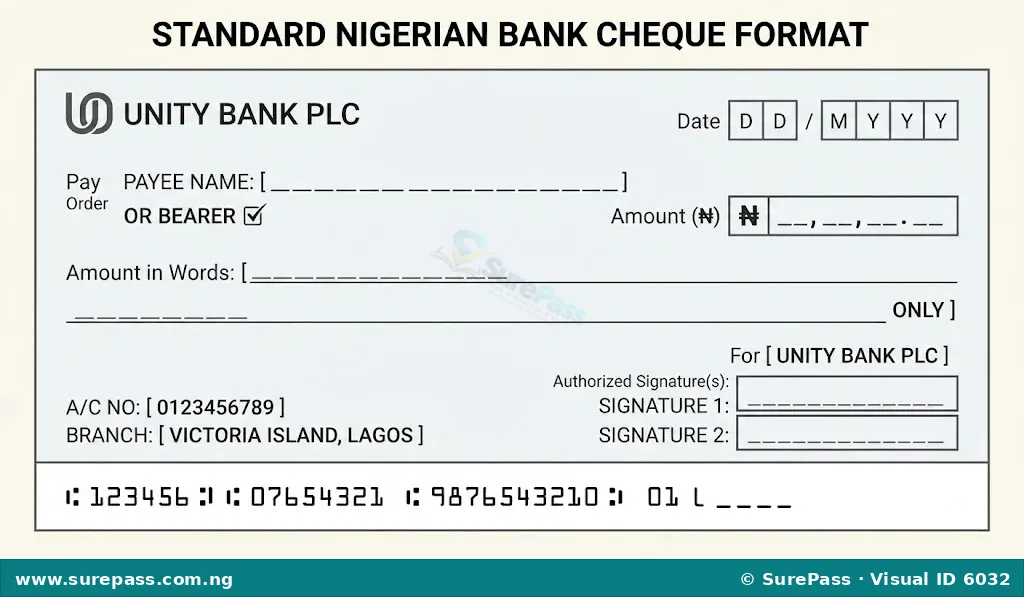
A cheque is a written order instructing a bank to pay a specific amount of money from one person’s account to another person or organisation.
Importance: Cheques are a common method of making payments. When a business issues a cheque, it records the payment in its cash book. When a business receives a cheque, it records it as a receipt and deposits it. Cheques are crucial for bank reconciliation because they can cause discrepancies if they are issued but not yet presented to the bank for payment (unpresented cheques) or if they are deposited but not yet cleared by the bank (uncredited cheques).
Terminologies in Bank Reconciliation
Understanding specific terms is vital for preparing a bank reconciliation statement:
- Bank Statement:
- Bank Charges:
- Interest Paid (by Bank):
- Interest Received (by Bank):
A bank statement is a summary of all transactions (deposits, withdrawals, cheques, charges, interest) that have occurred in a bank account over a specific period, usually a month, as recorded by the bank.
It shows the opening balance, all debits (payments out) and credits (money in), and the closing balance according to the bank’s records.
Bank charges are fees levied by the bank for services provided to the account holder, such as account maintenance, transaction fees, or charges for issuing cheque books.
These charges reduce the bank balance and are usually debited by the bank directly from the account. The business may only become aware of them when they receive the bank statement.
Interest paid by the bank refers to the amount of money the bank adds to a customer’s account for keeping a credit balance with them. This is a form of income for the account holder.
The bank credits the account with this interest, and the business may only know about it upon receiving the bank statement.
Interest received by the bank refers to the amount of money the bank charges the customer for an overdraft facility or for late payments on loans. This is an expense for the account holder.
The bank debits the account with this interest, and the business may only become aware of it when they receive the bank statement.
Reasons for Discrepancy between Cash Book and Bank Statement
The balance in a business’s cash book often differs from the balance shown on the bank statement for various reasons. These differences are usually due to timing issues or transactions recorded by one party but not yet by the other, or errors.
Common reasons for discrepancies include:
- Unpresented Cheques (Outstanding Cheques):
- Uncredited Lodgements (Outstanding Deposits):
- Bank Charges:
- Interest Received (from Bank):
- Interest Paid (to Bank):
- Direct Debits and Standing Orders:
- Direct Credits (Bank Transfers/Receipts):
- Dishonoured Cheques:
- Errors:
These are cheques that the business has issued to suppliers or other parties and has recorded as payments in its cash book. However, the payee has not yet presented these cheques to the bank for payment, so the bank has not yet debited the business’s account. The cash book balance will be lower than the bank statement balance for these cheques.
These are amounts of money (cash or cheques) that the business has deposited into its bank account and recorded as receipts in its cash book. However, the bank has not yet processed or credited these deposits to the account, perhaps due to processing time or the deposit being made late in the day. The cash book balance will be higher than the bank statement balance for these deposits.
These are fees charged by the bank for various services (e.g., account maintenance, transaction fees). The bank debits these charges from the account and records them on the bank statement. The business, however, may not have recorded these charges in its cash book until it receives the bank statement. This makes the bank statement balance lower than the cash book balance.
This is interest earned on the bank balance, which the bank credits to the account. The bank statement will show this credit, but the business may not have recorded it in its cash book until it receives the bank statement. This makes the bank statement balance higher than the cash book balance.
This is interest charged by the bank on an overdraft facility. The bank debits this interest from the account and records it on the bank statement. The business may not have recorded this expense in its cash book until it receives the bank statement. This makes the bank statement balance lower than the cash book balance.
These are regular payments made by the bank directly from the customer’s account on their behalf (e.g., utility bills, loan repayments). The bank records these payments on the bank statement. The business may not have recorded them in its cash book until it receives the bank statement. This makes the bank statement balance lower than the cash book balance.
These are amounts of money paid directly into the business’s bank account by customers or other parties (e.g., electronic transfers). The bank credits these amounts to the account and records them on the bank statement. The business may not be aware of these receipts until it receives the bank statement. This makes the bank statement balance higher than the cash book balance.
These are cheques that the business received and recorded as a receipt in its cash book, but the bank later refused to pay (e.g., due to insufficient funds in the drawer’s account). The bank will debit the amount back from the business’s account. The business needs to reverse the original entry in its cash book. This makes the bank statement balance lower than the cash book balance.
Mistakes can be made by either the business when recording transactions in the cash book (e.g., incorrect amount, omission) or by the bank when preparing the bank statement (e.g., crediting/debiting a wrong account). These errors need to be identified and corrected.
Preparing an Adjusted Cash Book
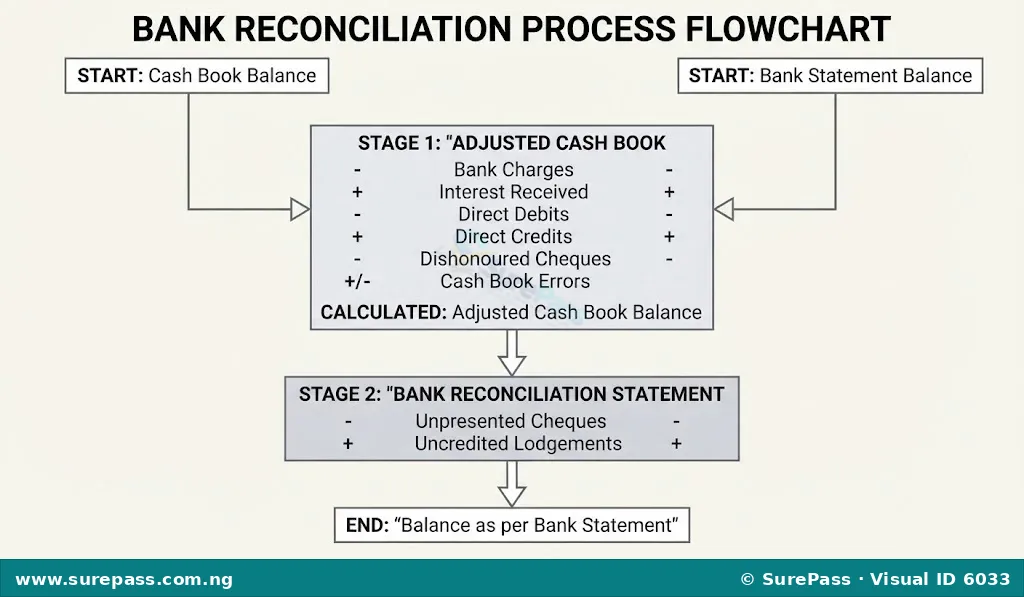
The first step in bank reconciliation is often to update the cash book with items that the business was not aware of until receiving the bank statement. This updated cash book is called the Adjusted Cash Book or Updated Cash Book.
The purpose of preparing an Adjusted Cash Book is to bring the cash book balance up to date by incorporating all transactions that have been recorded by the bank but not yet by the business. This adjusted balance will then be used as the starting point for the bank reconciliation statement.
The procedure for preparing an Adjusted Cash Book involves the following steps:
- Start with the original balance as per the cash book.
- Add any items that the bank has credited to the account but the business has not yet recorded (e.g., direct credits, interest received from the bank).
- Subtract any items that the bank has debited from the account but the business has not yet recorded (e.g., bank charges, interest paid to the bank, direct debits, standing orders, dishonoured cheques).
- Correct any errors made by the business in the cash book.
- The resulting balance is the Adjusted Cash Book balance.
Worked Example: Preparing an Adjusted Cash Book
The cash book (bank column) of XYZ Enterprises showed a debit balance of N150,000 on 31st March 2023. The bank statement for the same date showed a credit balance of N165,000. Upon comparison, the following discrepancies were noted:
- Bank charges of N2,500 appeared on the bank statement but not in the cash book.
- Interest on deposit of N1,500 was credited by the bank but not recorded in the cash book.
- A direct payment of N10,000 from a customer was credited by the bank but not known to XYZ Enterprises.
- A cheque for N5,000 issued to a supplier was dishonoured by the bank due to insufficient funds and debited back by the bank. This was not yet recorded in the cash book.
Solution:
XYZ Enterprises
Adjusted Cash Book (Bank Column)
As at 31st March 2023
| Details | N | Details | N |
|---|---|---|---|
| Balance b/d | 150,000 | Bank Charges | 2,500 |
| Direct Credit (Customer) | 10,000 | Dishonoured Cheque | 5,000 |
| Interest Received | 1,500 | Balance c/d (Adjusted) | 154,000 |
| 161,500 | 161,500 |
The Adjusted Cash Book balance is N154,000 (Debit).
Preparing a Bank Reconciliation Statement
After preparing the Adjusted Cash Book, the next step is to prepare the Bank Reconciliation Statement. This statement starts with the Adjusted Cash Book balance and reconciles it with the bank statement balance by accounting for items that the bank has not yet recorded.
The purpose of the Bank Reconciliation Statement is to show how the adjusted cash book balance is brought into agreement with the bank statement balance by considering items that are known to the business but not yet processed by the bank.
The procedure for preparing a Bank Reconciliation Statement (starting with the Adjusted Cash Book balance) involves the following steps:
- Start with the Adjusted Cash Book balance.
- Add any uncredited lodgements (deposits made by the business but not yet shown on the bank statement).
- Subtract any unpresented cheques (cheques issued by the business but not yet debited by the bank).
- Correct any errors made by the bank that have not been corrected by them.
- The final balance should agree with the balance as per the bank statement.
Worked Example: Preparing a Bank Reconciliation Statement
Continuing from the previous example for XYZ Enterprises, the Adjusted Cash Book balance was N154,000 (Debit). The original bank statement balance was N165,000 (Credit).
The following items were identified as differences not yet recorded by the bank:
- Cheque No. 001 for N8,000 issued to a supplier on 28th March was not yet presented to the bank.
- Cash deposit of N7,000 made on 30th March was not yet credited by the bank.
Solution:
XYZ Enterprises
Bank Reconciliation Statement
As at 31st March 2023
| Details | N | N |
|---|---|---|
| Balance as per Adjusted Cash Book (Debit) | 154,000 | |
| Add: Uncredited Lodgements | ||
| Cash Deposit (30th March) | 7,000 | |
| 161,000 | ||
| Less: Unpresented Cheques | ||
| Cheque No. 001 | 8,000 | |
| (8,000) | ||
| Balance as per Bank Statement (Credit) | 153,000 |
Note: In this example, there is still a discrepancy between the reconciled balance (N153,000) and the original bank statement balance (N165,000). This indicates that there might be an error either in the initial problem statement or an unlisted item. For a complete reconciliation, the final balance must match the bank statement balance. Let’s re-evaluate the example to ensure it balances.
Let’s correct the example to ensure the reconciliation balances. Assume the original bank statement balance was N153,000.
Revised Worked Example: Preparing a Bank Reconciliation Statement
Continuing from the previous example for XYZ Enterprises, the Adjusted Cash Book balance was N154,000 (Debit). The original bank statement balance was N153,000 (Credit).
The following items were identified as differences not yet recorded by the bank:
- Cheque No. 001 for N8,000 issued to a supplier on 28th March was not yet presented to the bank.
- Cash deposit of N7,000 made on 30th March was not yet credited by the bank.
Solution:
XYZ Enterprises
Bank Reconciliation Statement
As at 31st March 2023
| Details | N | N |
|---|---|---|
| Balance as per Adjusted Cash Book (Debit) | 154,000 | |
| Add: Uncredited Lodgements | ||
| Cash Deposit (30th March) | 7,000 | |
| 161,000 | ||
| Less: Unpresented Cheques | ||
| Cheque No. 001 | 8,000 | |
| (8,000) | ||
| Balance as per Bank Statement (Credit) | 153,000 |
The final balance of N153,000 matches the balance as per the bank statement, indicating a successful reconciliation.




0 comments
Open the discussion when you need it. Comments stay collapsed until requested so the initial article remains light.