


ARTICLE CONTENTSOn this page 8 sections
Business Documents
Performance Objectives
By the end of the lesson, students should be able to:
- state the meaning of business document;
- identify the types of business documents;
- state the purpose of each document and its uses;
- fill out sample business documents correctly;
- interpret sample business documents;
- demonstrate ethical use of business documents.
In the world of business, many transactions take place every day. Goods are bought and sold, services are rendered, and money changes hands. To keep track of all these activities, businesses use special papers called business documents. These documents are essential for recording information, proving transactions, and helping businesses manage their finances.
Meaning of Business Documents
A business document is a written record that provides evidence of a business transaction or event.
These documents serve as proof that something has happened, such as a sale, a payment, or a delivery. They are crucial for maintaining accurate financial records and for resolving any disagreements that may arise between parties involved in a transaction.
Business Documents as Sources of Information
Business documents are vital sources of information for a business. They provide the raw data needed to prepare financial statements like the income statement and statement of financial position. Each document contains specific details about a transaction, such as the date, the parties involved, the items or services exchanged, and the amounts of money. This information is then used to update the accounting records, ensuring that all financial activities are accurately reflected.
Types of Business Documents
Various types of business documents are used depending on the nature of the transaction. Each document has a specific purpose and contains particular details relevant to the event it records.
Invoice
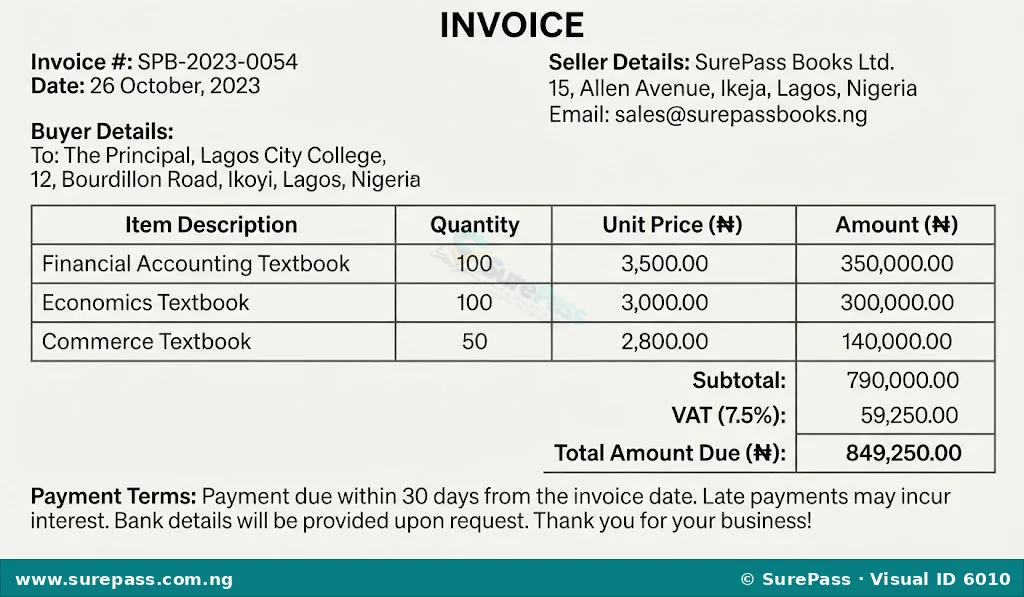
An invoice is a commercial document issued by a seller to a buyer, indicating the products, quantities, and agreed prices for products or services the seller has provided to the buyer. It is a request for payment.
The purpose of an invoice is to formally request payment from a customer for goods or services supplied on credit. It details the items sold, their unit prices, the total amount due, and the payment terms. It serves as a record for both the seller and the buyer.
Debit Note
A debit note is a document issued by a seller to a buyer to correct an undercharge or to request additional payment for goods or services already supplied.
The purpose of a debit note is to inform the buyer that their account has been debited (increased) due to an error in the original invoice, such as an undercharge, omitted items, or incorrect calculations. It acts as a formal request for the additional amount owed.
Credit Note
A credit note is a document issued by a seller to a buyer to correct an overcharge, grant an allowance, or acknowledge the return of goods.
The purpose of a credit note is to inform the buyer that their account has been credited (reduced) due to reasons like returned goods, overcharges, or damaged items. It effectively reduces the amount the buyer owes the seller.
Cheque Counterfoil
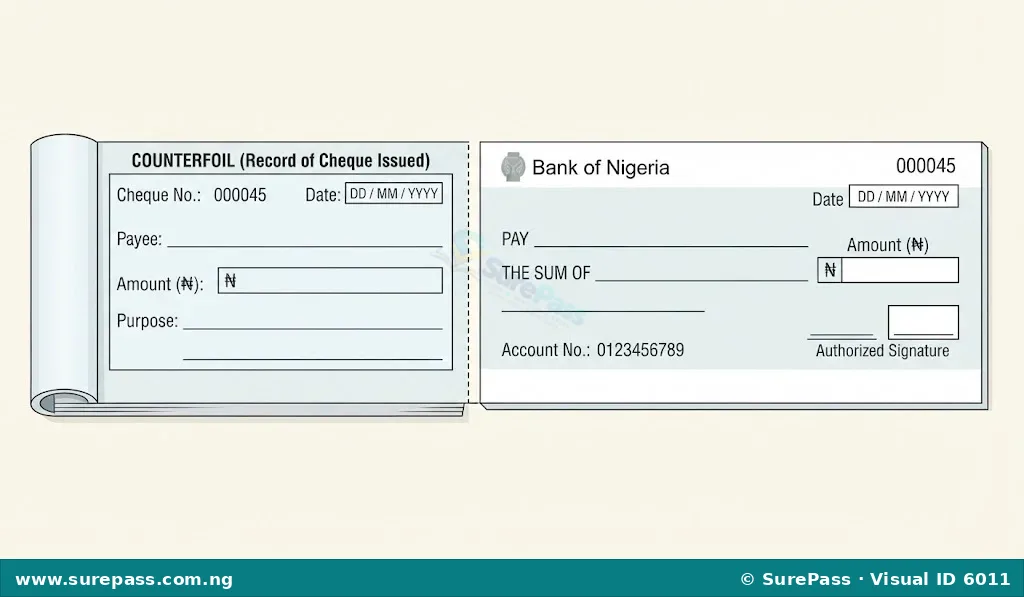
A cheque counterfoil is the stub or detachable part of a cheque book that remains with the drawer after the cheque has been issued and detached.
The purpose of a cheque counterfoil is to provide a record of the cheque issued. It contains details such as the cheque number, date, payee’s name, and the amount, allowing the drawer to keep track of payments made without having to refer to the bank statement immediately.
Paying-in Slip
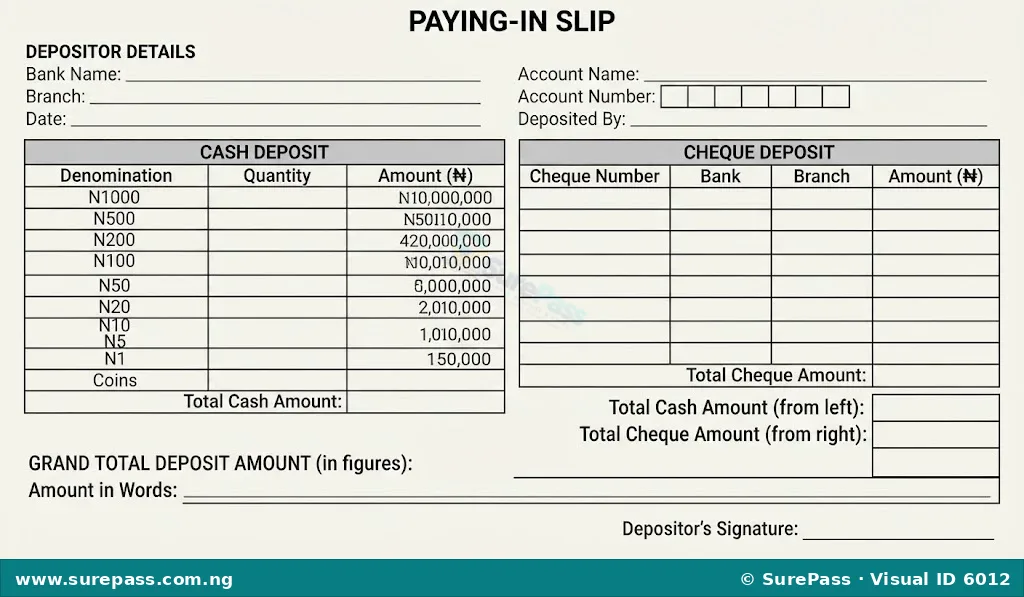
A paying-in slip is a form used to deposit cash or cheques into a bank account.
The purpose of a paying-in slip is to provide the bank with details of the funds being deposited, including the account number, the date, and the breakdown of cash (notes and coins) and cheques. It ensures that the correct amount is credited to the right account and serves as proof of deposit for the customer.
Receipt
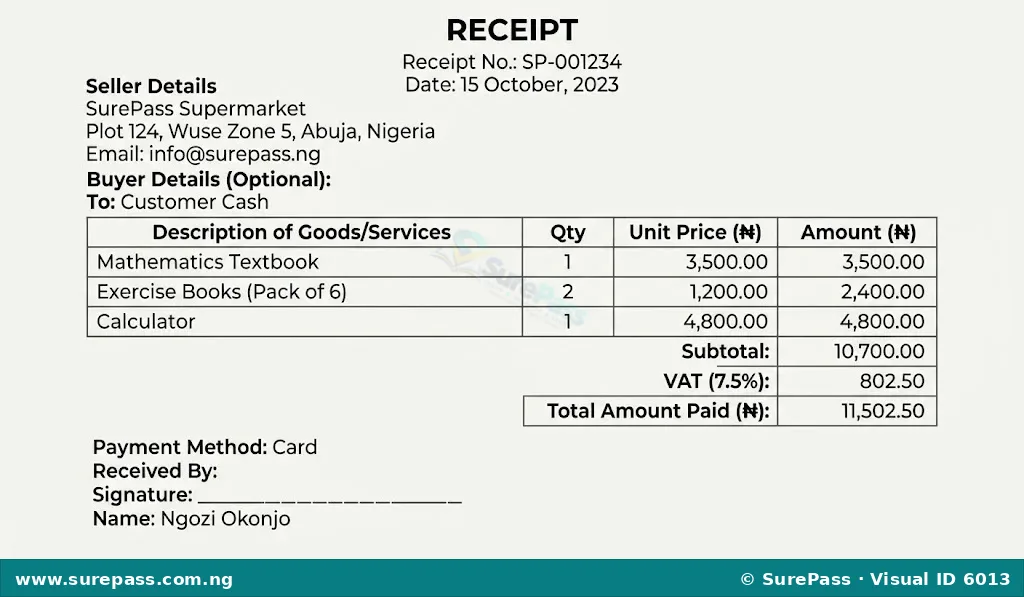
A receipt is a written acknowledgment that a specified article or sum of money has been received.
The purpose of a receipt is to serve as proof of payment for goods or services. It confirms that a transaction has occurred and that the buyer has paid the seller. Receipts are important for both the buyer (for record-keeping and potential returns) and the seller (for accounting and tax purposes).
Bank Statement
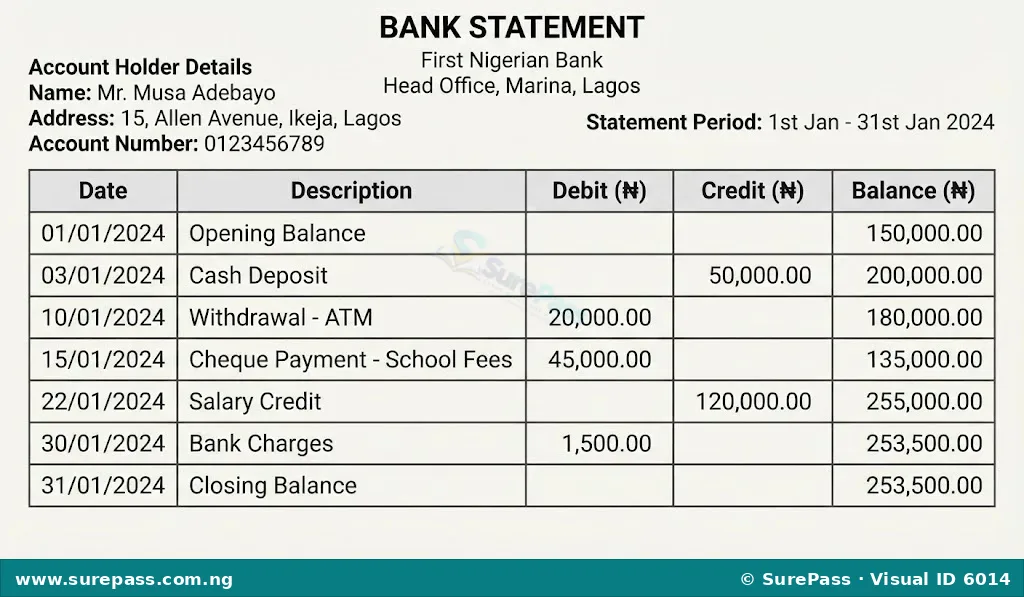
A bank statement is a document issued by a bank to its account holders, summarising all transactions (deposits, withdrawals, charges, interest) in their account over a specific period, usually a month.
The purpose of a bank statement is to provide a comprehensive record of all financial activities in a bank account. It allows account holders to reconcile their own records with the bank’s records, identify any discrepancies, and monitor their cash flow. Businesses use bank statements to verify transactions and prepare bank reconciliation statements.
Filling Out Sample Business Documents
Accurately filling out business documents is a crucial skill in financial accounting. It ensures that all transaction details are correctly captured, which is essential for record-keeping and avoiding errors.
Steps for Filling Out a Paying-in Slip (Example)
The procedure involves the following steps:
- Obtain the Slip: Collect a blank paying-in slip from your bank.
- Enter Account Details: Write the full account name and account number clearly in the designated spaces.
- Date the Slip: Write the current date of the deposit.
- Detail Cash Deposit: If depositing cash, count the notes and coins carefully. List the quantity of each denomination (e.g., 5 x N1000 notes) and calculate the total value for each. Sum these to get the total cash amount.
- Detail Cheque Deposit: If depositing cheques, write the cheque number and the amount of each cheque in the appropriate section.
- Calculate Total Deposit: Add up the total cash amount and the total cheque amount to get the grand total deposit.
- Sign (if required): Some slips may require a signature.
- Present to Teller: Hand the completed slip and the funds to the bank teller. Keep the stamped counterfoil as proof of deposit.
Interpreting Sample Business Documents
Interpreting business documents means understanding the information they contain and what that information signifies for the business. This skill is vital for making informed decisions and for accurately recording transactions.
When interpreting a document, focus on key elements such as:
- Date of Transaction: This indicates when the event occurred.
- Parties Involved: Identify the seller, buyer, payer, or payee.
- Description of Goods/Services: Understand what was bought, sold, or paid for.
- Quantities and Prices: Note the number of items and their individual and total costs.
- Amounts: Identify the total amount due, paid, or deposited.
- Terms and Conditions: Look for payment terms, discounts, or return policies.
- Document Number: Unique identifiers like invoice numbers or receipt numbers help in tracking.
For example, interpreting an invoice involves understanding who owes what to whom, by when, and for what specific items. Interpreting a bank statement involves identifying deposits, withdrawals, and bank charges to understand the flow of money in and out of the account.
Demonstrating Ethical Use of Business Documents
Ethical use of business documents is fundamental to maintaining trust, transparency, and integrity in business operations. It involves ensuring that all documents are accurate, complete, and used honestly.
Key aspects of ethical use include:
- Accuracy: All information recorded on documents must be truthful and free from errors. Deliberately misstating facts, quantities, or amounts is unethical and can lead to legal consequences.
- Completeness: Ensure that all necessary details for a transaction are included on the document. Omitting important information can mislead others or hide actual events.
- Honesty: Documents should reflect genuine transactions. Creating fake documents or altering existing ones to deceive others is a serious ethical breach.
- Confidentiality: Business documents often contain sensitive information about customers, suppliers, and the business itself. This information must be protected and not shared inappropriately.
- Proper Authorisation: Documents requiring approval (e.g., for large purchases or payments) must have the correct authorisation signatures before being processed.
- Record Keeping: Documents should be properly filed and stored for future reference, audits, and legal requirements. Destroying or hiding documents improperly is unethical.
By adhering to these ethical principles, businesses can build a reputation for trustworthiness and ensure that their financial records are reliable and verifiable.




0 comments
Open the discussion when you need it. Comments stay collapsed until requested so the initial article remains light.