



ARTICLE CONTENTSOn this page 8 sections
Ethics in Business
Performance Objectives
By the end of the lesson, students should be able to:
- state the meaning of ethics in business;
- discuss the importance of ethics in business;
- explain basic ethical principles in business;
- distinguish between ethical and unethical behaviour;
- discuss the effects of unethical behaviour on employees and businesses;
- explain how unethical behaviour in business can be prevented.
Meaning of Ethics in Business
Ethics refers to a set of moral principles that guide a person’s behaviour. These principles help people decide what is right or wrong, good or bad in different situations.
Ethics in business means applying these moral principles to how a business operates. It involves doing what is right, fair, and honest when dealing with customers, employees, suppliers, and the wider community.
A business that practices ethics ensures that its actions are morally sound and do not cause harm to others. This includes how products are made, how customers are treated, how employees are managed, and how the business impacts the environment.
Importance of Ethics in Business
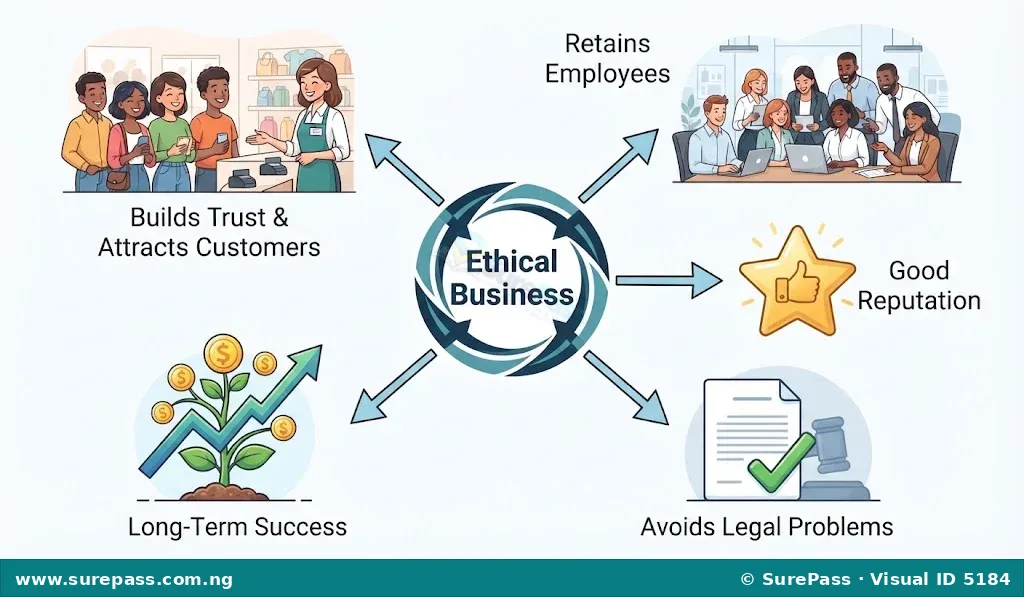
Practicing good ethics is very important for any business. It helps a business to succeed and grow in the long run by building trust and a good reputation.
The importance of ethics in business includes the following:
- Builds Trust: When a business acts ethically, customers, employees, and suppliers trust it. Customers believe they will receive good products and fair prices, while employees believe they will be treated well and respected.
- Attracts Customers: People prefer to buy from businesses they trust and that have a good name. An ethical business often attracts more customers who want to support companies that operate responsibly.
- Retains Employees: Employees want to work for a company that treats them fairly, pays them well, and shows respect. Ethical businesses tend to have happier employees who are more likely to stay with the company, reducing staff turnover.
- Good Reputation: An ethical business earns a good name and positive image in the community and among its competitors. This positive reputation can lead to more business opportunities and support from various stakeholders.
- Avoids Legal Problems: Businesses that consistently follow ethical rules are less likely to break laws and regulations. This helps them avoid heavy fines, lawsuits, and other legal troubles that can be costly and damaging.
- Long-Term Success: Businesses built on strong ethical practices are more stable and tend to last longer. They have a solid foundation of trust, good relationships, and responsible operations, which contributes to their sustainability and growth.
Basic Ethical Principles in Business
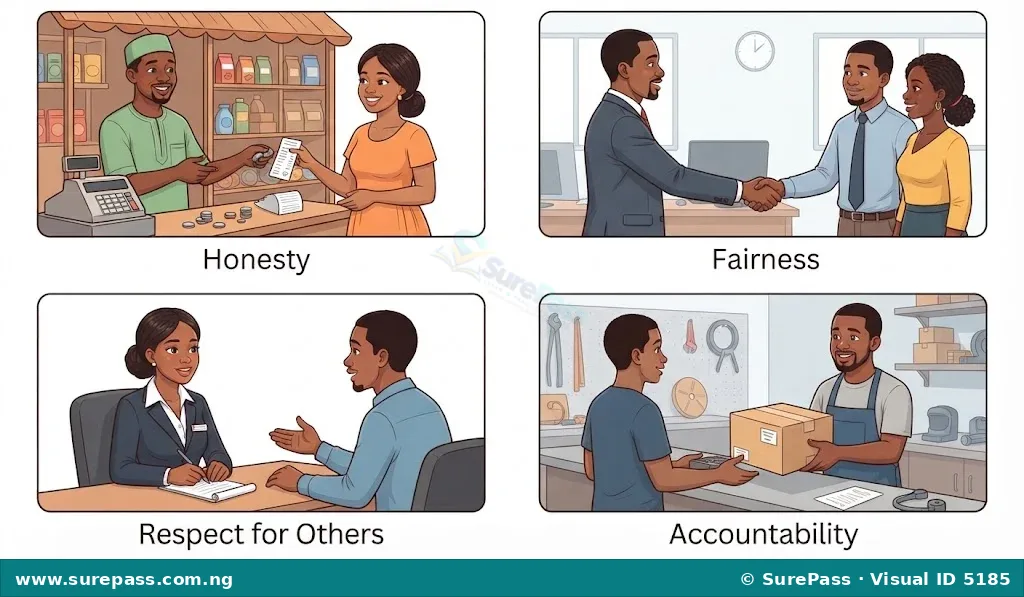
Several basic principles guide ethical behaviour in business. These principles help businesses make good decisions and act responsibly in all their dealings.
Some basic ethical principles include:
- Honesty: This principle means being truthful and sincere in all business dealings. Businesses should not lie to customers about the quality or features of their products or services. They should also be honest with their employees and suppliers. For example, a shop owner should always give the correct change to a customer and clearly state any faults in a product before selling it.
- Fairness: Fairness means treating everyone equally and justly, without favouritism or discrimination. This includes treating all customers fairly, regardless of their background, and paying employees fair wages for their work. A business should ensure equal opportunities for all its staff.
- Respect for Others: This principle involves treating customers, employees, suppliers, and even competitors with dignity, politeness, and consideration. It means listening to complaints, valuing different opinions, and avoiding rude or disrespectful behaviour. For instance, a business should respect customer privacy by not sharing their personal information.
- Accountability: Accountability means taking responsibility for one’s actions, decisions, and their consequences. If a business makes a mistake or a product is faulty, it should admit it and work to fix the problem promptly. For example, an accountable business will offer a refund or replacement for a defective product.
- Transparency: This means being open, clear, and honest about business practices and information. Businesses should not hide important information from customers or employees that affects their choices or well-being. For example, clearly stating the ingredients of a food product, the terms and conditions of a service, or the pricing structure.
- Integrity: Integrity means doing the right thing consistently, even when no one is watching or when it is difficult. It involves sticking to strong moral principles and being consistent in ethical behaviour, ensuring that actions match words.
Ethical and Unethical Behaviour
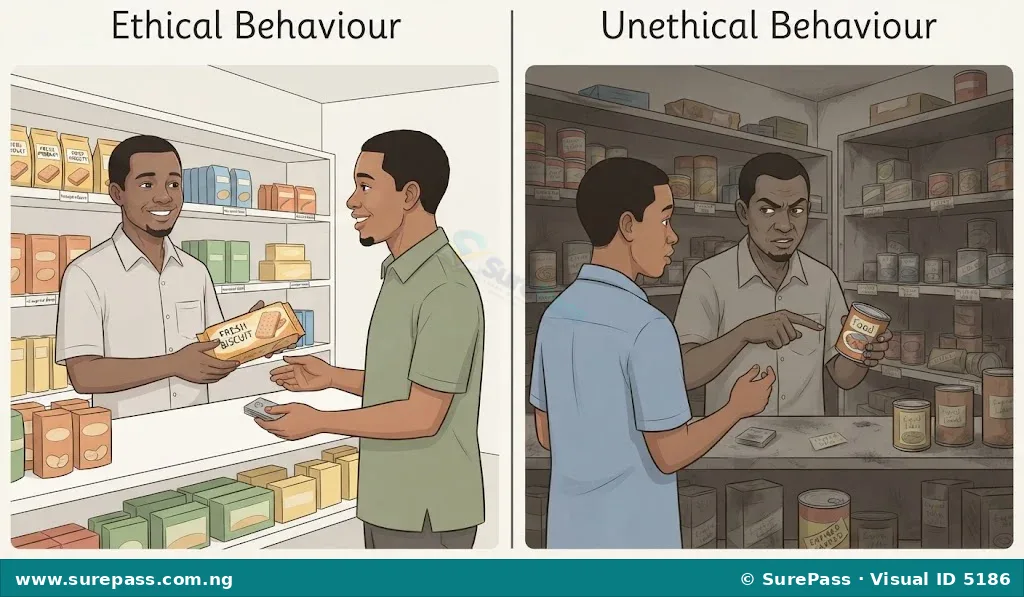
In business, actions can be categorised as either ethical or unethical, depending on whether they follow moral principles and standards.
Ethical Behaviour
Ethical behaviour in business means acting in a way that is morally right, fair, and honest. It involves making decisions that benefit the business without causing harm to customers, employees, or the community.
Examples of ethical behaviour include:
- Selling quality products that are safe for use and meet advertised standards.
- Giving accurate and truthful information about products and services to customers.
- Paying employees fair wages and ensuring their salaries are paid on time.
- Treating all customers with respect, politeness, and without discrimination.
- Keeping customer information private and secure, not sharing it without permission.
- Being honest about prices and not overcharging customers for goods or services.
- Returning lost items found on the business premises to their rightful owners.
- Ensuring the business operations do not pollute the environment.
Unethical Behaviour
Unethical behaviour in business means acting in a way that is morally wrong, unfair, dishonest, or harmful. Such actions can negatively affect customers, employees, the business itself, or the wider community.
Examples of unethical behaviour include:
- Selling fake, expired, or substandard products that can harm customers.
- Lying to customers or misleading them with false advertisements to make a sale.
- Paying employees very low wages, delaying their salaries, or making them work in unsafe conditions.
- Discriminating against certain customers or employees based on their background, gender, or religion.
- Sharing customer private information or data without their consent.
- Cheating customers by giving wrong change, overpricing items, or using faulty weighing scales.
- Stealing money, goods, or ideas from the business, employees, or customers.
- Polluting the environment with business waste or harmful chemicals.
Consequences of Unethical Behaviour on Employees and Businesses
Unethical behaviour can have serious negative effects on both the employees who work for a business and the business itself, often leading to severe problems.
Consequences on Employees
When a business acts unethically, its employees can suffer in many ways:
- Loss of Trust: Employees lose trust in their employers if they observe unethical practices, leading to low morale and a lack of commitment to the company.
- Unfair Treatment: Unethical businesses might treat employees unfairly, such as denying them deserved promotions, paying them less than their worth, or forcing them to work in unsafe or unhealthy conditions.
- Job Insecurity: If a business fails or faces severe legal issues due to unethical practices, employees may lose their jobs, leading to financial hardship.
- Stress and Demotivation: Working in an unethical environment can be highly stressful and make employees feel demotivated, affecting their productivity and overall well-being.
- Bad Reputation for Employees: Employees associated with an unethical business might also get a bad reputation, making it difficult for them to find new jobs in the future.
Consequences on Businesses
Unethical behaviour can severely damage a business, affecting its operations, finances, and even leading to its closure:
- Loss of Customers: Customers will stop buying from a business they do not trust or that has been involved in unethical practices. This leads to a significant drop in sales and profits.
- Bad Reputation: News of unethical practices spreads quickly through word-of-mouth and social media, giving the business a bad name. This negative reputation makes it difficult to attract new customers, partners, or even talented employees.
- Legal Problems and Fines: Unethical actions often violate laws and regulations, leading to heavy fines, costly lawsuits, and even imprisonment for the business owners or managers involved.
- Loss of Investors: People who invest money in businesses prefer ethical and stable companies. Unethical behaviour can scare away current and potential investors, making it hard for the business to get the funding it needs to grow.
- Business Closure: In severe cases, a business involved in serious unethical practices might be forced to shut down by government authorities or go bankrupt due to a complete loss of customers and overwhelming legal costs.
- Difficulty in Attracting Talent: Talented and skilled individuals prefer to work for reputable, ethical companies. Unethical businesses struggle to hire and keep skilled employees, which affects their ability to compete and innovate.
Preventing Unethical Issues in Business
Preventing unethical behaviour is crucial for the success, growth, and sustainability of any business. Businesses can take several important steps to ensure that ethical practices are followed by everyone.
How to Prevent Unethical Behaviour in Business
The following steps can help businesses prevent unethical issues and promote a culture of integrity:
- Set Clear Rules: Businesses should develop clear rules and guidelines, often called a “code of conduct,” that explain what ethical behaviour means for all employees. These rules should be communicated effectively to everyone in the organisation.
- Lead by Example: Business owners, managers, and leaders must consistently act ethically themselves. When leaders demonstrate strong ethical behaviour, employees are more likely to follow their example and uphold similar standards.
- Train Employees: Regular training sessions can educate employees about ethical principles, help them identify unethical situations, and teach them what to do if they encounter such issues. This builds awareness and confidence.
- Encourage Reporting: Businesses should create a safe and confidential way for employees to report unethical behaviour without fear of punishment or retaliation. This helps to identify and address problems early before they become more serious.
- Fair Treatment of Employees: Treat all employees fairly, pay them well, provide good working conditions, and offer opportunities for growth. Happy, respected, and well-compensated employees are less likely to engage in unethical acts.
- Regular Checks and Monitoring: Businesses should regularly check their operations, processes, and financial records to ensure that ethical standards are being met. This can include internal audits, quality control checks, and customer feedback mechanisms.
- Reward Ethical Behaviour: Recognise and reward employees who consistently demonstrate strong ethical behaviour and uphold the company’s values. This encourages others to act ethically and reinforces the importance of integrity.





0 comments
Open the discussion when you need it. Comments stay collapsed until requested so the initial article remains light.