



ARTICLE CONTENTSOn this page 5 sections
History of Taxation in Nigeria
Performance Objectives
By the end of the lesson, students should be able to:
- state the meaning of tax and taxation;
- narrate the history of taxation from pre-colonial to post-colonial era.
- narrate the history of taxation on the various regions in Nigeria
Meaning of Tax and Taxation
A tax is a compulsory payment made by individuals and businesses to the government.
These payments are not made in exchange for any direct goods or services. Instead, they are used to fund public services that benefit everyone in the country.
Taxation is the system or process by which a government collects money from its citizens and businesses to pay for public services.
It is how governments raise the money needed to build roads, schools, hospitals, and provide security, among other things.
History of Taxation in Nigeria
The history of taxation in Nigeria can be divided into three main periods: the pre-colonial era, the colonial era, and the post-colonial era. Each period had different ways of collecting money from the people.
Taxation in the Pre-Colonial Era
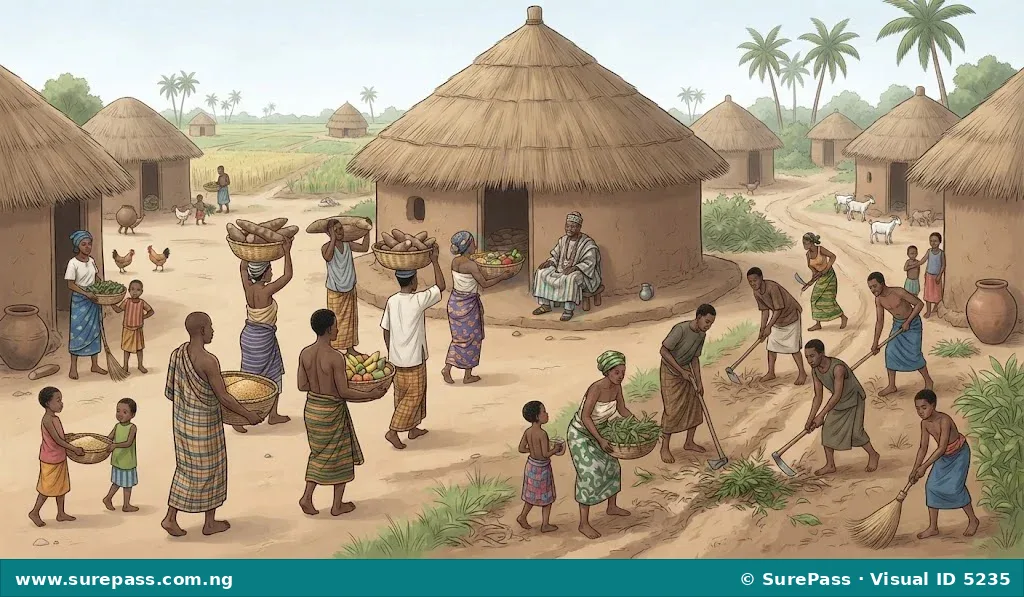
Before the arrival of the British colonialists, various kingdoms and communities in Nigeria had their own systems for collecting resources from their people. These systems were not always called “taxes” but served a similar purpose: to support the leaders and provide for the community.
In the pre-colonial era, payments were often made in goods, services, or labour rather than money. These payments were used to maintain the traditional rulers, elders, and community projects.
Examples of pre-colonial forms of taxation include:
- Tributes: People paid tributes to their kings or chiefs in the form of farm produce, livestock, or crafts. This was common in many parts of Nigeria, including the Yoruba, Igbo, and Hausa kingdoms.
- Labour: Community members were often required to contribute their labour for communal projects such as clearing paths, building markets, or constructing defensive walls. This was a way of contributing to the common good.
- Market Levies: In some areas, traders paid a small portion of their goods or earnings to the local chief or market head for the right to trade in the market.
- Gifts: People sometimes offered gifts to their rulers as a sign of loyalty and respect, which also helped to support the leadership.
Taxation in the Colonial Era
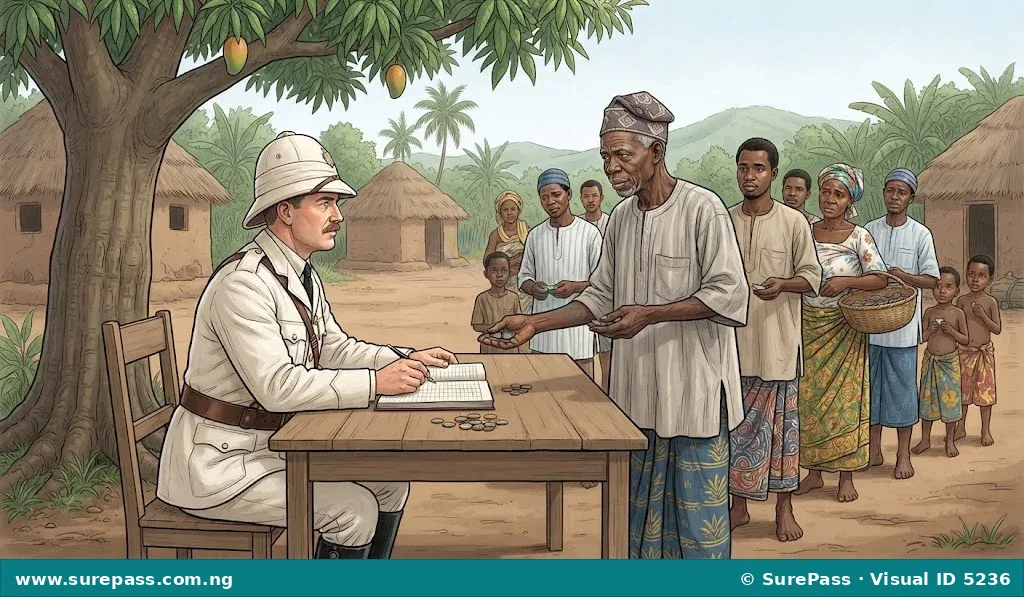
When the British colonial government took control of Nigeria, they introduced a more formal system of taxation, mainly to fund their administration and development projects. This marked a significant shift from the traditional systems.
The colonial government introduced direct taxes, which were often collected from individuals based on their income or property. These taxes were usually paid in money, which forced many Nigerians to engage in cash-crop farming or wage labour to earn money.
Key forms of taxation during the colonial era included:
- Poll Tax: This was a fixed tax levied on every adult male, regardless of his income or wealth. It was a major source of revenue for the colonial government, especially in the Northern and Eastern regions.
- Head Tax: Similar to the poll tax, this was a tax on each adult male, sometimes also including adult females in certain areas.
- Hut Tax: This tax was levied on each hut or dwelling owned by an individual. It was common in some parts of the country.
- Income Tax: As the economy developed, a more structured income tax was introduced for those in formal employment.
The introduction of these taxes sometimes led to resistance and protests, as people were not used to paying money directly to a foreign government.
Taxation in the Post-Colonial Era
After Nigeria gained independence in 1960, the new Nigerian government continued to develop and refine the tax system inherited from the colonial administration. The aim was to create a more effective and equitable system to fund national development.
In the post-colonial era, the tax system became more complex, with different types of taxes introduced to generate revenue from various sources. The government needed funds for large-scale infrastructure, education, healthcare, and other public services for a growing population.
Examples of taxes in the post-colonial era include:
- Personal Income Tax (PIT): This is a tax on the income of individuals, including salaries, wages, and profits from businesses. It is collected by state governments.
- Company Income Tax (CIT): This is a tax on the profits of companies and corporations. It is collected by the federal government.
- Value Added Tax (VAT): This is a consumption tax levied on goods and services at each stage of production and distribution. It is collected by the federal government.
- Customs and Excise Duties: These are taxes on imported and exported goods, as well as on certain goods produced locally. They are collected by the federal government.
- Property Tax: This is a tax on land and buildings, usually collected by local governments.
The tax system continues to evolve with new laws and policies aimed at improving collection and ensuring fairness.

History of Taxation in Various Regions of Nigeria
Taxation practices also varied across the different regions of Nigeria, reflecting their unique social structures, economies, and the way colonial rule was implemented.
Northern Region
In the Northern Region, which was largely dominated by the Sokoto Caliphate before colonial rule, a well-established system of Islamic taxes existed. These included:
- Zakat: A religious tax on wealth, livestock, and farm produce, collected for charitable purposes.
- Jizya: A tax levied on non-Muslims in exchange for protection and the right to practice their religion.
- Kharaj: A land tax.
The British colonial administration largely adopted and modified these existing systems, introducing the Native Revenue Ordinance in 1904 and later the Direct Taxation Ordinance of 1918. These ordinances formalised the collection of poll tax and cattle tax, often collected through traditional rulers.
Western Region
In the Western Region, particularly among the Yoruba people, pre-colonial contributions included tributes to Obas (kings) and chiefs, as well as communal labour. These were often in the form of farm produce, cowries (a form of currency), or services.
The colonial government introduced direct taxation, such as the poll tax, which was met with some resistance, especially when it was first introduced in areas not accustomed to such direct money payments. The taxation system was often administered through the traditional chiefs and local councils.
Eastern Region
The Eastern Region, particularly among the Igbo people, had a more decentralised political structure. Pre-colonial contributions were often voluntary or based on communal efforts for specific projects, rather than formal taxes to a central authority.
The introduction of direct taxation, especially the poll tax on men, by the colonial government in the Eastern Region was particularly challenging. It led to significant protests, such as the Aba Women’s Riot of 1929, because women, who were economically active, were not initially taxed but felt the impact of the taxes on their husbands and communities. The colonial government later adjusted its approach to taxation in the region.
Understanding the history of taxation helps to explain how Nigeria’s current tax system developed and why it is important for national growth.



0 comments
Open the discussion when you need it. Comments stay collapsed until requested so the initial article remains light.