


ARTICLE CONTENTSOn this page 7 sections
Meaning, Functions and Types of an Office for JSS 1
Performance Objectives
By the end of the lesson, students should be able to:
- define an office;
- state the functions of an office;
- differentiate between the types of office;
- identify the departments in an office and their functions;
- design and set up an office.
Meaning of an Office
An office is a place where people work, usually performing administrative, professional, or business tasks.
It is a central point where information is received, processed, stored, and sent out. Offices can be found in many different places, such as schools, hospitals, banks, government buildings, and private businesses. The main purpose of an office is to help an organisation run smoothly by managing its daily operations.
Functions of an Office
An office performs several important functions that are essential for any organisation to operate effectively. These functions ensure that work is organised, information flows correctly, and decisions are made based on accurate records.
The main functions of an office include:
- Receiving Information: An office receives various types of information from inside and outside the organisation. This can include letters, emails, phone calls, reports, and customer feedback.
- Processing Information: After receiving information, the office processes it. This involves sorting, analysing, summarising, and preparing documents. For example, invoices are checked, reports are written, and data is entered into computers.
- Storing Information: Important documents and records need to be kept safe and organised for future reference. Offices use filing cabinets, computer databases, and other storage systems to store information securely.
- Distributing Information: Information that has been processed and stored needs to be sent to the right people, both within the organisation and to external contacts. This can be done through emails, memos, reports, or phone calls.
- Communication: An office serves as a communication hub. It facilitates communication between different departments, employees, customers, and suppliers. This ensures everyone is aware of important updates and tasks.
- Record Keeping: Keeping accurate records of all transactions, activities, and decisions is a crucial function. These records help the organisation track its progress, meet legal requirements, and make informed future plans.
Types of Office
Offices come in different forms and sizes, depending on the needs of the organisation and the nature of the work being done. Understanding these types helps to appreciate how businesses adapt their workspaces.
Small Office and Large Office
Offices can be broadly categorised by their size and the scale of operations they support.
- Small Office: A small office typically has a limited number of employees, perhaps one to ten people. It usually occupies a smaller physical space and handles a narrower range of tasks. Small businesses, startups, or individual professionals often operate from small offices. For example, a local tailor’s office or a small law firm’s office.
- Large Office: A large office has many employees, often hundreds or thousands, and occupies a much bigger physical space, sometimes across multiple floors or buildings. It handles a wide variety of complex tasks and usually belongs to large corporations, government agencies, or big institutions. For example, the head office of a major bank or a large manufacturing company.
Flexible Workspaces
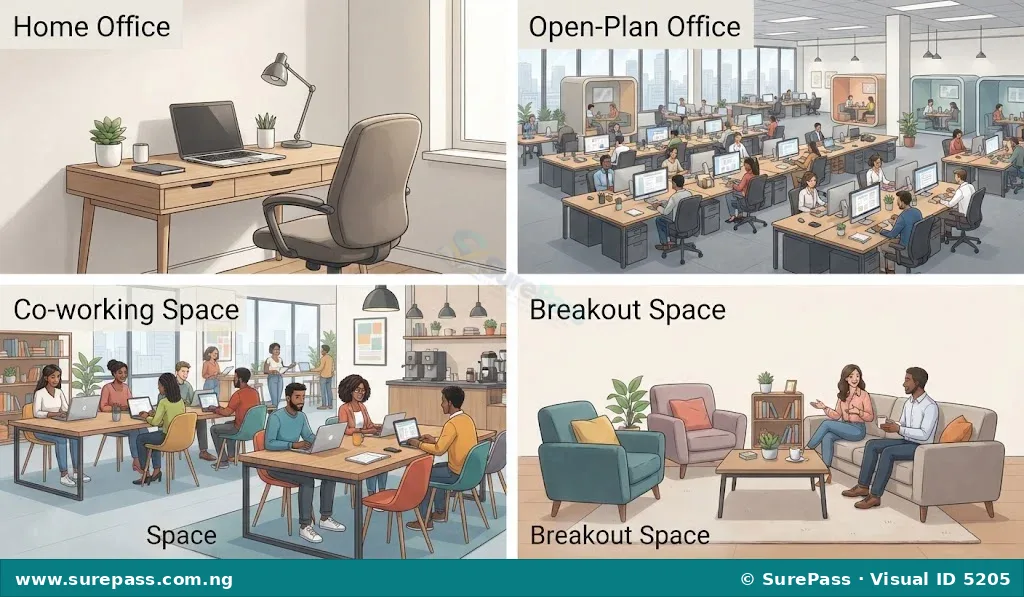
Modern technology and changing work styles have led to the development of flexible workspaces. These are office setups that are not traditional, fixed desk environments, offering more adaptability for workers.
- Virtual Offices: A virtual office allows employees to work from different locations, often from their homes, while still having a professional business address and communication services. Workers use technology like video calls, email, and cloud software to collaborate.
- Co-working Spaces: These are shared office environments where individuals or small teams from different companies can rent desks or private offices. They offer shared amenities like meeting rooms, internet, and printing services, fostering a community feel.
- Creative Spaces: These are office areas specifically designed to encourage new ideas, innovation, and collaboration. They often have colourful designs, comfortable furniture, and tools for brainstorming, such as whiteboards and interactive screens.
- Breakout Spaces: Breakout spaces are informal areas within an office where employees can relax, have casual meetings, or work away from their main desks. They are usually comfortable and designed to promote informal interaction and short breaks.
Departments in an Organisation and their Functions
Most organisations are divided into different departments, with each department responsible for specific tasks. This division of labour helps the organisation to operate efficiently and achieve its goals. Each department plays a vital role in the overall success of the business.
Observe the diagram below, which illustrates how different departments might be arranged within an organisation.
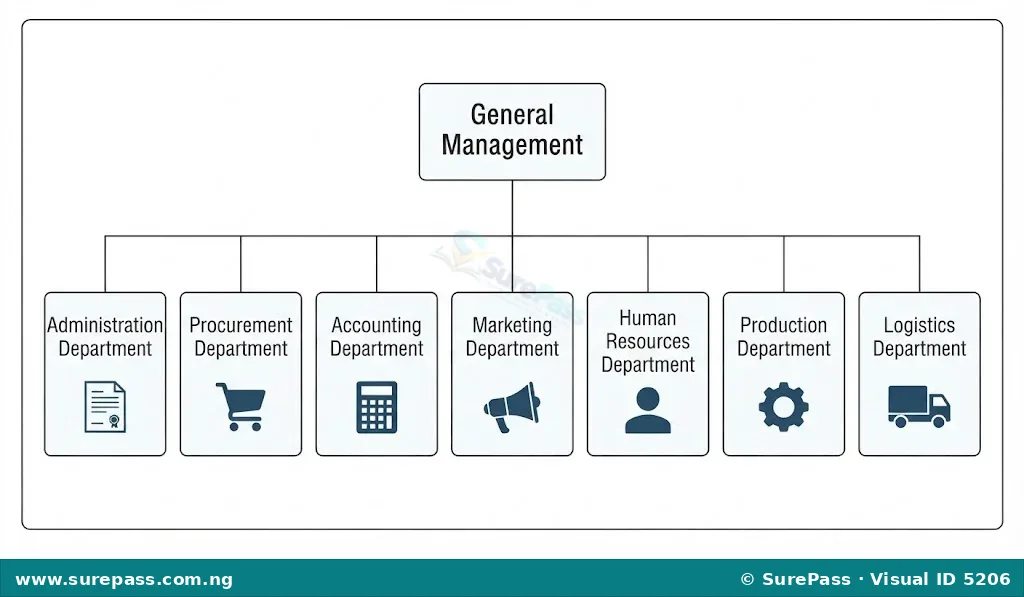
The common departments in an organisation and their functions include:
- Administration Department: This department is responsible for the overall management and smooth running of the office. Its functions include managing office supplies, handling correspondence, scheduling meetings, and ensuring general office maintenance.
- Procurement Department: The procurement department is responsible for buying all the goods, services, and materials that the organisation needs to operate. This includes finding suppliers, negotiating prices, and ensuring timely delivery of items.
- Accounting Department: This department handles all financial matters of the organisation. Its functions include keeping records of money received and spent, preparing financial statements, managing payroll, and ensuring that taxes are paid correctly.
- Marketing Department: The marketing department is responsible for promoting the organisation’s products or services to customers. Its functions include market research, advertising, sales promotion, and public relations to attract and retain customers.
- Human Resources Department (HR): The HR department manages all matters related to the employees of the organisation. Its functions include recruiting new staff, training and development, managing employee benefits, and handling employee relations.
- Production Department: This department is responsible for manufacturing or creating the goods that the organisation sells. Its functions include planning production schedules, managing raw materials, overseeing the manufacturing process, and ensuring quality control.
- Logistics Department: The logistics department manages the flow of goods from the point of origin to the point of consumption. Its functions include transportation, warehousing, inventory management, and ensuring that products reach customers efficiently.
Designing and Setting Up an Office
Designing and setting up an office involves planning the space and arranging the necessary items to create a functional and comfortable work environment. This skill helps in creating an organised space for work, whether it is a small corner at home or a dedicated room.
The procedure for designing and setting up a simple office involves the following steps:
- Choose a Suitable Space: Identify a quiet and well-lit area that can be dedicated to office work. This could be a spare room, a corner of a living room, or a section of a shop.
- Plan the Layout: Think about how to arrange furniture and equipment. Consider where the desk, chair, and storage units will be placed to allow for easy movement and access to items.
- Gather Essential Furniture: Obtain a sturdy desk and a comfortable chair. These are the most important pieces of furniture for any office.
- Arrange Storage: Use shelves, drawers, or filing cabinets to keep documents, stationery, and other supplies organised. This helps to keep the workspace tidy and efficient.
- Set Up Basic Equipment: Place essential equipment like a computer, printer, or telephone in easily accessible locations on the desk. Ensure power outlets are available and cables are neatly managed.
- Organise Supplies: Stock the office with necessary supplies such as pens, paper, notebooks, and folders. Keep them in designated places so they are easy to find when needed.
- Ensure Good Lighting: Make sure the office has enough light to prevent eye strain. Use natural light where possible, and add a desk lamp if needed.
- Keep it Tidy: Regularly clean and organise the office space. A tidy environment helps in focusing on work and improves productivity.


0 comments
Open the discussion when you need it. Comments stay collapsed until requested so the initial article remains light.