


ARTICLE CONTENTSOn this page 9 sections
Concept of Credit
Performance Objectives
By the end of the lesson, students should be able to:
- explain the meaning and origin of credit;
- identify different types of credits;
- state different sources of credit;
- explain the benefits of taking credit;
- Implications of taking credit.
Meaning of Credit
Credit is an agreement where a borrower receives money, goods, or services now with the promise to pay for them at a later date.
It involves trust between the person giving the credit, known as the lender, and the person receiving it, known as the borrower. For example, when a shop owner allows a customer to take goods and pay next month, that is a form of credit.
Origin of Credit
The idea of credit is very old and has existed for a long time, even before money became widely used. In ancient times, people often exchanged goods and services based on trust and promises.
For instance, a farmer might give some of his harvest to a neighbour who promised to return an equal amount after their own harvest. This was a simple form of credit, built on the understanding that debts would be repaid. As societies developed, this system of trust and delayed payment became more organised, leading to the modern forms of credit used today.
Types of Credit
Credit comes in different forms, each designed to meet specific needs. Understanding these types helps people choose the most suitable option when they need to borrow.
Credit Card
A credit card is a small plastic card issued by banks or other financial institutions. It allows the cardholder to buy goods and services on credit, meaning they can pay for them at a later date.
The bank pays the seller immediately, and the cardholder then owes the money to the bank. Credit cards have a spending limit, which is the maximum amount that can be borrowed using the card.

Bank Loan
A bank loan is a sum of money borrowed from a bank that must be repaid with interest over a set period.
Banks offer different kinds of loans to meet various needs. The common types of bank loans include:
- Term Loan: This is a loan given for a specific period, often several years. The borrower repays the loan in regular instalments (payments) over the agreed term. Term loans are often used for large purchases like starting a business or buying equipment.
- Consumer Loan: This type of loan is given to individuals for personal use, such as buying household items, paying for education, or covering medical expenses. Consumer loans are usually repaid over a shorter period compared to term loans.
Overdraft
An overdraft occurs when a bank allows a customer to withdraw more money from their account than they actually have in it, up to an agreed limit.
It is a short-term form of credit, often used to cover unexpected expenses or temporary cash shortages. Interest is usually charged on the amount overdrawn for the period it is used.
Sources of Credit
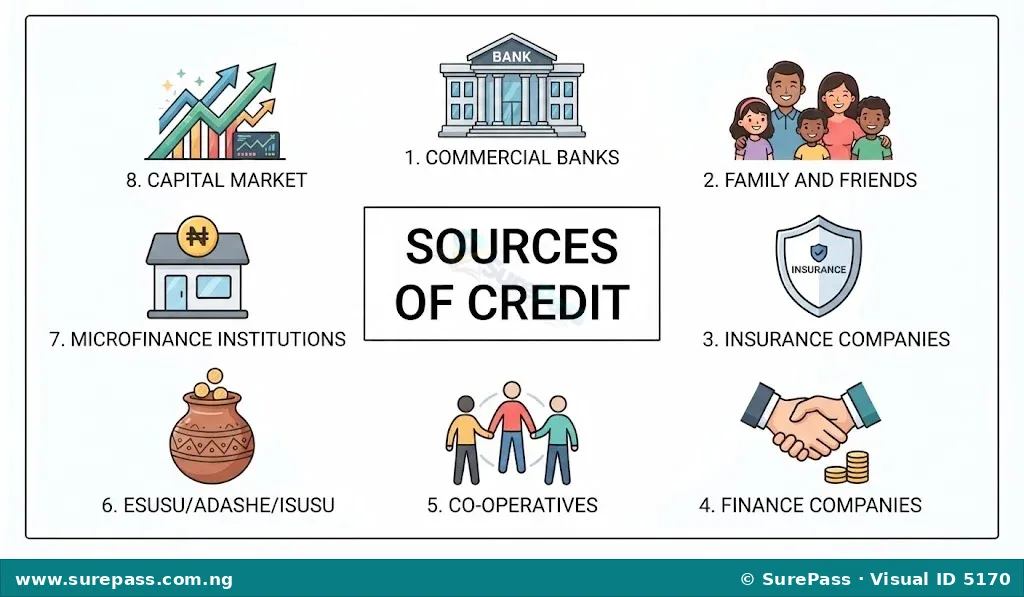
People and businesses can obtain credit from various sources. These sources provide the funds or goods that borrowers need.
Common sources of credit include:
- Banks: Commercial banks are major providers of credit. They offer various types of loans, overdrafts, and credit cards to individuals and businesses.
- Family and Friends: Many people borrow money from their family members or friends, especially for smaller amounts or in emergencies. This type of credit often has flexible repayment terms and may not involve interest.
- Insurance Companies: Some insurance companies offer loans to their policyholders, especially against the cash value of certain types of insurance policies.
- Finance Companies: These are companies that specialise in providing loans to individuals and businesses. They may offer different types of loans, sometimes with more flexible terms than traditional banks.
- Co-operatives: Co-operative societies are organisations owned and controlled by their members. They often provide credit facilities, such as loans, to their members at reasonable interest rates.
- Esusu/Adashe/Isusu: These are traditional informal savings and credit schemes common in many Nigerian communities. Members contribute a fixed amount regularly, and the total sum is given to each member in rotation. It acts as a form of forced savings and a source of credit for its members.
- Non-Bank Microfinance Institutions (MFIs): These institutions provide small loans (microcredit) and other financial services to low-income individuals or groups who may not have access to traditional banking services. They often support small businesses and entrepreneurial activities.
- Capital Market: The capital market is where long-term funds are raised. Businesses can obtain credit by issuing bonds or shares, which are bought by investors. This is a more advanced source of credit typically used by larger companies.
Reasons and Benefits of Taking Credit
Taking credit can be very helpful when used wisely. People and businesses take credit for several important reasons:
- To Address Immediate Need: Credit allows people to acquire goods or services they need right away, even if they do not have enough cash at that moment. For example, a student might use credit to buy textbooks at the start of a new term.
- To Address Emergency: In unexpected situations like a sudden illness or an urgent house repair, credit can provide the necessary funds quickly. This helps people handle emergencies without delay.
- To Invest in Income-Earning Activities: Businesses often use credit to buy equipment, stock up on goods, or expand their operations. This investment can help them earn more money in the future. For example, a farmer might take a loan to buy improved seeds or a new tractor, which can lead to a bigger harvest and higher income.
Factors to Consider Before Taking Credit
Before taking credit, it is important to think carefully about certain factors to ensure that borrowing is a good decision. These considerations help prevent future problems and ensure responsible borrowing.
Key factors to consider include:
- Need for the Credit: Is the credit truly necessary? Borrowing for essential needs or income-generating investments is generally a wiser decision than borrowing for unnecessary wants or luxuries.
- Ability to Repay: Can the borrower realistically afford to pay back the loan, including any interest, within the agreed time? It is important to assess one’s income and expenses to ensure repayment is possible without causing financial strain.
- Terms and Conditions: What are the rules of the credit agreement? This includes understanding the interest rate, the repayment schedule, any fees involved, and what happens if payments are missed. Clear understanding of these terms is crucial.
- Purpose of the Credit: What will the borrowed money be used for? Using credit for productive purposes that can generate income or solve a critical problem is often a wise choice, as it can lead to positive outcomes.
Implications of Taking Credit
Taking credit has both positive and negative consequences, which are known as implications. Understanding these implications helps borrowers make responsible decisions and manage their finances effectively.
The implications of taking credit include:
- Increased Purchasing Power: Credit allows individuals and businesses to buy things they need or want immediately, even if they do not have the full amount of cash. This can improve living standards or help businesses grow faster.
- Interest Payments: Most forms of credit require the borrower to pay interest, which is an additional cost for borrowing money. This means the total amount repaid will be more than the amount originally borrowed.
- Debt Burden: If credit is not managed well, it can lead to a heavy debt burden. This happens when a person borrows too much or struggles to make repayments, which can cause significant financial stress and difficulty.
- Improved Credit History: When a borrower takes credit and repays it on time, they build a good credit history. A good credit history makes it easier to get more credit in the future, often with better terms and lower interest rates.
- Damaged Credit History: Failing to repay credit on time or defaulting on a loan can damage a person’s credit history. This makes it difficult to borrow money in the future and can lead to legal problems or asset seizure.
- Financial Discipline: Managing credit requires discipline to ensure timely repayments. This can help individuals develop better financial habits and improve their overall money management skills.




0 comments
Open the discussion when you need it. Comments stay collapsed until requested so the initial article remains light.