


ARTICLE CONTENTSOn this page 8 sections
Becoming an Informed Consumer of Financial Services
Performance Objectives
By the end of the lesson, students should be able to:
- explain the meaning of consumer of financial services;
- differentiate between consumers of financial services and consumers of other goods/services;
- discuss the challenges faced by consumers of financial services;
- identify strategies for mitigating challenges faced by consumers of financial services.
Introduction to Financial Services
In daily life, people use many services to manage money. These services are called financial services. They help individuals and businesses save money, borrow money, send money, and protect assets. Understanding these services and how to use them wisely is important for financial well-being.
Meaning of Consumer of Financial Services
A consumer is a person who buys or uses goods and services.
Financial services are services provided by banks, insurance companies, and other financial institutions to help people manage their money.
A consumer of financial services is a person who uses services provided by financial institutions to manage their money.
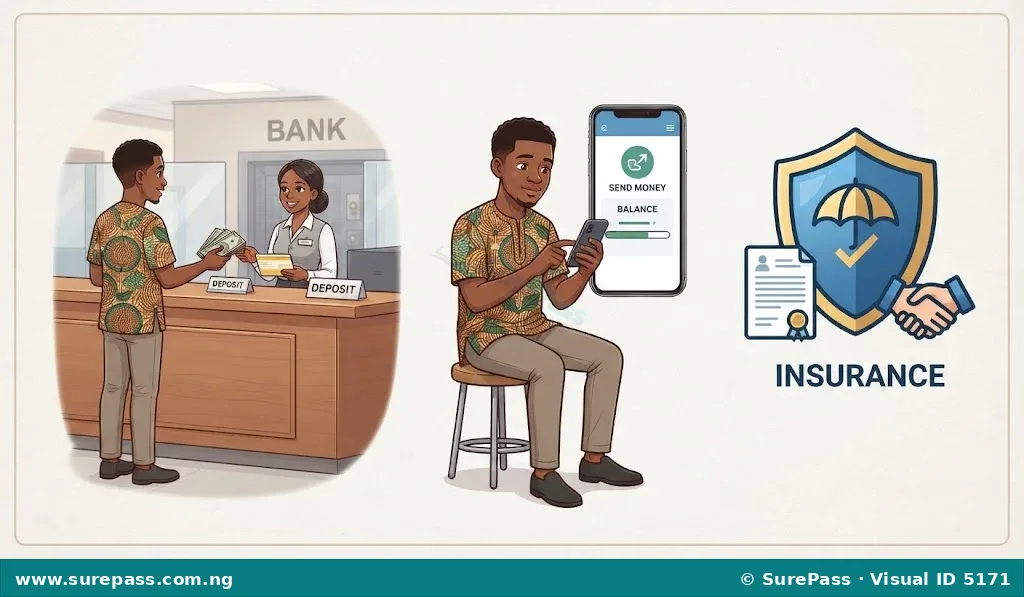
This includes individuals who save money in a bank, take out a loan, send money to family, or buy insurance.
Examples of financial services include:
- Saving money in a bank account.
- Sending money to another person using a bank or mobile money agent.
- Taking a small loan from a bank or microfinance institution.
- Buying insurance to protect property or health.
Differences Between Consumers of Financial Services and Consumers of Other Goods/Services
Consumers use many types of goods and services every day. While all consumers aim to get value for money, there are important differences between buying a physical product like food or clothes, and using a financial service.
Consumers of Other Goods and Services
When a person buys goods like food, clothes, or a phone, they can usually see, touch, and immediately use the product. The quality can often be checked right away. For example, a person can taste food, try on clothes, or test a phone before buying or soon after.
Examples of other goods and services include:
- Buying food from a market.
- Purchasing clothes from a shop.
- Paying for transport to school.
- Getting a haircut.
Consumers of Financial Services
Financial services are often intangible, meaning they cannot be seen or touched like a physical product. For example, a bank account is a service, not a physical item. The benefits of a financial service, like interest on savings or protection from insurance, may not be seen immediately. It requires trust in the financial institution and understanding of complex terms.
The key differences are:
- Intangibility: Financial services are not physical objects. A person cannot touch a loan or a savings account.
- Complexity: Financial services often involve complex terms, conditions, and calculations that can be hard to understand.
- Trust: Consumers must trust financial institutions with their money and personal information.
- Long-term Impact: Decisions about financial services, like loans or investments, can have long-lasting effects on financial well-being.
- Information Asymmetry: Financial institutions often have more information and expertise than the average consumer, which can make it difficult for consumers to make informed choices.
The table below summarizes the differences between consumers of financial services and consumers of other goods and services:
| Feature | Consumers of Other Goods/Services | Consumers of Financial Services |
|---|---|---|
| Tangibility | Goods can be seen, touched, and physically examined. | Services are intangible and cannot be physically touched. |
| Immediate Evaluation | Quality can often be checked immediately upon purchase. | Benefits or problems may only appear after a long period. |
| Complexity | Products are usually simple to understand and use. | Services involve complex terms, interest rates, and agreements. |
| Level of Trust | Requires basic trust in the seller’s product quality. | Requires high trust, as consumers hand over money for safekeeping. |
Challenges Faced by Consumers of Financial Services
Consumers of financial services can face several challenges that make it difficult to use these services effectively and safely. These challenges can lead to financial losses or dissatisfaction.
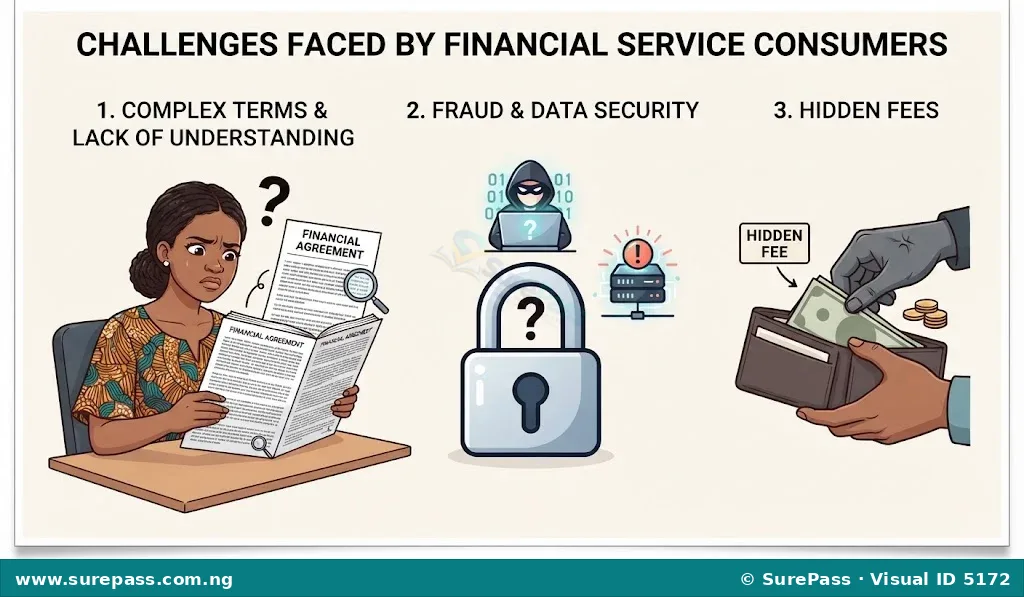
Some common challenges include:
- Lack of Information and Understanding: Many financial services use technical terms and complex rules that are difficult for consumers to understand. This can make it hard to choose the right service or know what to expect.
- Fraud and Scams: Dishonest individuals or groups may try to trick consumers into giving away money or personal information through fake financial offers, phishing emails, or fraudulent schemes.
- Hidden Fees and Charges: Some financial services may have fees or charges that are not clearly explained upfront. Consumers might only discover these costs after they have already committed to the service.
- Poor Customer Service: Consumers may experience difficulties when trying to get help, resolve issues, or make complaints with financial service providers. This can be frustrating and leave problems unresolved.
- Misleading Advertising: Financial institutions sometimes use advertisements that make their services seem better than they are, or they hide important details. This can lead consumers to make choices based on incomplete or false information.
- Privacy and Data Security Concerns: Financial services require consumers to share personal and sensitive information. There is a risk that this information could be misused or stolen if the financial institution does not have strong security measures.
- Difficulty Comparing Services: With many different financial products available, it can be hard for consumers to compare them effectively to find the best option for their needs.
Strategies for Mitigating Challenges Faced by Consumers of Financial Services
To protect themselves and make good financial decisions, consumers can adopt several strategies. These strategies help to reduce the risks and challenges associated with using financial services.
Important strategies include:
- Ask Questions: Always ask the financial service provider to explain anything that is unclear. Do not be afraid to ask for simpler explanations of terms, conditions, and fees.
- Read and Understand Terms and Conditions: Before signing any document or agreeing to a service, carefully read all the terms and conditions. If possible, ask a trusted adult to review them.
- Be Wary of Unsolicited Offers: Be cautious of unexpected calls, emails, or messages offering financial deals that seem too good to be true. Always verify the source of such offers.
- Protect Personal Information: Never share bank account details, passwords, or Personal Identification Numbers (PINs) with anyone, especially over the phone or internet, unless the identity of the recipient and the reason for sharing are absolutely verified.
- Compare Services: Before choosing a financial service, compare different options from various providers. Look at interest rates, fees, customer service reputation, and terms to find the best fit.
- Keep Records: Keep copies of all important documents, receipts, and communication related to financial services. This can be useful if there are any disputes or issues later.
- Report Problems: If poor service is experienced, fraud is suspected, or a complaint arises, it should be reported immediately to the financial institution. If the problem is not resolved, help can be sought from consumer protection agencies.
- Seek Financial Education: Learn more about how financial services work. Understanding basic financial concepts can help consumers make better decisions and avoid common pitfalls.
- Check for Regulatory Approval: Ensure that the financial institution is licensed and regulated by the appropriate authorities in Nigeria, such as the Central Bank of Nigeria (CBN), the Nigeria Deposit Insurance Corporation (NDIC), or the National Insurance Commission (NAICOM).
How to Safely Perform a Transaction at a Mobile Money Agent
Mobile money agents are common in many Nigerian communities. They help people deposit, withdraw, or transfer money. To avoid fraud and errors, consumers should follow safe transaction procedures.
The required materials are:
- A mobile phone with an active SIM card.
- The exact cash amount to be deposited or withdrawn.
- A notebook and pen to record transaction details.
The procedure involves the following steps:
- Verify the Agent’s Legitimacy: Look for official branding, banners, or certificates that show the agent is registered with a licensed mobile money operator.
- Confirm the Transaction Details: Clearly state the amount and the recipient’s phone number or account number to the agent. Write these details down to avoid mistakes.
- Protect the PIN: If a Personal Identification Number (PIN) must be entered on the phone or agent’s device, cover the keypad with one hand. Never tell the agent or anyone else the PIN.
- Wait for Confirmation: Do not leave the agent’s shop until a confirmation SMS (text message) is received on the mobile phone. Verify that the amount in the message is correct.
- Collect a Receipt: Ask the agent for a printed or written receipt of the transaction and keep it safely.
- Count the Cash: If withdrawing money, count the cash carefully before leaving the agent’s counter.




0 comments
Open the discussion when you need it. Comments stay collapsed until requested so the initial article remains light.