


ARTICLE CONTENTSOn this page 9 sections
Digital Currency
Performance Objectives
By the end of the lesson, students should be able to:
- explain the meaning of digital currency;
- state types of digital currency;
- discuss the benefits of digital currency;
- buy and sell using digital currency.
Introduction to Digital Currency
Money is an important part of daily life. For a long time, people used physical money like coins and paper notes to buy goods and services. However, with the growth of technology, new ways of handling money have emerged. One of these new ways is digital currency.
Digital currency is changing how people pay for things, send money to others, and manage their finances. It is a form of money that exists only in electronic form, without physical notes or coins.
Meaning of Digital Currency
Digital currency is a form of money that exists purely in electronic form and is stored and exchanged using computers and the internet.
Unlike physical cash that can be held in hand, digital currency is made up of digital records. These records show how much money a person has and when they send or receive money. Transactions with digital currency happen instantly or very quickly, often through mobile phones or computers.
Types of Digital Currency
There are different kinds of digital currencies, but two main types are important to understand:
- Central Bank Digital Currency (CBDC)
- Cryptocurrency
Central Bank Digital Currency (CBDC)
A Central Bank Digital Currency (CBDC) is a digital form of a country’s national currency, issued and backed by its central bank.
This means that a CBDC is official money, just like the paper notes and coins issued by the Central Bank. For example, in Nigeria, the Central Bank of Nigeria (CBN) launched the eNaira, which is Nigeria’s own digital currency. The eNaira is a digital version of the Nigerian Naira. It is safe because it is controlled and regulated by the CBN.
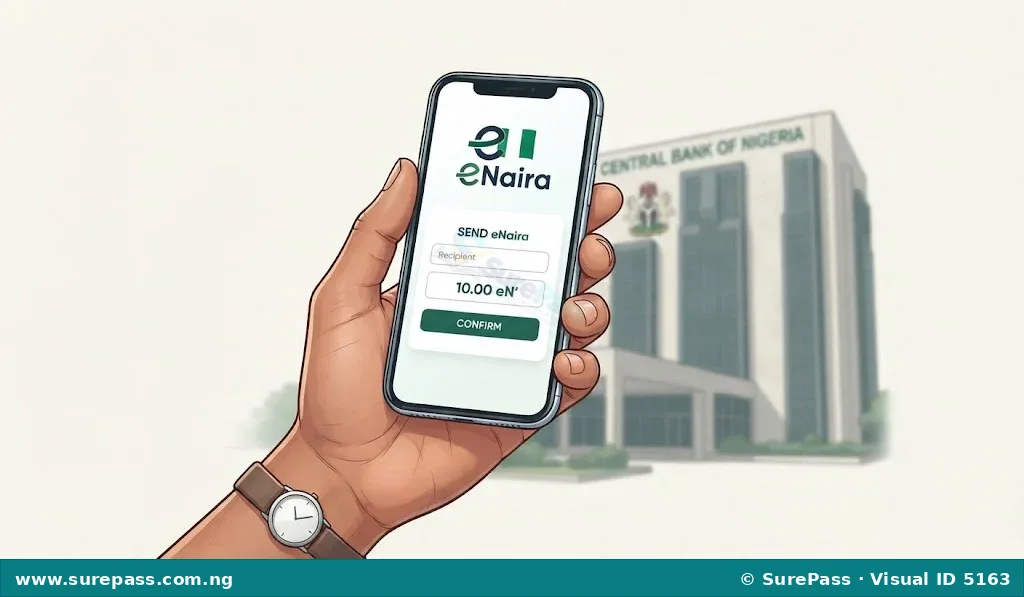
People can use CBDCs like the eNaira to make payments, send money to family and friends, and buy things online or in shops that accept it. It aims to make transactions faster, cheaper, and more secure for everyone.
Cryptocurrency
Cryptocurrency is a type of digital currency that uses strong encryption to secure transactions and control the creation of new units, and it is not issued or controlled by any central authority like a central bank.
Unlike CBDCs, cryptocurrencies are decentralised. This means no single government or bank controls them. Bitcoin and Ethereum are well-known examples of cryptocurrencies. They are created and managed by a network of computers. While cryptocurrencies offer new ways to handle money, their value can change very quickly, which makes them different from traditional money or CBDCs.
Benefits of Digital Currency
Digital currencies offer several advantages that make them useful for individuals and businesses:
- Faster Transactions: Digital currency transactions can happen almost instantly, especially across different locations. This is much quicker than traditional bank transfers which can take days.
- Lower Transaction Costs: Sending money digitally, especially across borders, can sometimes be cheaper than using traditional banking services, which often charge higher fees.
- Increased Convenience: Digital currency allows people to make payments and manage their money using their mobile phones or computers from anywhere, at any time. There is no need to visit a bank or an ATM.
- Improved Security: Digital currency transactions often use advanced encryption technology, which makes them secure against fraud. CBDCs, being backed by central banks, also offer a high level of security and trust.
- Financial Inclusion: Digital currency can help people who do not have traditional bank accounts to access financial services, making it easier for them to save, send, and receive money.
Risks of Digital Currency
While digital currencies have many benefits, they also come with certain risks that users should be aware of:
- Volatility (for Cryptocurrencies): The value of cryptocurrencies can change very quickly and unpredictably. This means that the money available today might be worth less tomorrow, or more. This makes them risky for investment.
- Security Risks: Although digital currencies use strong security, they can still be targeted by hackers. Digital wallets or accounts can be hacked if not properly secured, leading to loss of funds.
- Lack of Regulation (for Cryptocurrencies): Many cryptocurrencies are not regulated by governments or central banks. This means there might be less protection for users if something goes wrong, compared to traditional banking or CBDCs.
- Internet and Technology Dependence: To use digital currency, access to the internet and a device like a smartphone or computer is needed. If there is no internet or the device fails, the money cannot be accessed.
- Scams and Fraud: There are many scams related to digital currencies, where people try to trick others into sending them money or giving away their account details.
Mitigating Risks of Digital Currency
To protect oneself when using digital currency, it is important to take certain precautions:
- Use Strong Passwords: Always create strong, unique passwords for digital currency accounts and wallets. Passwords should not be shared with anyone.
- Enable Two-Factor Authentication (2FA): This adds an extra layer of security by requiring a second verification step, like a code sent to a phone, before an account can be accessed.
- Be Wary of Scams: Suspicious links should not be clicked, and messages asking for digital currency details should not be responded to. The sender and the purpose of any transaction should always be verified.
- Keep Software Updated: Ensure that the apps and software used for digital currency are always updated to the latest versions, as updates often include security improvements.
- Understand What Is Being Used: Before using any digital currency, especially cryptocurrencies, it is important to learn how it works, its risks, and how its value might change.
- Use Reputable Platforms: Only well-known and trusted platforms or apps should be used for managing digital currency. For CBDCs like eNaira, the official app provided by the Central Bank should be used.
Buying and Selling Using Digital Currency
Using digital currency to buy and sell goods or services is similar to making other electronic payments. The process generally involves a digital wallet or an app.
How to Buy Using Digital Currency
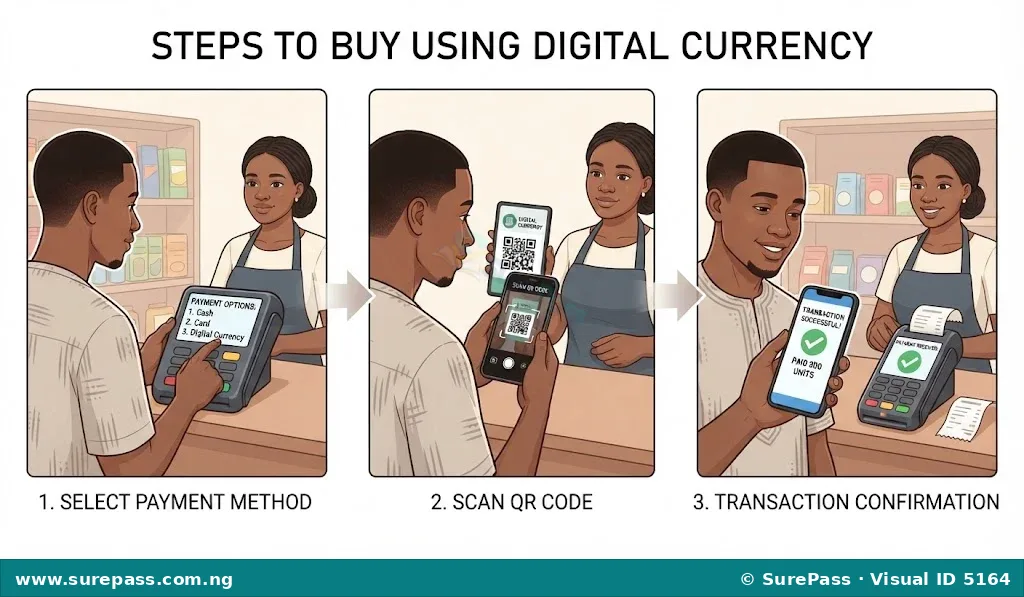
When an item is to be bought using digital currency, the steps are usually as follows:
- Ensure Funds: Enough digital currency must be available in the digital wallet or account to cover the cost of the item to be bought.
- Choose Digital Currency as Payment: At the point of purchase, digital currency should be selected as the payment method. For example, if eNaira is being used, eNaira payment would be chosen.
- Scan or Enter Details: The seller will usually provide a QR code or a unique digital wallet address. The digital currency app is used to scan the QR code or manually enter the address.
- Enter Amount: The exact amount of money required for the purchase is input into the app.
- Confirm Transaction: The transaction details (amount, recipient) should be reviewed carefully, and then the payment confirmed. A PIN might need to be entered or a fingerprint used for security.
- Receive Confirmation: Both the buyer and the seller will receive an instant confirmation that the payment was successful.
How to Sell Using Digital Currency (Receive Payment)
If a seller wants to receive payment in digital currency, the process is also straightforward:
- Provide Digital Wallet Details: The buyer is given the digital wallet address or a QR code linked to the account is displayed. This is how the buyer knows where to send the money.
- Buyer Initiates Payment: The buyer will use their digital currency app to send the agreed amount to the seller’s wallet address or by scanning the QR code.
- Confirm Receipt: An alert or notification will be received in the digital currency app once the payment has been successfully sent and received in the account.
- Verify Amount: The correct amount should always be checked to ensure it has been received before handing over the goods or services.
Using digital currency for buying and selling makes transactions efficient and can be very convenient for both buyers and sellers.




0 comments
Open the discussion when you need it. Comments stay collapsed until requested so the initial article remains light.