



ARTICLE CONTENTSOn this page 10 sections
Meaning, Ways, Reasons and Benefits of Saving
Performance Objectives
By the end of the lesson, students should be able to:
- explain the meaning of saving;
- identify types of savings;
- explain the reasons for saving;
- discuss the benefits of savings;
- state the factors that determine Savings;
- save money.
- Describe the challenges to saving money and how to overcome them
Meaning of Saving
Saving is keeping money aside instead of spending it immediately.
It means putting away a part of current income for future use. People save money for different reasons, such as buying something expensive, preparing for emergencies, or investing for growth.
Ways of Saving
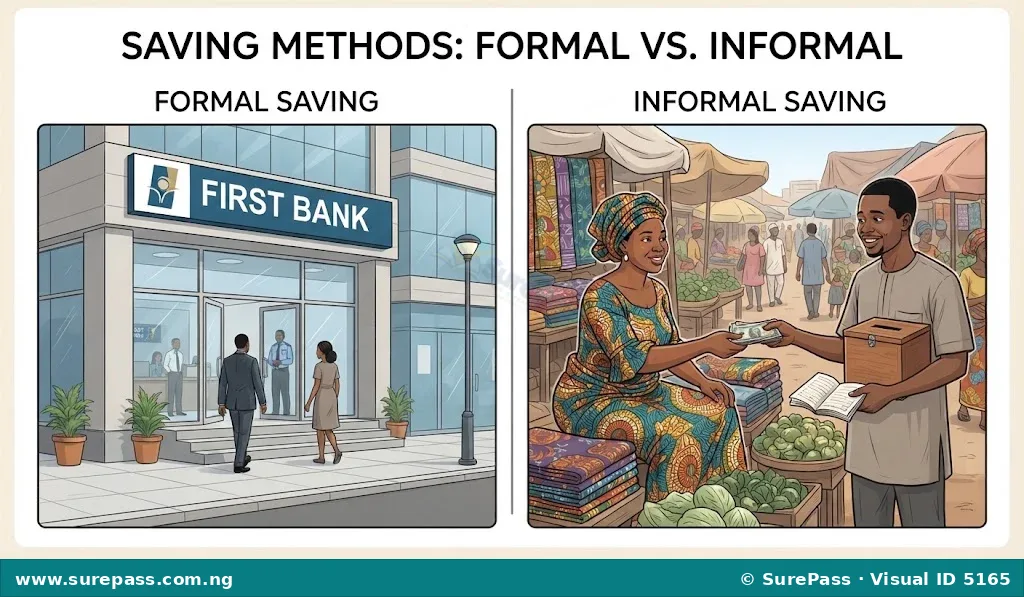
There are different ways people can save money. These ways can be grouped into formal and informal methods.
Formal Ways of Saving
Formal ways of saving involve using recognised financial institutions that are regulated by law. These institutions offer secure ways to keep money and often provide interest on savings.
Examples of formal saving methods include:
- Banks: These are financial institutions where people can open savings accounts. Money kept in banks is safe, and banks often pay a small amount of extra money, called interest, to savers. Examples of banks in Nigeria include First Bank, Zenith Bank, and GTBank.
- Commercial Banks: These are types of banks that offer a wide range of financial services, including savings accounts, current accounts, and loans, to individuals and businesses. They are a common place for people to save money formally.
- Co-operative Societies: These are groups of people who come together to achieve common economic goals. Members contribute money regularly, and this pooled money can be saved or lent out to members at low interest rates.
Informal Ways of Saving
Informal ways of saving do not involve formal financial institutions. They are often based on trust and community relationships. These methods are common in many Nigerian communities.
Examples of informal saving methods include:
- Thrift Collectors (Esusu): This is a traditional saving method where a person, known as a thrift collector or “Esusu” collector, collects a fixed amount of money from individuals daily, weekly, or monthly. The total amount collected is then returned to the individual after an agreed period, usually with a small deduction for the collector’s service.
- Saving at Home: Some people save money by keeping it in a safe place in their homes, such as a piggy bank, a box, or a secure container. While this method offers easy access to money, it may not be as safe as formal methods and does not earn interest.
Reasons for Saving Money
People save money for various important reasons. These reasons help individuals and families plan for their future and handle unexpected situations.
Common reasons for saving money include:
- For Future Needs: Saving helps people achieve future goals, such as paying for education, buying a house, or starting a business.
- For Emergencies: Unexpected events like illness, job loss, or accidents can require money. Having savings provides a safety net during such difficult times.
- To Buy Expensive Items: Large purchases like a car, a refrigerator, or a piece of land often require a significant amount of money that cannot be paid from a single income. Saving allows people to accumulate the necessary funds.
- For Investment: Saved money can be invested to earn more money. For example, money saved in a bank earns interest, or it can be used to buy assets that increase in value over time.
- For Retirement: Saving money during working years helps people have financial security and maintain their lifestyle after they stop working.
Benefits of Saving
Saving money offers many advantages that improve a person’s financial well-being and overall quality of life.
The benefits of saving include:
- Financial Security: Having savings provides a sense of security, knowing that there is money available for future needs or unexpected events.
- Achieving Goals: Saving makes it possible to reach personal and family goals, such as getting an education, buying property, or travelling.
- Peace of Mind: Knowing that there is money set aside for emergencies reduces worry and stress about financial difficulties.
- Avoiding Debt: When people have savings, they are less likely to borrow money and incur debt, especially for unexpected expenses.
- Earning Interest: Money saved in formal institutions like banks can earn interest, which means the savings grow over time without additional effort.
- Improved Standard of Living: Savings can be used to make investments or purchase assets that improve a person’s living conditions and comfort.
Factors that Determine Savings
Several factors influence how much money a person can save. Understanding these factors can help individuals make better financial decisions.
The main factors that determine savings are:
- Income: The amount of money a person earns is a major factor. Generally, people with higher incomes have more money available to save after covering their expenses.
- Interest Rates: Interest is the extra money paid by banks for keeping savings with them. Higher interest rates encourage people to save more because their money will grow faster. Lower interest rates may make people less interested in saving.
- Expenses: The amount of money a person spends on daily needs, wants, and bills directly affects how much they can save. High expenses leave less money for saving, while lower expenses allow for more savings.
Saving Culture: The Need to Save Irrespective of Income and Expenses
A saving culture means developing the habit of saving regularly, no matter how much money is earned or spent. It is about making saving a priority and a regular part of financial life.
It is important to cultivate a saving culture because:
- It Builds Discipline: Regularly setting aside money, even small amounts, helps to build financial discipline.
- Small Amounts Grow: Even small, consistent savings can grow into significant amounts over time, especially with interest.
- Prepares for the Future: A saving culture ensures that individuals are always preparing for future needs and unexpected events.
- Reduces Financial Stress: Knowing that there is a savings habit in place helps to reduce anxiety about money.
Even if income is low or expenses are high, finding a small amount to save consistently is crucial. This could mean cutting down on unnecessary spending or looking for ways to earn a little extra.
Challenges of Saving Money and How to Overcome Them
Saving money can sometimes be difficult due to various challenges. However, there are ways to overcome these difficulties and build a strong saving habit.
Common challenges to saving money include:
- Low Income: When earnings are small, it can be hard to set aside money after covering basic needs.
- High Expenses: Many people face high costs for food, transport, housing, and other necessities, leaving little room for saving.
- Lack of Discipline: It can be tempting to spend money immediately rather than saving it for the future.
- Emergencies: Unexpected events can force people to use their savings, making it difficult to rebuild.
- Inflation: The rising cost of goods and services can reduce the buying power of saved money over time.
Ways to overcome these challenges include:
- Create a Budget: Plan how to spend and save money. A budget helps to track income and expenses, showing where money is going and where it can be saved.
- Set Clear Goals: Have specific reasons for saving, such as “to buy a bicycle in six months” or “to save for school fees next term.” Clear goals provide motivation.
- Save Regularly: Make saving a habit by setting aside a fixed amount of money each time income is received, even if it is a small amount.
- Reduce Unnecessary Expenses: Look for ways to cut down on spending on non-essential items. For example, cooking at home instead of eating out can save money.
- Use Formal Saving Methods: Saving in a bank or co-operative society can make it harder to spend the money impulsively and can also earn interest.
- Use a Piggy Bank: For small, regular savings, a piggy bank can be a simple and effective tool to keep money out of immediate reach.
- Seek Additional Income: If possible, find ways to earn extra money, such as through part-time work or small businesses, to increase the amount available for saving.
How to Start Saving Money Using a Piggy Bank
Saving money is a practical skill that everyone can learn. A simple way to start is by using a piggy bank. This method helps to develop the habit of putting money aside regularly.
The procedure involves the following steps:
- Get a Piggy Bank: Obtain a piggy bank or any secure container that can hold money and is not easily opened. It could be made of plastic, ceramic, or even a strong box.
- Set a Saving Goal: Decide what the saved money will be used for. For example, “to buy a new school bag” or “to save for a special treat.” This goal will motivate regular saving.
- Decide on a Regular Amount: Choose a small, affordable amount of money to save regularly. This could be a small portion of pocket money, or any change received.
- Save Consistently: Each day or week, put the decided amount into the piggy bank. Make it a routine, like brushing teeth or doing homework.
- Avoid Taking Money Out: Once money is put into the piggy bank, try not to take it out until the saving goal is reached or a specific period has passed.
- Track Progress (Optional): If the piggy bank is transparent, observe the money growing. If not, a simple note can be kept to record how much has been put in.
- Open and Use Savings: Once the goal is reached, carefully open the piggy bank and use the money for the intended purpose.
- Start Again: After achieving one goal, get another piggy bank or reuse the old one and start saving for a new goal.






0 comments
Open the discussion when you need it. Comments stay collapsed until requested so the initial article remains light.