



ARTICLE CONTENTSOn this page 7 sections
Office Staff
Performance Objectives
By the end of the lesson, students should be able to:
- describe office staff;
- state the duties and qualities of various office staff;
- discuss the use of artificial intelligence (AI) and robotics in facilitating office work
- discuss the impacts and potential impacts of AI and robotics on staffing;
- use AI in performing a given secretarial task.
An office is a place where administrative work is done. This work includes writing letters, keeping records, answering phone calls, and managing appointments. To ensure these tasks are carried out smoothly, different people work together. These people are known as office staff.
Meaning of Office Staff
Office staff are the people who work in an office to help an organisation run effectively.
They perform various administrative and support tasks that are essential for the daily operations of a business or institution. These individuals ensure that communication flows well, records are kept properly, and visitors are welcomed. They are the backbone of any office, making sure everything is organised and efficient.
Duties and Qualities of Office Staff
Different members of office staff have specific duties and require certain qualities to perform their jobs well. This section will look at the roles of a secretary, a receptionist, and virtual assistants.
Secretary
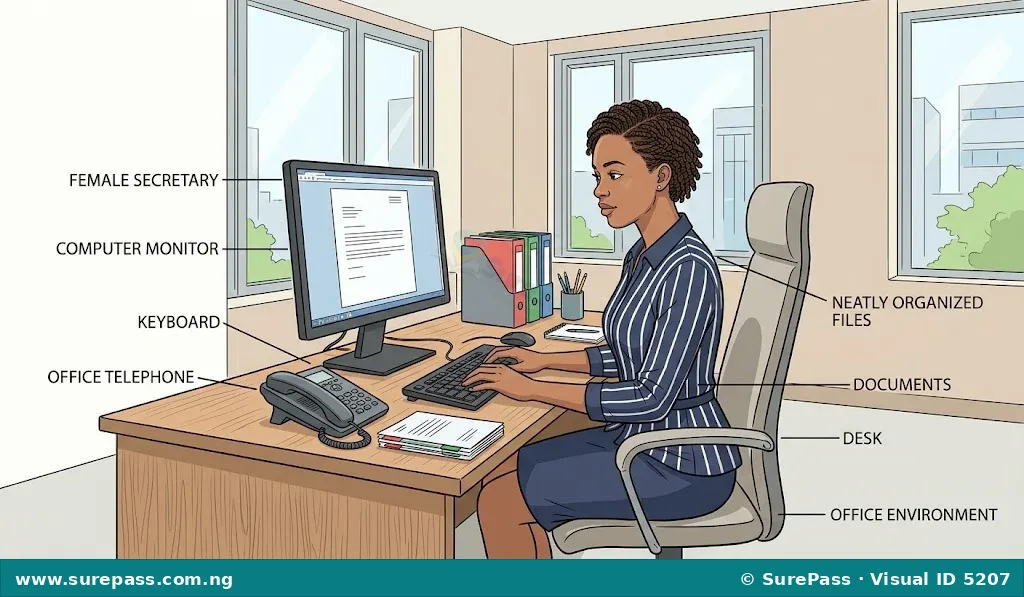
A secretary is an office professional who provides administrative support to an individual or a team.
Secretaries are often responsible for managing schedules, handling correspondence, and organising meetings.
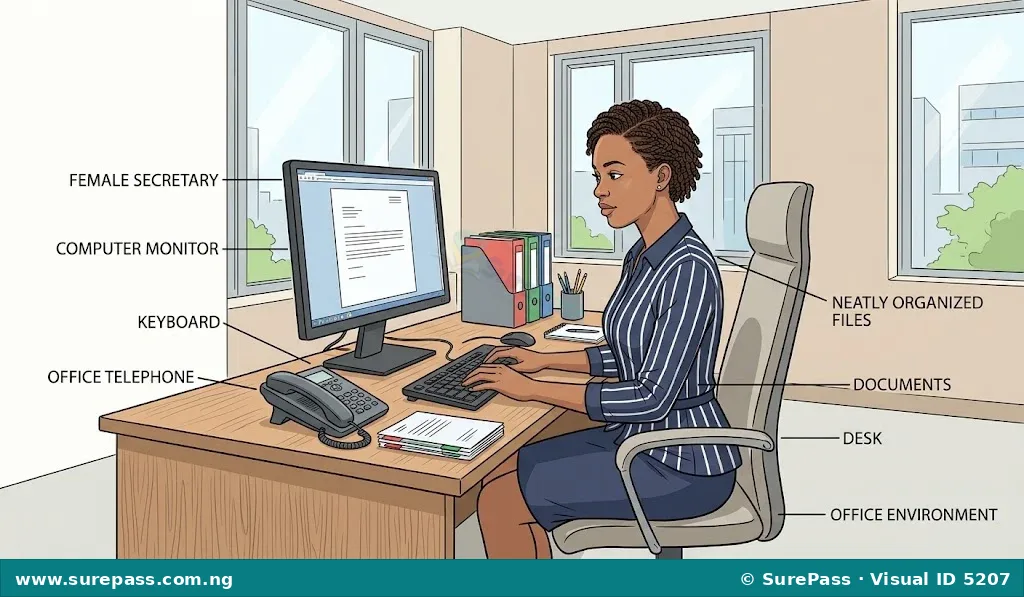
The duties of a secretary include:
- Typing and Document Preparation: Preparing letters, reports, memos, and other documents using a computer.
- Managing Correspondence: Handling incoming and outgoing mail, emails, and faxes.
- Scheduling Appointments: Arranging meetings and managing the calendar of their employer.
- Organising Meetings: Preparing meeting agendas, taking minutes, and ensuring all necessary materials are available.
- Filing and Record Keeping: Maintaining an organised system for important documents and records.
- Answering Phone Calls: Screening calls, taking messages, and directing calls to the appropriate person.
- Travel Arrangements: Booking flights, hotels, and other travel logistics for their employer.
Important qualities of a secretary include:
- Organised: Able to keep track of many tasks and documents efficiently.
- Attention to Detail: Careful and thorough in all work, ensuring accuracy.
- Good Communication Skills: Able to speak and write clearly and professionally.
- Confidentiality: Able to keep sensitive information private.
- Punctual: Always on time for work and appointments.
- Reliable: Can be depended upon to complete tasks as required.
- Computer Literate: Skilled in using office software and digital tools.
Receptionist
A receptionist is the first point of contact for visitors and callers to an office.
They are responsible for welcoming guests, directing them, and managing incoming communications.
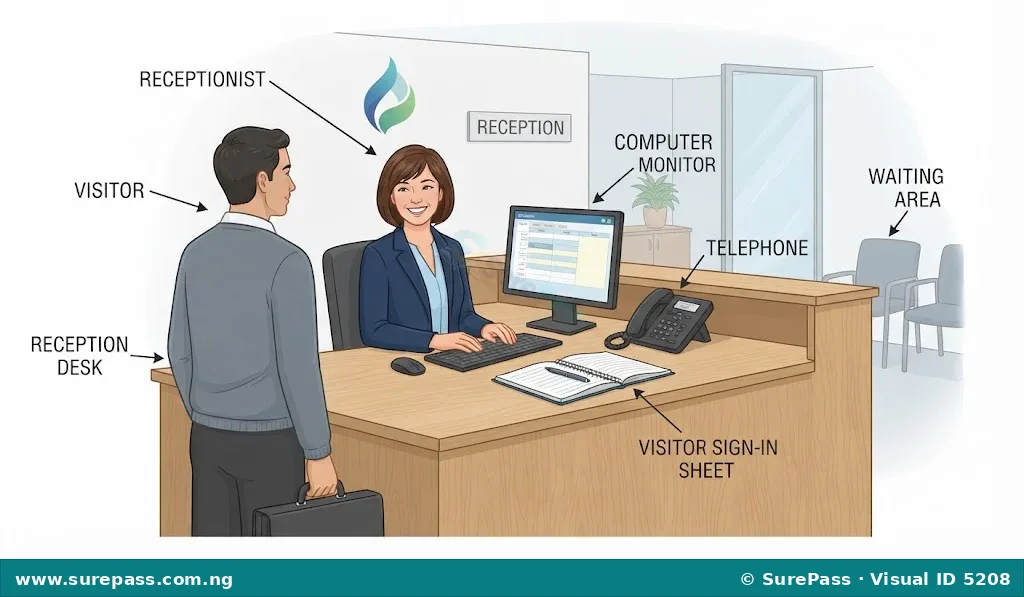
The duties of a receptionist include:
- Greeting Visitors: Welcoming people who come to the office and making them feel comfortable.
- Answering Phone Calls: Handling all incoming calls, directing them, and taking messages.
- Managing the Reception Area: Ensuring the reception area is tidy and presentable.
- Handling Mail and Deliveries: Receiving and distributing mail, packages, and deliveries.
- Scheduling Appointments: Booking and managing appointments for staff members.
- Providing Information: Answering basic questions about the organisation.
- Maintaining Security: Keeping a record of visitors and issuing visitor passes.
Important qualities of a receptionist include:
- Friendly and Welcoming: Able to make a good first impression on visitors.
- Good Communication Skills: Able to speak clearly and listen effectively.
- Patient: Able to handle different types of people and situations calmly.
- Organised: Able to manage multiple tasks like calls, visitors, and mail.
- Professional Appearance: Dressed appropriately for an office environment.
- Helpful: Willing to assist visitors and colleagues.
- Calm Under Pressure: Able to remain composed during busy periods.
Virtual Assistants
A virtual assistant (VA) is a professional who provides administrative, technical, or creative assistance to clients remotely, usually from a home office.
They use technology to communicate and complete tasks.
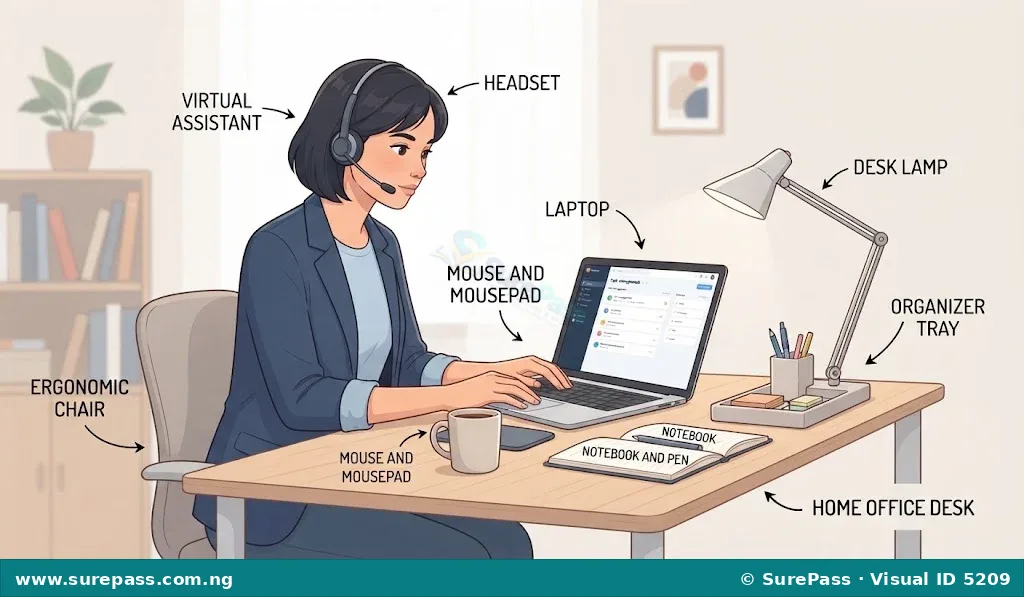
The duties of virtual assistants include:
- Email Management: Organising inboxes, responding to emails, and drafting messages.
- Calendar Management: Scheduling appointments and managing digital calendars.
- Social Media Management: Helping to manage social media accounts for businesses.
- Data Entry: Inputting information into spreadsheets or databases.
- Research: Gathering information on various topics for clients.
- Content Creation: Writing simple blog posts or social media captions.
- Customer Service: Responding to customer inquiries via email or chat.
Important qualities of virtual assistants include:
- Self-Motivated: Able to work independently without direct supervision.
- Tech-Savvy: Proficient in using various online tools and software.
- Good Time Management: Able to meet deadlines and manage their own schedule effectively.
- Reliable Internet Connection: Essential for remote work.
- Strong Communication Skills: Able to communicate clearly through digital channels.
- Adaptable: Able to learn new tools and adjust to different client needs.
- Problem-Solver: Able to find solutions to challenges independently.
Use of Artificial Intelligence (AI) and Robotics in Facilitating Office Work
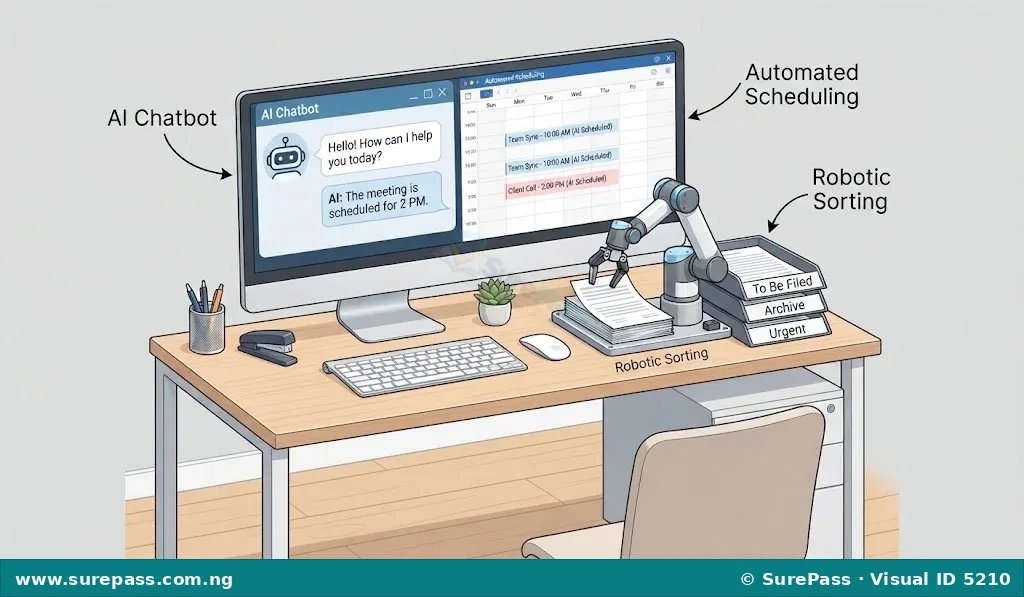
Artificial Intelligence (AI) and robotics are becoming more common in offices. They help to make work easier, faster, and more efficient. AI refers to computer systems that can perform tasks that normally require human intelligence, such as learning, problem-solving, and understanding language. Robotics involves the design, construction, operation, and use of robots, which are machines that can perform tasks automatically.
AI and robotics facilitate office work in several ways:
- Automated Scheduling: AI tools can help schedule meetings by finding available times for all participants and sending out invitations automatically.
- Chatbots for Customer Service: AI-powered chatbots can answer common customer questions instantly, freeing up human staff for more complex issues.
- Data Entry and Processing: AI can automatically extract information from documents and input it into databases, reducing manual effort and errors.
- Email Management: AI can sort emails, flag important messages, and even draft simple responses.
- Report Generation: AI can analyse data and create reports quickly, providing insights that help in decision-making.
- Robotic Process Automation (RPA): Software robots can perform repetitive, rule-based tasks like processing invoices or updating records, just like a human would, but much faster.
- Virtual Assistants (Software): Beyond human virtual assistants, AI-powered virtual assistants (like voice assistants) can help with tasks like setting reminders, making calls, or searching for information.
Impact and Potential Impacts of AI and Robotics on Staffing
The introduction of AI and robotics in the office has significant impacts on staffing, both now and in the future.
- Increased Efficiency: AI and robots can perform routine and repetitive tasks much faster and with fewer errors than humans. This means office work can be completed more quickly and accurately.
- Changes in Job Roles: Some tasks that were previously done by humans, like basic data entry or answering simple customer questions, might be taken over by AI or robots. This means that human staff may need to focus on more complex tasks that require creativity, critical thinking, and human interaction.
- Need for New Skills: Office staff will need to learn new skills to work alongside AI and robots. This includes understanding how to use AI tools, managing automated systems, and interpreting data generated by AI.
- Creation of New Jobs: While some jobs may change, AI and robotics also create new job opportunities. For example, there will be a need for people to develop, maintain, and train AI systems, as well as to manage and supervise robots.
- Focus on Human-Centric Roles: Jobs that require empathy, negotiation, complex problem-solving, and creative thinking will become even more important. These are areas where humans still have a significant advantage over machines.
- Reduced Manual Labour: AI and robotics can reduce the amount of manual and repetitive work, allowing staff to focus on more strategic and engaging activities.
Using AI to Perform a Given Office Task
One practical way to understand AI is to use it for a simple office task. Many AI tools are available online that can help with writing, summarising, or generating ideas. For this activity, learners will use an AI tool to draft a simple email.
The procedure involves the following steps:
- Access an AI Tool: Open a web browser on a digital device (computer, tablet, or smartphone) and go to a simple AI writing tool. Examples include free versions of tools like ChatGPT, Google Bard, or similar AI assistants.
- Understand the Task: Imagine the need to send an email to a teacher asking for an extension on an assignment. The email should be polite and clear.
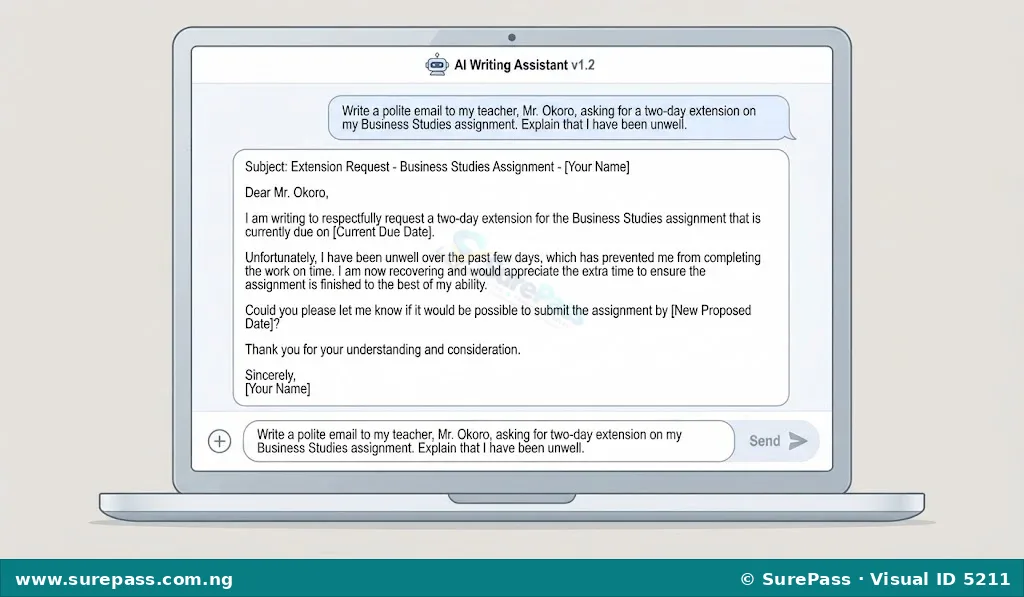
- Provide a Prompt: In the AI tool’s chat box, type a clear instruction (a “prompt”) for what the AI should do. For example, type: “Write a polite email to my teacher, Mr. Okoro, asking for a two-day extension on my Business Studies assignment. Explain that I have been unwell.”
- Review the AI’s Draft: The AI tool will generate an email based on the prompt. Read through the email carefully.
- Edit and Refine: Check if the email is polite, clear, and includes all the necessary information. Small changes to the wording might be needed to make it sound more personal or to add specific details. For example, change “I have been unwell” to “I have been feeling unwell for the past two days.”
- Copy and Use: Once satisfied with the email, copy the text. It can then be pasted into an email application to send it.
Important Safety Tips for Using AI:
- Always review AI-generated content carefully. AI tools can sometimes make mistakes or provide incorrect information.
- Do not share personal or confidential information with AI tools unless their privacy policies are clear.
- Use AI as a helper, not as a replacement for personal thinking and writing skills.
- Always give credit where credit is due if AI is used to generate ideas or content for academic work, as instructed by the teacher.




0 comments
Open the discussion when you need it. Comments stay collapsed until requested so the initial article remains light.