



ARTICLE CONTENTSOn this page 6 sections
Meaning and Steps for Developing a Savings Plan
Performance Objectives
By the end of the lesson, students should be able to:
- state the meaning of a savings plan;
- develop a savings plan.
Understanding Savings
Saving money means keeping a part of the money earned or received instead of spending all of it. People save money for different reasons, such as buying something important in the future or preparing for unexpected needs.
Meaning of a Savings Plan
A savings plan is a detailed guide that shows how a person intends to save money to achieve a specific financial goal.
It helps individuals organise their saving efforts by setting clear targets and outlining the steps to reach those targets. Without a plan, it can be difficult to save money consistently and achieve desired goals.
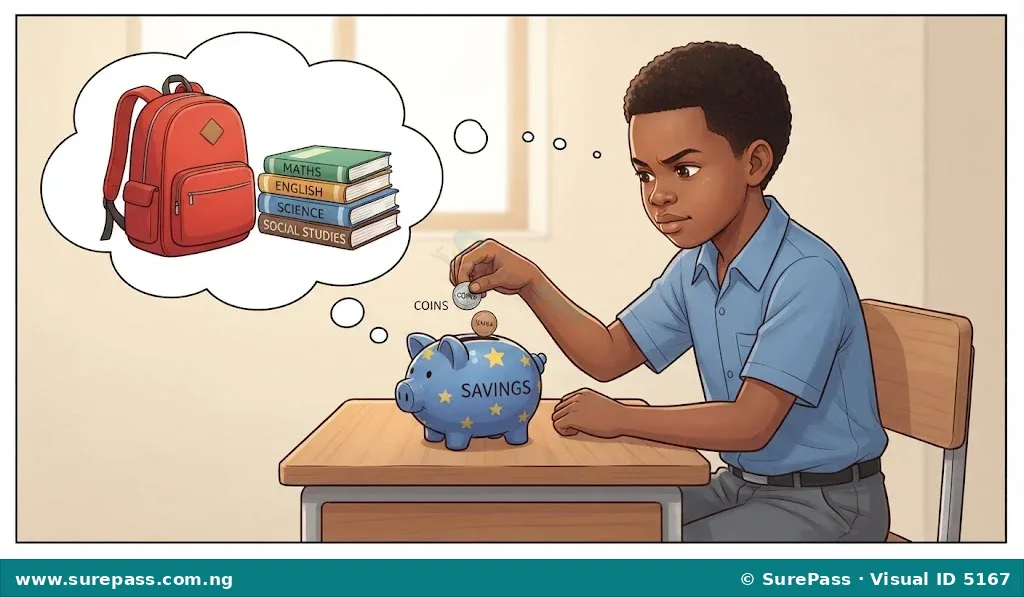
Steps in Developing a Savings Plan
Developing a savings plan involves several important steps. These steps help to make the saving process clear and achievable.
1. Set Savings Target
The first step is to decide what to save for and how much money is needed. This is called setting a savings target or goal. A target makes saving meaningful because there is a clear purpose for the money being saved.
Examples of savings targets for students include:
- Buying a new school bag.
- Purchasing specific textbooks or stationery.
- Saving for a special gift for a family member.
- Starting a small business, like selling snacks.
- Contributing to school excursions or projects.
When setting a target, it is important to know the exact amount of money required for the item or goal.
2. Identify Duration of Savings
After setting a target, the next step is to decide how long it will take to save the required amount. This is the duration of savings. The duration depends on the total amount needed and how much can be saved regularly.
For example, if a new school bag costs N5,000 and a person can save N1,000 each week, the duration would be five weeks.
3. Determine Amount to Save
This step involves calculating how much money needs to be saved regularly to reach the target within the identified duration. This is often done by dividing the total savings target by the number of saving periods.
For instance, if the target is N10,000 and the duration is 10 weeks, the amount to save each week would be N1,000 (N10,000 ÷ 10 weeks).
4. Determine Frequency of Savings
The frequency of savings refers to how often money will be put aside. This could be daily, weekly, or monthly, depending on when money is received and how easy it is to save.
Common frequencies for students include:
- Daily (e.g., from daily pocket money).
- Weekly (e.g., from weekly allowance).
- Monthly (e.g., from a monthly gift or allowance).
Choosing a consistent frequency helps to build a regular saving habit.
Developing a Savings Plan
To develop a savings plan, apply the steps discussed above to a real-life situation. This helps to create a practical guide for saving money.
Example: Developing a Savings Plan for a New Textbook
Imagine a student named Emeka wants to buy a new Business Studies textbook that costs N2,500. He receives N500 as pocket money every week.
Here is how Emeka can develop his savings plan:
-
Set Savings Target:
Goal: Buy a new Business Studies textbook.
Amount needed: N2,500.
-
Identify Duration of Savings:
Emeka receives N500 weekly. To find out how many weeks he needs to save, he divides the total amount by his weekly savings:
N2,500 ÷ N500 per week = 5 weeks.
Duration: 5 weeks.
-
Determine Amount to Save:
Based on his pocket money, Emeka can save N500 every week.
Amount to save per period: N500.
-
Determine Frequency of Savings:
Since he receives pocket money weekly, he will save weekly.
Frequency: Weekly.
Emeka’s savings plan shows that if he saves N500 every week, he will be able to buy his new Business Studies textbook in 5 weeks.
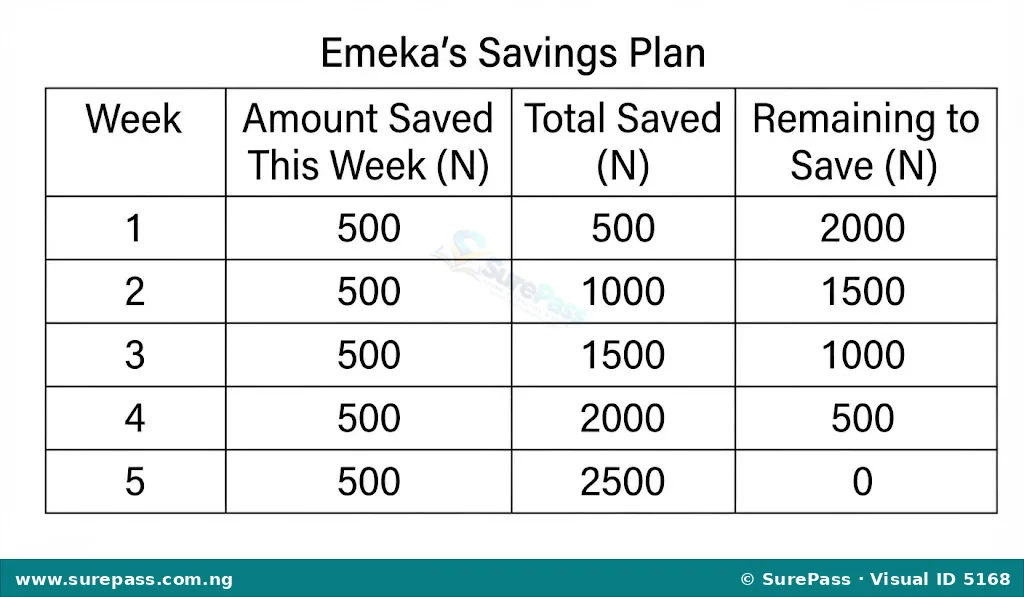
Having a clear savings plan helps a person stay focused and motivated to reach their financial goals. It turns a big goal into smaller, manageable steps.




0 comments
Open the discussion when you need it. Comments stay collapsed until requested so the initial article remains light.