


ARTICLE CONTENTSOn this page 6 sections
Objectives and Types of Taxes in Nigeria for JSS 1
Performance Objectives
By the end of the lesson, students should be able to:
- identify the objectives of tax in Nigeria;
- classify taxes;
- list the types of taxes.
What is Tax?
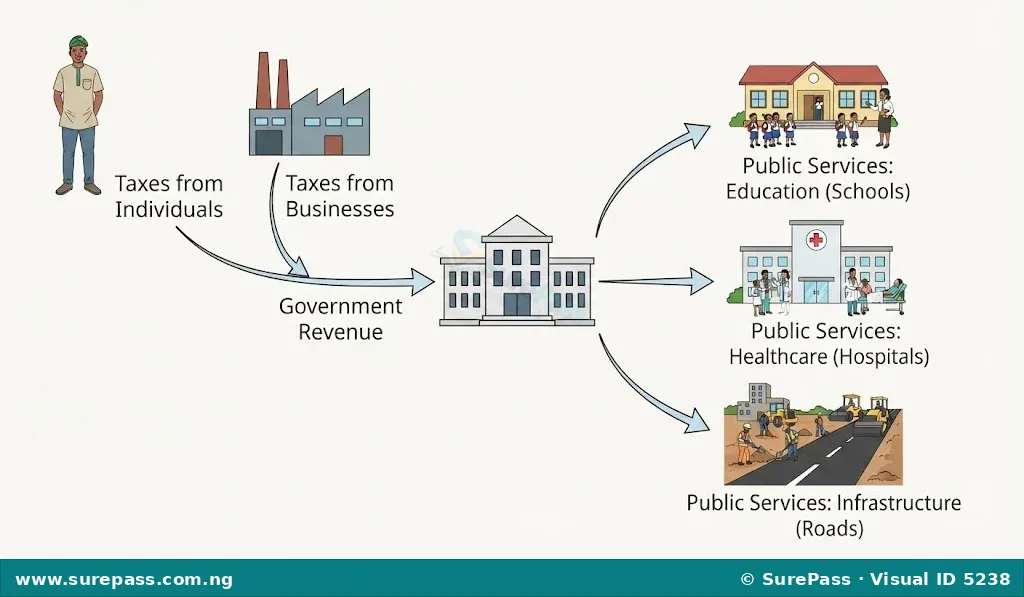
A tax is a compulsory payment made by individuals and businesses to the government.
These payments are not made in exchange for any direct goods or services. Instead, they are used to fund public services and government activities that benefit everyone in the country.
Objectives of Taxation in Nigeria
The government collects taxes for several important reasons. These reasons are called the objectives of taxation. In Nigeria, the main objectives of taxation include:
- Revenue Generation: This is the primary objective of taxation. Taxes provide the government with money to pay for its expenses and to carry out its responsibilities. This money is used to build roads, schools, hospitals, provide security, and pay civil servants.
- Economic Development: Taxes help the government to fund projects that promote economic growth and development. For example, tax revenue can be used to invest in infrastructure like power plants, communication networks, and agricultural support, which helps businesses grow and creates jobs.
- Redistribution of Wealth: Taxation can help to reduce the gap between the rich and the poor. The government collects taxes from those who earn more and uses the money to provide social services and support for those who are less privileged. This can include funding for public education, healthcare, and welfare programmes.
- Regulation of Economic Activities: Taxes can be used to influence how people and businesses behave. For example, the government might tax certain goods more heavily to discourage their consumption (like tobacco or alcohol) or offer tax breaks to encourage investment in specific industries. This helps to guide the economy in a desired direction.
Classes of Tax
Taxes can be grouped into different classes based on how they are collected and who pays them directly. The main classes of tax in Nigeria are:
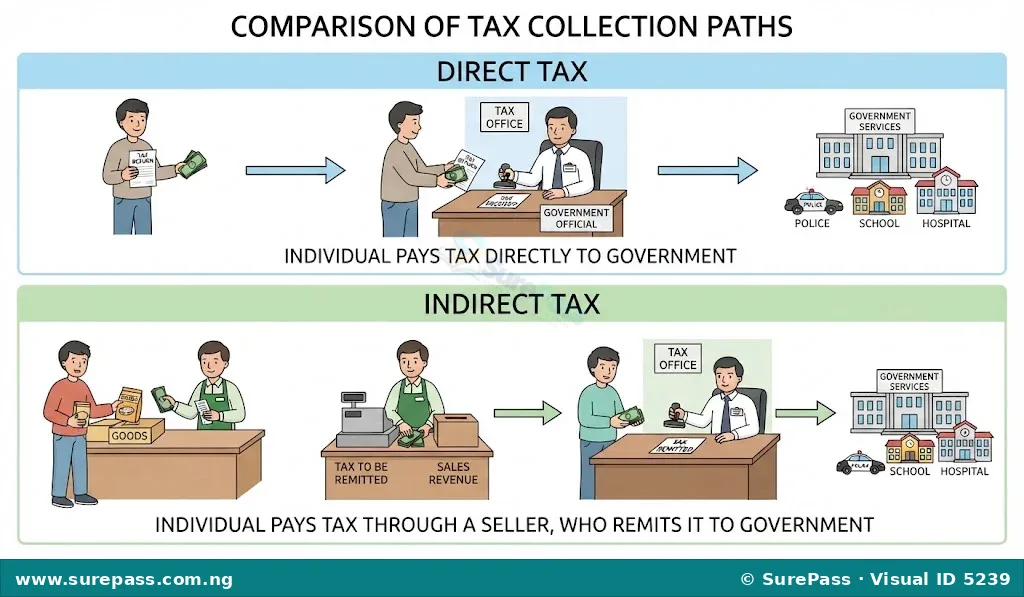
- Direct Taxes: These are taxes paid directly by individuals or organisations to the government. The burden of direct taxes cannot be easily shifted to another person. The person or company that earns the income or owns the property is the one who pays the tax.
- Indirect Taxes: These are taxes paid by individuals indirectly, usually when they buy goods or services. The burden of indirect taxes can be shifted from the seller to the buyer. For example, a business pays the tax to the government, but they add it to the price of the goods, so the customer effectively pays it.
- Property Taxes: These are taxes levied on land and buildings. Property owners are required to pay these taxes to the government, usually to the local government authorities. The amount of tax often depends on the value of the property.
- Environmental Taxes: These are taxes imposed on activities or products that are harmful to the environment. The aim is to discourage pollution and promote environmentally friendly practices. For example, taxes might be placed on plastic bags or carbon emissions.
Types of Taxes in Nigeria
Within the different classes, there are specific types of taxes that individuals and businesses pay in Nigeria. Some common types of taxes include:
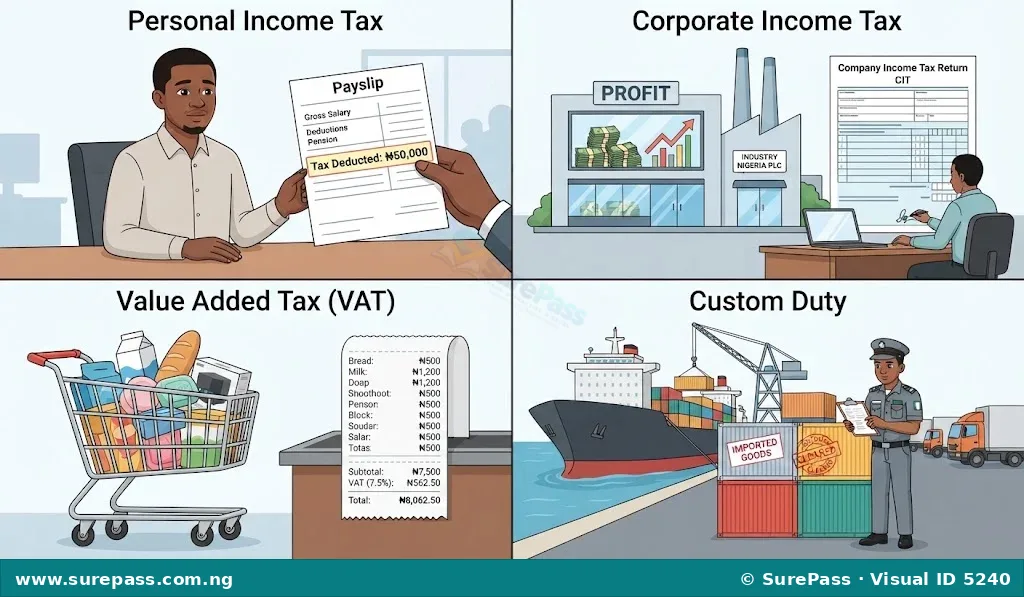
- Personal Income Tax (PIT): This is a direct tax paid by individuals on their income. Income can come from salaries, wages, business profits, rents, or other sources. In Nigeria, employees have their tax deducted directly from their salaries by their employers, while self-employed individuals pay their taxes directly to the tax authorities.
- Corporate Income Tax (CIT): This is a direct tax paid by companies on the profits they make from their business activities. The Federal Inland Revenue Service (FIRS) is responsible for collecting corporate income tax from companies operating in Nigeria.
- Value Added Tax (VAT): This is an indirect tax added to the price of most goods and services sold in Nigeria. When a customer buys an item, the VAT is included in the price. The business then collects this VAT and pays it to the government. It is a consumption tax.
- Custom Duty: This is an indirect tax imposed on goods that are imported into or exported out of Nigeria. It is collected by the Nigeria Customs Service at ports, airports, and land borders. Custom duties help to generate revenue and can also be used to protect local industries by making imported goods more expensive.


0 comments
Open the discussion when you need it. Comments stay collapsed until requested so the initial article remains light.