


ARTICLE CONTENTSOn this page 8 sections
Ethics in Sourcing and Using Chemicals
Performance Objectives
By the end of the lesson, students should be able to:
- explain the meaning of chemicals;
- differentiate between chemicals that are suitable and those that are unsuitable for use in food and drugs;
- state the ethics in sourcing and using chemicals;
- explain the consequences of unethical use of chemicals;
- discuss the need for monitoring and controlling the use of chemicals in food and drugs;
- observe ethical practices in sourcing and using chemicals in food and drugs.
Meaning of Chemicals
A chemical is a substance that makes up everything around us.
This includes the air people breathe, the water they drink, and the food they eat. Some chemicals occur naturally, while others are made by people in factories or laboratories.
In business, chemicals are used in many ways. They are used in making food products, medicines, cleaning agents, and even clothes. It is important to understand that while some chemicals are safe and useful, others can be harmful if not handled correctly.
Suitable and Unsuitable Chemicals for Food and Drugs
Not all chemicals are safe for use in food and drugs. It is very important to know the difference between chemicals that are suitable and those that are unsuitable.
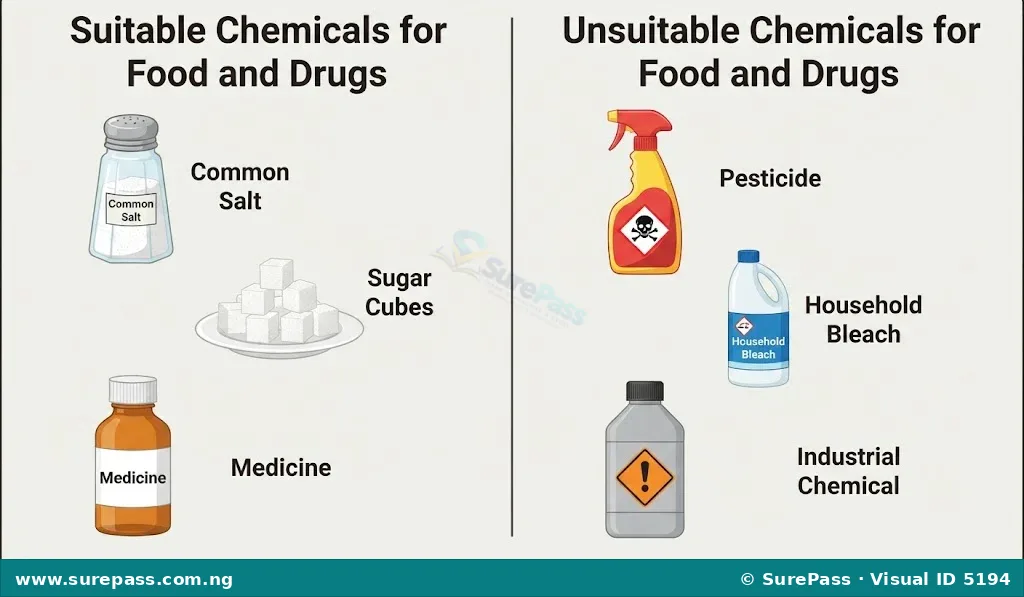
Suitable Chemicals for Food and Drugs
Suitable chemicals are those that have been tested and approved as safe for consumption or medical use. They are used to preserve food, add flavour, provide nutrients, or treat illnesses.
Examples of suitable chemicals for food include:
- Salt: Used for seasoning and preserving food.
- Sugar: Used as a sweetener.
- Approved food colourings: Used to make food look more appealing.
- Vitamins and minerals: Added to food to improve nutritional value.
Examples of suitable chemicals for drugs include:
- Active pharmaceutical ingredients: These are the substances in medicines that produce the desired effect, such as paracetamol for pain relief.
- Preservatives: Used in medicines to prevent the growth of harmful bacteria.
- Flavourings: Added to make medicines taste better, especially for children.
Unsuitable Chemicals for Food and Drugs
Unsuitable chemicals are those that are harmful, toxic, or have not been approved for use in food or drugs. Using these chemicals can cause serious health problems, including sickness, poisoning, or even death.
Examples of unsuitable chemicals for food and drugs include:
- Pesticides: Used to kill pests on farms, but not safe for direct consumption.
- Industrial chemicals: Used in factories for manufacturing, but toxic if ingested.
- Cleaning agents: Such as bleach or detergents, which are poisonous if consumed.
- Unapproved or fake ingredients: Substances not meant for human consumption or not properly tested for safety.
Ethics in Sourcing and Using Chemicals
Ethics refers to the moral principles that guide a person’s or business’s behaviour. When dealing with chemicals, especially those used in food and drugs, ethical practices are crucial to ensure safety and protect people’s health.
Important ethical practices in sourcing and using chemicals include:
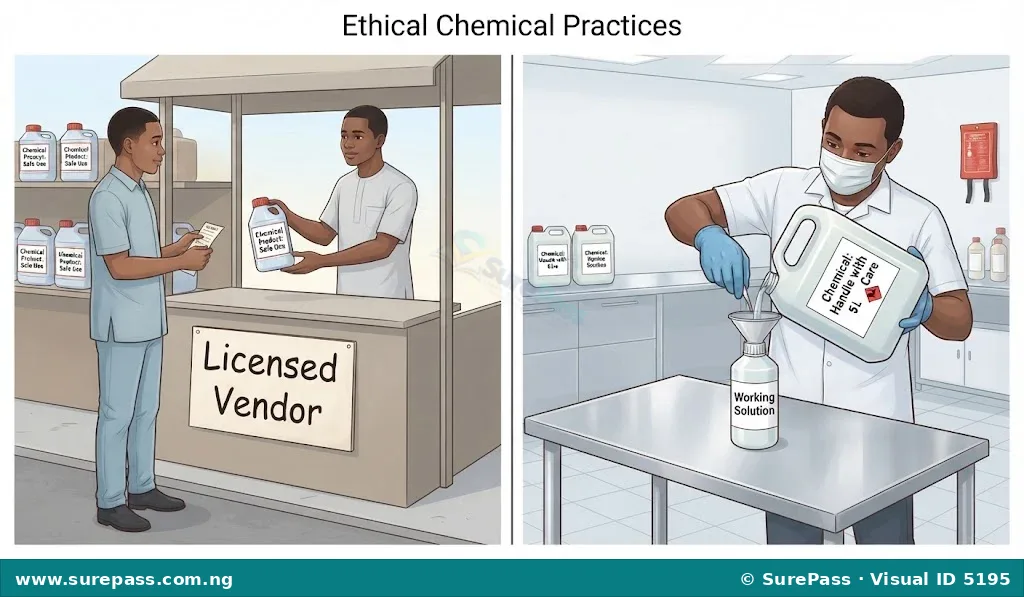
- Sourcing chemicals from licensed chemical vendors: Businesses should only buy chemicals from suppliers who are officially approved and licensed. Licensed vendors are known to sell genuine, quality, and safe chemicals. Buying from unlicensed vendors can lead to purchasing fake, expired, or dangerous chemicals.
- Good handling techniques: Chemicals must be handled with care to prevent accidents, spills, or contamination. This includes using appropriate protective gear like gloves and masks, storing chemicals in their original, properly labelled containers, and avoiding mixing chemicals unless instructed by an expert.
- Good distribution: Chemicals, especially those for food and drugs, must be transported and distributed safely. This means using appropriate packaging that prevents leakage or damage, ensuring proper temperature control if needed, and keeping them separate from other goods to avoid contamination.
- Proper disposal: After use, or if chemicals expire, they must be disposed of correctly. Pouring chemicals down drains or throwing them into regular waste bins can harm the environment and people. Businesses should follow specific guidelines for chemical waste disposal, often involving special collection services.
Consequences of Unethical Use of Chemicals
When businesses or individuals fail to follow ethical practices in sourcing and using chemicals, there can be severe consequences. These consequences affect consumers, businesses, and the environment.
The consequences of unethical use of chemicals include:
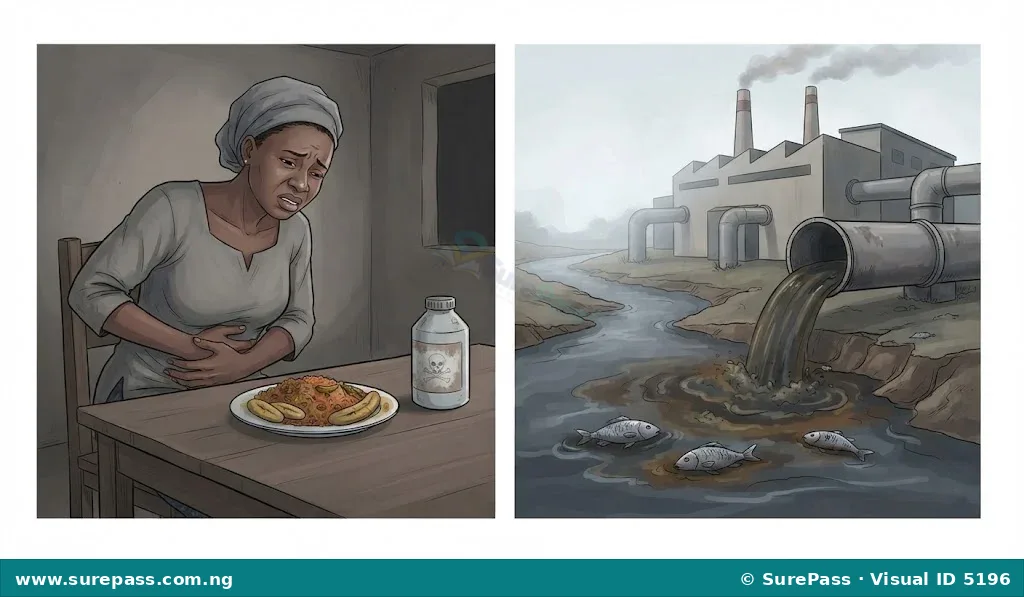
- Health problems for consumers: Using unsuitable or contaminated chemicals in food and drugs can lead to food poisoning, allergic reactions, chronic diseases, organ damage, or even death for those who consume them.
- Loss of trust and reputation for businesses: If a business is found to be using chemicals unethically, consumers will lose trust in their products. This can lead to a damaged reputation, loss of customers, and a significant drop in sales.
- Legal penalties and fines: Governments have laws and regulations to control chemical use. Businesses that violate these laws can face heavy fines, legal action, and even closure.
- Environmental pollution: Improper disposal of chemicals can pollute soil, water bodies, and the air. This harms plants, animals, and the overall ecosystem, affecting everyone in the community.
- Economic losses: Businesses may suffer financial losses from product recalls, lawsuits, and the cost of cleaning up environmental damage.
Monitoring and Controlling the Use of Chemicals in Food and Drugs
Monitoring and controlling the use of chemicals in food and drugs are essential to protect public health and ensure fair business practices. Various bodies and measures are put in place to achieve this.
Need for Monitoring and Control
The need for monitoring and controlling chemicals arises from several factors:
- Public safety: To prevent harm to consumers from dangerous or contaminated products.
- Quality assurance: To ensure that food and drug products meet required quality standards.
- Preventing fraud: To stop businesses from using cheap, unapproved, or fake chemicals to cut costs, which can endanger lives.
- Environmental protection: To ensure chemicals are disposed of safely and do not pollute the environment.
- Fair competition: To ensure all businesses operate under the same rules, promoting fair competition.
How Chemicals are Monitored and Controlled
In Nigeria, the primary agency responsible for monitoring and controlling food and drug products is the National Agency for Food and Drug Administration and Control (NAFDAC).
Methods of monitoring and control include:
- Registration and licensing: NAFDAC registers and licenses all food, drugs, cosmetics, medical devices, and packaged water products before they can be sold to the public. This ensures that products meet safety and quality standards.
- Inspections: NAFDAC conducts regular inspections of manufacturing facilities, warehouses, and retail outlets to ensure compliance with regulations regarding chemical sourcing, handling, and storage.
- Laboratory testing: Samples of products are collected and tested in laboratories to check for harmful chemicals, contamination, or incorrect ingredients.
- Public enlightenment: NAFDAC educates the public about the dangers of fake or unapproved products and encourages reporting of suspicious activities.
- Enforcement of laws: NAFDAC has the power to seize illegal products, close down non-compliant businesses, and prosecute offenders.
Observing Ethical Practices in Sourcing and Using Chemicals
It is important to understand how to observe and recognise ethical practices related to chemicals in daily life. This skill helps people make informed choices and contribute to a safer community.
Ethical practices can be observed by:
- Checking for NAFDAC registration numbers: When buying packaged food or drugs, look for the NAFDAC registration number on the product label. This indicates that the product has been approved.
- Noticing product packaging and labelling: Ethical businesses use clear, accurate labels that show ingredients, expiry dates, and usage instructions. Packaging should be sealed and undamaged.
- Observing storage conditions: In shops or pharmacies, notice how products are stored. Are they kept in clean, cool places, away from direct sunlight or harmful substances?
- Reporting suspicious products: If products look fake, have strange smells, or are sold by unlicensed vendors, they should be reported to an adult or relevant authorities like NAFDAC.
- Understanding proper waste disposal: Observe how waste is managed in the home and community. Proper disposal of chemical waste, such as empty insecticide cans or expired medicines, should follow local guidelines.




0 comments
Open the discussion when you need it. Comments stay collapsed until requested so the initial article remains light.