


ARTICLE CONTENTSOn this page 7 sections
Introduction to Marketing
Performance Objectives
By the end of the lesson, students should be able to:
- state the meaning of marketing;
- explain the importance of marketing;
- discuss the functions of marketers;
- identify the scope of marketing;
- explain the core concepts in marketing.
Meaning of Marketing
Marketing refers to all the activities a business or person does to make people interested in buying their products or services.
It involves understanding what people need and want, creating products or services to meet those needs, telling people about them, and making them available for purchase. The main goal of marketing is to satisfy customers and help businesses sell their goods and services.
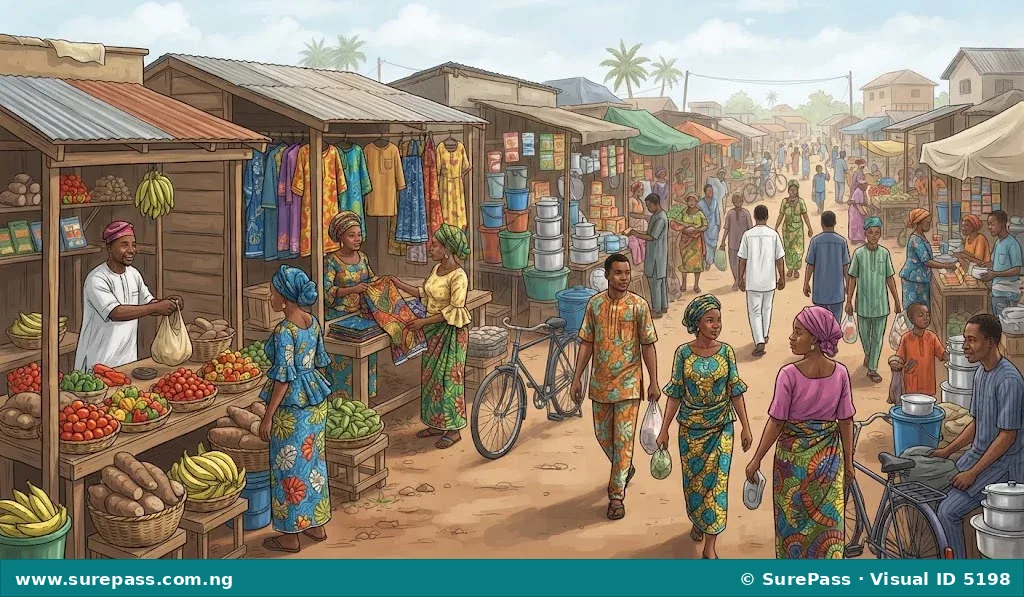
For example, when a farmer harvests fresh tomatoes, they need to find buyers. The farmer might take the tomatoes to the local market, display them nicely, and tell people how fresh and sweet they are. This entire process, from understanding that people need tomatoes to making them available for sale, is part of marketing.
Importance of Marketing
Marketing is very important for both businesses and the people who buy from them. Without marketing, many good products and services would not reach the people who need them. It plays a key role in connecting producers with consumers.
The importance of marketing includes the following:
- Helps Businesses Sell: Marketing helps businesses to sell their products and services by making them known to many people. When people know about a product, they are more likely to buy it. For instance, a soft drink company uses advertisements to make its drinks popular, which helps them sell more.
- Informs Customers: Marketing tells people about new products, how they work, and where they can be bought. This helps customers make good choices. For example, a new phone advertisement explains its features and where to find it, helping potential buyers decide.
- Creates Jobs: Many people work in marketing, such as advertisers, salespersons, and market researchers. This helps to create jobs in the community and supports many families.
- Satisfies Needs and Wants: By understanding what people want, marketing helps businesses create products that truly satisfy the needs and wants of customers. If people want healthier food options, marketers help food companies develop and sell such products.
- Encourages Competition: When businesses market their products, they try to offer better goods or services than their competitors. This leads to better quality products and fair prices for customers, as businesses compete to attract buyers.
- Improves Standard of Living: Marketing makes a wide variety of products and services available to people, giving them more choices and improving their quality of life. Access to different types of food, clothing, and entertainment contributes to a better standard of living.
Functions of Marketers
Marketers are the people who carry out marketing activities. They play many important roles to ensure products and services reach the right people and satisfy customer needs.
The main functions of marketers include:
- Finding Out What People Want (Market Research): Marketers study what people need and want. They ask questions, conduct surveys, and observe buying habits to understand customer preferences. For example, they might ask students what kind of snacks they prefer in school.
- Designing and Developing Products: Based on what they find out from market research, marketers help businesses create new products or improve existing ones to meet customer demands. If research shows people want a healthier drink, marketers work with product developers to create one.
- Pricing Products: Marketers help decide the right price for a product. The price must be fair for customers so they can afford it, and also allow the business to make a profit. They consider production costs and competitor prices.
- Promoting Products (Advertising and Sales Promotion): Marketers tell people about products through various means. This includes advertisements on TV, radio, social media, newspapers, or posters. They also organise special offers, discounts, or contests to encourage sales.
- Making Products Available (Distribution): Marketers ensure that products are available in places where customers can easily buy them. This involves choosing the right shops, supermarkets, online stores, or other channels to reach customers.
- Selling Products: Marketers are involved in the actual selling of products to customers, either directly through sales teams or by setting up effective sales points. They ensure that the sales process is smooth and efficient.
- After-Sales Service: For some products, especially electronics or vehicles, marketers also ensure that customers receive support after buying the product, such as repairs, maintenance, or warranty services. This helps to build customer loyalty.
Scope of Marketing
The scope of marketing refers to the different areas and types of things that can be marketed. Marketing is not just about selling physical goods; it covers a wide range of activities and items that can be promoted and exchanged.
The scope of marketing includes:
- Marketing of Goods: This is the most common type, involving physical products that can be touched and seen. Examples include food items like rice and beans, clothes, cars, mobile phones, and household electronics.
- Marketing of Services: Services are activities performed for others that cannot be physically owned. Examples include haircuts from a barber, banking services, transportation by bus or taxi, education provided by schools, and healthcare from hospitals.
- Marketing of Ideas: This involves promoting concepts, beliefs, or social causes to change people’s attitudes or behaviours. Examples include public health campaigns (e.g., “Wash your hands regularly,” “Get vaccinated”), safety messages (e.g., “Don’t drink and drive”), or environmental protection initiatives.
- Marketing of Places: This is about promoting tourist destinations, cities, states, or even countries to attract visitors, investors, or new residents. For example, promoting Calabar as a tourist destination or Lagos as a business hub.
- Marketing of Persons: This involves promoting individuals to build their reputation, attract followers, or gain support. Examples include politicians seeking votes, musicians promoting their albums, sports stars building their brand, or actors promoting their movies.
- Marketing of Organisations: This focuses on building a good image and reputation for an organisation, rather than a specific product. Examples include a university promoting its academic excellence, a charity promoting its humanitarian work, or a government agency promoting its public services.
Core Concepts in Marketing
To understand marketing well, it is important to know some basic ideas or concepts. These concepts help explain why people buy things and how businesses try to meet their needs effectively.
The core concepts in marketing are:
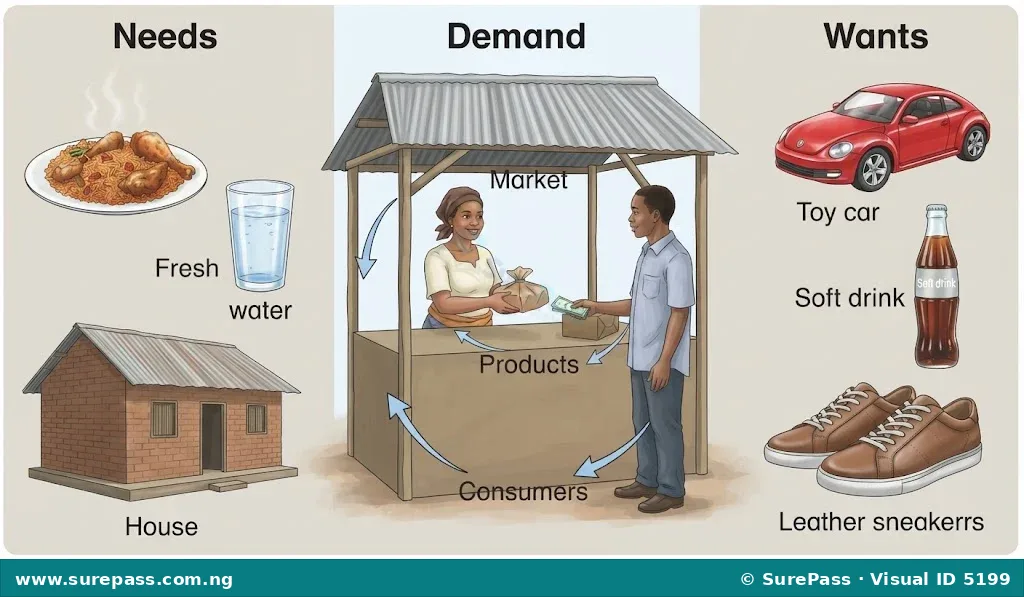
- Needs: These are basic human requirements for survival and well-being. Needs are fundamental and are not created by society or marketers. They are essential for life. Examples include food, water, shelter, clothing, safety, and a sense of belonging.
- Wants: These are desires for specific satisfiers of needs. Wants are shaped by culture, personality, and individual experiences. For example, a person needs food, but they may want jollof rice, pounded yam, or pizza. They need clothing, but they may want a specific brand of jeans or a traditional attire.
- Demand: This is a want for a specific product or service, backed by the ability and willingness to pay for it. If a person wants a new bicycle but does not have the money to buy it, it is a want. If they have the money and are willing to spend it, then it becomes a demand.
- Market: A market is a place where buyers and sellers meet to exchange goods and services. This can be a physical location like a local market, a supermarket, or a shopping mall. It can also be an online platform where people buy and sell products over the internet, such as e-commerce websites.
- Products: A product is anything that can be offered to a market to satisfy a need or want. Products can be physical goods (like a book, a phone, or a bag of garri), services (like a haircut, a bus ride, or a lesson), ideas (like a health campaign), or even experiences (like a concert or a football match).
- Consumers: Consumers are the people who actually use or consume the products or services. They are the end-users. For example, a parent might buy baby food, but the baby is the consumer. A child who eats a biscuit bought by an adult is the consumer of the biscuit.
- Customers: Customers are the people who buy the products or services. They are the ones who make the purchase, even if they are not the ones who will use the product. For example, a mother who buys school uniforms for her children is the customer. A school that buys textbooks for its students is also a customer.


0 comments
Open the discussion when you need it. Comments stay collapsed until requested so the initial article remains light.