


ARTICLE CONTENTSOn this page 10 sections
Marketing Mix
Performance Objectives
By the end of the lesson, students should be able to:
- explain marketing mix;
- describe the characteristics of each element of the marketing mix;
- apply marketing mix in formulating marketing strategy;
- develop marketing strategy using the marketing mix.
Introduction to the Marketing Mix
Businesses produce goods and services to satisfy the needs of customers. For a business to succeed, it must not only produce good quality products but also ensure that customers know about them, can afford them, and can easily find them. This involves a set of decisions and actions that businesses take to sell their products effectively.
The marketing mix is a very important tool that helps businesses make these decisions. It is like a recipe that combines different ingredients to achieve a desired outcome, which in this case is successful selling and customer satisfaction.
Meaning of Marketing Mix
The marketing mix is a set of marketing tools that a business uses to achieve its marketing objectives in the target market.
It involves combining different elements in a way that helps a business attract customers and sell its products or services. These elements are often called the “4Ps” because they all start with the letter P.
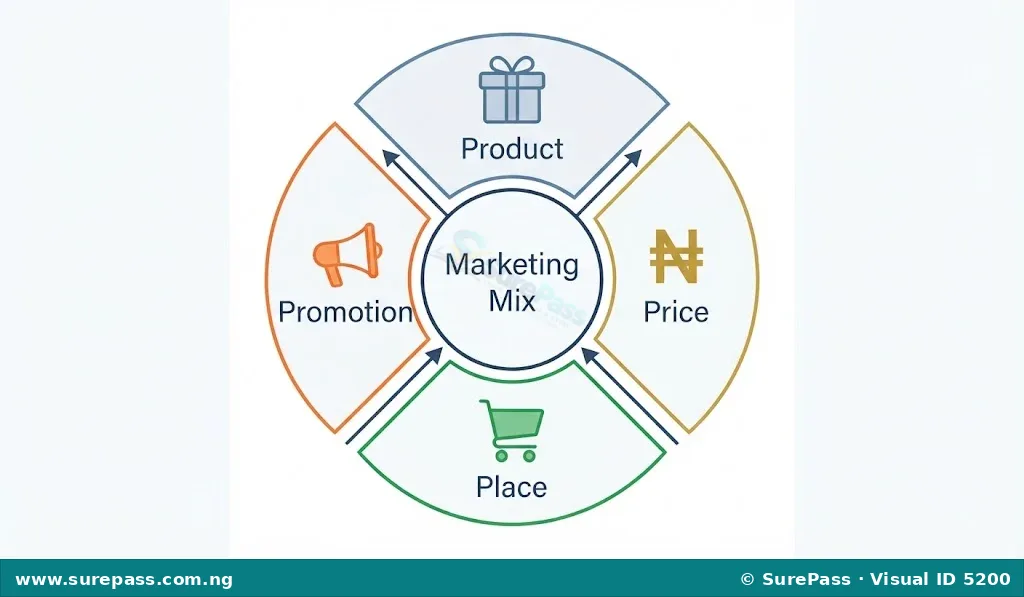
The 4Ps of the Marketing Mix
The marketing mix consists of four main elements, often referred to as the 4Ps. These elements are Product, Price, Promotion, and Place. Each P represents a key area that a business must consider when planning how to sell its goods or services.
Product
The product refers to the actual good or service that a business offers to its customers.
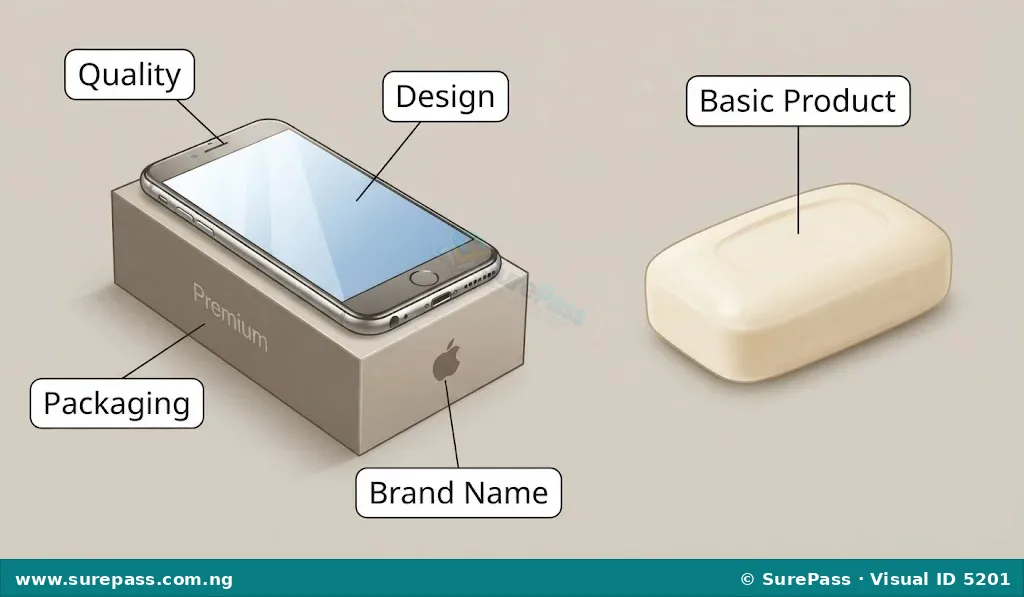
This includes not just the physical item but also its features, quality, design, packaging, branding, and any services that come with it, such as warranty or after-sales support. A product must meet the needs and wants of the target customers.
Characteristics of a Product in the Marketing Mix
When considering the product element, businesses look at several characteristics:
- Quality: This refers to how good the product is. Does it work well and last long? Customers often look for good quality in the products they buy.
- Features: These are the specific functions or attributes the product has. For example, a mobile phone might have a good camera, a large screen, or a long battery life.
- Design: This describes how the product looks and feels. Is it attractive, easy to hold, or simple to use? Good design can make a product stand out from others.
- Packaging: This is how the product is wrapped or contained. Packaging protects the product, provides important information (like ingredients or instructions), and can make it appealing to customers. Examples include colourful snack wrappers or sturdy cartons for electronics.
- Branding: This involves the name, logo, and overall image of the product. A strong brand helps customers recognise and remember a product, such as a popular soft drink brand or a well-known biscuit brand.
- Variety: This refers to the different types or versions of the product a business offers to suit various customer tastes and needs.
Price
Price is the amount of money customers pay to buy the product or service.
Setting the right price is crucial because it affects how many customers will buy the product and how much profit the business makes. The price must be fair to the customer and profitable for the business.
Characteristics of Price in the Marketing Mix
Businesses consider these characteristics when setting prices:
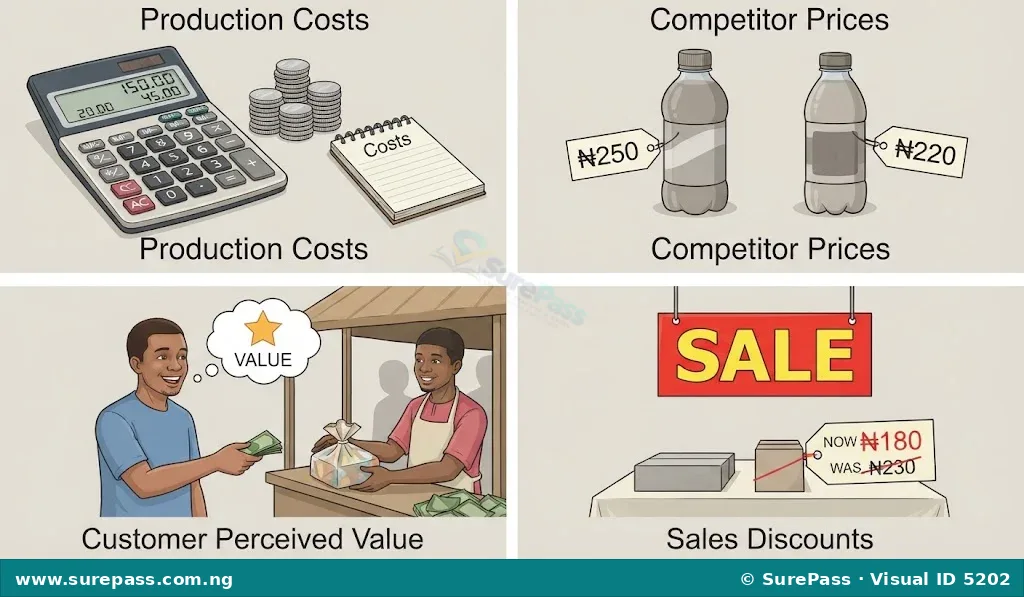
- Cost of Production: This includes the money spent on raw materials, labour, and other expenses to make the product. The price must cover these costs and allow the business to make a profit.
- Competitors’ Prices: Businesses often look at what their rivals are charging for similar products. If the price is too high compared to competitors, customers might choose another brand.
- Customer Perception of Value: This refers to how much customers think the product is worth. If customers believe a product is of high quality or offers unique benefits, they might be willing to pay more.
- Discounts and Offers: Businesses might offer discounts, sales, or special promotions to attract customers or clear old stock. Examples include “buy one, get one free” deals or seasonal sales.
- Payment Terms: This includes how customers can pay for the product, such as cash, card, mobile transfer, or instalment plans.
Promotion
Promotion involves all the activities a business uses to communicate with its customers and persuade them to buy its products.
The goal of promotion is to inform, persuade, and remind customers about the product. It helps to create awareness and interest.
Characteristics of Promotion in the Marketing Mix
Common ways businesses promote their products include:
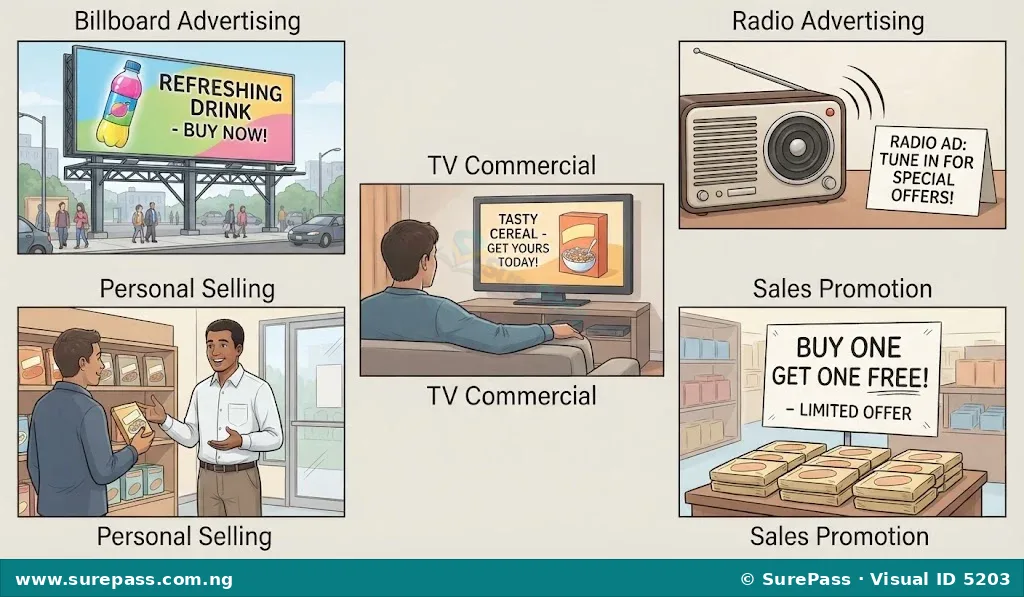
- Advertising: This involves paid messages in newspapers, magazines, on radio, television, social media, or billboards. For example, a TV advert for a new soft drink or a billboard promoting a new school.
- Sales Promotion: These are short-term incentives to encourage immediate purchase, such as discounts, “buy one, get one free” offers, coupons, or contests.
- Personal Selling: This is when a salesperson directly talks to a customer to sell a product. This can happen in shops, at market stalls, or through door-to-door sales.
- Public Relations: This involves building a good image for the business and its products through news stories, sponsorships of events, or community service activities.
- Direct Marketing: This involves sending messages directly to individual customers, for example, through emails, text messages, or mailed brochures.
Place
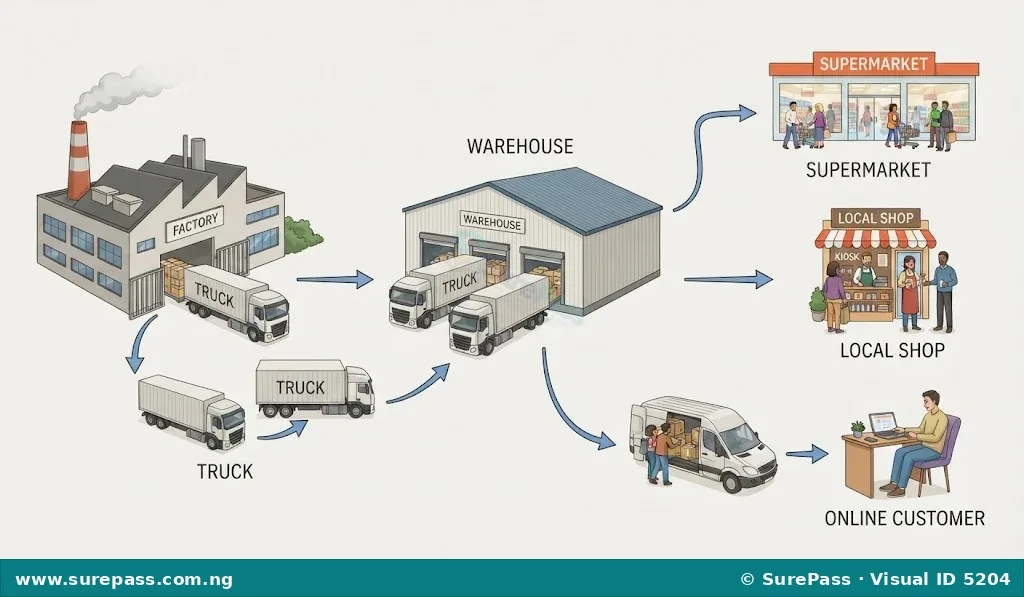
Place, also known as distribution, refers to how a product gets from the producer to the customer.
It involves the channels and locations where customers can buy the product. The goal is to make the product available to the target customers at the right time and in the right location.
Characteristics of Place in the Marketing Mix
Key considerations for place include:
- Distribution Channels: These are the paths a product takes to reach the customer. Examples include selling directly from the factory, through wholesalers, retailers (shops), or online stores.
- Location: This refers to where the product will be sold. This could be a supermarket, a local market stall, a small shop, or an online website. The location should be convenient and accessible for customers.
- Logistics: This involves the physical movement and storage of products. It includes transportation (e.g., by road, rail, air), warehousing (storage facilities), and inventory management (keeping track of stock levels).
- Coverage: This describes how widely available the product is. Is it sold in many places across a region, or only in a few selected stores?
Formulating Marketing Strategies Using the Marketing Mix
A marketing strategy is a plan that a business creates to reach its target customers and achieve its sales goals. The marketing mix (4Ps) is the main tool used to develop this plan.
To formulate a marketing strategy, a business decides on the best combination of product, price, promotion, and place for its specific target market. These decisions must work together to create a strong overall plan.
Developing a Marketing Strategy: An Example
Imagine a small business wants to launch a new brand of healthy, locally-sourced fruit juice for JSS students. Here is how they might use the marketing mix to develop their strategy:
The procedure involves the following steps:
-
Product Strategy:
The business decides to make the juice from fresh, natural Nigerian fruits like pineapple, mango, and orange. The juice will have no added sugar and will be fortified with vitamins. It will come in small, colourful, recyclable bottles that are easy for students to carry in their bags. The brand name will be “SureSip Juice” to suggest freshness and taste.
-
Price Strategy:
The business researches the prices of other juices sold in school tuck shops and local stores. They decide to price “SureSip Juice” slightly higher than sugary drinks but lower than imported juices, making it affordable for students while reflecting its healthy quality. They might offer a small discount for buying a pack of three bottles.
-
Promotion Strategy:
To promote “SureSip Juice,” the business plans to:
- Visit schools and offer free samples during break time.
- Put up colourful posters in school canteens and notice boards, highlighting the health benefits.
- Run a social media campaign with fun facts about Nigerian fruits and a competition for students to design a new flavour.
- Sponsor a school sports event and provide “SureSip Juice” to participants.
-
Place (Distribution) Strategy:
The business decides to distribute “SureSip Juice” through:
- Direct sales to school tuck shops and canteens.
- Local small shops and kiosks near schools.
- Online food delivery platforms that cater to families.
- They will ensure regular delivery to keep the juice fresh and available.
By carefully planning each of the 4Ps, the “SureSip Juice” business creates a complete marketing strategy designed to reach JSS students and encourage them to buy their healthy product.


0 comments
Open the discussion when you need it. Comments stay collapsed until requested so the initial article remains light.