



ARTICLE CONTENTSOn this page 7 sections
Crop Production and Horticulture
Performance Objectives
By the end of the lesson, students should be able to:
- explain the meaning of crop production and horticulture;
- identify types of crops and horticulture;
- discuss the impact of climate change on crop production and horticulture.
Introduction to Crop Production and Horticulture
Agriculture is a vital sector in Nigeria, providing food, raw materials for industries, and employment opportunities. Within agriculture, the cultivation of plants for various purposes is broadly categorised into crop production and horticulture. These practices are essential for sustaining human life and supporting economic activities.
Understanding these areas involves knowing what they are, the different kinds of plants grown, and how external factors like climate change can affect them. This unit explores these fundamental aspects, focusing on their relevance in the Nigerian context.
Meaning of Crop Production and Horticulture
Crop production and horticulture are related but distinct fields that involve growing plants. Both are crucial for food security and economic development.
Meaning of Crop Production
Crop production is the cultivation of plants on a large scale for economic purposes, primarily for food, feed, fibre, and industrial raw materials.
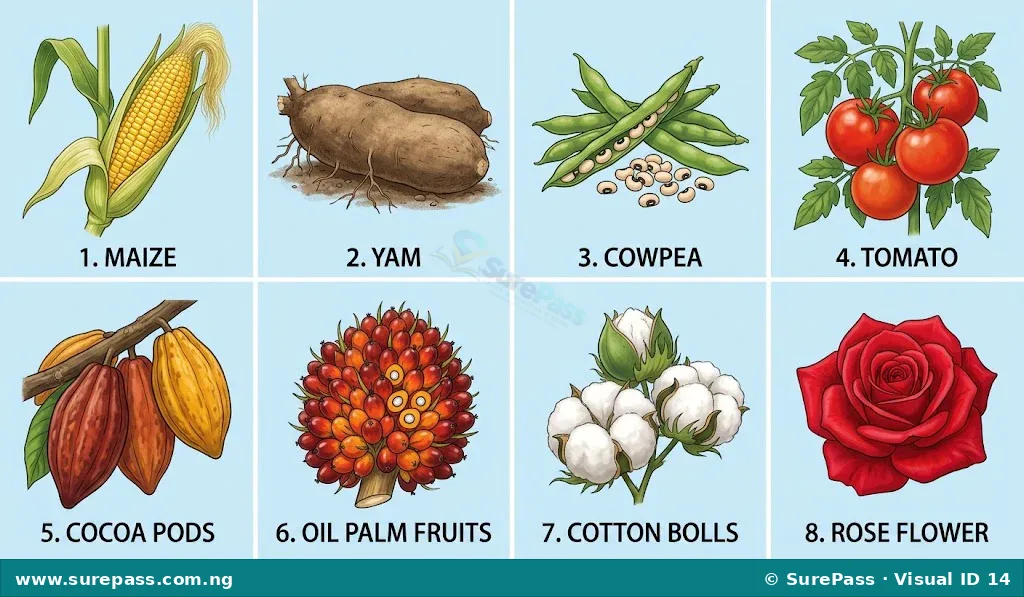
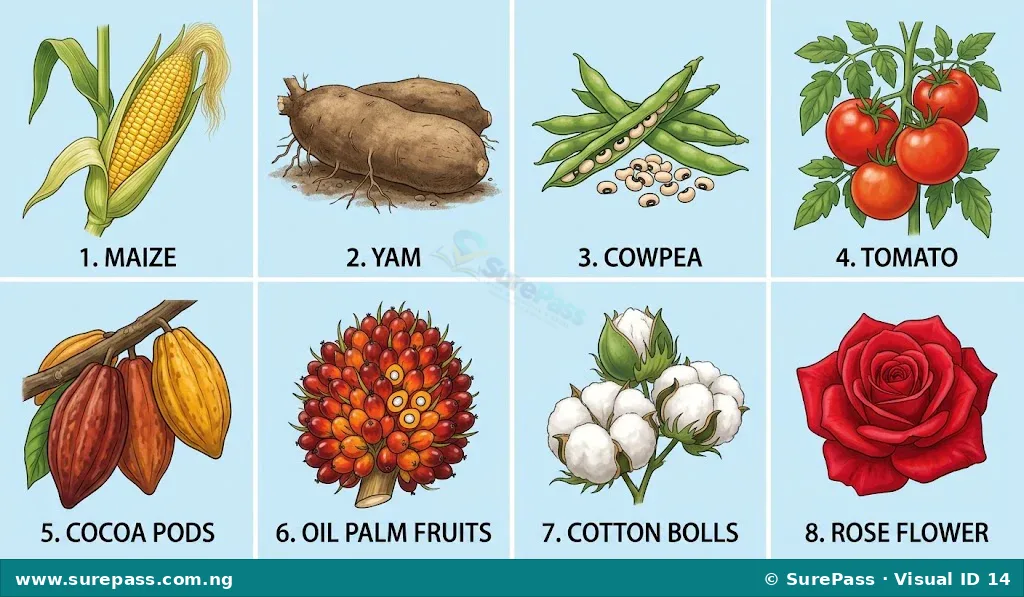
This involves a series of activities from preparing the land, planting, nurturing the crops, protecting them from pests and diseases, to harvesting and storing the produce. Examples of crops commonly grown in Nigeria include maize, rice, cassava, yam, and groundnut.
Meaning of Horticulture
Horticulture is the art and science of cultivating plants, especially fruits, vegetables, flowers, and ornamental plants, typically on a smaller scale or with more intensive care than field crops.
Horticultural practices often focus on individual plant care, aesthetic value, and high-value produce. It includes activities like gardening, landscaping, and growing plants in nurseries or greenhouses. Examples of horticultural products in Nigeria include tomatoes, peppers, oranges, mangoes, roses, and various garden plants.
Distinction Between Crop Production and Horticulture
While both crop production and horticulture involve growing plants, they differ mainly in scale, intensity of care, and the types of plants cultivated. Crop production typically deals with staple food crops and industrial crops grown over large areas using extensive methods. Horticulture, on the other hand, often focuses on high-value crops like fruits, vegetables, and flowers, usually grown on smaller plots with more intensive management and individual plant attention.
Types of Crops
Crops can be classified in various ways, but a common method is based on their primary use. This classification helps in understanding their economic importance and how they contribute to human needs.
Food Crops
Food crops are plants cultivated primarily for human consumption. They form the staple diet of many communities and provide essential nutrients.
- Cereals: These are grasses cultivated for their edible grain. Examples include maize (corn), rice, millet, and sorghum.
- Legumes: These are plants that produce pods containing seeds, rich in protein. Examples include cowpea (beans), groundnut (peanut), soybean, and pigeon pea.
- Root and Tuber Crops: These crops store edible material in underground roots or tubers. Examples include cassava, yam, sweet potato, and cocoyam.
- Vegetable Crops: These are plants grown for their edible leaves, stems, roots, or fruits, often consumed fresh or cooked. Examples include fluted pumpkin (ugu), spinach (efo), okra, tomato, and pepper.
- Fruit Crops: These are plants that produce fleshy, edible fruits. Examples include oranges, mangoes, pineapples, bananas, and pawpaws.
Cash Crops
Cash crops are plants grown specifically for sale to generate income, rather than for direct consumption by the farmer.
These crops are often exported or sold to processing industries. Examples in Nigeria include cocoa, oil palm, rubber, and cotton.
Industrial Crops
Industrial crops are plants cultivated to provide raw materials for various industries.
These crops are processed to produce goods like sugar, textiles, and oils. Examples include sugarcane (for sugar), cotton (for textiles), and oil palm (for palm oil and other products).
Ornamental Crops
Ornamental crops are plants grown for their aesthetic appeal, such as their flowers, foliage, or overall form, rather than for food or industrial use.
They are used to decorate homes, gardens, parks, and public spaces. Examples include roses, hibiscus, bougainvillea, and various shrubs and trees used in landscaping.
Types of Horticulture
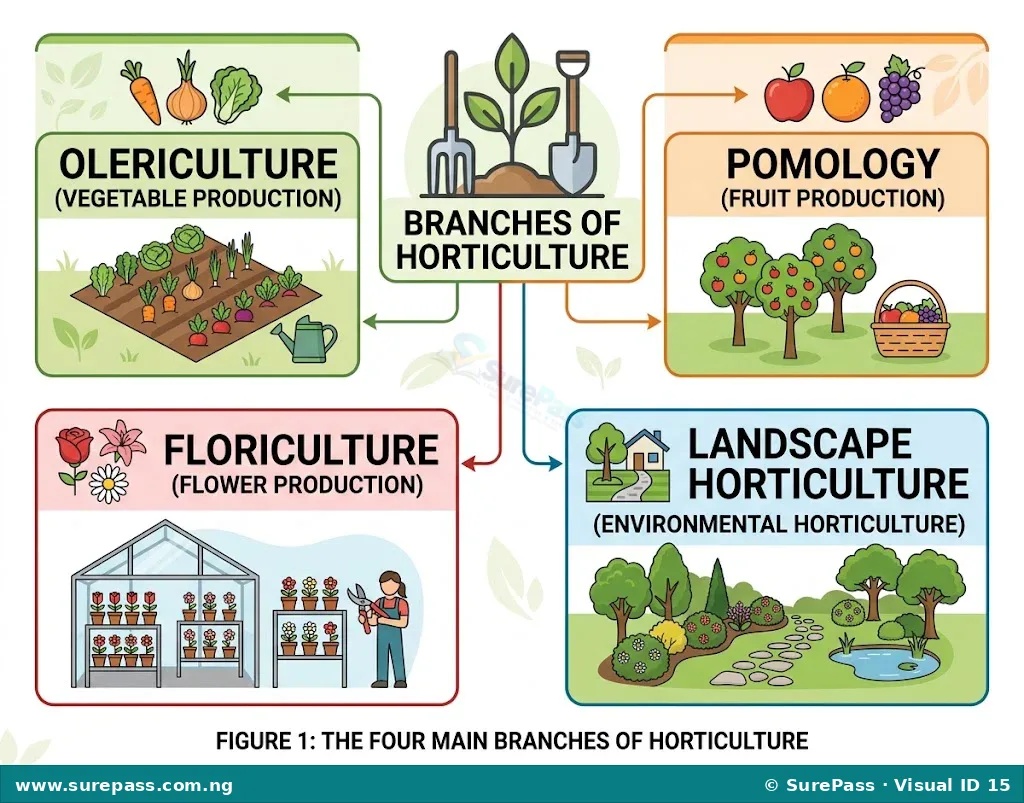
Horticulture is a broad field with several specialised branches, each focusing on specific types of plants or applications.
Olericulture (Vegetable Growing)
Olericulture is the branch of horticulture that deals with the production and marketing of vegetables.
This includes leafy vegetables like spinach and fluted pumpkin, fruit vegetables like tomatoes and peppers, and root vegetables like carrots. Olericulture often involves intensive cultivation methods to achieve high yields and quality.
Pomology (Fruit Growing)
Pomology is the branch of horticulture concerned with the cultivation, harvesting, and storage of fruits.
It covers a wide range of fruits, from tropical varieties like mangoes, oranges, and pineapples to temperate fruits. Pomologists study fruit trees and plants to improve their yield, quality, and disease resistance.
Floriculture (Flower Growing)
Floriculture is the branch of horticulture that focuses on the cultivation of flowering and ornamental plants for gardens, floral arrangements, and potted plants.
This includes growing cut flowers like roses, orchids, and lilies, as well as bedding plants and foliage plants. Floriculture contributes significantly to the aesthetic industry and special events.
Landscape Horticulture
Landscape horticulture involves the design, installation, and maintenance of outdoor spaces, including gardens, parks, and recreational areas.
This branch combines artistic design with plant science to create functional and beautiful environments. It includes selecting appropriate plants, designing irrigation systems, and maintaining lawns and garden features.
Impact of Climate Change on Crop Production and Horticulture
Climate change refers to long-term shifts in temperatures and weather patterns. These shifts can be natural, but since the 1800s, human activities have been the main driver of climate change, primarily due to the burning of fossil fuels.
What is Climate Change?
Climate change is a significant and lasting change in the statistical distribution of weather patterns over periods ranging from decades to millions of years.
It involves changes in average global temperatures, rainfall patterns, and the frequency of extreme weather events. These changes have profound effects on natural ecosystems and human activities, especially agriculture.
Effects of Climate Change on Crop Production in Nigeria
Nigeria’s agricultural sector is highly vulnerable to the impacts of climate change, which can lead to reduced food security and economic instability.
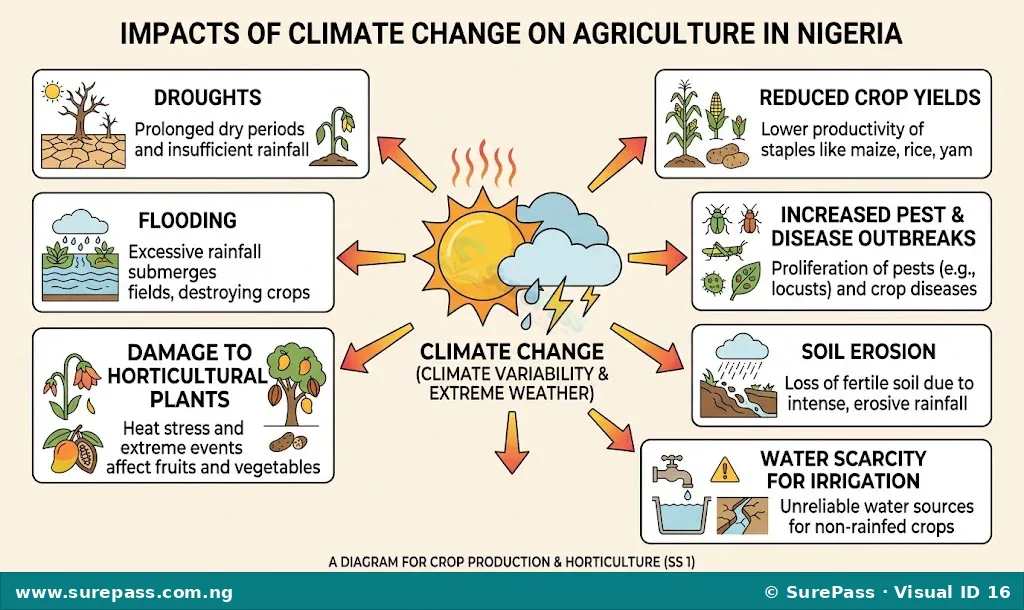
- Changes in Rainfall Patterns: Climate change leads to unpredictable rainfall. Some regions experience prolonged droughts, causing crops to wither and die, while others face excessive rainfall and floods, which wash away crops, damage farmlands, and promote soil erosion.
- Increased Temperatures: Rising temperatures can stress crops, leading to reduced growth and lower yields. Many crops have specific temperature ranges for optimal growth, and temperatures outside these ranges can negatively affect flowering, fruit setting, and overall productivity.
- Pest and Disease Outbreaks: Warmer temperatures and altered rainfall patterns can create favourable conditions for the proliferation of agricultural pests and diseases. New pests may emerge or existing ones may spread to new areas, causing significant damage to crops.
- Soil Degradation: Extreme weather events like heavy rainfall and strong winds can lead to increased soil erosion, washing away fertile topsoil. Droughts can also cause soil to become dry and less fertile, reducing its capacity to support crop growth.
- Reduced Crop Yields: The combined effects of droughts, floods, high temperatures, and increased pests and diseases often result in significantly reduced crop yields. This directly impacts food availability and the income of farmers across Nigeria.
Effects of Climate Change on Horticulture in Nigeria
Horticultural crops, often requiring more intensive care and specific environmental conditions, are particularly susceptible to climate change impacts.
- Damage to Horticultural Plants: Delicate horticultural plants, such as flowers and certain vegetables, are highly sensitive to extreme weather conditions. High temperatures can scorch leaves and flowers, while heavy rains can damage fruits and cause root rot.
- Water Scarcity for Irrigation: Many horticultural crops, especially vegetables and fruits, require consistent irrigation. Changes in rainfall patterns and prolonged dry seasons can lead to water scarcity, making it difficult to maintain these crops without expensive alternative irrigation methods.
- Reduced Quality and Market Value: Climate stress can affect the quality of horticultural produce. Fruits may be smaller or less sweet, vegetables may be discoloured or tough, and flowers may have shorter shelf lives. This reduction in quality can lead to lower market prices and reduced income for horticulturalists.
- Impact on Ornamental Plants: Ornamental plants used in landscaping and floriculture are also affected. Changes in climate can alter their flowering cycles, reduce their vibrancy, or make them more susceptible to diseases, impacting the aesthetic value and commercial viability of these plants.


0 comments
Open the discussion when you need it. Comments stay collapsed until requested so the initial article remains light.