



ARTICLE CONTENTSOn this page 8 sections
Transportation and Storage of Agrochemicals
Performance Objectives
By the end of the lesson, students should be able to:
- discuss the safe transportation of agrochemicals;
- discuss the safe storage of agrochemicals.
Meaning of Agrochemicals
Agrochemicals are chemical products used in agriculture to manage ecosystems, protect crops and improve yields.
These substances include pesticides, herbicides, insecticides, fungicides and fertilizers. While these chemicals are essential for modern crop production and horticulture, they are highly toxic. Improper handling during transportation and storage can lead to environmental pollution, crop damage, animal poisoning and severe human health hazards.
Meaning of Personal Protective Equipment
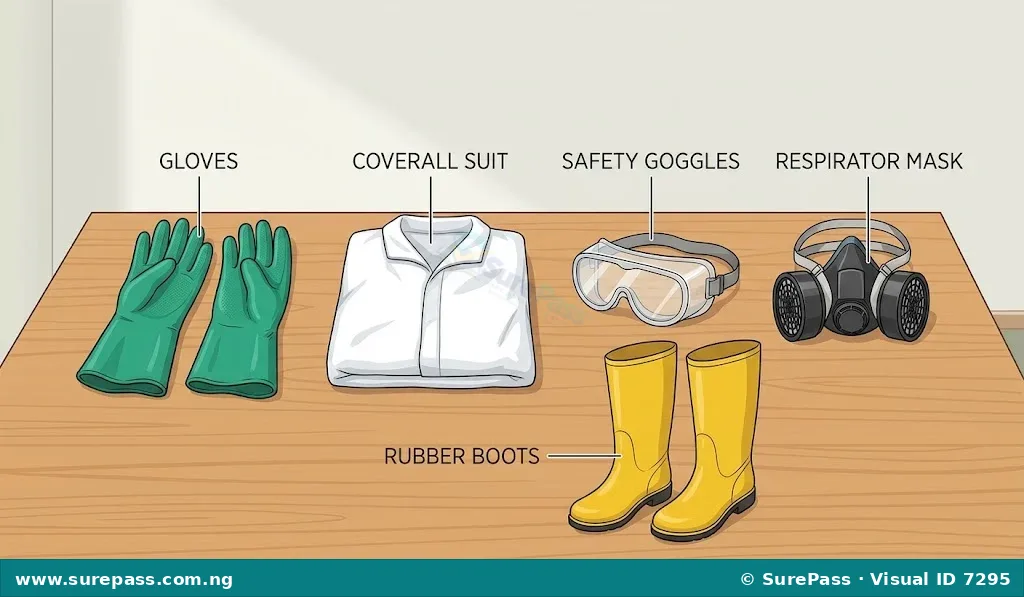
Personal Protective Equipment is specialized clothing or equipment worn to protect the body from hazards, infections or chemical exposure.
In agricultural practices, Personal Protective Equipment is commonly referred to as PPE. It acts as a physical barrier between the handler and toxic chemical substances, preventing skin contact, inhalation and accidental ingestion of agrochemicals.
Safe Transportation of Agrochemicals
Transportation is the movement of agrochemicals from the point of purchase, manufacturing plant or central warehouse to the farm or local storage facility. Because vehicles move through public roads and communities, transportation carries a high risk of accidents, spills and contamination. Safe transportation practices prevent these hazards.
The primary rules for the safe transportation of agrochemicals include:
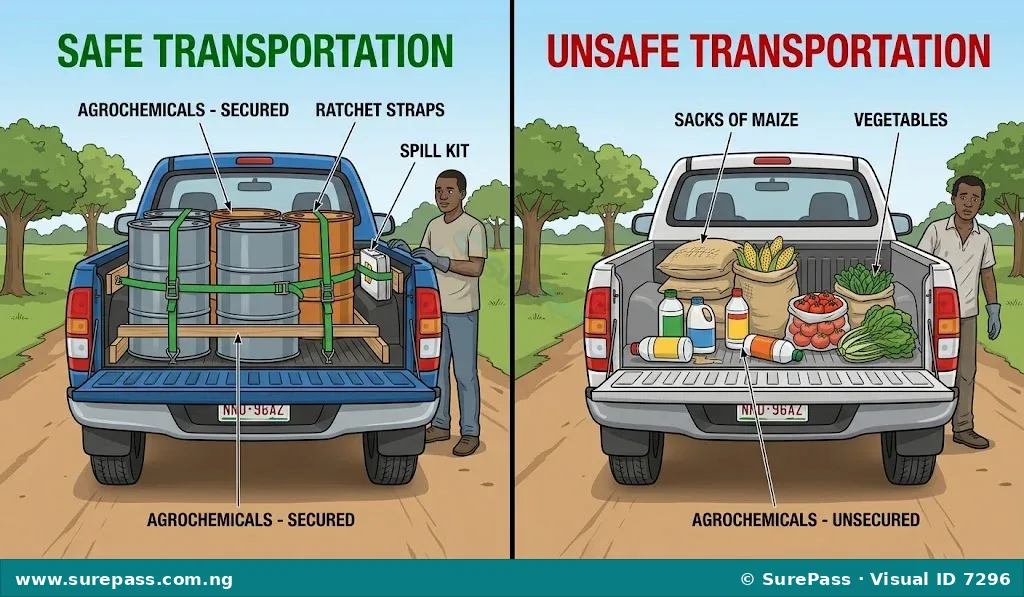
- Separation from Food Items: Agrochemicals must never be transported in the same compartment as food items, animal feed, harvested crops or drinking water. Chemical fumes or liquid leaks can easily penetrate food packaging, leading to severe food poisoning.
- Use of Personal Protective Equipment: Handlers must wear appropriate PPE during the loading, transit and offloading phases. Even when containers appear sealed, external surfaces may carry chemical residues that can cause skin irritation or systemic poisoning upon contact.
- Post-Offloading Hygiene: Handlers must wash their hands and take a complete bath with soap and clean water immediately after offloading agrochemicals. This hygiene routine must be completed before eating, drinking, smoking or touching the face to prevent accidental ingestion of chemical residues.
- Securing the Load: Agrochemical containers must be tightly secured in the transport vehicle to prevent movement, tipping, rolling or falling. Ropes, crates or dividers should be used to keep containers upright and stable.
- Vehicle Selection: Open-bed vehicles, such as trucks or trailers, are preferred for transporting agrochemicals because they provide natural ventilation. If a closed vehicle must be used, the windows should be kept open to prevent the accumulation of toxic fumes in the cabin. Agrochemicals must never be transported in the passenger compartment of a vehicle.
- Spill Kit Readiness: Transport vehicles should carry a basic spill kit containing absorbent materials like dry sand, sawdust or soil, along with a shovel and heavy-duty waste bags to manage accidental leaks immediately.
Safe Storage of Agrochemicals
Storage refers to the holding of agrochemicals in a designated facility from the time of acquisition until they are mixed and applied on the farm. Proper storage preserves the quality of the chemicals, prevents environmental contamination and protects unauthorized individuals from accidental exposure.
Key guidelines for the safe storage of agrochemicals include:
- Dedicated Storage Facility: Agrochemicals must be stored in a dedicated room, building or cabinet specifically designed for that purpose. This facility must be located away from residential areas, water sources, livestock pens and food storage areas.
- Security and Access Control: The storage facility must be kept locked at all times. Access must be restricted to trained adults. Warning signs, such as a skull and crossbones symbol or clear written warnings in local languages, should be placed on the door to deter children and unauthorized visitors.
- Ventilation and Temperature Control: The storage area must be well-ventilated, dry and cool. Proper airflow prevents the buildup of toxic, flammable or explosive fumes. Direct sunlight and extreme heat must be avoided, as high temperatures can cause chemical containers to expand, rupture or degrade.
- Use of Original Containers: Agrochemicals must always be kept in their original containers with the manufacturer labels intact. Labels contain critical information regarding active ingredients, application rates, safety precautions and first-aid measures. Chemicals must never be transferred to food or beverage containers.
- Organized Shelving and Segregation: Storage shelves should be made of non-absorbent materials like metal or plastic rather than wood. Liquid chemicals must be stored on lower shelves, while dry formulations like powders or granules should be placed on upper shelves. This prevents liquid leaks from contaminating dry products. Additionally, different classes of chemicals, such as herbicides and fertilizers, should be kept separate.
- Flooring and Spill Containment: The floor of the storage facility should be made of smooth, impermeable concrete to prevent chemicals from soaking into the ground in the event of a spill. A raised threshold at the doorway helps contain liquid spills within the room.
How to Put On and Remove PPE Safely
Wearing Personal Protective Equipment correctly is a critical skill that ensures maximum protection during the handling, transportation and storage of agrochemicals. The process of putting on PPE is called donning, while the process of removing it is called doffing.
The required materials for this procedure are:
- A protective coverall suit
- Chemical-resistant rubber boots
- A chemical respirator or face mask
- Safety goggles
- Heavy-duty nitrile or neoprene gloves
- Soap, clean water and a towel
The procedure for putting on (donning) PPE involves the following steps:
- Inspect all PPE items for tears, holes, cracks or worn-out parts before use. Damaged equipment must be replaced immediately.
- Pull on the protective coverall suit and zip it up completely to the neck.
- Step into the chemical-resistant rubber boots. Pull the legs of the coverall suit over the outside of the boots to prevent spilled liquids from running down inside the boots.
- Fit the chemical respirator or face mask over the nose and mouth. Adjust the straps to ensure a tight, airtight seal against the face.
- Place the safety goggles over the eyes and adjust the headband for a secure fit. Ensure the goggles fit snugly over the respirator nosepiece.
- Pull on the chemical-resistant gloves. If working with hands pointing downward, pull the sleeves of the coverall over the outside of the gloves.
The procedure for removing (doffing) PPE involves the following steps:
- Wash the gloved hands thoroughly with soap and water before touching any other part of the body or equipment to remove surface chemical residues.
- Remove the safety goggles by handling only the headband. Do not touch the front of the goggles.
- Unzip and peel down the coverall suit, turning it inside out as it is removed to keep any external contamination folded inward.
- Remove the rubber boots by stepping out of them without touching the outer surfaces with bare hands.
- Remove the respirator or face mask by untying or pulling the straps from behind the head.
- Carefully peel off the gloves by pulling them inside out from the wrist, ensuring the bare skin does not touch the contaminated outer surface of the gloves.
- Wash hands, arms and face thoroughly with soap and clean water, or take a complete shower immediately.
How to Organize an Agrochemical Storage Space
Organizing a storage space systematically reduces the risk of chemical reactions, accidental spills and contamination of agricultural inputs.
The required materials for this procedure are:
- A lockable metal cabinet or a dedicated storage room
- Agrochemical containers with original labels
- Non-absorbent metal or plastic shelves
- A broom, dustpan and a spill kit (sand, shovel and heavy-duty waste bags)
- A logbook and a pen for inventory records
The procedure for organizing the storage space involves the following steps:
- Clean the storage cabinet or room thoroughly, ensuring there is no dust, moisture or debris on the shelves or floor.
- Inspect all agrochemical containers to confirm that lids are tightly sealed, labels are intact and there are no visible leaks.
- Group the agrochemicals by their functional type, separating herbicides, insecticides, fungicides and fertilizers into distinct sections.
- Place dry formulations, such as wettable powders and granules, on the upper shelves of the storage unit.
- Place liquid formulations on the lower shelves to prevent them from leaking onto dry products below.
- Arrange the containers so that their labels face forward, making the product names, active ingredients and hazard warnings clearly visible.
- Record every chemical container in the inventory logbook, noting the product name, quantity, date of purchase and expiration date.
- Place the spill kit in an easily accessible corner near the entrance of the storage space.
- Close the storage cabinet or room door and secure it firmly with a padlock.




0 comments
Open the discussion when you need it. Comments stay collapsed until requested so the initial article remains light.