


ARTICLE CONTENTSOn this page 8 sections
Business Ideas and Opportunities
Performance Objectives
By the end of the lesson, students should be able to:
- explain the meanings of business ideas, business opportunities and gainful activities;
- identify sources of business ideas, opportunities and gainful activities.
Meanings of Key Concepts
In the field of crop production and horticulture, establishing a successful enterprise requires a clear understanding of foundational entrepreneurial concepts. These concepts include business ideas, business opportunities, and gainful activities. While these terms are closely related, they represent different stages and aspects of starting and running an agricultural business.
Meaning of Business Idea
A business idea is a clear and concise concept or thought that can be developed into a commercial venture to generate income or profit.
A business idea is the starting point of any entrepreneurial journey. It is a mental picture of a product, service, or method that can solve a problem or meet a need in society. In crop production and horticulture, a business idea might involve growing a specific type of crop, offering landscaping services, or producing organic fertilizers. However, a business idea is purely theoretical until it is tested and implemented.
Meaning of Business Opportunity
A business opportunity is a proven or highly probable commercial chance to introduce a product or service into a market where it can generate sustainable profit.
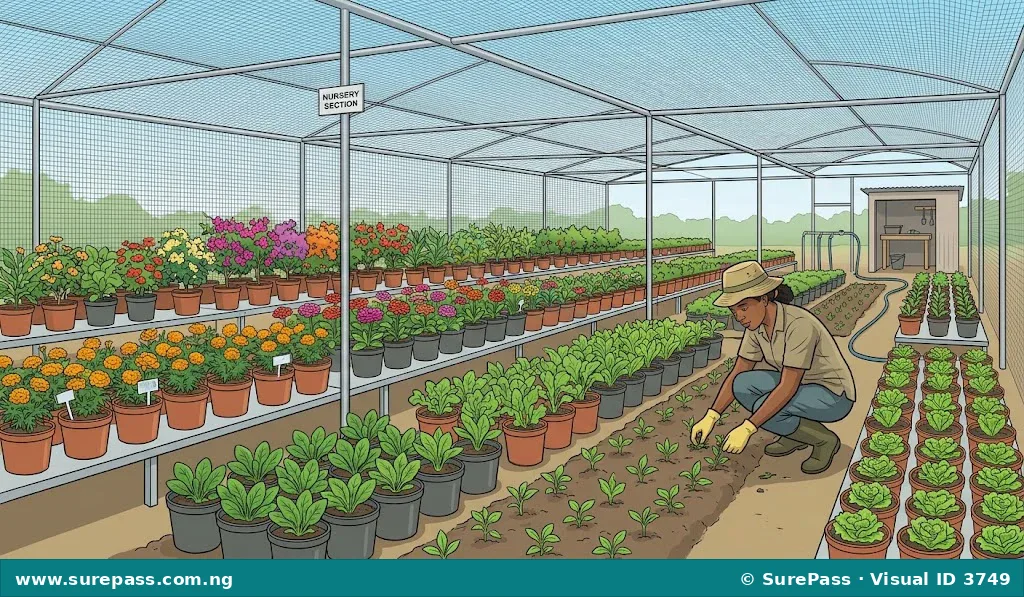
A business opportunity is more advanced than a simple business idea. It exists when there is a proven demand for a product or service, a clear target market, and the resources necessary to execute the idea successfully. For instance, while thinking about growing exotic flowers is a business idea, discovering that local event planners import flowers at high costs due to a lack of local suppliers represents a genuine business opportunity.
Meaning of Gainful Activities
Gainful activities are productive tasks, employments or ventures that yield financial returns, livelihood support or economic benefits to the individual performing them.
In agriculture, gainful activities include both self-employment and wage-earning jobs. These activities keep individuals productively engaged while generating income to sustain their livelihoods. Examples include weeding farms for a fee, grafting fruit trees for sale, packaging seeds, or transporting harvested crops from farms to urban markets.
Distinction Between Ideas, Opportunities, and Gainful Activities
Understanding the distinction between these three concepts helps agricultural entrepreneurs minimize risks. A business idea is a thought, a business opportunity is a viable market gap, and a gainful activity is the actual work performed to generate income. The relationship between these concepts can be illustrated through practical agricultural scenarios.
Examples of these distinctions in crop production and horticulture include:
- The Business Idea: A student thinks about producing fresh tomato paste locally to reduce post-harvest losses.
- The Business Opportunity: The student conducts research and finds that local tomato farmers lose forty percent of their harvest during the peak season, and local markets lack affordable, locally processed tomato paste.
- The Gainful Activity: The student purchases surplus tomatoes, processes them into paste, packages them in jars, and sells them to local households and restaurants.
Sources of Business Ideas, Opportunities, and Gainful Activities
Agricultural entrepreneurs do not generate ideas in a vacuum. Successful business ideas and opportunities are identified through systematic search and observation.
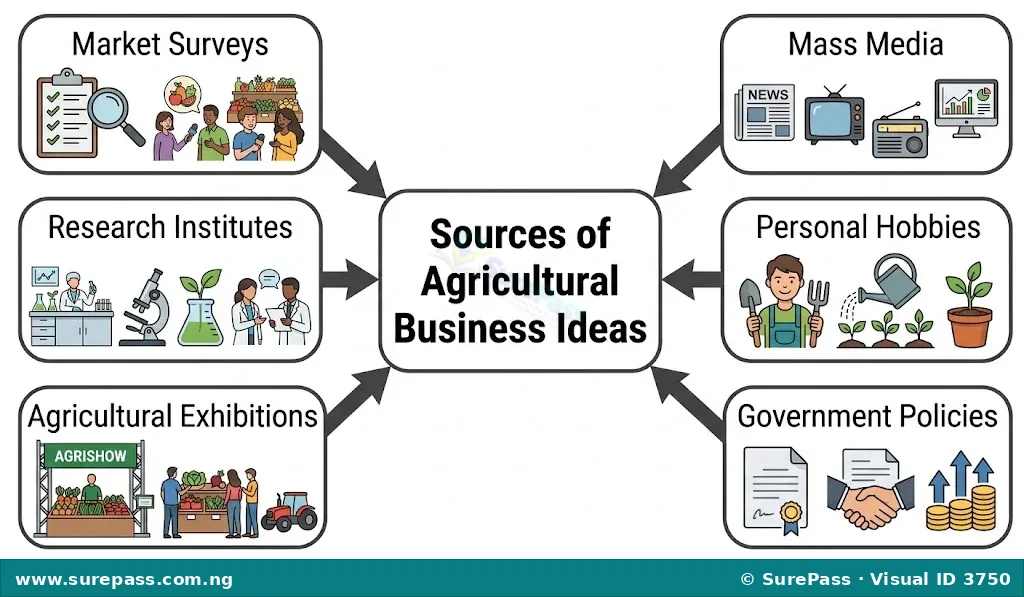
The primary sources of business ideas and opportunities in crop production and horticulture include:
- Market Surveys and Consumer Needs: Observing shortages of certain crops, vegetables, or ornamental plants in local markets reveals what consumers want but cannot easily find.
- Mass Media and Publications: Newspapers, agricultural magazines, trade journals, and multimedia advertisements highlight emerging trends, new crop varieties, and demands in the agricultural sector.
- Agricultural Exhibitions and Trade Fairs: Attending agricultural shows exposes individuals to new technologies, modern farming equipment, and innovative horticultural designs.
- Research Institutes and Universities: Institutions such as the National Horticultural Research Institute (NIHORT) and the International Institute of Tropical Agriculture (IITA) develop improved crop varieties and processing techniques that can be commercialized.
- Personal Hobbies and Skills: A passion for gardening, flower arrangement, backyard vegetable cultivation, or plant propagation can easily be converted into a commercial venture.
- Government Policies and Programmes: Government initiatives, such as bans on certain imported agricultural products, agricultural grants, or fertilizer subsidies, create new opportunities for local production.
- Environmental and Social Trends: The rising demand for organic foods, urban beautification, and environmental conservation creates opportunities for organic farming and professional landscaping services.
Factors Affecting the Success of a Business Opportunity in a Location
Not every business opportunity will thrive in every location. An entrepreneur must evaluate specific environmental, economic, and social factors before establishing a crop production or horticultural business in a particular area.
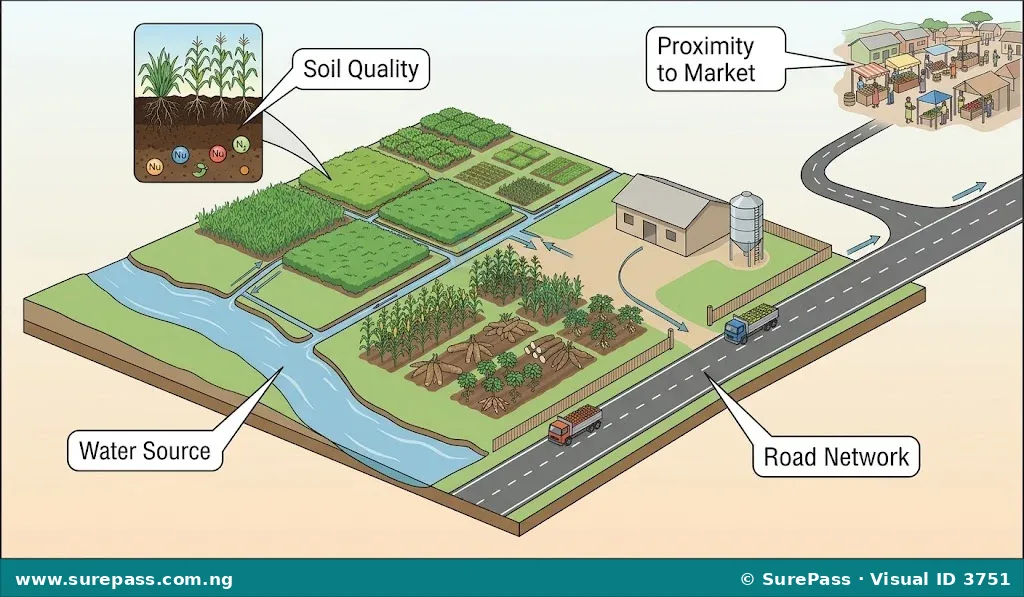
The factors that affect the success of an agricultural business opportunity in a location include:
- Environmental and Climatic Conditions: Crop production depends heavily on soil fertility, rainfall patterns, temperature, and water availability. For example, a business opportunity based on growing irrigated vegetables will fail in an area with severe water scarcity and poor soil.
- Market Demand and Proximity: A business must be located close to its target market or have access to reliable buyers. Perishable horticultural products, such as fresh flowers and leafy vegetables, must reach consumers quickly to prevent spoilage.
- Transportation and Infrastructure: Good road networks, stable electricity for cold storage, and clean water supply are essential for maintaining the quality of harvested crops and reducing transportation costs.
- Availability of Land and Land Tenure Systems: Secure access to fertile land is critical. Land tenure systems that restrict long-term land use can hinder the establishment of permanent orchards or large-scale nurseries.
- Availability of Labour: Crop production and horticulture are labour-intensive. A business requires access to both skilled labour (such as horticulturists and propagators) and unskilled labour (for weeding, planting, and harvesting).
- Government Regulations and Security: Local taxes, zoning laws, and the general security of the area affect business operations. High rates of theft or pest infestations in a location can ruin an agricultural investment.
Developing Innovative Skills for Agricultural Business Ideas
Innovation in agriculture involves finding new, more efficient ways to produce, package, distribute, or market crop and horticultural products. Developing innovative skills allows individuals to look at common agricultural challenges and turn them into profitable business ventures.
Examples of innovative concepts in crop production and horticulture include:
- Value Addition: Instead of selling raw cassava, processing it into high-quality starch or packaged flour.
- Vertical Farming: Growing vegetables in stacked layers or on walls, which is highly suitable for urban areas with limited land space.
- Organic Production: Cultivating crops without synthetic chemicals to target health-conscious consumers who pay premium prices.
- Decorative and Functional Horticulture: Combining plant nursery business with landscape design to beautify residential and commercial properties.
How to Identify and Evaluate a Local Horticultural Business Idea
Identifying a viable business idea requires systematic observation and planning. This practical exercise helps develop the innovative skills needed to assess local agricultural needs.
The procedure for identifying and evaluating a local horticultural business idea involves the following steps:
- Observe the local community to identify crop or plant products that are scarce, expensive, or of poor quality.
- List potential solutions or products that can meet this demand, such as starting a backyard vegetable garden or a flower nursery.
- Assess the resources required to start the venture, including land, water supply, seeds, fertilizers, and basic hand tools.
- Identify the target customers, such as local households, hotels, schools, or event planners.
- Analyze the environmental conditions of the chosen location to ensure the selected crops can grow successfully.
- Select the most viable idea based on the availability of resources, low startup costs, and high local demand.
- Draft a simple business plan outlining how the crops will be produced, packaged, and sold to the target market.




0 comments
Open the discussion when you need it. Comments stay collapsed until requested so the initial article remains light.