


ARTICLE CONTENTSOn this page 8 sections
Kitchen Tools / Utensils, and Equipment
Performance Objectives
By the end of the lesson, students should be able to:
- distinguish between kitchen tools, equipment, and utensils;
- classify kitchen tools and equipment into cooking equipment and serving utensils with examples;
- identify the correct methods for cleaning, drying, and storing various kitchen tools;
- compare the functions, advantages, and disadvantages of local and modern utensils.
Meaning of Kitchen Tools, Utensils, and Equipment
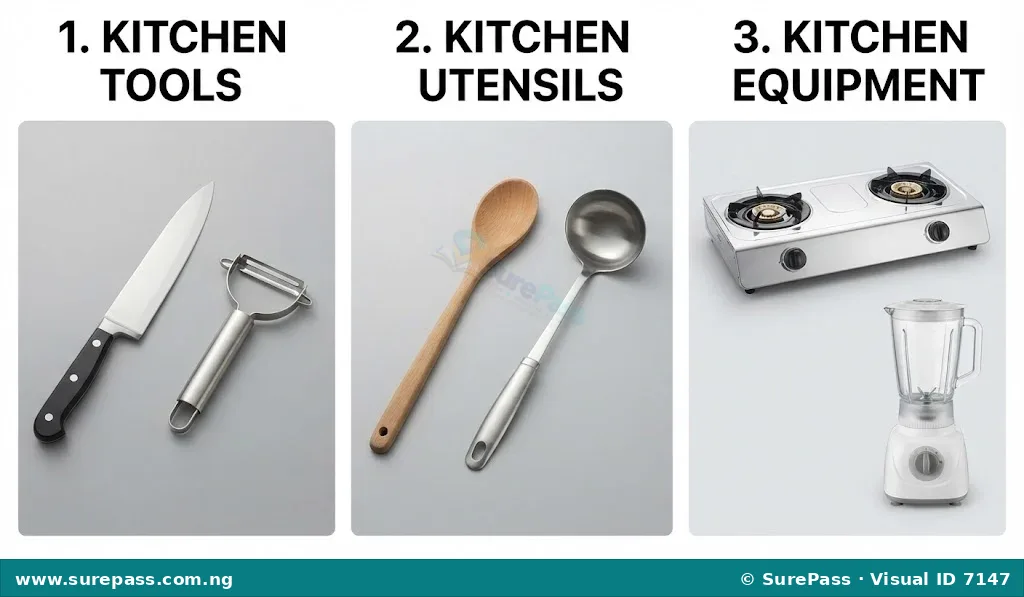
A kitchen tool is a small, handheld device designed to perform a specific task in food preparation.
Kitchen tools are usually manual and require physical effort to operate. Examples include knives, peelers, can openers, and graters.
A kitchen utensil is a small, handheld vessel or implement used for food preparation, cooking, or serving.
Utensils are often used to handle food directly or to hold food during the cooking and serving processes. Examples include spoons, forks, ladles, and whisks.
Kitchen equipment refers to larger, often mechanical or electrical appliances used to facilitate food preparation, cooking, preservation, and storage.
Equipment is typically larger than tools and utensils, and it often requires electricity, gas, or manual mechanical systems to function. Examples include refrigerators, gas cookers, blenders, and ovens.
The table below highlights the key differences between kitchen tools, utensils, and equipment:
| Feature | Kitchen Tools | Kitchen Utensils | Kitchen Equipment |
|---|---|---|---|
| Size | Small and lightweight. | Small to medium. | Large and heavy. |
| Power Source | Manual (human physical effort). | Manual (human physical effort). | Electricity, gas, or complex mechanical parts. |
| Portability | Highly portable and easy to move. | Highly portable. | Mostly stationary or semi-stationary. |
| Primary Function | Specific preparation tasks (cutting, peeling, grating). | Handling, mixing, or serving food. | Cooking, baking, cooling, or processing food. |
| Examples | Kitchen knives, vegetable peelers, hand graters. | Serving spoons, ladles, whisks, mixing bowls. | Refrigerators, gas cookers, electric blenders, ovens. |
Observe the visual comparison below to distinguish between a kitchen tool, a kitchen utensil, and a piece of kitchen equipment.
Classification of Kitchen Tools, Utensils, and Equipment
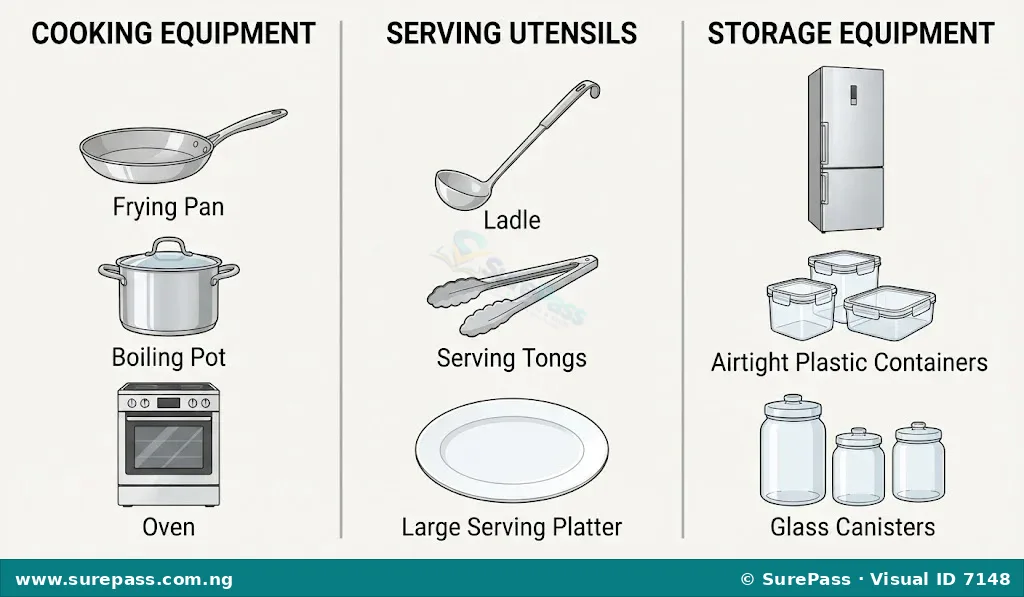
To ensure efficiency and safety in the kitchen, items are grouped according to their specific functions. The three main classifications are cooking equipment, serving utensils, and storage equipment.
Cooking Equipment
Cooking equipment includes items used directly to apply heat to food or to assist in the actual cooking process on a heat source.
Examples of cooking equipment include:
- Pots and Saucepans: Used for boiling, stewing, and making soups.
- Frying Pans: Used for frying, searing, and sautéing food.
- Gas or Electric Cookers: Provide the heat source necessary for cooking.
- Ovens: Used for baking, roasting, and grilling food.
- Pressure Cookers: Used to cook food rapidly using high-pressure steam.
Serving Utensils
Serving utensils are implements used to transfer food from cooking vessels to plates, or to portion and present food at the dining table.
Examples of serving utensils include:
- Soup Ladles: Deep-cupped spoons used for serving soups, stews, and sauces.
- Serving Spoons: Large spoons used for portioning rice, beans, and vegetables.
- Tongs: Scissor-like implements used to grip and lift solid food items like meat or salad.
- Serving Platters: Large flat dishes used to present main courses.
- Cake Slices: Flat, triangular utensils used to lift and serve slices of cake or pie.
Storage Equipment
Storage equipment consists of containers and appliances designed to keep raw or cooked food safe, fresh, and free from contamination.
Examples of storage equipment include:
- Refrigerators and Freezers: Electrical appliances used to preserve perishable foods at low temperatures.
- Food Canisters: Airtight containers used to store dry goods such as flour, sugar, and tea leaves.
- Plastic and Glass Food Containers: Used to store leftovers in the pantry or refrigerator.
- Bread Bins: Specially ventilated boxes used to keep bread fresh.
- Pantry Shelves and Larder Units: Structures used to organize and store non-perishable food items.
Look at the diagram below to see how kitchen items are classified into cooking, serving, and storage categories.
Care and Maintenance of Kitchen Tools, Utensils, and Equipment
Proper care and maintenance of kitchen items ensure they remain hygienic, function efficiently, and last longer. Neglecting kitchen tools can lead to food contamination, rust, and physical accidents.
Cleaning of Kitchen Tools, Utensils, and Equipment
Different materials require specific cleaning methods to prevent damage and maintain hygiene.
The cleaning guidelines for various materials are:
- Wooden Items (e.g., Mortar and Pestle, Wooden Spoons): Wash immediately after use with warm soapy water and a soft sponge. Do not soak wooden items in water, as this causes the wood to swell, crack, and harbor bacteria.
- Stainless Steel and Metal Items (e.g., Pots, Knives): Wash with warm water, mild detergent, and a non-abrasive sponge. Avoid using steel wool on polished surfaces to prevent scratching.
- Plastics (e.g., Mixing Bowls, Storage Containers): Wash with warm soapy water. Avoid using extremely hot water, which can warp the plastic, and do not use abrasive scourers that scratch the surface.
- Glass and Ceramic Items (e.g., Baking Dishes, Plates): Wash carefully in warm soapy water. Use a soft cloth to prevent chipping or cracking.
- Electrical Equipment (e.g., Blenders, Food Processors): Wipe the motor base with a clean, damp cloth. Never submerge the motor base in water. Wash the detachable blades and jugs separately with warm soapy water.
Drying and Storage
Moisture promotes the growth of bacteria, mold, and rust. Therefore, proper drying and storage are essential.
The correct procedures for drying and storing kitchen items include:
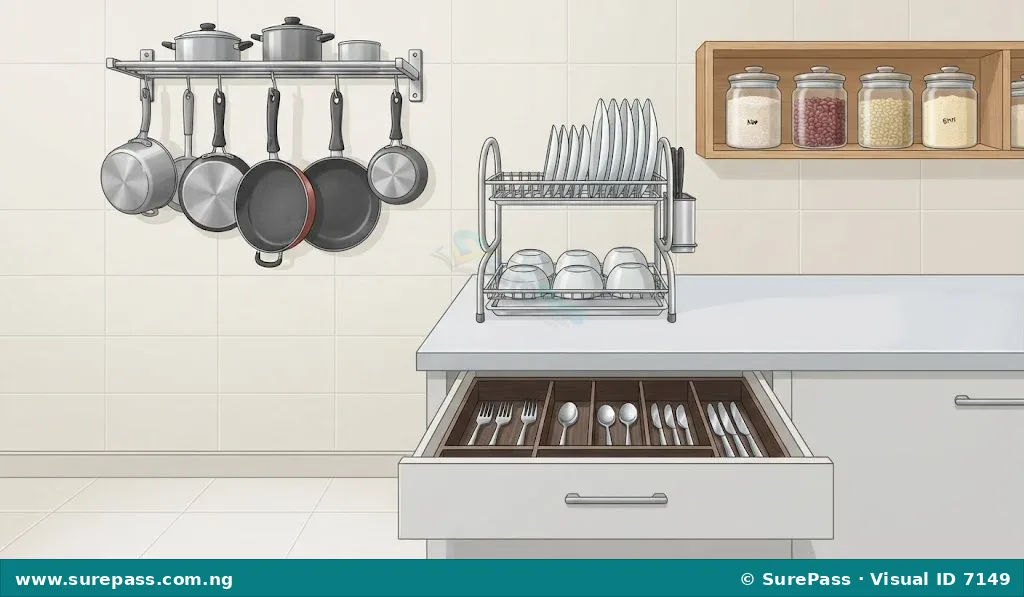
- Air Drying: Place washed items upside down on a clean dish rack to allow water to drain off naturally.
- Towel Drying: Use a clean, dry, lint-free dishcloth to dry metal utensils and knives immediately to prevent water spots and rust.
- Drawer Storage: Store clean, dry cutlery and small tools in organized drawers lined with clean liners.
- Hanging Racks: Hang pots, pans, and large serving spoons on wall-mounted hooks to save space and keep them dry.
- Cupboard Storage: Store heavy equipment and glass items in dry, well-ventilated cupboards. Ensure heavy items are placed on lower shelves for safety.
Observe the organized kitchen storage setup shown below.
Repair and Replacement of Faulty Tools
Faulty kitchen tools and equipment pose serious safety hazards and reduce efficiency in food preparation.
Guidelines for managing faulty items include:
- Sharpening: Dull knives should be sharpened regularly using a sharpening stone or steel to prevent slipping during cutting.
- Tightening Loose Parts: Loose handles on pots, pans, and drawer pulls should be tightened immediately with a screwdriver.
- Replacing Damaged Items: Cracked plastic containers, chipped glassware, and pots with broken handles should be discarded and replaced to prevent injury or contamination.
- Professional Servicing: Faulty electrical appliances, such as blenders with damaged cords or malfunctioning motors, should be repaired by a qualified technician or replaced.
Safety and Hygiene in Maintenance
Maintaining safety and hygiene during the cleaning and handling of kitchen tools prevents foodborne illnesses and physical injuries.
Important safety and hygiene rules include:
- Disconnect Power: Always unplug electrical appliances from the power source before cleaning or assembling them.
- Handle Sharp Blades with Care: Wash knives individually with the blade pointing away from the hand. Never leave knives submerged in soapy water where they cannot be seen.
- Sanitize Surfaces: Regularly sanitize dishcloths, sponges, and kitchen countertops to prevent the spread of bacteria.
- Avoid Cross-Contamination: Use separate cutting boards and knives for raw meats and ready-to-eat foods, and wash them thoroughly between uses.
Local vs. Modern Kitchen Tools, Utensils, and Equipment
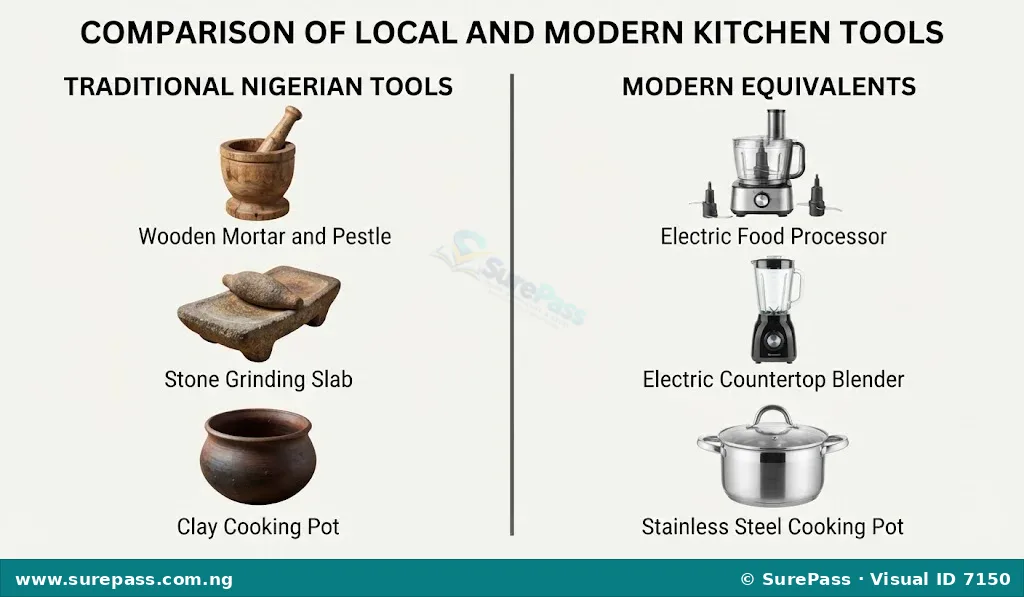
In Nigerian culinary practice, both local (traditional) and modern kitchen tools are used. Understanding their differences, advantages, and disadvantages helps in choosing the right tool for specific tasks.
Local Kitchen Tools and Utensils
Local kitchen tools are traditional implements made from locally sourced materials such as wood, clay, stone, and calabash. They have been used for generations in food preparation.
Examples of local kitchen tools include:
- Wooden Mortar and Pestle: Used for pounding yam, cassava, fufu, and grinding spices.
- Clay Pot (Asape/Esa): Used for cooking soups, stews, and storing water to keep it cool.
- Grinding Stone (Olo and Omo olo): A flat stone paired with a smaller hand stone, used for crushing peppers, tomatoes, and seeds.
- Calabash (Gourd): Used as bowls for holding water, serving palm wine, or measuring dry ingredients.
- Local Sieve (Sefa): Made from woven raffia, cane, or palm fronds, used for sifting flour or straining liquids.
Modern Kitchen Tools and Equipment
Modern kitchen tools are contemporary appliances and utensils made from manufactured materials like stainless steel, plastic, glass, and aluminum. They often rely on electricity or advanced mechanical designs.
Examples of modern kitchen tools include:
- Electric Blender: Used for pureeing peppers, tomatoes, and blending fruits.
- Stainless Steel Pot: Used for boiling, steaming, and general cooking.
- Plastic Bowl: Used for mixing ingredients, washing vegetables, and storing food.
- Electric Grinder: Used for grinding dry spices, beans, and grains.
- Modern Sieve: Made of stainless steel wire mesh or plastic, used for sifting and straining.
Observe the visual comparison below showing traditional local kitchen tools alongside their modern equivalents.
Differences Between Local and Modern Kitchen Tools
The table below outlines the primary differences between local and modern kitchen tools:
| Feature | Local Kitchen Tools | Modern Kitchen Tools | |||
|---|---|---|---|---|---|
| Materials | Natural materials (wood, stone, clay, calabash). | Manufactured materials (stainless steel, plastic, glass). | Power Source | Manual physical labor. | Electricity, gas, or mechanical batteries. |
| Speed of Operation | Slow and labor-intensive. | Fast and highly efficient. | |||
| Durability | Highly durable (stone and wood do not break easily). | Varies (plastics can warp, glass can shatter). | |||
| Cost | Relatively cheap and locally available. | Expensive to purchase and maintain. |
Advantages and Disadvantages
Both local and modern kitchen tools have unique benefits and limitations depending on the cooking context.
The advantages of local kitchen tools are:
- Affordability: They are inexpensive and easily sourced within local communities.
- No Electricity Required: They can be used anywhere, making them highly reliable in rural areas without electricity.
- Flavor Enhancement: Traditional cooking in clay pots or grinding on stones is believed to preserve and enhance the natural flavor of food.
- Durability: Items like grinding stones and wooden mortars can last for decades without wearing out.
The disadvantages of local kitchen tools are:
- Labor Intensive: They require significant physical strength and energy to operate.
- Slow Operation: Food preparation takes a longer time compared to modern methods.
- Hygiene Challenges: Porous materials like wood and clay can absorb moisture and food particles, making them harder to sanitize completely.
The advantages of modern kitchen tools are:
- Time and Energy Saving: Electrical appliances like blenders and food processors perform tasks in seconds, reducing physical fatigue.
- Precision and Consistency: Modern tools provide uniform cutting, blending, and temperature control.
- Ease of Cleaning: Non-porous surfaces like stainless steel and glass are easy to wash and sanitize.
The disadvantages of modern kitchen tools are:
- High Cost: They are expensive to purchase, repair, and replace.
- Dependence on Electricity: Many modern appliances cannot function during power outages.
- Complexity: Some appliances require technical knowledge to operate and maintain safely.
How to Safely Handle and Clean Kitchen Tools
This practical guide outlines the steps required to safely handle, clean, and store kitchen tools to prevent accidents and maintain hygiene.
The required materials are:
- A dirty wooden chopping board and a chef’s knife
- Warm water and liquid dishwashing soap
- A clean sponge and a dry dishcloth
- A knife sharpener
The procedure involves the following steps:
- Inspect the Tools: Check the knife handle to ensure it is tight and secure. Inspect the chopping board for deep cracks that could harbor food particles.
- Sharpen the Knife: Hold the knife blade at a 20-degree angle against the sharpening stone. Draw the blade across the stone in a smooth, controlled motion away from the body.
- Use the Knife Safely: Place the chopping board on a flat, non-slip surface. Hold the food item with the fingers curled inward (the claw grip) to protect them from the blade. Cut the food using smooth, downward strokes.
- Clean the Knife: Immediately after use, hold the knife by the handle. Wipe the blade with a soapy sponge from the spine (back) toward the sharp edge to avoid cutting the sponge or fingers. Rinse under running water.
- Clean the Chopping Board: Scrub the wooden board with warm soapy water. Do not submerge it in water. Rinse thoroughly.
- Dry and Store: Dry the knife immediately with a clean dishcloth to prevent rust. Place it in a knife block or a designated drawer divider. Stand the chopping board upright in a well-ventilated rack to air dry completely.
Summary
Kitchen tools, utensils, and equipment form the foundation of efficient food preparation. Proper classification into cooking, serving, and storage categories helps organize the kitchen workspace. Regular care, correct cleaning methods, and timely maintenance prevent accidents and food contamination. While modern appliances offer speed and convenience, local traditional tools remain highly valuable for their durability, affordability, and unique culinary results in Nigerian cooking.




0 comments
Open the discussion when you need it. Comments stay collapsed until requested so the initial article remains light.