



ARTICLE CONTENTSOn this page 6 sections
Nigerian Foods, Nutrient Groups and Nutritive Values
Performance Objectives
By the end of the lesson, students should be able to:
- identify different types of Nigerian foods;
- classify Nigerian foods based on their role in the body;
- explain major nutrients in different types of Nigerian foods.
- Relate nutritional knowledge to familiar, culturally relevant foods
Introduction to Nigerian Foods and Nutrients
Food is essential for life. It provides the body with the energy needed for daily activities, materials for growth and repair, and protection against diseases. Nigeria is rich in a wide variety of foods, many of which are locally grown and consumed across different cultures and regions.
Understanding the different types of Nigerian foods and their nutritive values is important for making healthy food choices. Each food contains specific substances called nutrients that perform particular functions in the body. By classifying foods based on these functions, individuals can ensure they consume a balanced diet.
What Are Food Nutrients?
Food nutrients are chemical substances found in food that are necessary for the body to function properly, grow, and stay healthy.
These nutrients are obtained from the foods consumed daily. They are vital for various bodily processes, from providing energy to building tissues and protecting against illness.
Classification of Nigerian Foods by Nutrient Group
Nigerian foods can be classified into different groups based on the primary nutrients they provide and their main functions in the body. This classification helps in understanding how different foods contribute to overall health.
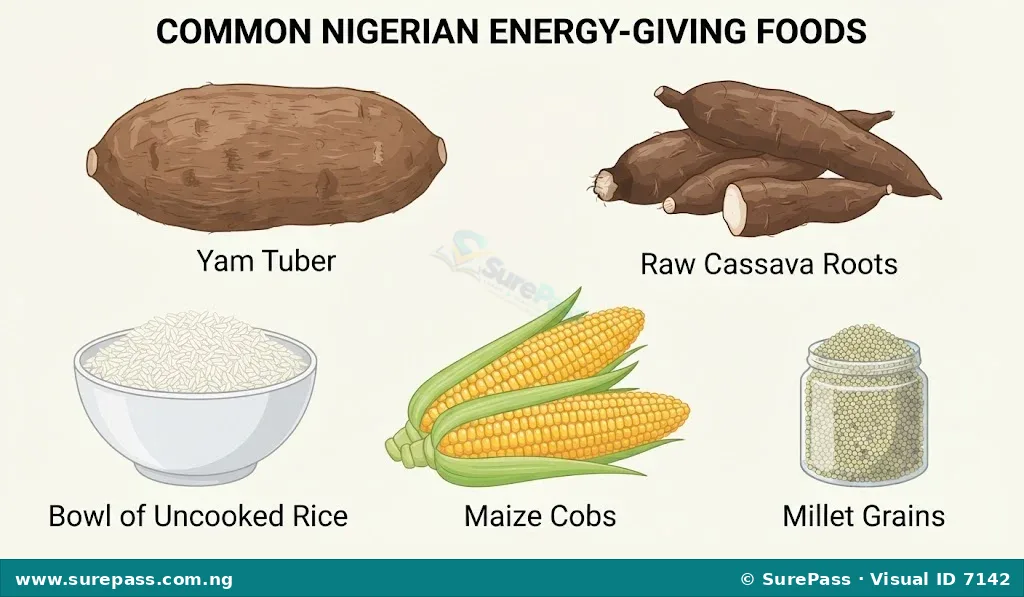
Energy-Giving Foods
Energy-giving foods are those that primarily provide the body with energy for physical activity, warmth, and all internal bodily processes like breathing and blood circulation.
The major nutrient found in energy-giving foods is carbohydrate. These foods are often starchy and form a significant part of many Nigerian meals.
Common Nigerian energy-giving foods include:
- Yams: A staple food, often boiled, roasted, or pounded. Yams are a rich source of complex carbohydrates.
- Cassava: Used to make garri, fufu, and tapioca. Cassava is another important source of carbohydrates.
- Rice: A widely consumed grain, providing quick energy.
- Maize (Corn): Eaten roasted, boiled, or processed into pap (ogi/akamu) and corn flour. Maize is a good source of carbohydrates.
- Millet: Often used to make pap, kunu, and local bread, especially in northern Nigeria. Millet provides sustained energy.
Body-Building Foods
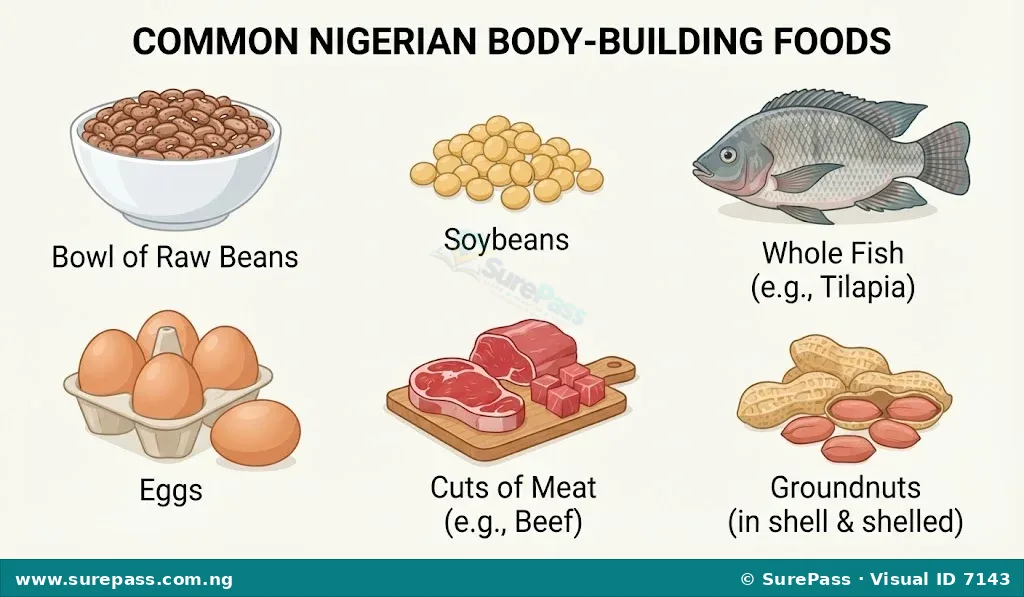
Body-building foods are essential for growth, repair of worn-out tissues, and the formation of new cells, muscles, and organs.
The primary nutrient in body-building foods is protein. These foods are crucial for children’s growth and for maintaining muscle mass in adults.
Examples of Nigerian body-building foods include:
- Beans: A widely consumed legume, prepared in various ways such as boiled beans, akara, and moi-moi. Beans are an excellent plant-based protein source.
- Soybeans: Used to make soy milk, tofu, and soy flour. Soybeans are a complete protein source.
- Fish: Fresh, smoked, or dried fish are common in Nigerian diets. Fish provides high-quality protein and essential fats.
- Eggs: A versatile and affordable source of high-quality protein.
- Meat: Includes beef, goat meat, chicken, and other animal proteins. Meat is a rich source of protein and iron.
- Groundnut (Peanut): Eaten roasted, boiled, or processed into groundnut paste. Groundnut provides protein and healthy fats.
Protective Foods
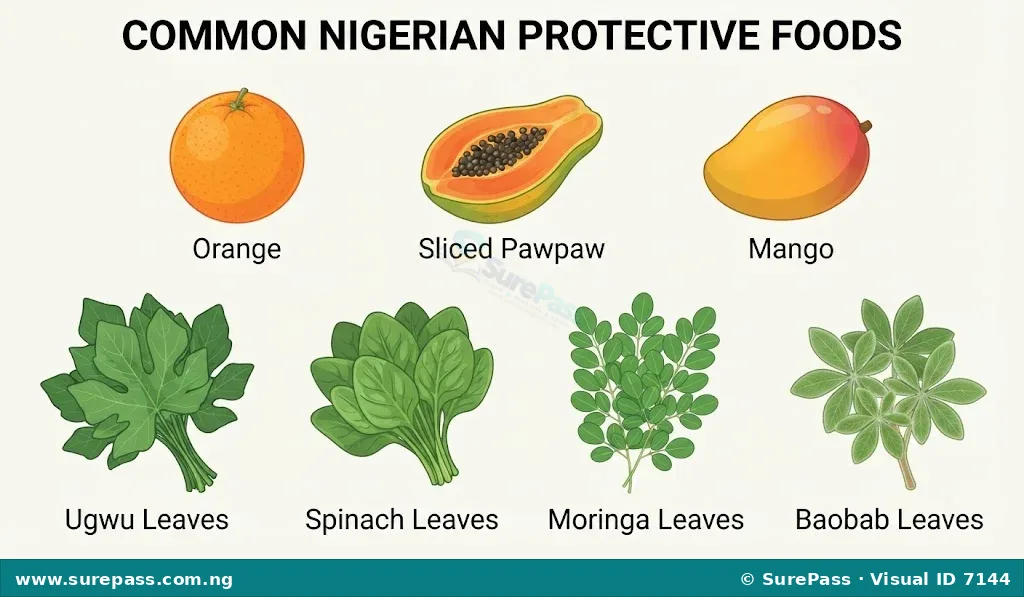
Protective foods are those that supply the body with vitamins and minerals, which are vital for maintaining good health, boosting the immune system, and protecting against diseases.
These foods help the body fight infections, ensure proper functioning of organs, and keep skin, hair, and eyes healthy. They are typically fruits and vegetables.
Nigerian protective foods include:
- Fruits:
- Orange: Rich in Vitamin C, important for immunity.
- Pawpaw (Papaya): Contains Vitamins A and C, and digestive enzymes.
- Mango: A good source of Vitamins A and C.
- Vegetables:
- Ugwu (Fluted Pumpkin Leaves): A popular leafy green, rich in iron and vitamins.
- Spinach (Efo Tete): Another common leafy green, packed with vitamins and minerals.
- Moringa: Known for its high content of vitamins, minerals, and antioxidants.
- Baobab Leaves (Kuka): Used in soups, providing vitamins and minerals.
Relating Nutritional Knowledge to Nigerian Meals
Understanding the classification of Nigerian foods helps in preparing balanced meals. A balanced meal should ideally include foods from all three nutrient groups to ensure the body receives all necessary nutrients.
For example, a typical Nigerian meal like “rice and stew with fish and ugwu” combines:
- Rice: An energy-giving food (carbohydrate).
- Fish: A body-building food (protein).
- Ugwu (Fluted Pumpkin Leaves): A protective food (vitamins and minerals).
Similarly, “beans and garri with some sliced mango” provides:
- Beans: A body-building food (protein).
- Garri (from cassava): An energy-giving food (carbohydrate).
- Mango: A protective food (vitamins and minerals).
By consciously combining foods from these groups, individuals can ensure their diet supports growth, provides energy, and protects against illness, using familiar and culturally relevant Nigerian ingredients.





0 comments
Open the discussion when you need it. Comments stay collapsed until requested so the initial article remains light.