



ARTICLE CONTENTSOn this page 9 sections
Introduction to Foods and Nutrition
Performance Objectives
By the end of the lesson, students should be able to:
- explain the meaning and importance of foods and nutrition;
- classify foods based on origin, nutrient content, and functions;
- Analyze effects of poor nutrition and propose solutions;
- Identify the function of foods in the body.
- identify consequences of Poor Nutrition;
- Identify nutrition related career opportunities.
Meaning of Food
Food refers to any edible substance, usually of plant or animal origin, that when eaten, provides the body with energy, promotes growth, repairs tissues, and regulates body processes.
Food is essential for all living organisms to survive and thrive. It is what people eat daily to gain strength and stay healthy.
Meaning of Nutrition
Nutrition is the process by which living organisms obtain and use food for growth, energy, maintenance, and repair of tissues.
It involves several stages, including ingestion (taking in food), digestion (breaking down food), absorption (taking nutrients into the bloodstream), assimilation (using nutrients), and egestion (removing waste products).
Importance of Food and Nutrition
Food and nutrition are fundamental for human health and well-being. Proper nutrition ensures that the body receives all the necessary nutrients to function optimally.
The importance of food and nutrition includes:
- Supporting Growth and Development: Adequate nutrition is crucial for the physical and mental development of children and adolescents.
- Providing Energy: Food supplies the energy needed for all daily activities, from thinking and breathing to running and working.
- Maintaining Health: A balanced diet strengthens the immune system, helping the body fight off diseases and infections.
- Repairing and Building Tissues: Nutrients from food are used to repair damaged cells and build new ones, which is vital for recovery from injury and general body maintenance.
- Regulating Body Processes: Food contains vitamins and minerals that help regulate various body functions, such as blood pressure, nerve function, and hormone production.
- Enhancing Productivity: Well-nourished individuals tend to be more alert, focused, and productive in their studies and work.
Classification of Foods
Foods can be classified in different ways to help understand their properties and how they benefit the body. The main classifications are according to their origin, nutrient content, and function.
Classification According to Origin
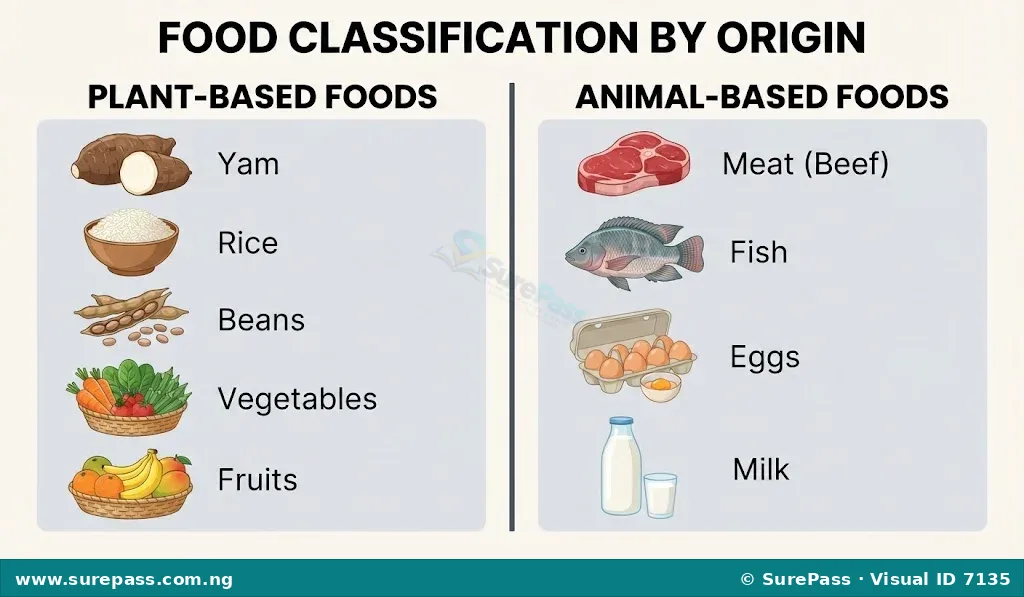
This classification groups foods based on whether they come from plants or animals.
- Plant-Based Foods: These foods are derived from various parts of plants, such as roots, stems, leaves, fruits, and seeds.
- Yam
- Rice
- Beans
- Maize
- Vegetables (e.g., spinach, ugu)
- Fruits (e.g., oranges, mangoes)
- Groundnuts
- Palm oil
- Animal-Based Foods: These foods are obtained from animals or animal products.
- Meat (e.g., beef, chicken, goat meat)
- Fish
- Eggs
- Milk and dairy products (e.g., cheese, yoghurt)
- Honey
Examples of plant-based foods include:
Examples of animal-based foods include:
Classification According to Nutrients
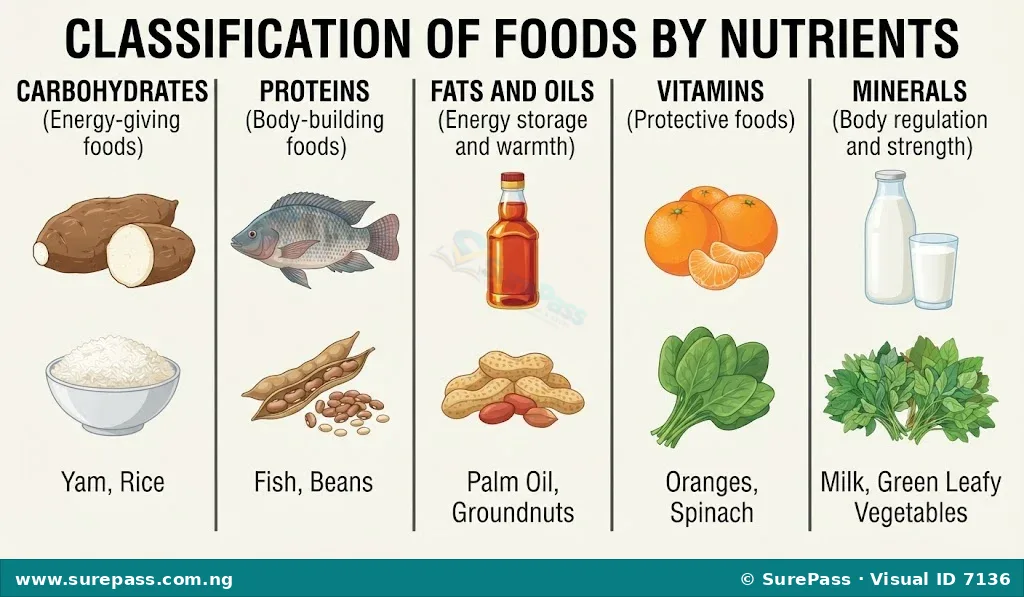
Foods are also classified based on the primary nutrients they provide to the body. The major nutrient groups are carbohydrates, proteins, fats and oils, vitamins, and minerals.
- Carbohydrate-Rich Foods: These foods are primary sources of energy for the body.
- Yam
- Rice
- Cassava
- Maize
- Sweet potatoes
- Bread
- Protein-Rich Foods: These foods are essential for building and repairing body tissues.
- Beans
- Meat
- Fish
- Eggs
- Milk
- Groundnuts
- Fat and Oil-Rich Foods: These foods provide concentrated energy and help in the absorption of certain vitamins.
- Palm oil
- Groundnut oil
- Margarine
- Butter
- Avocado
- Nuts
- Vitamin-Rich Foods: These foods contain vitamins that are vital for regulating body processes and protecting against diseases.
- Fruits (e.g., oranges, pawpaw, pineapple)
- Vegetables (e.g., carrots, spinach, tomatoes)
- Liver
- Milk
- Mineral-Rich Foods: These foods provide minerals necessary for strong bones, healthy blood, and various body functions.
- Green leafy vegetables
- Milk
- Fish
- Salt
- Legumes
Examples include:
Examples include:
Examples include:
Examples include:
Examples include:
Classification According to Function
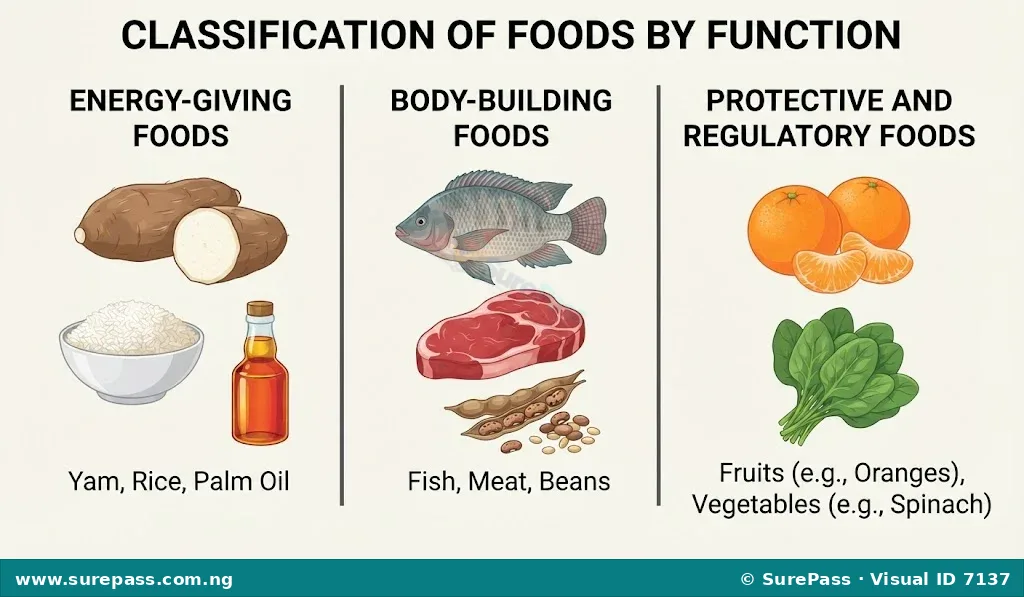
Foods are also grouped based on the main role they play in the body.
- Energy-Giving Foods (Carbohydrates and Fats): These foods provide the body with the fuel needed for all activities, warmth, and proper functioning of organs.
- Yam
- Rice
- Garri
- Bread
- Palm oil
- Groundnut oil
- Body-Building Foods (Proteins): These foods are essential for growth, repair of worn-out tissues, and building new cells, muscles, and bones.
- Meat
- Fish
- Eggs
- Beans
- Milk
- Soya beans
- Protective and Regulatory Foods (Vitamins and Minerals): These foods help to protect the body from diseases and regulate various body processes, ensuring overall health.
- Fruits (e.g., oranges, apples, bananas)
- Vegetables (e.g., ugu, spinach, carrots)
- Milk
- Water
Examples include:
Examples include:
Examples include:
Functions of Food in the Body
The food consumed performs several vital functions to keep the body healthy and active.
- Provides Energy: Food is the body’s fuel. Carbohydrates and fats are the main energy sources, powering all physical activities, maintaining body temperature, and enabling internal organ functions like breathing and blood circulation.
- Builds and Repairs Tissue: Proteins are crucial for growth and the continuous repair of body tissues. They help in forming new cells, muscles, skin, hair, and nails. When the body is injured, proteins help in healing and rebuilding damaged parts.
- Regulates Body Processes: Vitamins, minerals, and water play a key role in regulating various body functions. They help in maintaining fluid balance, nerve function, muscle contraction, blood clotting, and hormone production. For example, iron helps in blood formation, and calcium strengthens bones.
- Protects Against Disease: Vitamins and minerals, particularly vitamins A, C, E, and minerals like zinc and selenium, boost the immune system. A strong immune system helps the body fight off infections, viruses, and bacteria, thereby protecting against various diseases.
Consequences of Poor Nutrition
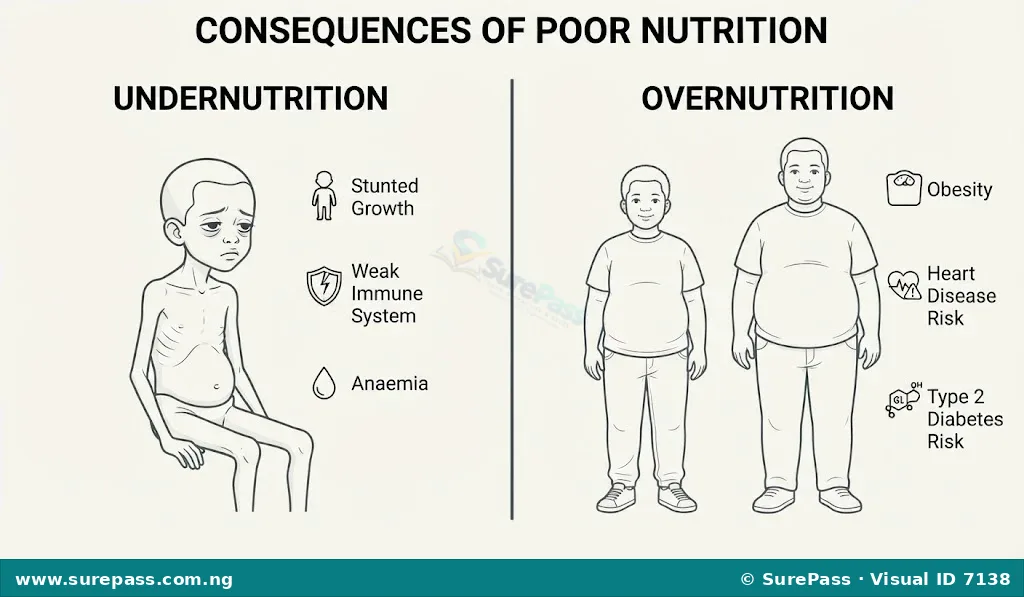
Poor nutrition, also known as malnutrition, occurs when the body does not receive the right amount of nutrients. This can be due to either insufficient intake (undernutrition) or excessive intake (overnutrition) of certain nutrients.
The consequences of poor nutrition can be severe and affect overall health and well-being:
- Stunted Growth: In children, prolonged undernutrition can lead to stunted growth, meaning they are too short for their age.
- Wasting: This is a condition where children are too thin for their height, indicating recent rapid weight loss or failure to gain weight.
- Weakened Immune System: Lack of essential vitamins and minerals makes the body more susceptible to infections and diseases, as the immune system cannot function effectively.
- Reduced Energy and Fatigue: Insufficient energy-giving foods lead to constant tiredness, lack of concentration, and reduced ability to perform daily tasks.
- Poor Academic Performance: Malnourished children often struggle with learning and concentration, leading to poor performance in school.
- Specific Nutrient Deficiencies:
- Anaemia: Caused by a lack of iron, leading to fatigue, weakness, and pale skin.
- Night Blindness: Caused by vitamin A deficiency, making it difficult to see in dim light.
- Goitre: Caused by iodine deficiency, leading to swelling of the thyroid gland in the neck.
- Kwashiorkor and Marasmus: Severe forms of protein-energy malnutrition, common in young children, leading to swollen belly (kwashiorkor) or extreme thinness (marasmus).
- Obesity and Related Diseases: Overnutrition, especially excessive intake of fats and sugars, can lead to obesity. Obesity increases the risk of chronic diseases such as diabetes, heart disease, and high blood pressure.
- Increased Mortality: Severe malnutrition, particularly in children, significantly increases the risk of death.
Careers in Food and Nutrition
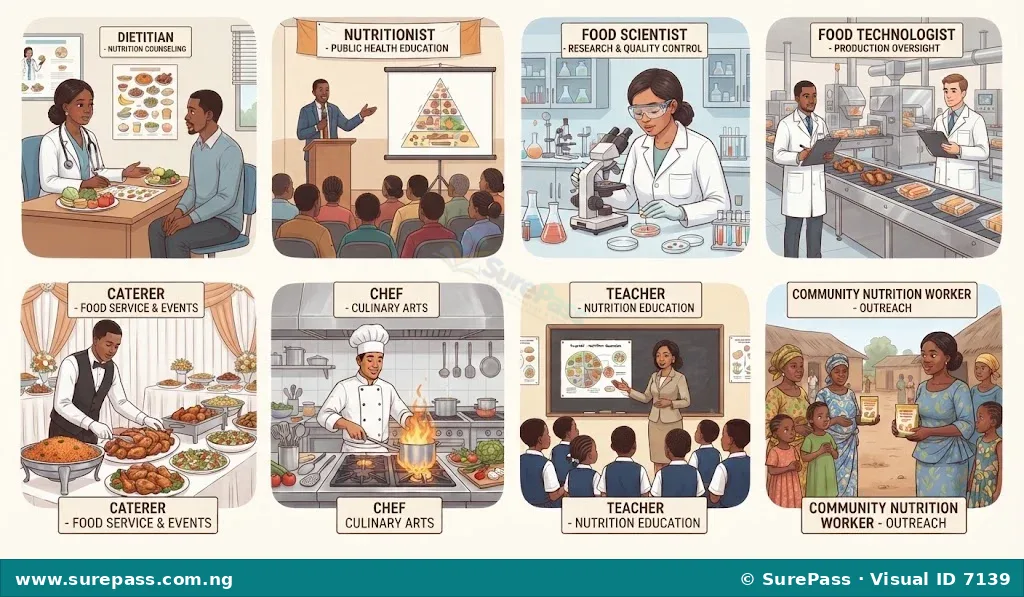
The field of food and nutrition offers a wide range of career opportunities for individuals interested in health, food science, and public well-being. These careers involve applying knowledge of food and nutrition to improve people’s lives.
Some career opportunities in food and nutrition include:
- Dietitians: These professionals assess the nutritional needs of individuals and groups, develop meal plans, and provide dietary advice to manage diseases or promote health. They often work in hospitals, clinics, or private practice.
- Nutritionists: Nutritionists provide general advice on food and healthy eating. They educate people about the importance of nutrition for overall wellness and help them make informed food choices. They may work in public health, wellness centres, or for food companies.
- Food Scientists: Food scientists study the physical, chemical, and biological makeup of food. They are involved in developing new food products, improving food safety, enhancing food quality, and finding ways to preserve food. They often work in research and development for food manufacturers.
- Food Technologists: These professionals apply scientific and engineering principles to the processing, preservation, packaging, and storage of food. They ensure food products are safe, high-quality, and meet consumer demands. They work in food production and manufacturing industries.
- Caterers: Caterers plan, prepare, and serve food for various events, such as weddings, parties, and corporate functions. They need to understand food preparation, presentation, and often, the nutritional needs of their clients.
- Chef/Cook: Chefs and cooks prepare meals in restaurants, hotels, and other food service establishments. While their primary role is cooking, a good understanding of ingredients and basic nutrition can enhance their craft and allow them to create healthier dishes.
- Teaching: Individuals with expertise in food and nutrition can become teachers in secondary schools, vocational colleges, or universities. They educate students about food science, nutrition principles, and practical cooking skills.
- Community Nutrition Worker: These workers focus on improving the nutritional status of communities, especially vulnerable groups. They conduct nutrition education programmes, promote healthy eating habits, and help address food security issues at the grassroots level.



0 comments
Open the discussion when you need it. Comments stay collapsed until requested so the initial article remains light.