



ARTICLE CONTENTSOn this page 7 sections
Cooking Methods and Serving for Local Dishes
Performance Objectives
By the end of the lesson, students should be able to:
- Identify each cooking method and its purpose;
- identify common kitchen accidents and demonstrate appropriate first aid responses and preventive measures to it;
- discuss the importance of selecting fresh, seasonal, and locally available ingredients;
- describe methods for minimizing food waste during meal preparation;
Cooking Methods for Local Dishes
Cooking is the process of applying heat to food to make it digestible, safe, and palatable.
In Nigerian culinary practice, various cooking methods are used to prepare traditional dishes. The choice of cooking method depends on the texture of the food, the desired flavour, and the nutritional requirements of the meal.
Boiling
Boiling is a method of cooking food in boiling water or other water-based liquids at a temperature of 100°C.
The primary purpose of boiling is to soften tough food fibres, make starch digestible, and extract flavours into the cooking liquid. It is a simple and healthy method that does not require added fat.
Common local foods prepared by boiling include:
- Yam, sweet potatoes, and cocoyam
- Rice and beans
- Meat, fish, and poultry for stocks
- Plantains (ripe or unripe)
Steaming
Steaming is a method of cooking food using the steam rising from boiling water, without the food coming into direct contact with the water.
The purpose of steaming is to retain the maximum amount of water-soluble nutrients, natural colour, shape, and flavour of the food. It is a gentle cooking method highly suitable for delicate mixtures.
Common local foods prepared by steaming include:
- Moin-moin (steamed bean pudding)
- Ekuru (white beans pudding)
- Steamed fresh fish wrapped in local leaves (uma leaves)
- Agidi or eko (steamed corn starch pudding)
Frying
Frying is the process of cooking food in hot oil or fat.
Frying can be classified into shallow frying (using a small amount of oil in a pan) and deep frying (submerging food completely in hot oil). The purpose of frying is to cook food rapidly, create a crispy outer texture, develop a golden-brown colour, and enhance the overall flavour of the food.
Common local foods prepared by frying include:
- Akara (fried bean cakes)
- Dodo (fried ripe plantain)
- Puff-puff and chin-chin
- Fried fish, meat, and chicken
Roasting
Roasting is a dry-heat cooking method where food is exposed to direct radiant heat over an open fire, hot charcoal, or in an oven.
The purpose of roasting is to caramelize the surface sugars of the food, which develops a rich, smoky flavour and a firm, dry texture.
Common local foods prepared by roasting include:
- Bole (roasted plantain)
- Roasted yam and sweet potatoes
- Suya (skewered, spiced roasted meat)
- Roasted maize and groundnuts
Stewing
Stewing is a slow, gentle cooking method where food is cooked in a small, measured amount of liquid in a covered pot over low heat for a prolonged period.
The purpose of stewing is to tenderize tough cuts of meat and fibrous vegetables while allowing the flavours of the ingredients to blend thoroughly into a rich, thick gravy. The cooking liquid is served as part of the dish, ensuring no nutrients are lost.
Common local foods prepared by stewing include:
- Tomato-based beef or chicken stew
- Egusi soup (melon seed soup)
- Efo riro (vegetable soup)
- Ofe nsala (white soup)
Observe the image below to see how different cooking methods are applied to local Nigerian ingredients.
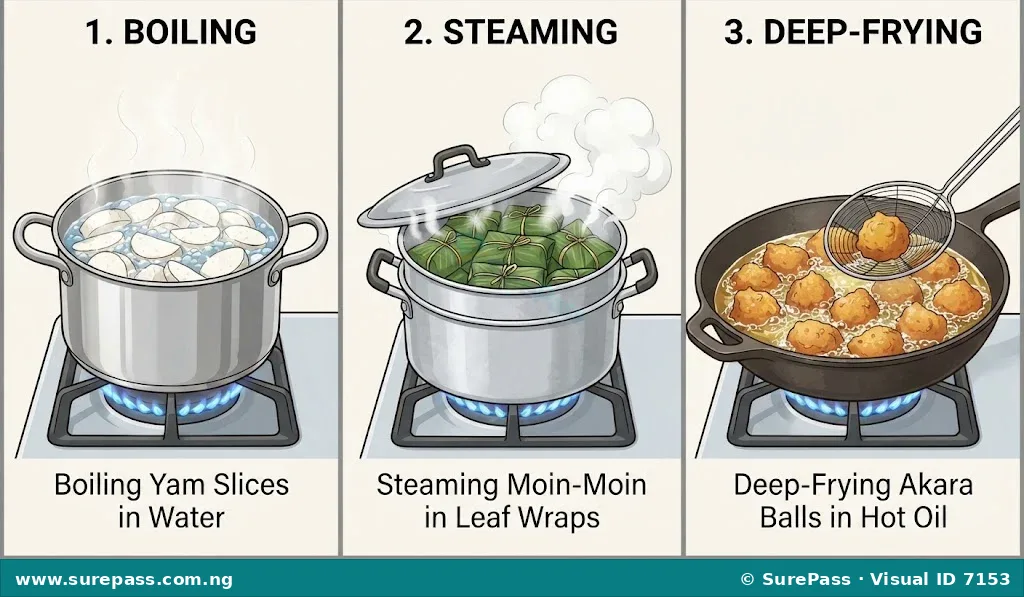
Summary of Cooking Methods, Purposes, and Local Examples
The table below summarizes the relationship between cooking methods, their purposes, and suitable local food examples:
| Cooking Method | Primary Purpose | Suitable Local Food Examples |
|---|---|---|
| Boiling | To soften tough fibres and make starches digestible using liquid at 100°C. | Yam, Rice, Beans, Unripe Plantain |
| Steaming | To preserve nutrients, colour, and texture using moist steam heat. | Moin-moin, Ekuru, Agidi, Steamed Fish |
| Frying | To cook quickly, add crispness, and enhance flavour using hot oil. | Akara, Dodo, Puff-puff, Fried Fish |
| Roasting | To develop a smoky flavour and dry texture using direct dry heat. | Bole, Suya, Roasted Yam, Roasted Maize |
| Stewing | To slowly tenderize ingredients and blend flavours in a covered pot. | Tomato Stew, Egusi Soup, Efo Riro |
Common Kitchen Accidents and Their Management
A kitchen accident is an unplanned and unexpected event occurring in the food preparation area that may cause injury, illness, or damage to property.
The kitchen contains various hazards, including heat sources, sharp tools, electrical appliances, and wet surfaces. Understanding these hazards is essential for maintaining a safe cooking environment.
Types of Kitchen Accidents
The most common types of accidents in the kitchen include:
- Burns and scalds: Burns are caused by dry heat from hot pots, open flames, or hot ovens. Scalds are caused by wet heat from steam, boiling water, or hot oil.
- Cuts and lacerations: These are skin wounds caused by sharp objects such as kitchen knives, broken glassware, or the sharp edges of opened tin cans.
- Slips, trips, and falls: These occur when a person loses balance due to wet or greasy floors, spilled food, or obstacles left in walkways.
- Electric shocks: These occur when a person comes into contact with live electrical currents, often due to handling appliances with wet hands, using faulty sockets, or operating devices with frayed cords.
- Fire outbreaks: These are uncontrolled fires caused by overheated cooking oil, gas cylinder leaks, or electrical faults.
- Food poisoning due to contamination: This is an illness caused by consuming food contaminated with harmful bacteria, toxins, or chemical residues due to poor hygiene or improper storage.
Causes of Kitchen Accidents
Kitchen accidents are rarely completely unavoidable. They are usually caused by specific human errors or environmental hazards. The main causes include:
- Carelessness and rushing while performing kitchen tasks.
- Poor lighting or ventilation in the food preparation area.
- Spilling liquids or grease on the floor and failing to clean them up immediately.
- Using the wrong tools for a task, such as using a dull knife or using a knife instead of a tin opener.
- Wearing loose clothing, synthetic fabrics, or leaving hair uncovered near open flames.
- Failing to turn off gas cylinders or electrical appliances after use.
- Improper storage of hazardous chemicals, such as detergents and pest control sprays, near food items.
First Aid and Immediate Response
First aid is the immediate, temporary care given to an injured person before professional medical assistance arrives.
Prompt action can prevent minor injuries from becoming severe. The standard immediate responses for kitchen accidents are:
- For Burns and Scalds: Place the affected area under cool, gently running water for at least 10 to 15 minutes. Do not apply grease, butter, oil, or toothpaste, as these trap heat and increase the risk of infection. Cover with a clean, sterile bandage.
- For Cuts and Lacerations: Apply firm pressure to the wound using a clean cloth or sterile gauze to stop the bleeding. Once bleeding stops, clean the wound with mild soap and water, apply an antiseptic, and cover with a plaster or sterile dressing.
- For Slips, Trips, and Falls: Help the person sit down comfortably. Check for pain, swelling, or difficulty in movement. If a bone fracture or head injury is suspected, keep the victim still and call for medical help immediately.
- For Electric Shocks: Do not touch the victim while they are still in contact with the electrical current. Turn off the main power source immediately. If the switch cannot be reached, use a dry, non-conductive object (like a wooden broom handle) to push the victim away from the source. Check for breathing and seek emergency medical care.
- For Fire Outbreaks: For small grease fires in a pan, slide a metal lid or a damp fire blanket over the pan to smother the flames. Never throw water on an oil fire, as this will cause the fire to explode. For gas fires, turn off the gas supply if safe to do so. Evacuate the building and call emergency services if the fire spreads.
- For Food Poisoning: Keep the affected person hydrated by giving them oral rehydration solutions or clean water. Do not induce vomiting unless instructed by a medical professional. Seek medical attention if symptoms persist.
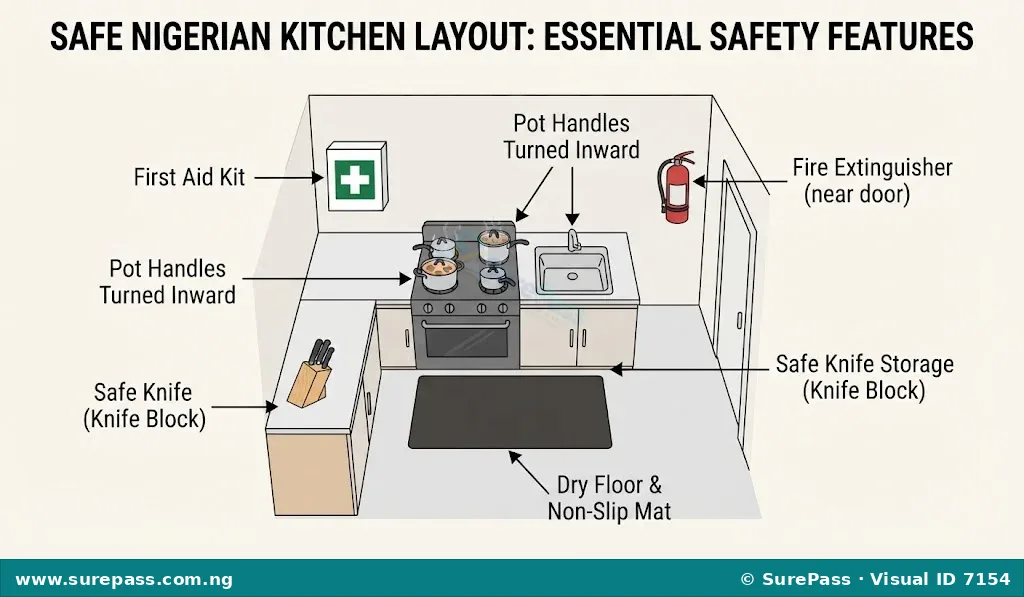
The diagram below shows the essential safety layout of a domestic kitchen to prevent these accidents.
Preventive Measures
Preventing accidents requires maintaining a clean, organized, and hazard-free kitchen environment. Important preventive measures include:
- Wiping up all liquid and grease spills on the floor immediately.
- Keeping knives sharp (dull knives slip more easily than sharp ones) and storing them in a knife block or designated drawer.
- Turning pot handles inward, away from the front of the stove, to prevent them from being knocked over.
- Ensuring hands are completely dry before plugging in or operating any electrical appliance.
- Wearing fitted cotton clothing and tying back long hair when cooking.
- Maintaining a clean workspace to prevent cross-contamination and food poisoning.
Safety Equipment and Tools
Every kitchen should be equipped with basic safety tools to manage emergencies. These include:
- First Aid Kit: Containing sterile bandages, plasters, antiseptic wipes, burn creams, scissors, and adhesive tape.
- Fire Extinguisher: Specifically rated for kitchen fires (Class B or Class K for grease and oil fires).
- Fire Blanket: Used to smother small fires on stoves or wrap around a person whose clothes are on fire.
- Oven Gloves/Mittens: Thick, heat-resistant gloves used to handle hot pots, pans, and baking trays.
- Non-slip Mats: Placed in areas prone to wetness, such as near the sink, to prevent slipping.
Use of Local Ingredients in Meal Preparation
Using local ingredients involves selecting food items that are grown, harvested, and sold within the immediate community or region.
In Nigeria, utilizing local ingredients is key to preparing authentic, nutritious, and cost-effective meals.
Selecting Fresh, Seasonal, and Locally Available Ingredients
Selecting the right ingredients is the foundation of successful meal preparation. The importance of this practice includes:
- Nutritional Value: Freshly harvested local ingredients, such as pumpkin leaves (ugu), waterleaf, and fresh tomatoes, retain their vitamins and minerals compared to imported foods that have undergone long-distance transportation and storage.
- Cost-Effectiveness: Seasonal ingredients (foods that are naturally harvested during a specific time of the year, such as fresh maize in the rainy season or mangoes in the dry season) are abundant and sold at much lower prices.
- Flavour and Quality: Fresh, locally sourced ingredients have superior taste, texture, and aroma, which enhances the quality of the final dish.
- Supporting the Local Economy: Buying from local farmers and markets strengthens community trade and reduces the carbon footprint associated with food transportation.
Minimizing Food Waste During Preparation
Minimizing food waste is the practice of using food resources efficiently to reduce the quantity of edible material discarded during preparation.
Food waste can be significantly reduced in the kitchen through the following methods:
- Proper Peeling: Peeling tubers like yams, potatoes, and cassava thinly to avoid cutting away the edible flesh. Using a vegetable peeler instead of a large kitchen knife helps preserve the food.
- Portion Control: Measuring ingredients accurately according to the number of people to be served. This prevents cooking excess food that might spoil or be thrown away.
- Reusing Edible Parts: Finding creative culinary uses for parts of ingredients that are often discarded. For example, using vegetable stems and meat trimmings to make stock, or using overripe plantains to make mosa (fried plantain cakes).
- Composting Leftovers: Collecting non-edible organic waste, such as eggshells, onion skins, and vegetable peels, to create compost. This compost can be used as natural fertilizer in the school garden or home farm.
The flowchart below illustrates the systematic process of managing kitchen resources to minimize waste.
Practical Demonstrations
How to Administer First Aid for Common Kitchen Accidents
This practical activity demonstrates the correct immediate response to common injuries sustained during food preparation.
The required materials are:
- A fully stocked first aid kit (containing sterile gauze, plasters, antiseptic liquid, burn ointment, and bandages)
- Clean, cold running water
- A clean towel
The procedure involves the following steps:
- Demonstrating First Aid for a Minor Burn:
- Immediately place the simulated burn area under a gentle stream of cold running water.
- Keep the area under the water for 10 minutes to cool the skin.
- Gently pat the area dry with a clean towel without rubbing.
- Apply a thin layer of burn ointment.
- Cover loosely with a sterile gauze bandage to protect the skin from friction.
- Demonstrating First Aid for a Minor Cut:
- Apply direct pressure to the simulated cut using a clean piece of gauze to stop bleeding.
- Once bleeding stops, wash the wound gently under clean running water.
- Apply a small amount of antiseptic liquid or cream to prevent infection.
- Apply a sterile plaster firmly over the wound.
How to Minimize Food Waste During Meal Preparation
This practical activity demonstrates techniques for reducing waste when preparing local tubers and vegetables.
The required materials are:
- Fresh yam tubers or sweet potatoes
- A sharp kitchen knife and a vegetable peeler
- Two bowls for sorting
- A compost bin or container
The procedure involves the following steps:
- Thin Peeling Technique:
- Place the tuber on a clean chopping board.
- Use the vegetable peeler or a small knife to remove only the thin, dirty outer skin of the yam or potato.
- Ensure that the white edible flesh is not cut away with the skin. Place the thin skins in the waste bowl.
- Sorting and Composting:
- Separate the inedible peels and vegetable ends from any edible trimmings.
- Transfer the inedible organic waste directly into the compost bin to be decomposed for the school garden.
- Store any edible trimmings (such as vegetable stems) in a clean container to be used later for making vegetable stock.
Questions for Evaluation
Answer the following questions to review the lesson:
- Define boiling and steaming, and state two local Nigerian dishes prepared using each method.
- Explain the difference between burns and scalds, and describe the correct first aid response for a minor burn.
- Identify four common causes of kitchen accidents and state how they can be prevented.
- Discuss three reasons why it is important to select fresh, seasonal, and locally available ingredients for meal preparation.
- Describe three practical ways a cook can minimize food waste in the kitchen during food preparation.




0 comments
Open the discussion when you need it. Comments stay collapsed until requested so the initial article remains light.