


ARTICLE CONTENTSOn this page 8 sections
Culinary Terms in Catering
Performance Objectives
By the end of the lesson, students should be able to:
- define Culinary terms;
- classify culinary terms;
- interpret culinary terms correctly;
- use culinary terms appropriately.
Meaning of Culinary Terms
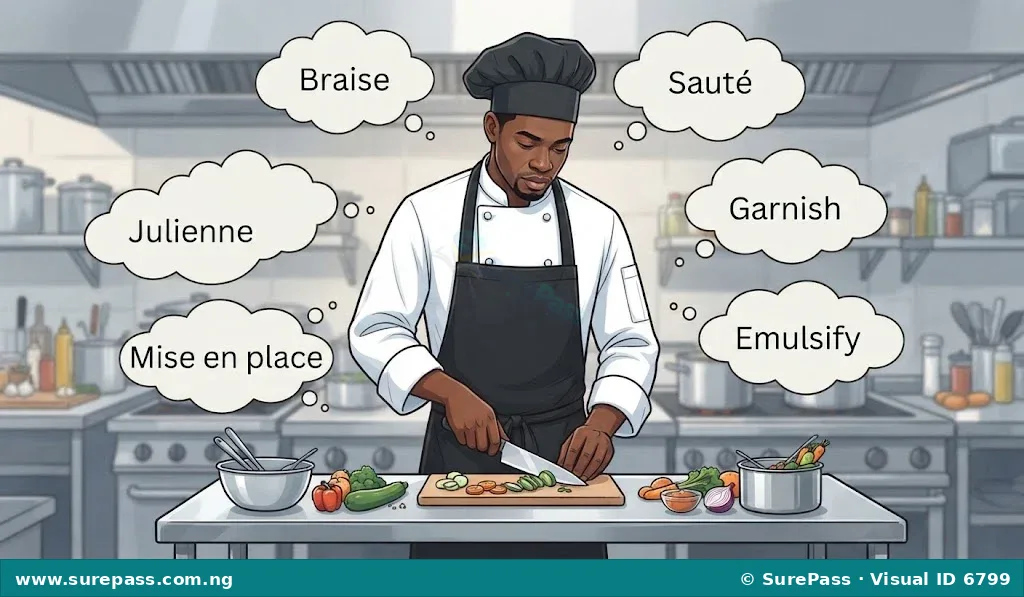
Culinary terms are specialised words and phrases used in the kitchen and catering industry to describe ingredients, cooking methods, equipment, dishes, and processes related to food preparation.
These terms form a common language among chefs, cooks, and catering professionals. They ensure clear communication and consistent results in food preparation, allowing everyone involved to understand exactly what needs to be done, how it should be done, and what the final product should be like. Without these specific terms, instructions could be misunderstood, leading to errors in cooking and inconsistent food quality.
Classification of Culinary Terms
Culinary terms can be grouped into different categories based on what they describe. This classification helps in understanding their meaning and application in various cooking situations.
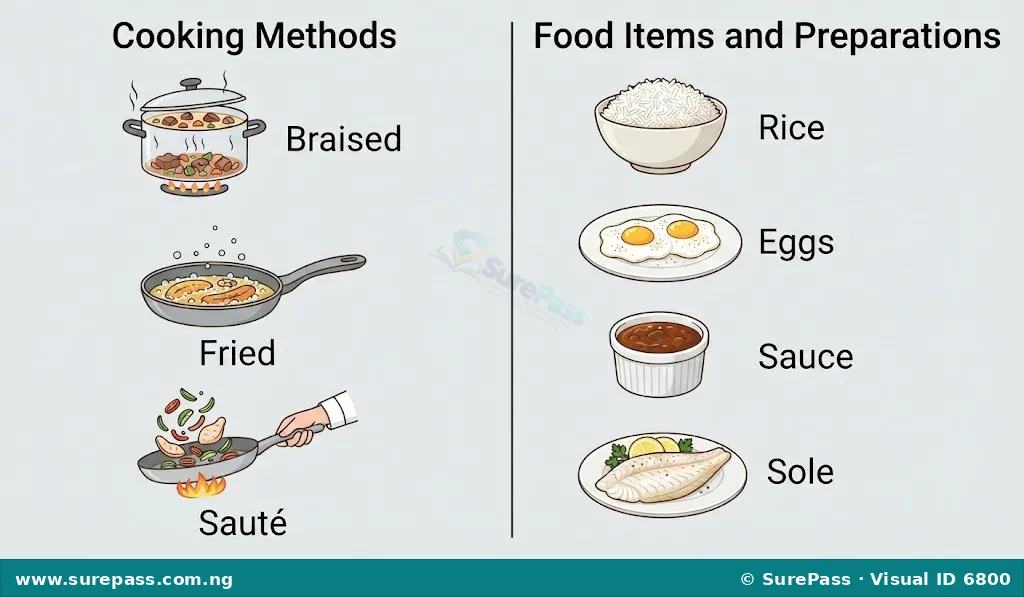
For SS1, common classifications include terms related to cooking methods and terms related to food items or preparations.
1. Terms for Cooking Methods
These terms describe the techniques used to cook food. They explain how heat is applied to ingredients to transform them into edible dishes.
Examples of cooking method terms include:
- Braised: A cooking method where food is first seared (browned quickly in fat) and then slowly cooked in a small amount of liquid in a covered pot. This method makes tough cuts of meat tender and flavourful.
- Fried: A cooking method where food is cooked in hot oil or fat. This can be shallow-frying (using a small amount of fat) or deep-frying (submerging food completely in hot fat).
- Sauté: To cook food quickly in a small amount of fat over relatively high heat, often stirring or tossing the food.
- Roast: To cook food, especially meat or vegetables, in an oven or over an open fire, usually with fat or oil.
- Boil: To cook food in water or other liquid that has reached its boiling point (100°C or 212°F).
2. Terms for Food Items and Preparations
These terms describe specific ingredients, components of a dish, or the way certain foods are prepared before or during cooking.
Examples of food item and preparation terms include:
- Rice: A staple grain, often served as a side dish or main component in many meals.
- Eggs: A versatile ingredient used in many forms, such as scrambled, fried, boiled, or as a binder in recipes.
- Sole: A type of flatfish, often prepared by frying, grilling, or baking.
- Sauce: A liquid or semi-liquid accompaniment to food, used to add flavour, moisture, and visual appeal. Sauces can be savoury or sweet.
- Garnish: An item or substance used as a decoration or embellishment accompanying a prepared food dish or drink.
- Mise en place: A French culinary term meaning “everything in its place.” It refers to the preparation and organisation of ingredients and equipment before cooking begins.
Interpretation of Culinary Terms
Interpreting culinary terms means understanding their exact meaning and how they apply in a recipe or kitchen instruction. Correct interpretation is crucial for achieving the desired outcome in cooking.
Let us interpret some of the terms mentioned earlier:
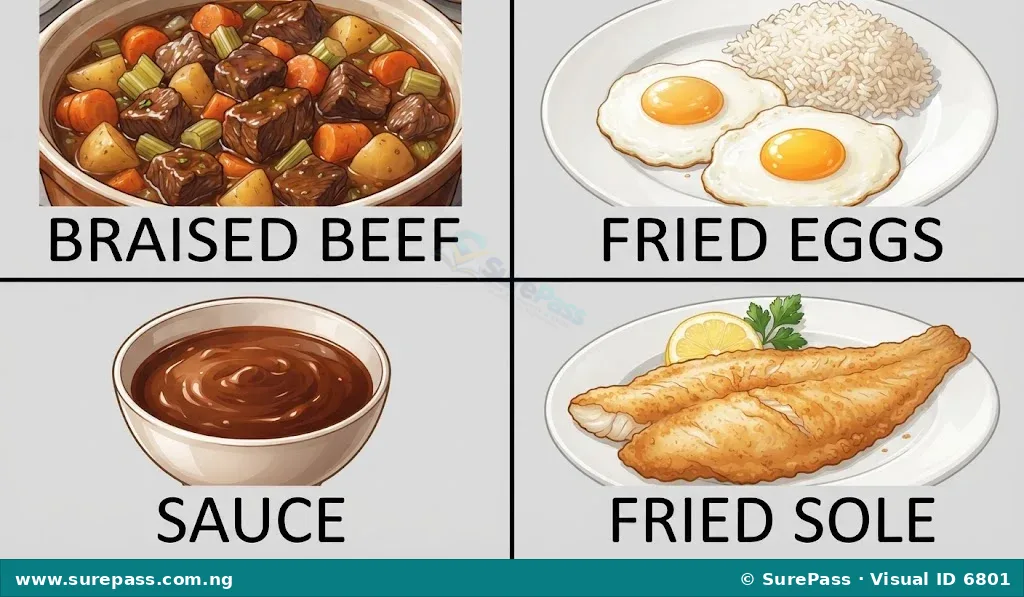
- Braised: When a recipe says “braise the beef,” it means to first brown the beef on all sides, then add liquid (like stock or wine) and vegetables, cover the pot, and cook it slowly over low heat or in an oven until the beef is very tender.
- Fried: If a recipe instructs to “fry the plantain,” it means to cook slices of plantain in hot oil until they are golden brown and cooked through. If it says “deep-fry the chicken,” it means to submerge the chicken pieces in a large amount of hot oil until they are crispy and cooked.
- Sauce: When a dish is to be served “with a tomato sauce,” it implies that a liquid condiment made from tomatoes will accompany the main food item, adding flavour and moisture.
- Rice: In a recipe like “rice fried eggs,” “rice” refers to cooked rice that is then combined with fried eggs, often by stir-frying them together.
- Eggs: In “rice fried eggs,” “eggs” refers to chicken eggs that are cooked, usually scrambled or fried, and then mixed with the rice.
- Sole: If a menu item is “fried sole,” it means a fillet of sole fish that has been cooked by frying, typically until it is golden and flaky.
Pronouncing and Spelling Culinary Terms Correctly
Correct pronunciation and spelling of culinary terms are essential for clear communication in the catering industry and for professional presentation. Mispronouncing or misspelling terms can lead to confusion or appear unprofessional.
To improve pronunciation and spelling:
- Listen carefully: Pay attention to how experienced chefs and culinary instructors pronounce terms. Watch cooking shows or online videos where these terms are used.
- Use a dictionary: Consult a culinary dictionary or a general dictionary that includes pronunciation guides. Many online dictionaries also offer audio pronunciations.
- Practice regularly: Say the words aloud repeatedly. Practice spelling them out.
- Break down complex words: For longer terms, break them into smaller, manageable syllables to help with both pronunciation and spelling.
- Focus on common terms first: Master the terms you encounter most frequently before moving on to less common ones.
Matching Culinary Terms with Their Meanings
The ability to match culinary terms with their correct meanings demonstrates a fundamental understanding of catering language. This skill is vital for following recipes, understanding menu descriptions, and communicating effectively in a kitchen environment.
To effectively match terms with meanings:
- Understand the context: Consider where the term is typically used. Is it a cooking method, an ingredient, or a piece of equipment?
- Look for keywords: Often, the meaning will contain keywords that relate directly to the term. For example, “braise” involves “slow cooking in liquid.”
- Visualise the process or item: Try to picture the action or the food item described by the term. This mental image can help solidify the connection to its meaning.
- Review definitions: Regularly revisit the definitions of culinary terms to reinforce your memory.
Using Culinary Terms in Writing Recipes
Culinary terms are the backbone of clear and concise recipe writing. Using them appropriately ensures that anyone following the recipe can understand the instructions and achieve the intended results. Recipes are essentially a set of instructions, and precise language is key.
When writing recipes, culinary terms are used to:
- Specify cooking methods: Instead of saying “cook the chicken slowly in some water,” a recipe would say “braise the chicken.”
- Describe ingredients or preparations: Instead of “a thick liquid to put on top,” a recipe would specify “serve with a rich sauce.”
- Indicate cuts or forms: Terms like “julienne” (cut into thin strips) or “dice” (cut into small cubes) precisely describe how ingredients should be prepared.
- Convey temperatures and timings: “Simmer gently” or “roast at 180°C for 30 minutes” are examples of precise instructions.
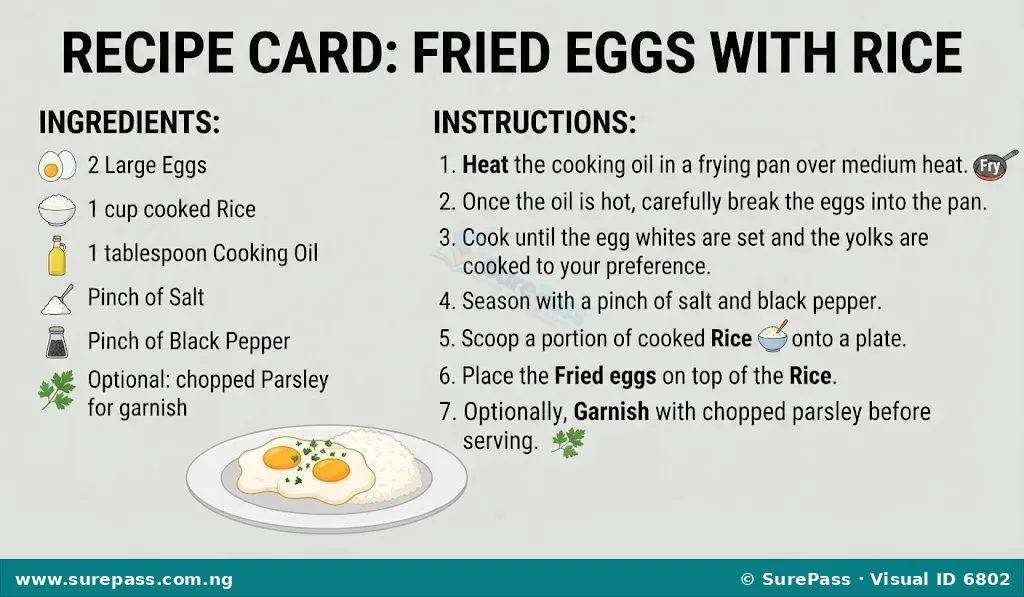
Consider the following example of how culinary terms are used in a simple recipe:
Recipe: Fried Eggs with Rice
Ingredients:
- 2 large eggs
- 1 cup cooked rice
- 1 tablespoon vegetable oil
- Salt and pepper to taste
- Optional: chopped spring onions for garnish
Instructions:
- Heat the vegetable oil in a frying pan over medium heat.
- Crack the eggs into the hot oil.
- Fry the eggs until the whites are set and the yolks are cooked to your preference (e.g., runny or firm).
- Season the fried eggs with salt and pepper.
- In a separate bowl, gently mix the cooked rice with a pinch of salt.
- Serve the fried eggs immediately alongside the seasoned rice.
- Optionally, garnish with chopped spring onions.
In this recipe, “fry,” “fried eggs,” “rice,” and “garnish” are culinary terms that provide clear instructions and descriptions.




0 comments
Open the discussion when you need it. Comments stay collapsed until requested so the initial article remains light.