


ARTICLE CONTENTSOn this page 7 sections
Career Opportunities in Catering
Performance Objectives
By the end of the lesson, students should be able to:
- identify various career opportunities in catering;
- describe the roles and responsibilities of different professions in catering;
- plan a career path in the catering industry.
Introduction to Catering Careers
The catering industry is a vibrant and essential part of the economy, providing food and beverage services to individuals and groups in various settings. It involves preparing, cooking, and serving food for different occasions, from daily meals in restaurants to large events like weddings and conferences. This industry offers a wide range of career opportunities for individuals with different skills and interests.
Working in catering can be a rewarding experience, allowing professionals to express creativity, interact with people, and contribute to memorable experiences. It requires dedication, attention to detail, and a passion for food and service.
Various Career Opportunities in Catering
The catering industry is diverse, offering many different job roles. These roles can be found in various establishments such as hotels, restaurants, fast-food outlets, hospitals, schools, event centres, and even through self-employment. Understanding these opportunities is the first step towards planning a career in this field.
Some common career opportunities in catering include:
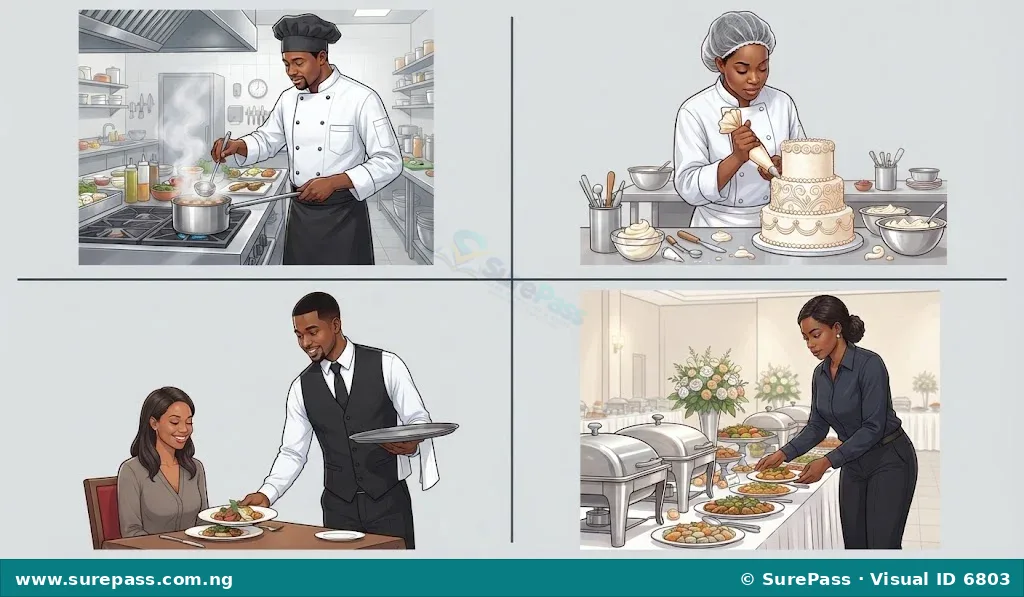
- Chef/Cook: These professionals are responsible for preparing and cooking food. They work in kitchens of all sizes, from small eateries to large hotels.
- Baker/Pastry Chef: Specialises in making bread, cakes, pastries, desserts, and other baked goods. They often work in bakeries, hotels, or dedicated pastry shops.
- Waiter/Waitress (Service Staff): These individuals serve food and drinks to customers and ensure a pleasant dining experience. They are the direct link between the kitchen and the customer.
- Caterer (Event Caterer): A caterer provides food and beverage services for special events such as weddings, parties, corporate meetings, and conferences, often at a client’s chosen location.
- Restaurant Manager: This role involves overseeing the entire operation of a restaurant or food service establishment, ensuring smooth running and customer satisfaction.
- Food Service Assistant: Supports chefs and service staff by performing various tasks like food preparation, cleaning, and setting up dining areas.
- Kitchen Porter/Steward: Responsible for maintaining cleanliness and hygiene in the kitchen, including washing dishes, cleaning equipment, and assisting with basic kitchen tasks.
Roles and Responsibilities of Different Professionals in Catering
Each role within the catering industry comes with specific duties and responsibilities that contribute to the overall success of the food service operation.
Chef/Cook
A chef or cook is at the heart of food preparation. Their main responsibility is to create delicious and safe meals for customers.
The responsibilities of a chef/cook include:
- Planning menus and creating new recipes.
- Preparing and cooking various dishes according to recipes and quality standards.
- Ensuring food is cooked to the correct temperature and served attractively.
- Managing kitchen inventory and ordering food supplies.
- Maintaining a clean and hygienic kitchen environment.
- Supervising and training junior kitchen staff (for head chefs).
- Adhering to food safety regulations and health standards.
Baker/Pastry Chef
A baker or pastry chef specialises in the art of baking. They are responsible for producing a wide range of baked goods.
The responsibilities of a baker/pastry chef include:
- Preparing doughs, batters, and fillings for various baked items.
- Baking bread, cakes, cookies, pastries, and other desserts.
- Decorating cakes and pastries with icing, fruits, and other embellishments.
- Developing new recipes and experimenting with ingredients.
- Ensuring the quality and consistency of baked products.
- Managing baking ingredients and equipment.
- Maintaining a clean and organised baking area.
Waiter/Waitress (Service Staff)
Waiters and waitresses are the front-line staff who interact directly with customers. They play a crucial role in customer satisfaction.
The responsibilities of a waiter/waitress include:
- Greeting customers and seating them comfortably.
- Presenting menus and explaining daily specials.
- Taking food and drink orders accurately.
- Serving meals and beverages to customers.
- Checking on customers to ensure their satisfaction.
- Clearing tables and preparing them for new customers.
- Handling payments and processing transactions.
- Addressing customer complaints and providing excellent service.
Caterer (Event Caterer)
An event caterer manages the food and beverage aspects of special occasions. Their work often involves planning and execution outside a traditional restaurant setting.
The responsibilities of an event caterer include:
- Consulting with clients to understand their event needs and preferences.
- Designing customised menus suitable for the event and budget.
- Preparing food, which may involve cooking in a central kitchen or on-site.
- Transporting food, equipment, and serving staff to the event location.
- Setting up food displays, buffet lines, or table service.
- Providing professional food and beverage service during the event.
- Managing staff working at the event.
- Cleaning up after the event, including packing up equipment and disposing of waste.
Restaurant Manager
The restaurant manager is responsible for the overall operation and profitability of a food service establishment. They oversee all aspects of the business.
The responsibilities of a restaurant manager include:
- Hiring, training, and supervising staff members.
- Managing budgets, controlling costs, and handling financial transactions.
- Ensuring high standards of customer service and satisfaction.
- Overseeing food quality, presentation, and hygiene.
- Managing inventory, ordering supplies, and negotiating with suppliers.
- Developing and implementing marketing strategies.
- Ensuring compliance with health, safety, and licensing regulations.
- Handling administrative tasks and resolving operational issues.
Food Service Assistant
Food service assistants provide crucial support to the main kitchen and service staff. They help ensure that operations run smoothly.
The responsibilities of a food service assistant include:
- Assisting with basic food preparation tasks, such as washing and chopping vegetables.
- Setting up dining areas, including arranging tables and chairs.
- Serving food and drinks to customers, especially in cafeterias or buffet settings.
- Clearing tables and washing dishes.
- Maintaining cleanliness in the kitchen and dining areas.
- Restocking supplies like cutlery, napkins, and condiments.
- Assisting with inventory management and storage of food items.
Kitchen Porter/Steward
Kitchen porters or stewards are essential for maintaining the cleanliness and organisation of the kitchen. They ensure that chefs have clean equipment to work with.
The responsibilities of a kitchen porter/steward include:
- Washing and sanitising dishes, pots, pans, and kitchen utensils.
- Cleaning kitchen equipment, work surfaces, and floors.
- Assisting with the unloading and storage of deliveries.
- Disposing of waste and recycling materials properly.
- Helping with basic food preparation tasks when needed.
- Ensuring that the kitchen is always tidy and ready for use.
Qualities of a Professional Caterer
To succeed in any of these catering roles, professionals need to possess certain qualities. These qualities help them perform their duties effectively and provide excellent service.
Important qualities for a professional caterer include:
- Passion for Food and Service: A genuine interest in food preparation and serving others.
- Good Communication Skills: Ability to listen to customers, communicate clearly with colleagues, and take accurate orders.
- Attention to Detail: Ensuring food is prepared correctly, presented well, and served efficiently.
- Teamwork: Working well with other staff members in a fast-paced environment.
- Hygiene and Cleanliness: Maintaining high standards of personal hygiene and keeping work areas clean to ensure food safety.
- Time Management: Ability to manage tasks and serve customers promptly, especially during busy periods.
- Physical Stamina: Many catering roles involve standing for long hours, lifting, and moving around.
- Creativity: Especially for chefs and bakers, to develop new dishes and presentations.
- Problem-Solving Skills: Ability to handle unexpected situations, such as customer complaints or ingredient shortages.
Planning a Career Path in the Catering Industry
Planning a career path involves setting goals and identifying the steps needed to achieve them. For the catering industry, this means understanding the entry points, training requirements, and opportunities for growth.
Steps to plan a career path in catering include:
- Self-Assessment: Identify your interests (e.g., cooking, baking, serving, managing) and strengths (e.g., creativity, organisation, communication).
- Research Roles: Learn more about specific roles that interest you, including their daily tasks, working conditions, and potential earnings.
- Education and Training: Consider enrolling in a catering craft practices program at a secondary school, vocational institute, or polytechnic. These programs provide foundational knowledge and practical skills.
- Gain Experience: Look for opportunities to gain practical experience, such as internships, apprenticeships, or part-time jobs in restaurants, hotels, or catering companies. This hands-on experience is invaluable.
- Develop Skills: Continuously work on improving your cooking, baking, service, and management skills. Attend workshops or short courses to specialise.
- Networking: Connect with professionals already working in the catering industry. They can offer advice, mentorship, and inform you about job openings.
- Set Goals: Define short-term and long-term career goals. For example, a short-term goal might be to become a junior cook, while a long-term goal could be to own your own restaurant or catering business.
- Specialisation: As you gain experience, you might choose to specialise in a particular area, such as pastry, international cuisine, or event management.



0 comments
Open the discussion when you need it. Comments stay collapsed until requested so the initial article remains light.