


ARTICLE CONTENTSOn this page 7 sections
Catering and Hospitality Industry
Performance Objectives
By the end of the lesson, students should be able to:
- state the concept of catering and hospitality industry;
- list the types of catering and hospitality industry;
- describe the characteristic of event in catering and hospitality industry;
- discuss the importance of catering and hospitality to individuals, society and the nation.
Concept of Catering and Hospitality
The catering and hospitality industry is a broad sector that provides food, drink, accommodation, and related services to people away from their homes. It focuses on meeting the needs of guests and customers, ensuring their comfort, satisfaction, and enjoyment.
What is Catering?
Catering refers to the business of providing food and drink services for various events or locations, such as restaurants, hotels, schools, hospitals, and special occasions.
Catering services can range from preparing simple meals for a small group to providing elaborate banquets for hundreds of guests. It involves planning menus, preparing food, serving meals, and often includes setting up dining areas and cleaning up afterwards.
What is Hospitality?
Hospitality is the friendly and generous reception and entertainment of guests, visitors, or strangers.
In the context of the industry, hospitality involves providing a welcoming environment, excellent customer service, and comfortable facilities. It covers services like accommodation (hotels, guesthouses), travel and tourism, event management, and leisure activities. The goal of hospitality is to make guests feel valued and well-cared for.
The Catering and Hospitality Industry
The catering and hospitality industry combines these two concepts. It is a dynamic sector that includes all businesses involved in providing food, drink, lodging, and related services. This industry plays a vital role in daily life, supporting tourism, business, and social events across Nigeria and globally.
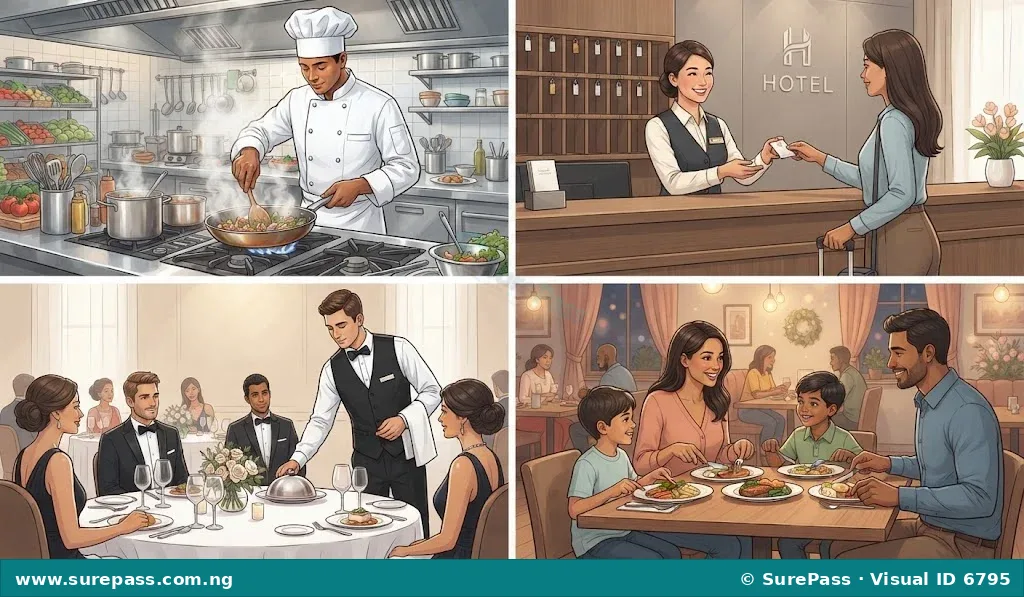
Types of Catering
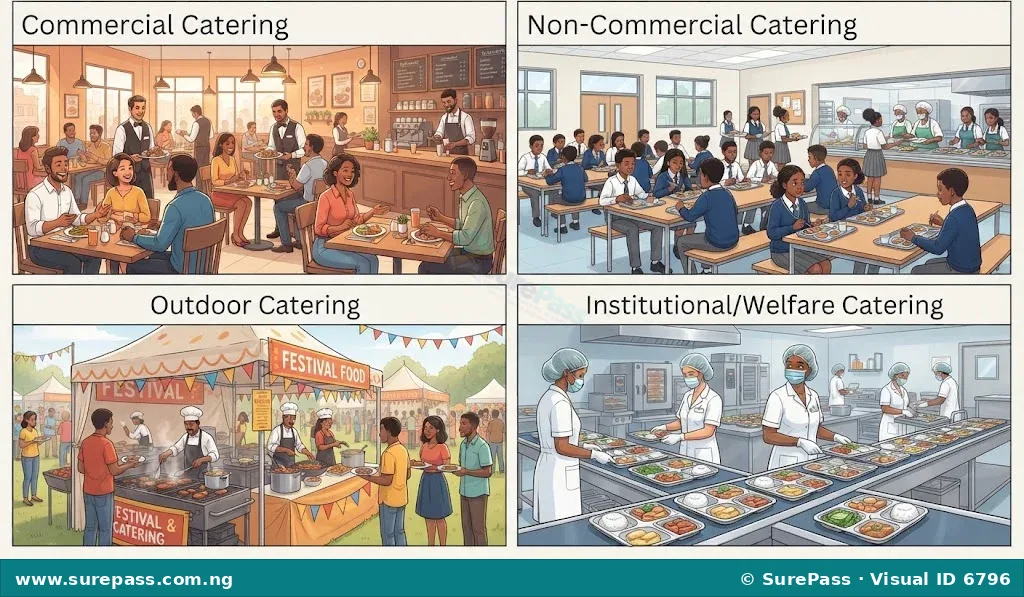
Catering services can be categorised based on their operational model, target customers, and location. Understanding these types helps in identifying the different segments of the catering industry.
Commercial Catering
Commercial catering refers to businesses that operate with the primary goal of making a profit by selling food and drink services to the general public.
These establishments are typically open to anyone willing to pay for their services. They aim to attract customers through quality food, good service, and effective marketing.
Examples of commercial catering include:
- Restaurants (e.g., fast food, fine dining, casual dining)
- Hotels and resorts with dining facilities
- Cafes and coffee shops
- Bars and nightclubs
- Commercial event caterers (for weddings, parties, corporate events)
Non-Commercial Catering
Non-commercial catering provides food and drink services as a secondary activity, often within an organisation, and usually not for direct profit.
The main purpose of non-commercial catering is to support the primary function of the institution it serves, such as feeding students, patients, or employees. Prices are often subsidised or included as part of a larger service.
Examples of non-commercial catering include:
- School canteens and university cafeterias
- Hospital kitchens and patient meal services
- Staff canteens in offices and factories
- Prison catering services
- Military catering services
Outdoor Catering
Outdoor catering involves providing food and drink services at a location away from a fixed kitchen or restaurant premises, often outdoors or in temporary venues.
This type of catering requires special planning for logistics, equipment transport, food safety, and weather conditions. It is common for large events that take place in open spaces.
Examples of outdoor catering include:
- Catering for outdoor weddings and parties
- Food stalls and vendors at festivals and concerts
- Catering for sporting events and tournaments
- Picnic and barbecue catering services
- Catering for film sets or remote construction sites
Institutional / Welfare Catering
Institutional or welfare catering focuses on providing meals to specific groups of people within institutions, often with a focus on nutritional needs and affordability rather than profit.
This type of catering is similar to non-commercial catering but specifically highlights the welfare aspect, ensuring that vulnerable or specific populations receive appropriate meals. It often operates under strict dietary guidelines and budgets.
Examples of institutional/welfare catering include:
- Catering for orphanages and care homes
- Meals on wheels services for the elderly
- Catering for refugee camps or disaster relief efforts
- School feeding programmes
- Catering for correctional facilities
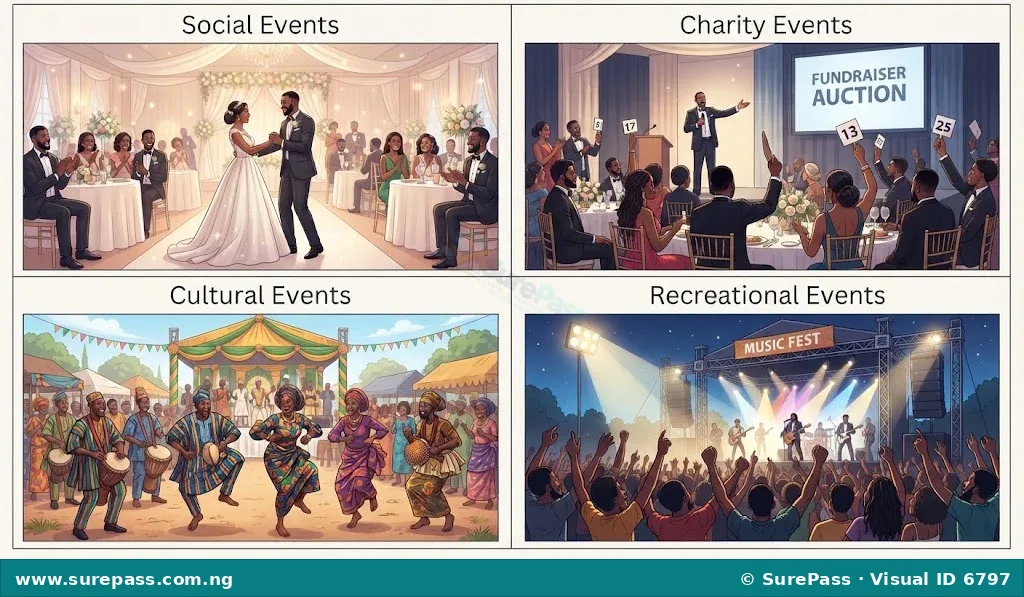
Types of Events in Hospitality
The hospitality industry often revolves around events, which are planned gatherings for specific purposes. These events require various hospitality services, such as venue provision, accommodation, food and beverage, and guest management.
Social Events
Social events are gatherings primarily for personal celebration, interaction, and enjoyment among friends, family, or community members.
These events are often informal but can also be formal, depending on the occasion and cultural context. They are central to personal milestones and community bonding.
Examples of social events include:
- Weddings and engagement parties
- Birthday celebrations and anniversaries
- Naming ceremonies and housewarming parties
- Family reunions and gatherings
- Graduation parties
Charity Events
Charity events are organised to raise funds or awareness for a charitable cause or non-profit organisation.
These events often involve fundraising activities, speeches, and entertainment, with all proceeds going towards the chosen cause. They rely heavily on hospitality services to create a pleasant and engaging atmosphere for donors and supporters.
Examples of charity events include:
- Fundraising galas and dinners
- Charity auctions
- Walkathons and marathons for a cause
- Benefit concerts and performances
- Awareness campaigns and workshops
Cultural Events
Cultural events are gatherings that celebrate and showcase the traditions, arts, heritage, and customs of a particular community, region, or nation.
These events often feature music, dance, food, traditional attire, and storytelling. They play a crucial role in preserving and promoting cultural identity and can attract both local and international visitors.
Examples of cultural events include:
- Traditional festivals (e.g., Argungu Fishing Festival, Calabar Carnival)
- Art exhibitions and craft fairs
- Music and dance festivals
- Historical reenactments
- Food festivals showcasing local cuisine
Recreational Events
Recreational events are organised for leisure, entertainment, and physical activity, providing opportunities for relaxation and enjoyment.
These events can range from competitive sports to casual gatherings focused on hobbies and entertainment. Hospitality services ensure participants and spectators have a comfortable and enjoyable experience.
Examples of recreational events include:
- Sporting competitions (e.g., football matches, athletics meets)
- Concerts and live performances
- Theme park visits and amusement activities
- Outdoor adventure trips (e.g., hiking, camping)
- Gaming tournaments
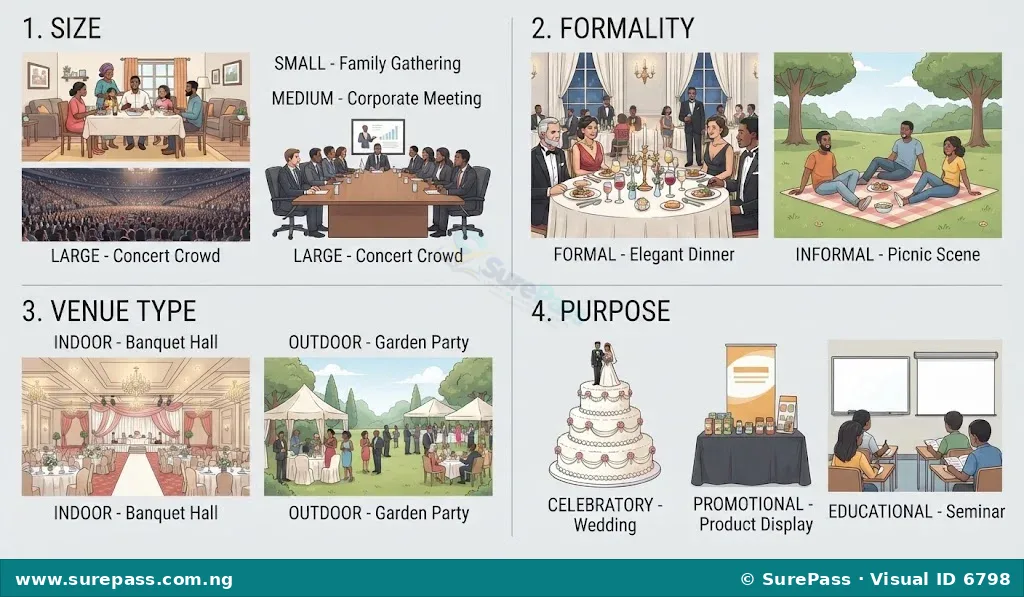
Characteristics of Events in Catering and Hospitality
Events in the catering and hospitality industry have distinct characteristics that influence their planning, execution, and the resources required. Understanding these characteristics helps event organisers and service providers to tailor their offerings effectively.
Size of Event
The size of an event refers to the number of attendees expected, which directly impacts resource allocation, venue selection, and staffing needs.
Event sizes are typically categorised as small, medium, or large, each requiring different levels of planning and coordination.
- Small Events: These typically involve a limited number of guests, often fewer than 50. Examples include small family dinners, intimate birthday parties, or business meetings. They require less complex logistics.
- Medium Events: These events host a moderate number of guests, usually between 50 and 200. Examples include corporate seminars, medium-sized weddings, or community gatherings. They require more detailed planning for catering, seating, and facilities.
- Large Events: These involve a significant number of attendees, often over 200, and can sometimes run into thousands. Examples include major festivals, large conferences, or political rallies. They demand extensive planning, large venues, substantial staffing, and robust security measures.
Formality of Event
The formality of an event describes the level of adherence to established rules, etiquette, and dress codes, influencing the atmosphere and service style.
Events can range from highly formal to completely informal, affecting everything from menu choices to staff uniforms.
- Formal Events: These events follow strict protocols, often require specific dress codes (e.g., black tie), and feature structured programmes. Examples include state dinners, formal weddings, or awards ceremonies. Service is typically highly professional and discreet.
- Informal Events: These events are relaxed, casual, and allow for more spontaneity. Dress codes are usually casual, and the atmosphere is laid-back. Examples include family barbecues, casual get-togethers, or children’s birthday parties. Service is often more relaxed and friendly.
Venue Type
The venue type refers to the location where an event takes place, which can be either indoors or outdoors, each presenting unique opportunities and challenges.
The choice of venue significantly impacts logistics, decor, and guest comfort, especially concerning weather conditions.
- Indoor Venues: These are enclosed spaces such as banquet halls, conference centres, hotels, or private homes. They offer protection from weather elements and usually have built-in facilities like air conditioning, lighting, and sound systems.
- Outdoor Venues: These are open-air spaces like gardens, parks, beaches, or open fields. They offer natural ambiance but require careful planning for weather contingencies (e.g., tents for rain or shade), temporary facilities (e.g., restrooms, power), and pest control.
Purpose of Event
The purpose of an event is the primary reason for its organisation, which dictates its content, structure, and overall objectives.
Understanding the purpose helps in designing the event to achieve its intended outcomes, whether it is to celebrate, promote, or educate.
- Celebratory Events: These are held to mark special occasions, achievements, or milestones. The focus is on joy, festivity, and creating memorable experiences. Examples include weddings, anniversaries, birthdays, and graduation ceremonies.
- Promotional Events: These are organised to market a product, service, brand, or idea. The goal is to generate interest, attract customers, or build public relations. Examples include product launches, trade shows, fashion shows, and grand openings.
- Educational Events: These events aim to impart knowledge, skills, or information to attendees. They often involve presentations, workshops, and discussions. Examples include conferences, seminars, training sessions, and academic lectures.
- Other Purposes: Events can also have other purposes such as networking (e.g., business mixers), fundraising (e.g., charity galas), or team building (e.g., corporate retreats).
Importance of Catering and Hospitality
The catering and hospitality industry is vital to individuals, society, and the nation, contributing significantly to economic growth, social well-being, and cultural exchange.
Importance to Individuals
For individuals, the catering and hospitality industry provides essential services and opportunities that enhance quality of life.
- Employment Opportunities: The industry is a major employer, offering jobs in various roles such as chefs, waiters, hotel managers, event planners, and cleaners. This provides income and career paths for many people.
- Convenience and Comfort: It offers convenience through ready-made meals, accommodation during travel, and organised events, reducing stress and saving time for individuals.
- Leisure and Recreation: Individuals can enjoy leisure activities, dine out, attend social events, and travel, which contribute to their relaxation, entertainment, and overall well-being.
- Skill Development: Working in the industry helps individuals develop valuable skills like customer service, communication, teamwork, problem-solving, and culinary expertise.
Importance to Society
The industry plays a crucial role in fostering community, promoting cultural understanding, and supporting social activities.
- Social Cohesion: It provides venues and services for social gatherings, celebrations, and community events, strengthening bonds among people and promoting social interaction.
- Cultural Exchange: Through tourism and diverse culinary offerings, the industry facilitates cultural exchange, allowing people to experience different traditions, foods, and ways of life.
- Community Development: Hospitality businesses often support local suppliers, create local jobs, and contribute to the vibrancy of communities, especially in tourist destinations.
- Health and Welfare: Institutional catering in schools and hospitals ensures that specific populations receive nutritious meals, contributing to public health and welfare.
Importance to the Nation
At a national level, the catering and hospitality industry is a significant driver of economic growth and national development.
- Economic Contribution: It generates substantial revenue through taxes, foreign exchange earnings from tourism, and direct spending by consumers. This boosts the national economy.
- Job Creation: The industry is a large-scale employer, helping to reduce unemployment rates and improve living standards across the country.
- Infrastructure Development: Growth in hospitality often leads to investment in infrastructure such as roads, airports, hotels, and tourist attractions, benefiting the entire nation.
- National Image and Tourism: A strong hospitality sector enhances a nation’s image on the global stage, attracting international tourists and investors, and promoting the country’s unique cultural heritage.
- Support for Other Industries: It creates demand for products and services from other sectors, including agriculture (food supply), manufacturing (equipment), construction (venues), and transportation.




0 comments
Open the discussion when you need it. Comments stay collapsed until requested so the initial article remains light.