


ARTICLE CONTENTSOn this page 7 sections
Safety Precautions in Catering
Performance Objectives
By the end of the lesson, students should be able to:
- explain the meaning and importance of kitchen safety;
- identify common kitchen accidents and their causes;
- list safety rules and precautions to be observed in the kitchen;
- describe first aid measures for minor kitchen accidents;
- identify the contents of a first aid box.
Meaning and Importance of Kitchen Safety
Meaning of Kitchen Safety
Kitchen safety refers to the practices and measures taken to prevent accidents, injuries, and health hazards in the kitchen environment. It involves being aware of potential dangers and taking steps to avoid them while preparing, cooking, and serving food.
Importance of Kitchen Safety
Observing kitchen safety is crucial for several reasons:
- Prevents Injuries: It helps to avoid cuts, burns, falls, and other physical injuries that can occur in a busy kitchen.
- Ensures Food Hygiene: Safe practices, such as proper cleaning and storage, prevent food contamination and the spread of foodborne illnesses.
- Protects Property: Safety measures like fire prevention help to protect kitchen equipment and the building from damage.
- Maintains Health: A safe kitchen environment contributes to the overall well-being of individuals working or living in the space.
- Saves Time and Money: Preventing accidents reduces the need for medical treatment, repairs, and replacement of damaged items, saving both time and money.
Common Kitchen Accidents and Their Causes
The kitchen can be a hazardous place if proper care is not taken. Understanding common accidents and their causes helps in preventing them.
Cuts
Cuts are common kitchen injuries, often caused by sharp objects.
- Causes:
- Improper handling of knives, graters, and other sharp utensils.
- Broken glassware or crockery.
- Opening cans or packages carelessly.
- Leaving sharp objects exposed or in sinks filled with soapy water.
Burns and Scalds
Burns are injuries caused by dry heat (e.g., hot surfaces, flames), while scalds are caused by wet heat (e.g., hot water, steam, hot oil).
- Causes:
- Touching hot pots, pans, or oven surfaces without protection.
- Spilling hot liquids or oil.
- Steam escaping from cooking pots or kettles.
- Loose clothing catching fire from stove flames.
- Overfilling frying pans with oil, leading to splatters.
Falls
Falls can lead to serious injuries, especially on hard kitchen floors.
- Causes:
- Spills of water, oil, or food on the floor.
- Greasy or wet floors.
- Using unstable chairs or stools to reach high shelves.
- Cluttered walkways or obstacles on the floor.
- Loose rugs or mats.
Electric Shocks
Electric shocks occur when a person comes into contact with an electrical current.
- Causes:
- Using faulty electrical appliances with frayed cords.
- Operating electrical appliances with wet hands.
- Water coming into contact with electrical outlets or appliances.
- Overloading electrical sockets.
- Improper wiring or damaged plugs.
Fires
Kitchen fires can be devastating and are often caused by cooking-related incidents.
- Causes:
- Leaving cooking unattended, especially frying oil.
- Grease build-up in ovens or on stovetops.
- Flammable materials (e.g., curtains, paper towels) too close to heat sources.
- Gas leaks from faulty cylinders or cookers.
- Overheating electrical appliances.
Poisoning
Poisoning in the kitchen usually involves accidental ingestion of harmful substances.
- Causes:
- Storing cleaning agents or pesticides near food items.
- Transferring chemicals into food containers without proper labelling.
- Consuming expired or spoiled food.
- Improperly prepared or stored food that develops toxins.
Safety Rules and Precautions in the Kitchen
To avert accidents and ensure a safe cooking environment, certain rules and precautions must be followed.
General Safety Rules
- Keep the kitchen clean and tidy at all times.
- Ensure adequate lighting and ventilation in the kitchen.
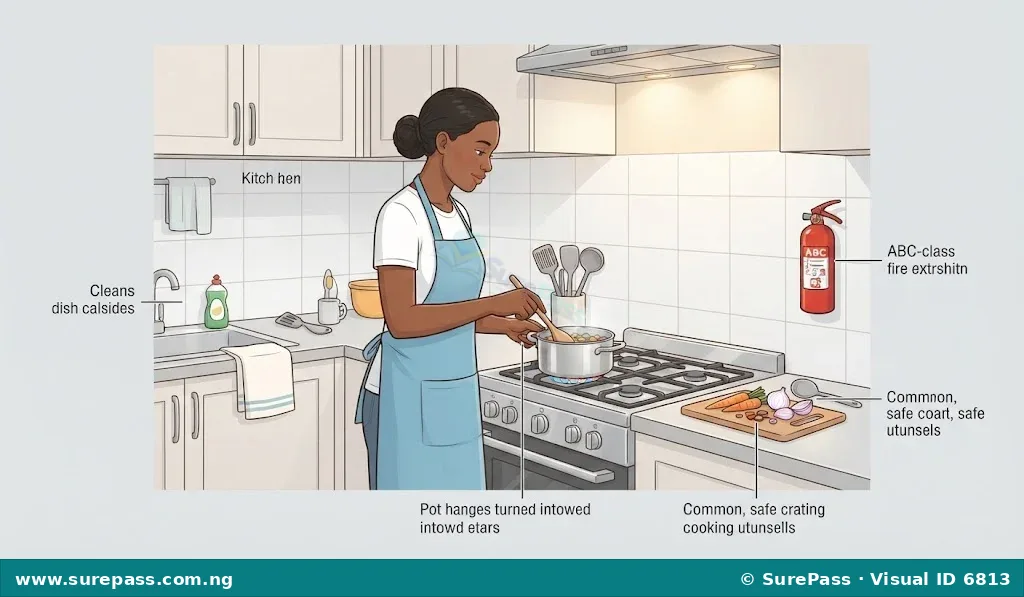
- Wear appropriate clothing, such as an apron, and tie back long hair to prevent it from catching fire or getting into food.
- Avoid wearing loose-fitting clothes that can get caught in machinery or catch fire.
- Always have a fire extinguisher or a bucket of fine sand readily available for emergencies.
Handling Knives and Sharp Objects
- Always use the correct knife for the task.
- Cut away from the body, not towards it.
- Keep knives sharp, as dull knives require more force and are more likely to slip.
- Never leave knives soaking in a sink full of soapy water where they cannot be seen.
- Store knives in a knife block, on a magnetic strip, or in a designated drawer.
- If a knife falls, do not try to catch it; let it drop.
- Handle broken glass carefully using a broom and dustpan, not bare hands.
Working with Heat and Hot Liquids
- Always use oven mitts or dry pot holders when handling hot pots, pans, or dishes.
- Turn pot handles inwards, away from the edge of the stove, to prevent them from being knocked over.
- Lift pot lids away from the body to avoid steam burns.
- When frying, ensure food is dry before placing it in hot oil to prevent splattering.
- Never leave cooking food unattended, especially when frying or boiling.
- Keep flammable materials like paper towels, curtains, and dishcloths away from the stovetop.
Electrical Safety
- Ensure hands are dry before touching any electrical appliance or switch.
- Check electrical cords for fraying or damage before use; replace damaged cords immediately.
- Do not overload electrical sockets with too many appliances.
- Keep electrical appliances away from water sources like sinks.
- Unplug appliances by pulling the plug, not the cord.
- Ensure appliances are switched off before plugging or unplugging them.
Preventing Falls
- Clean up spills immediately to prevent slips.
- Use non-slip mats in areas prone to wetness.
- Ensure walkways are clear of clutter, bags, or other obstacles.
- Wear comfortable, closed-toe shoes with good grip.
- Use a sturdy step stool or ladder to reach high shelves, not a chair.
Fire Safety Precautions
- Never leave cooking unattended.
- Keep flammable items away from heat sources.
- Regularly clean grease from stovetops, ovens, and exhaust fans.
- Know how to use a fire extinguisher.
- For a small grease fire, cover the pan with a lid to smother the flames; never use water.
- Turn off the gas supply after cooking.
Chemical Safety
- Store cleaning agents, pesticides, and other chemicals in their original, clearly labelled containers.
- Keep chemicals separate from food items and food preparation areas.
- Store chemicals in a locked cabinet, especially if there are children around.
- Never transfer chemicals into food or beverage containers.
- Follow instructions on chemical labels for safe use and disposal.
First Aid Measures for Minor Kitchen Accidents
What is First Aid?
First aid is the immediate assistance given to an injured or sick person before professional medical help arrives. In the kitchen, knowing basic first aid can help manage minor accidents and prevent them from worsening.
First Aid for Cuts
For minor cuts:
- Wash Hands: Wash hands thoroughly with soap and water before touching the wound.
- Clean the Wound: Gently wash the cut with clean water and mild soap to remove dirt.
- Stop Bleeding: Apply gentle, direct pressure to the wound with a clean cloth or sterile gauze for a few minutes until bleeding stops.
- Apply Antiseptic: Apply a mild antiseptic solution like iodine or mentholated spirit around the wound.
- Cover the Wound: Cover the cut with a sterile adhesive plaster or a clean bandage to protect it from infection.
First Aid for Minor Burns and Scalds
For minor burns (first-degree, affecting only the top layer of skin, with redness and mild pain):
- Cool the Burn: Immediately hold the burned area under cool (not cold) running water for at least 10-15 minutes. Do not use ice.
- Remove Jewellery/Clothing: Gently remove any rings, watches, or tight clothing from the burned area before swelling occurs.
- Cover Loosely: Cover the burn loosely with a clean, non-stick dressing or cling film to protect it from infection.
- Do Not Break Blisters: If blisters form, do not break them, as this can lead to infection.
- Seek Medical Help: For severe burns (large, deep, or blistering), seek immediate medical attention.
First Aid for Minor Falls and Bruises
For minor falls resulting in bruises or minor scrapes:
- Assess the Injury: Check for any obvious fractures or severe pain. If suspected, do not move the person and seek medical help.
- Clean Scrapes: If there are scrapes, clean them gently with soap and water.
- Apply Cold Compress: For bruises, apply a cold compress or ice pack wrapped in a cloth to the affected area for 15-20 minutes to reduce swelling and pain.
- Rest: Encourage the person to rest the injured part.
First Aid for Minor Electric Shocks
For minor electric shocks (where the person is conscious and responsive, with no severe burns):
- Disconnect Power: The first step is to safely disconnect the power source. Do not touch the person while they are still in contact with electricity. Use a non-conductive material like a dry wooden stick or plastic to move the source away.
- Check for Breathing: Once the power is off, check if the person is breathing and conscious.
- Reassure: Reassure the person and keep them warm.
- Seek Medical Advice: Even for minor shocks, it is advisable to seek medical advice as internal damage may not be immediately visible.
First Aid for Minor Poisoning
If someone accidentally ingests a non-corrosive, non-toxic substance in small amounts:
- Identify Substance: Try to identify what was ingested and how much.
- Do Not Induce Vomiting: Unless advised by a medical professional, do not try to make the person vomit.
- Contact Emergency Services: Immediately call for medical help or a poison control centre for advice.
- Keep Packaging: Keep the container or packaging of the ingested substance to show to medical personnel.
Contents of a First Aid Box
Identification of a First Aid Box
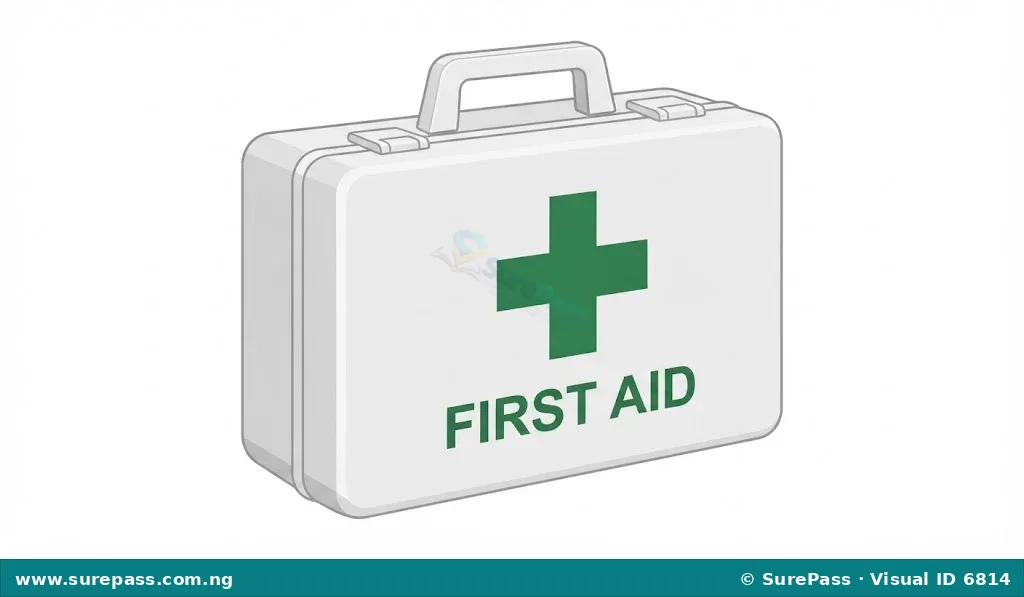
A first aid box is a container holding essential supplies and equipment for giving first aid. It is usually clearly marked with a white cross on a green background or a red cross on a white background. Every kitchen, especially in catering establishments, should have a well-stocked and easily accessible first aid box.
Essential Items in a First Aid Box
A well-stocked first aid box should contain the following items:
- Antiseptic Wipes/Solution: For cleaning wounds and preventing infection (e.g., iodine, mentholated spirit, methylated spirit).
- Cotton Wool: For cleaning wounds and applying antiseptics.
- Sterile Gauze Pads: For covering wounds and stopping bleeding.
- Adhesive Plasters (Band-Aids): Various sizes for covering small cuts and scrapes.
- Roller Bandages: For securing dressings, supporting sprains, or holding splints.
- Triangular Bandages: For slings or large dressings.
- Medical Tape: To secure dressings and bandages.
- Scissors: For cutting bandages, tape, or clothing.
- Tweezers: For removing splinters or small debris from wounds.
- Safety Pins: For securing bandages.
- Disposable Gloves: To protect the first aider and the injured person from cross-contamination.
- Pain Relievers: Basic over-the-counter pain medication (e.g., paracetamol) for minor aches.
- Antiseptic Cream/Ointment: For minor cuts and abrasions.
- Burn Gel/Cream: For soothing minor burns.
- First Aid Manual: A small guide with instructions on how to administer first aid.




0 comments
Open the discussion when you need it. Comments stay collapsed until requested so the initial article remains light.