



ARTICLE CONTENTSOn this page 6 sections
Information and Communication Technology (ICT) in Catering
Performance Objectives
By the end of the lesson, students should be able to:
- explain the meaning of ICT;
- discuss the use of ICT in catering services;
- list the advantages and disadvantages of ICT in catering services.
Understanding Information and Communication Technology (ICT)
Information and Communication Technology, commonly known as ICT, refers to all the tools and resources used to create, store, manage, transmit, and share information. It combines computing technology with communication technology.
ICT includes a wide range of electronic devices and applications. These tools help people to process information quickly and communicate effectively over short or long distances.
Components of ICT
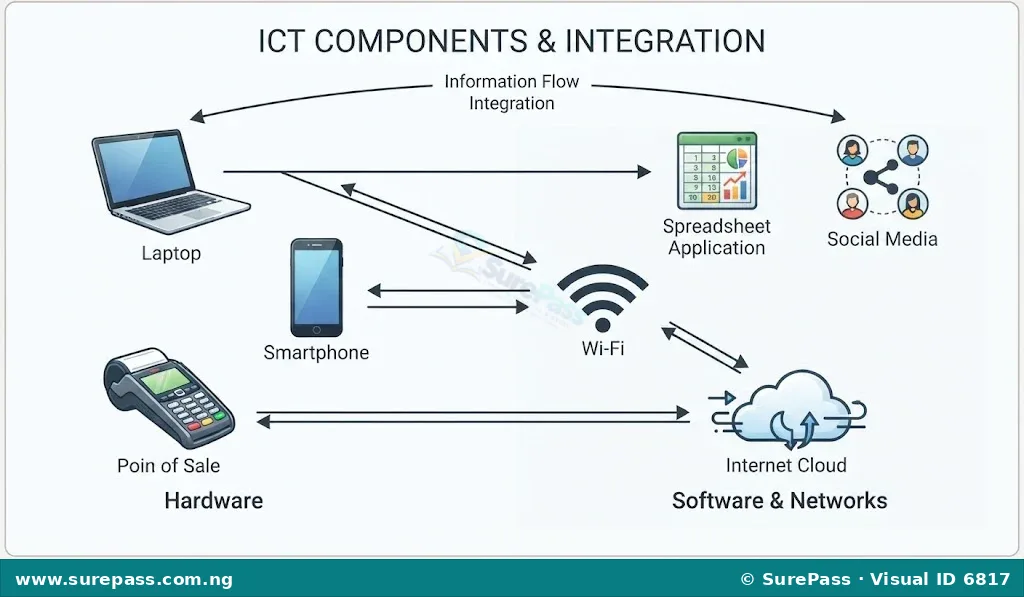
The main components of ICT include:
- Hardware: Physical parts of a computer system, such as computers, laptops, tablets, smartphones, printers, and point-of-sale (POS) terminals.
- Software: Programs and applications that run on hardware, such as word processors, spreadsheets, accounting software, inventory management systems, and social media apps.
- Networks: Systems that connect computers and devices, allowing them to share data and resources. Examples include the internet, local area networks (LANs), and Wi-Fi.
- Communication Technologies: Tools that enable people to exchange information, such as email, instant messaging, video conferencing, and telephone systems.
Uses of ICT in Catering Services
ICT plays a vital role in modern catering services, helping businesses to operate more efficiently, reach more customers, and improve overall service quality. Digital technologies are used to access, manage, and evaluate various aspects of catering and hospitality businesses.
The specific uses of ICT in catering services include:
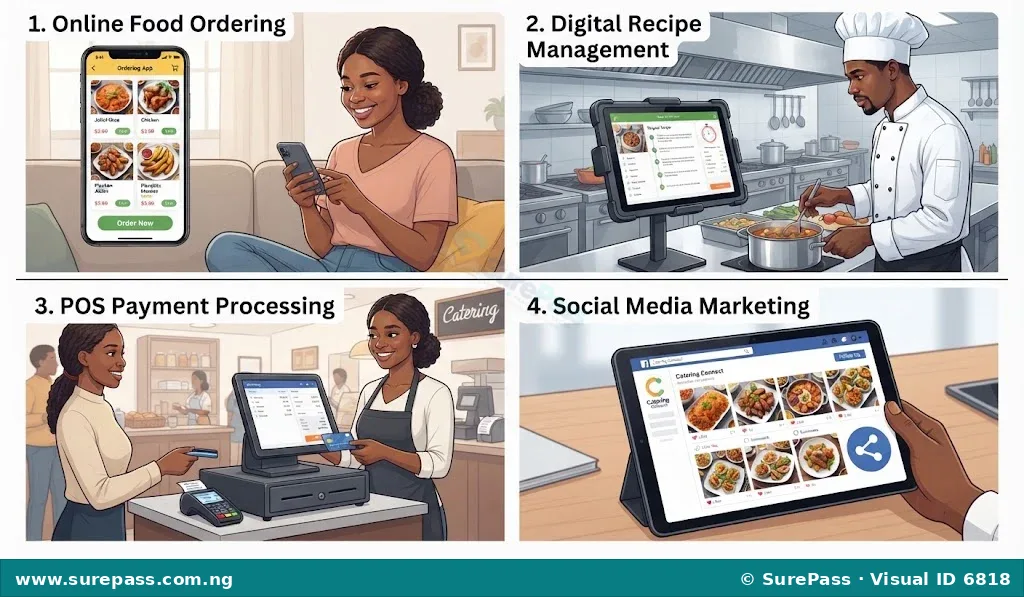
- Online Ordering and Delivery Systems: Customers can place orders through websites or mobile apps. These systems process orders, manage payments, and often integrate with delivery services, making it easier for customers to receive food.
- Point-of-Sale (POS) Systems: These systems are used at the counter or tables to take orders, process payments (cash, card, mobile money), and print receipts. They also help track sales data.
- Inventory Management: Software helps catering businesses track their stock of ingredients, supplies, and equipment. It can alert managers when items are running low, helping to reduce waste and ensure that necessary items are always available.
- Recipe and Menu Management: Digital platforms allow caterers to store, organise, and update recipes easily. They can also calculate ingredient costs, nutritional information, and adjust recipes for different serving sizes. Menus can be displayed digitally and updated instantly.
- Marketing and Promotion: Social media platforms (like WhatsApp, YouTube, TikTok), websites, and email marketing are used to advertise catering services, share menus, post appealing food photos and videos, and announce special offers. This helps to attract new customers and keep existing ones informed.
- Customer Relationship Management (CRM): ICT tools help catering businesses manage customer bookings, preferences, and feedback. This allows for personalised service and helps build customer loyalty.
- Financial Management: Accounting software helps manage finances, including tracking income and expenses, processing payroll, generating invoices, and preparing financial reports. This ensures accurate record-keeping and helps in financial planning.
- Staff Management: Software can be used for staff scheduling, tracking work hours, and communicating important updates to employees. This improves coordination and efficiency within the team.
- Research and Development: The internet provides access to a vast amount of information on new recipes, culinary trends, food safety regulations, and competitor activities. Caterers can watch video tutorials on YouTube or other platforms to learn new techniques or explore global best practices.
- Communication: ICT tools like email, WhatsApp, and video conferencing facilitate quick and easy communication within the catering team, with suppliers, and with clients.
Advantages of ICT in Catering Services
The adoption of ICT in catering brings several benefits that can improve operations and customer satisfaction.
The advantages of using ICT in catering services include:
- Increased Efficiency: ICT automates many tasks, such as order taking, inventory tracking, and billing, which saves time and reduces manual effort. This allows staff to focus on food preparation and customer service.
- Improved Accuracy: Digital systems reduce human error in order processing, inventory counts, and financial calculations, leading to more accurate records and fewer mistakes.
- Wider Customer Reach: Online platforms and social media enable catering businesses to reach a larger audience beyond their immediate physical location, attracting more customers.
- Enhanced Customer Experience: Online booking, quick order processing, and personalised communication through ICT tools can lead to greater customer satisfaction.
- Better Decision-Making: ICT systems collect valuable data on sales, customer preferences, and inventory levels. This data can be analysed to make informed decisions about menu changes, pricing, and marketing strategies.
- Cost Reduction: By optimising inventory, reducing waste, and streamlining operations, ICT can help catering businesses save money in the long run.
- Competitive Advantage: Businesses that effectively use ICT can offer better services, operate more smoothly, and market themselves more effectively than competitors who do not.
- Flexibility and Adaptability: Digital menus and online platforms can be updated quickly to reflect changes in prices, availability, or special offers, allowing businesses to adapt to market demands.
Disadvantages of ICT in Catering Services
While ICT offers many benefits, there are also challenges and drawbacks associated with its use in catering.
The disadvantages of using ICT in catering services include:
- High Initial Cost: Investing in ICT hardware (computers, POS systems), software licenses, and network infrastructure can be expensive, especially for small businesses.
- Need for Training: Staff members need to be trained on how to use new ICT systems and software effectively, which requires time and resources.
- Technical Issues and Downtime: ICT systems can experience technical glitches, software crashes, or internet outages. Such issues can disrupt operations, lead to lost sales, and frustrate customers.
- Security Risks: Storing customer data, financial information, and business secrets digitally makes them vulnerable to cyber-attacks, data breaches, or hacking, which can damage reputation and lead to financial losses.
- Dependence on Technology: Over-reliance on ICT means that if systems fail, the business may struggle to operate manually, especially if staff are not trained in traditional methods.
- Reduced Personal Interaction: While efficient, online ordering and automated systems can sometimes reduce direct human interaction, which some customers might prefer.
- Maintenance and Updates: ICT systems require ongoing maintenance, software updates, and technical support, which can incur additional costs and effort.
- Complexity: Some ICT systems can be complex to set up and manage, requiring specialised knowledge or external support.





0 comments
Open the discussion when you need it. Comments stay collapsed until requested so the initial article remains light.