



ARTICLE CONTENTSOn this page 7 sections
Food Commodities and Preparation
Performance Objectives
By the end of the lesson, students should be able to:
- explain the meaning of food commodities and their classifications;
- discuss the importance and principles of food preparation;
- demonstrate cooking methods and prepare various meals using food commodities.
Meaning of Food Commodities
Food commodities are raw or semi-processed food items that are bought and sold in markets. These items are essential for human consumption and form the basic ingredients for preparing meals.
They include a wide range of products from agriculture, livestock, and fisheries. Examples of food commodities commonly found in Nigerian markets include yam, rice, beans, maize, cassava, plantain, various vegetables like ugu and spinach, different types of meat such as beef and chicken, and fish like tilapia and mackerel.
Classifications of Food Commodities
Food commodities can be classified in different ways, often based on their nutritional content or their source. Understanding these classifications helps in planning balanced meals and making informed choices about food preparation.
A common way to classify food commodities is by their primary nutritional contribution to the body. These groups are:
-
Carbohydrate-Rich Foods: These foods are the body’s main source of energy. They provide the fuel needed for daily activities and bodily functions.
Examples include:
- Cereals: Rice, maize, millet, sorghum, wheat.
- Tubers: Yam, cassava, potato, cocoyam.
- Plantain.
- Bread and other baked goods (made from flour).
-
Protein-Rich Foods: Proteins are essential for building and repairing body tissues, making enzymes and hormones, and supporting the immune system.
Examples include:
- Meat: Beef, goat meat, chicken, pork.
- Fish: Tilapia, mackerel, catfish, stockfish.
- Legumes: Beans, groundnuts, soybeans, lentils.
- Eggs.
- Milk and dairy products.
-
Fat and Oil-Rich Foods: Fats provide concentrated energy, help absorb fat-soluble vitamins, and protect organs. They are also important for healthy skin and hair.
Examples include:
- Vegetable oils: Palm oil, groundnut oil, sunflower oil.
- Animal fats: Lard, butter.
- Nuts and seeds: Cashew nuts, melon seeds (egusi), sesame seeds.
- Avocado.
-
Vitamin and Mineral-Rich Foods: These foods are crucial for maintaining good health, regulating body processes, and preventing diseases. They are often called protective foods.
Examples include:
- Vegetables: Ugu (fluted pumpkin leaves), spinach (efo), waterleaf, okra, tomatoes, carrots, onions, peppers.
- Fruits: Oranges, mangoes, pawpaw, pineapple, garden eggs.
-
Water: Although not a food commodity in the same sense, water is a vital nutrient and is essential for all bodily functions, including digestion, absorption, circulation, and temperature regulation.
Water is obtained from drinking water directly and from the moisture content in many food commodities like fruits and vegetables.

Importance of Food Preparation
Food preparation is the process of making food ready for consumption. It involves various techniques and methods to transform raw ingredients into cooked meals. The importance of preparing food properly cannot be overstated, as it affects health, safety, and enjoyment.
The importance of food preparation includes the following:
-
Making Food Safe: Cooking food to the correct temperature kills harmful bacteria and microorganisms that can cause food poisoning. Washing fruits and vegetables removes dirt and pesticides.
-
Improving Digestibility: Cooking breaks down tough fibres and complex starches in food, making them easier for the body to digest and absorb nutrients.
-
Enhancing Flavour and Aroma: Preparation methods like frying, boiling, roasting, and stewing bring out the natural flavours of ingredients and create appealing aromas, making food more enjoyable to eat.
-
Improving Appearance: Proper presentation, cutting techniques, and cooking methods can make food look more attractive and appetising, encouraging people to eat.
-
Preserving Nutrients: While some nutrients can be lost during cooking, proper preparation techniques, such as steaming or stir-frying for short periods, can help retain essential vitamins and minerals.
-
Increasing Variety: Food preparation allows for countless combinations of ingredients and cooking methods, leading to a wide variety of meals and preventing monotony in the diet.
-
Extending Shelf Life: Some preparation methods, like drying, smoking, or pickling, can preserve food for longer periods, reducing waste.
Principles of Food Preparation
Following certain principles during food preparation ensures that meals are safe, nutritious, and delicious. These principles guide cooks in making good decisions from selecting ingredients to serving the final dish.
Key principles of food preparation include:
-
Hygiene and Sanitation: This is paramount to prevent food contamination. It involves:
- Washing hands thoroughly with soap and water before and after handling food.
- Using clean utensils, cutting boards, and cooking surfaces.
- Washing raw fruits and vegetables thoroughly.
- Keeping raw and cooked foods separate to prevent cross-contamination.
-
Proper Cooking Temperatures: Cooking food to the correct internal temperature ensures that harmful bacteria are destroyed. Different foods require different temperatures and cooking times.
-
Nutrient Retention: Methods that minimise nutrient loss should be preferred. Examples include steaming, stir-frying, and boiling with minimal water for short durations. Overcooking can destroy heat-sensitive vitamins.
-
Flavour Development: Ingredients should be combined in ways that create balanced and appealing flavours. This includes proper seasoning, marinating, and using aromatic ingredients like onions, garlic, and spices.
-
Texture and Consistency: Food should have a pleasant texture. Overcooking can make vegetables mushy, while undercooking can leave meats tough. Achieving the right consistency for sauces and soups is also important.
-
Presentation: The way food is arranged on a plate affects its appeal. Attention should be paid to colour, arrangement, and garnishing to make the meal inviting.
-
Minimising Waste: Efficient use of ingredients, proper portioning, and storing leftovers correctly help reduce food waste.
-
Safety in the Kitchen: Always handle knives carefully, use oven mitts for hot items, and be cautious around open flames or hot surfaces. Keep electrical appliances away from water.
Demonstrating Cooking Methods and Preparing Meals
Preparing quality and nutritious meals involves applying the principles of food preparation and using various cooking methods. This section outlines a general approach to preparing meals using common food commodities.
Basic Cooking Methods
Different cooking methods are suitable for different food commodities and desired outcomes:
-
Boiling: Cooking food in hot liquid, usually water, until it is tender. This is common for rice, yam, potatoes, and some vegetables.
-
Frying: Cooking food in hot oil or fat. This can be shallow frying (e.g., eggs, plantain) or deep frying (e.g., puff-puff, fish).
-
Steaming: Cooking food using steam from boiling water. This method helps retain nutrients and is good for vegetables and fish.
-
Stewing/Braising: Cooking food slowly in a small amount of liquid, often after browning. This is excellent for tenderising tougher cuts of meat and developing rich flavours in stews and soups.
-
Roasting/Baking: Cooking food in an oven using dry heat. This is suitable for meats, poultry, fish, and some root vegetables.
General Procedure for Preparing a Meal
This procedure can be adapted for various meals, such as preparing a simple rice and stew, or boiled yam with egg sauce.
The required materials and equipment are:
- Selected food commodities (e.g., rice, vegetables, meat, fish, oil, spices)
- Pots and pans
- Knife
- Cutting board
- Bowls
- Measuring cups and spoons
- Cooker (gas or electric)
- Serving utensils
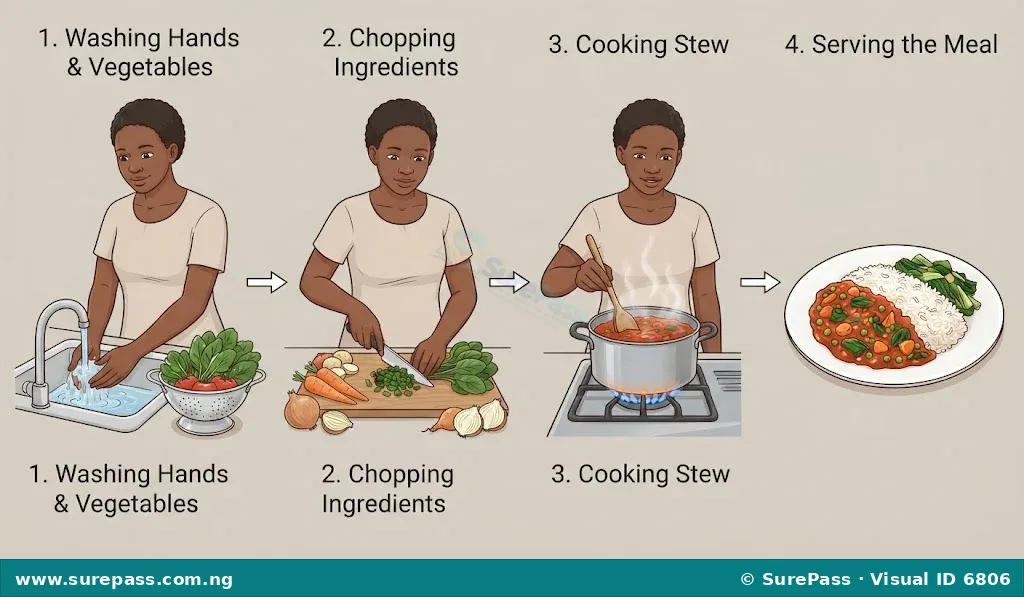
The procedure involves the following steps:
-
Plan the Meal: Decide what to cook, considering the available food commodities and nutritional balance. For example, a meal could include a carbohydrate source (rice), a protein source (fish or meat), and vegetables.
-
Gather Ingredients and Equipment: Collect all necessary food commodities, spices, and cooking equipment before starting. This ensures a smooth cooking process.
-
Wash and Prepare Ingredients:
- Wash hands thoroughly with soap and water.
- Wash all vegetables and fruits under running water.
- Clean and cut meat or fish into desired sizes.
- Peel and cut tubers like yam or potatoes.
- Measure out dry ingredients like rice or beans.
-
Pre-cook or Marinate (if needed): Some ingredients, like tough meats, may need to be boiled or marinated before the main cooking process to tenderise them or enhance flavour.
-
Cook the Main Components:
- For a stew, heat oil in a pot, sauté onions, add blended tomatoes and peppers, cook until the water dries, then add pre-cooked meat/fish and seasoning. Allow it to simmer.
- For rice, wash it thoroughly, add to boiling water (or cook in a separate pot with measured water), and cook until tender.
- For vegetables, steam or stir-fry them lightly to retain nutrients and colour.
-
Combine and Finish: If preparing a dish that combines components (e.g., jollof rice, vegetable soup), combine them at the appropriate stage. Adjust seasoning as needed.
-
Check for Doneness and Taste: Ensure all food is cooked through and tastes good. Meat and fish should be tender, and vegetables crisp-tender.
-
Serve: Arrange the prepared meal attractively on plates. Garnish if desired.
-
Clean Up: Wash all used utensils, pots, and cooking surfaces immediately after cooking to maintain hygiene.
Safety in the Kitchen
When demonstrating and preparing meals, safety is crucial:
-
Knife Safety: Always cut away from the body. Keep fingers curled inwards when chopping. Use a stable cutting board. A sharp knife is safer than a dull one as it requires less force.
-
Heat Safety: Use oven mitts or pot holders when handling hot pots and pans. Turn pot handles inwards on the stove to prevent accidental knocking. Be careful when lifting pot lids to avoid steam burns.
-
Cooker Safety: Ensure gas cookers are properly lit and turned off after use. For electric cookers, ensure hands are dry before touching controls. Do not leave cooking food unattended.
-
Electrical Safety: Keep electrical appliances away from water. Do not use appliances with frayed cords.
-
Preventing Falls: Clean up spills immediately to prevent slipping.





0 comments
Open the discussion when you need it. Comments stay collapsed until requested so the initial article remains light.