


ARTICLE CONTENTSOn this page 9 sections
Cooking Equipment, Utensils and Table Ware
Performance Objectives
By the end of the lesson, students should be able to:
- identify types of cooking equipment, utensils and tableware;
- describe the proper functions and usage of cooking equipment, utensils and tableware;
- mention safety precautions to take when using kitchen equipment and utensils;
- explain the importance of personal and kitchen hygiene, including the proper cleaning and maintenance of equipment and utensils.
Meaning and Types of Cooking Equipment, Utensils and Tableware
Cooking equipment refers to the large and small electrical or mechanical appliances used in the kitchen to facilitate food preparation, cooking, and preservation.
Kitchen utensils are small, hand-held tools used in the kitchen for tasks such as measuring, cutting, mixing, and handling food.
Tableware refers to the dishes, plates, cutlery, and glassware used for setting a table, serving food, and dining.
Understanding the distinctions between these categories helps in organizing the kitchen efficiently and using the correct tool for each culinary task.
Types of Cooking Equipment
Cooking equipment is generally classified into large equipment and small equipment or cookware. Common types of cooking equipment found in the kitchen include:
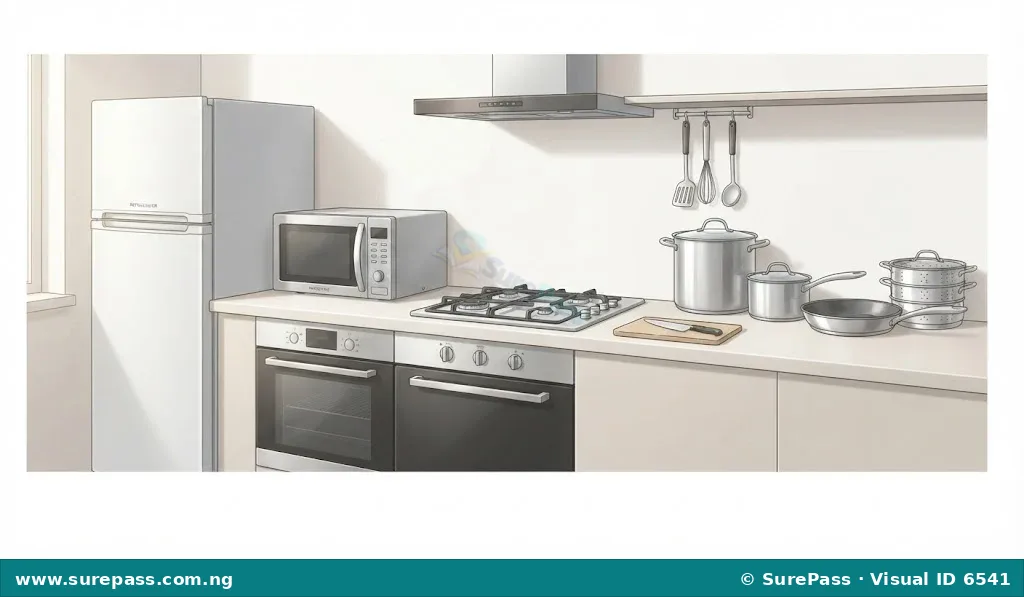
- Stoves and Cookers: Appliances that provide direct heat for boiling, frying, steaming, and simmering food. These can be powered by gas, electricity, or kerosene.
- Ovens: Enclosed compartments used for baking, roasting, and heating food.
- Microwaves: Electronic appliances that use electromagnetic waves to heat and cook food rapidly.
- Refrigerators: Cooling appliances used to preserve raw and cooked food items by keeping them at low temperatures to prevent spoilage.
- Pots and Pans: Metal vessels of various sizes, such as saucepans, frying pans, and stockpots, used on top of stoves for cooking food.
- Baking Trays: Flat, metal sheets with raised rims used for holding food items during baking in an oven.
Observe the image below to identify common cooking equipment.
Types of Kitchen Utensils
Kitchen utensils are designed for specific manual tasks during food preparation. Common types of kitchen utensils include:
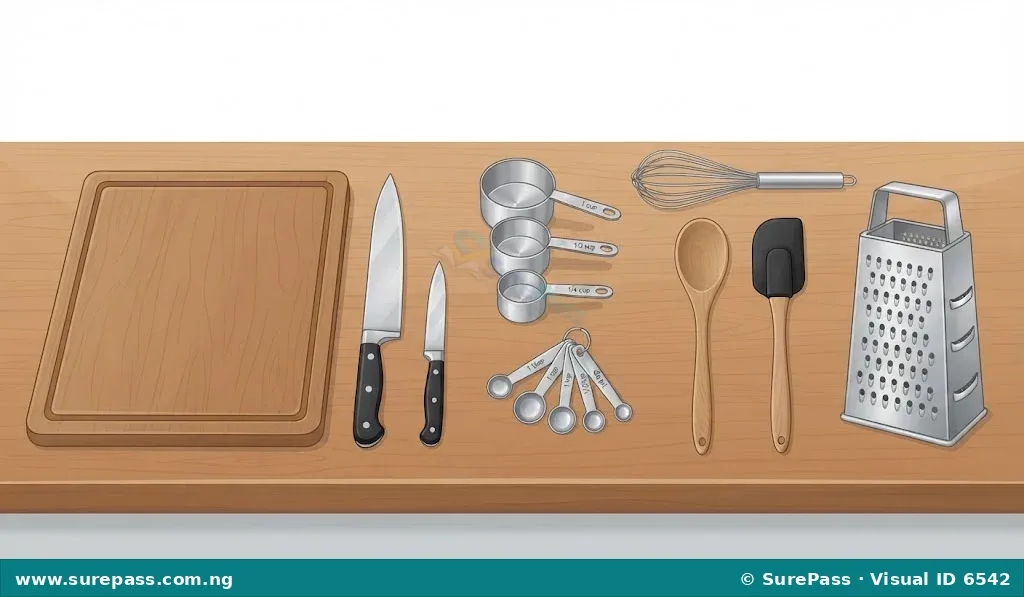
- Knives: Sharp cutting tools, including chef’s knives for chopping vegetables and meat, and paring knives for peeling and delicate work.
- Cutting Boards: Flat surfaces made of wood or food-grade plastic used as a safe base for cutting food items.
- Measuring Tools: Graduated cups and spoons used to measure dry and liquid ingredients accurately.
- Mixing and Handling Tools: Whisks for beating liquids, wooden spoons for stirring hot food, spatulas for scraping bowls, and tongs for lifting hot food items.
- Preparation Tools: Peelers for removing vegetable skins, graters for shredding food, and can openers for opening metal food cans.
Observe the image below to identify various kitchen utensils.
Types of Tableware
Tableware is used to present food and facilitate eating at the dining table. Common types of tableware include:
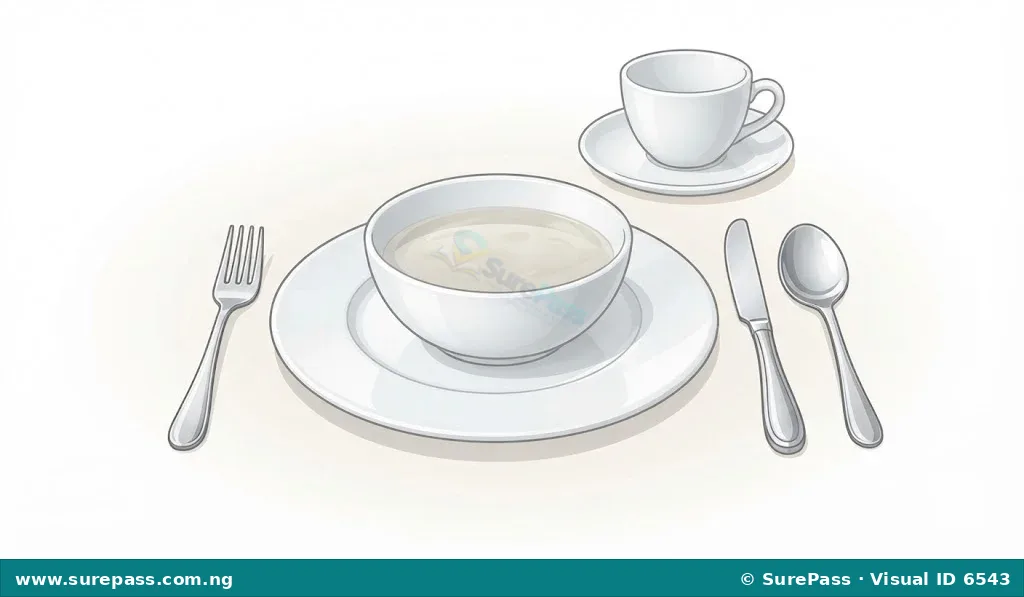
- Plates and Bowls: Flat and deep vessels made of ceramic, glass, or plastic used for holding individual portions of food.
- Cups and Saucers: Small vessels and matching small plates used for serving hot or cold beverages.
- Cutlery: Hand-held eating instruments, including forks, knives, and spoons.
- Serving Dishes and Platters: Large vessels used to present food on the dining table before it is portioning out.
Observe the image below to identify standard tableware items.
Factors to Consider in Selecting Cooking Equipment, Utensils and Tableware
Selecting the right kitchen items is essential for efficiency, safety, and durability. The main factors to consider when choosing these items include:
- Material and Durability: Items should be made of strong, non-toxic materials like stainless steel, cast iron, heat-resistant glass, or food-grade plastic that can withstand regular use and washing.
- Cost and Budget: The price of the items should align with the available financial resources of the family without compromising essential quality.
- Size and Capacity: The size of the equipment and utensils should match the size of the family and the volume of food usually prepared.
- Available Kitchen Space: Large appliances like refrigerators and stoves must fit comfortably within the physical layout of the kitchen without causing obstruction.
- Ease of Cleaning and Maintenance: Items with simple designs and smooth surfaces are easier to wash and keep hygienic than those with complex, hard-to-reach parts.
- Safety Features: Equipment should have insulated handles, stable bases, and secure electrical connections to prevent accidents.
- Versatility: Multi-purpose tools that can perform more than one task help save money and storage space.
Uses and Maintenance of Cooking Equipment, Utensils and Tableware
Proper use and regular maintenance extend the lifespan of kitchen items and ensure they remain safe for food preparation. The uses and maintenance guidelines for key items are:
- Stoves and Ovens: Used for cooking, baking, and roasting. Maintenance involves wiping spills immediately after cooling, cleaning burners regularly, and checking gas connections or electrical cords for safety.
- Refrigerators: Used for preserving food and keeping drinks cold. Maintenance involves defrosting regularly, wiping the interior with a mild baking soda solution, and avoiding overloading to allow proper air circulation.
- Pots and Pans: Used for boiling, frying, and simmering. Maintenance involves avoiding the use of metal scourers on non-stick surfaces, washing with mild soap, and drying thoroughly before storage to prevent rust.
- Knives and Cutting Boards: Used for cutting, slicing, and chopping ingredients. Maintenance involves sharpening knives regularly, washing cutting boards immediately after use (especially after cutting raw meat), and storing knives in a block or sheath.
- Measuring Cups and Spoons: Used for measuring ingredients accurately. Maintenance involves washing immediately after use, drying completely, and storing them together to prevent loss.
- Tableware (Plates, Bowls, and Cutlery): Used for serving and eating food. Maintenance involves handling ceramic and glass items gently to prevent chipping, washing with a soft sponge, and polishing cutlery with a dry cloth to prevent water spots.
Cleaning of Cooking Equipment, Utensils and Tableware
Cleaning is the process of removing dirt, grease, and food particles from kitchen items to make them safe for subsequent use.
Different materials require specific cleaning methods to prevent damage. The cleaning procedures for various kitchen materials are:
- Glassware and Ceramic Tableware: Wash in warm, soapy water using a soft sponge. Rinse in clean water and air-dry or wipe with a lint-free cloth. Always wash glassware first before greasy pots to keep the wash water clean.
- Stainless Steel Pots and Pans: Soak in warm water to loosen burnt food. Wash with a sponge and mild scouring powder if necessary. Rinse thoroughly and dry to prevent water stains.
- Wooden Utensils (Spoons and Cutting Boards): Wash immediately after use with warm soapy water. Do not soak wooden items in water, as this causes the wood to swell, crack, and harbor bacteria. Air-dry completely in a well-ventilated area.
- Plastic Utensils and Containers: Wash with warm water and mild dishwashing liquid. Avoid using abrasive scourers that can scratch the plastic surface and trap bacteria.
How to Clean and Maintain Kitchen Utensils and Tableware
This practical procedure demonstrates the correct sequence and technique for washing, drying, and storing kitchen utensils and tableware to maintain high hygiene standards.
The required materials for this procedure are:
- Dirty tableware (plates, cups, spoons) and utensils (cutting board, whisk)
- Two washing basins or a double kitchen sink
- Warm water and clean cold water
- Mild dishwashing liquid
- Soft sponge and a clean dishcloth
- A dish drying rack
The cleaning procedure involves the following steps:
- Scrape and Sort: Scrape all food residues from the plates and bowls into a waste bin. Sort the items by grouping glassware, cutlery, plates, and greasy pots separately.
- Prepare the Wash Water: Fill the first basin with warm water and add a small amount of mild dishwashing liquid to create suds. Fill the second basin with clean, cold water for rinsing.
- Wash in Order of Cleanliness: Start by washing the least greasy items first. Wash glassware first, followed by cutlery, then plates and bowls, and finally the greasy pots and pans. Use a soft sponge to scrub all surfaces.
- Rinse Thoroughly: Dip the washed items into the clean rinse water, ensuring all soap residue is completely removed. Change the rinse water when it becomes cloudy.
- Dry and Store: Place the rinsed items upside down on a clean dish drying rack to air-dry. Once dry, wipe cutlery and glassware with a clean, dry dishcloth to prevent spots, then store them in their designated cupboards or drawers.
Safety Precautions when Using Kitchen Equipment and Utensils
Safety in the kitchen prevents injuries, burns, and electrical accidents. Important safety precautions include:
- Handle Sharp Tools with Care: Always cut away from the body when using knives. Carry knives pointing downwards and never leave them submerged in soapy water where they cannot be seen.
- Prevent Burns and Scalds: Turn pot handles inward toward the back of the stove to prevent them from being knocked over. Use dry oven mitts or pot holders when handling hot pots, pans, or baking trays.
- Ensure Electrical Safety: Dry hands thoroughly before touching electrical plugs, switches, or appliances. Keep electrical cords away from water sources and hot stove surfaces.
- Use Equipment Correctly: Read and follow the manufacturer’s instructions before operating appliances like microwaves, blenders, and food processors.
- Store Heavy Items Low: Keep heavy pots, pans, and appliances on lower shelves to prevent them from falling and causing injury.
Importance of Personal and Kitchen Hygiene
Hygiene in the kitchen is critical for maintaining health and ensuring that food remains safe for consumption. The importance of personal and kitchen hygiene includes:
- Prevention of Food Contamination: Proper cleaning of utensils and equipment removes harmful bacteria, viruses, and parasites, preventing them from transferring to fresh food.
- Prevention of Foodborne Illnesses: Maintaining high hygiene standards reduces the risk of food poisoning and infections caused by pathogens like Salmonella and Escherichia coli.
- Control of Pests: Keeping the kitchen clean and free of food crumbs prevents pests such as cockroaches, rats, and flies from breeding and contaminating food surfaces.
- Preservation of Equipment Lifespan: Regular cleaning and proper maintenance prevent rust, grease buildup, and mechanical failures, making kitchen tools last longer.
- Creation of a Safe Working Environment: A clean, organized kitchen reduces the risk of slips, trips, and falls, making food preparation more pleasant and efficient.



0 comments
Open the discussion when you need it. Comments stay collapsed until requested so the initial article remains light.