


ARTICLE CONTENTSOn this page 9 sections
Meaning, Types and Functions of Clothing
Performance Objectives
By the end of the lesson, students should be able to:
- explain the meaning of clothing with their basic components;
- mention the types of clothing with their primary functions;
- outline factors influencing clothing choices and behaviour;
- show proper care, ironing and folding techniques for various clothing;
- discuss the importance of appropriate heat settings and safety in ironing.
Meaning of Clothing
Clothing refers to any article or material worn on the body for protection, adornment, identification, modesty or comfort.
Clothing is a fundamental human need. It extends beyond basic garments like shirts and trousers to include footwear, headwear, gloves, and accessories that complete an individual’s outfit. Historically, clothing evolved from simple natural coverings like animal skins and leaves into highly sophisticated textiles and designs that reflect culture, technology, and social status.
Basic Components of Clothing
To understand clothing, it is essential to examine the materials and elements that make up a finished garment. The structure of clothing relies on several foundational elements that determine its durability, appearance, and comfort.
The basic components of clothing include:
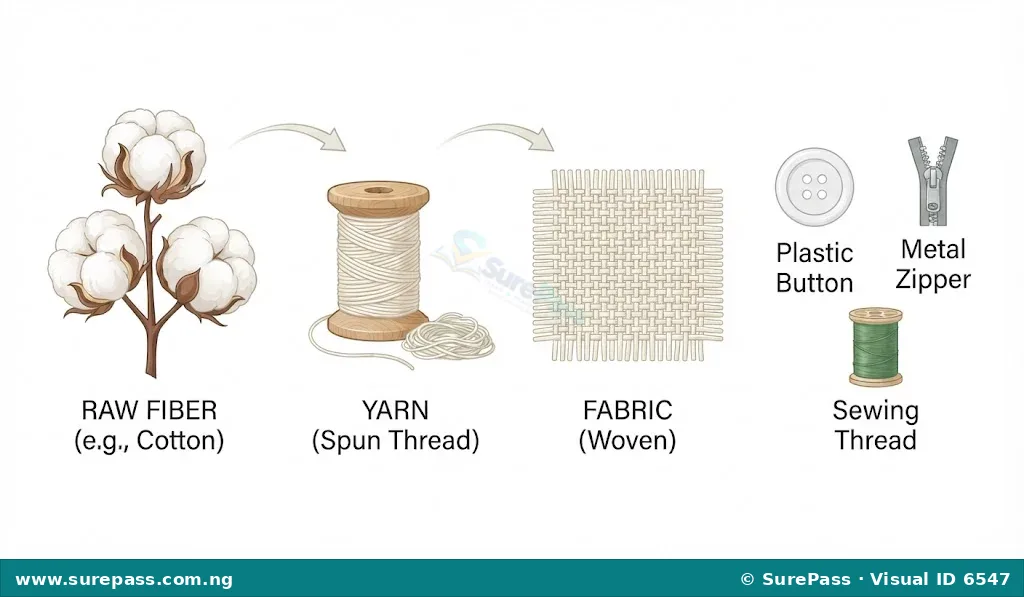
- Fibers: These are the hair-like raw materials obtained from natural sources (such as cotton, wool, silk, and flax) or synthetic sources (such as polyester, nylon, and acrylic). Fibers are the smallest units of any textile material.
- Yarns: These are continuous strands made by spinning or twisting fibers together. Yarns are used for weaving or knitting fabrics.
- Fabrics: These are flat, flexible sheets of material produced by interlacing yarns through weaving, interlooping yarns through knitting, or bonding fibers together directly.
- Notions and Trimmings: These are the functional and decorative items attached to garments during construction. Examples include sewing threads, buttons, zippers, hooks, snaps, elastic, lace, and ribbons.
- Finishes: These are chemical or physical treatments applied to fabrics to improve their appearance, texture, or performance. Finishes can make fabrics wrinkle-resistant, water-repellent, flame-retardant, or softer to the touch.
Types of Clothing
Clothing is classified into different categories based on the design, fabric, and the specific occasion for which it is intended. Proper classification helps individuals select appropriate attire for different settings.
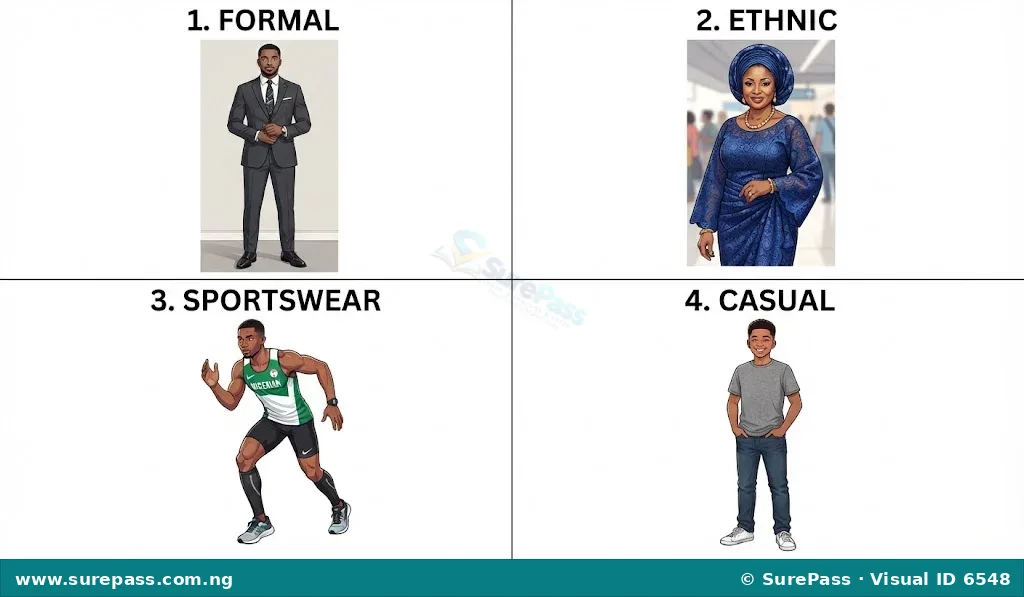
The four primary types of clothing are:
- Formal Wear: This category consists of highly structured, elegant, and conservative garments worn for official, professional, or ceremonial events. Examples include corporate suits, ties, official uniforms, evening gowns, and dinner jackets. Formal wear projects professionalism, respect, and seriousness.
- Ethnic or Traditional Wear: These are garments that reflect the cultural heritage, values, and identity of a specific group of people. In Nigeria, ethnic wear includes attire such as the Yoruba Buba and Shokoto, Agbada, Iro and Buba, the Igbo Isiagu and George wrapper, and the Hausa Kaftan and Babariga. Ethnic wear is commonly worn during cultural festivals, traditional weddings, and national celebrations.
- Sportswear: This type of clothing is specifically designed for physical exercise, sports, and outdoor activities. It is made from lightweight, breathable, stretchable, and moisture-wicking fabrics like spandex, nylon, and polyester. Examples include jerseys, tracksuits, athletic shorts, tennis skirts, and swimming trunks. Sportswear facilitates free movement and helps regulate body temperature during physical exertion.
- Casual Wear: This category includes comfortable, informal garments worn for everyday activities, relaxation, and informal social gatherings. Examples include T-shirts, jeans, simple gowns, shorts, and sweaters. Casual wear is designed for ease of maintenance, comfort, and personal expression.
Primary Functions of Clothing and Reasons for Wearing It
Clothing serves several essential purposes in human society. These purposes range from basic biological survival to complex social communication.
The primary functions of clothing and reasons for wearing it include:
- Protection: Clothing acts as a barrier between the human body and environmental hazards. It protects the skin from extreme weather conditions (such as intense heat, cold winds, and rain), insect bites, dust, and occupational hazards (such as chemicals, fire, and sharp objects).
- Modesty: Society has established standards regarding which parts of the body should be covered in public. Clothing helps individuals conform to these moral, ethical, and religious standards of decency.
- Identification and Role Representation: Clothing is used to identify an individual’s profession, status, or group membership. For example, school uniforms identify students, white coats identify medical doctors, and specific uniforms identify military and police officers.
- Adornment and Decoration: Clothing is used to enhance physical appearance and express personal beauty. Through colors, patterns, and designs, individuals use clothing as a form of art to make themselves look attractive.
- Status and Prestige: Certain garments and accessories indicate social standing, wealth, or achievement. For example, royal beads, academic gowns, and expensive designer labels communicate high status within a community.
- Psychological Comfort: Wearing clean, well-fitting, and appropriate clothing boosts self-confidence, improves mood, and provides a sense of security and belonging.
Factors Influencing Clothing Choices and Behaviour
An individual’s choice of clothing is rarely accidental. It is shaped by a combination of personal, environmental, and social factors that influence what people buy, wear, and how they perceive others based on their attire.
The key factors influencing clothing choices and behaviour include:
- Climate and Weather: The atmospheric conditions of a region dictate the weight and type of fabric chosen. In hot, humid tropical climates like Nigeria, lightweight cotton fabrics are preferred to allow air circulation. In cold climates, thick woolen garments are chosen to trap body heat.
- Culture and Tradition: Cultural background plays a significant role in clothing selection. Traditional norms dictate what is acceptable for different genders, age groups, and social ceremonies within a community.
- Occasion: The nature of an event determines the dress code. A person selects different outfits for a job interview, a religious service, a football match, or a bedtime routine. Wearing inappropriate clothing to an event can cause social discomfort.
- Income and Financial Status: The amount of money available to an individual or family determines the quality, brand, and quantity of clothing they can purchase. Budget constraints influence whether a person buys ready-made designer wear, custom-tailored garments, or second-hand clothing.
- Age and Physical Development: Clothing needs change as the body grows. Toddlers require loose, durable, and easily washable clothes. Teenagers often prefer trendy, form-fitting styles, while elderly individuals generally prioritize comfort, ease of wearing, and warmth.
- Occupation: The type of work a person does influences their daily wardrobe. Manual laborers require tough, protective clothing like overalls and boots, while office workers require formal corporate attire.
- Peer Pressure and Social Trends: The desire to fit into a social group or conform to current fashion trends strongly influences clothing choices, especially among adolescents. Media, celebrities, and internet influencers play a major role in shaping these trends.
- Religion: Religious beliefs often prescribe specific guidelines for dressing. Some religious groups require modest coverings, headscarves, or specific colors during worship and daily life.
Care of Clothing
Proper care of clothing ensures that garments remain clean, hygienic, attractive, and durable. Neglecting clothing care leads to rapid wear, discoloration, unpleasant odors, and fabric damage.
Essential practices for daily clothing care include:
- Airing: Garments that have been worn but are not yet dirty should be hung in a well-ventilated area to remove body moisture and odors before storage.
- Stain Removal: Stains from food, ink, oil, or sweat should be treated immediately before they dry and become permanently set in the fabric fibers.
- Laundering (Washing): Clothes should be washed regularly using appropriate detergents and water temperatures. White garments should be separated from colored ones to prevent color bleeding.
- Drying: Wet clothes should be hung properly on clotheslines. White cottons benefit from direct sunlight which acts as a natural bleaching agent, while colored garments should be dried in the shade to prevent fading.
- Mending: Loose buttons, torn seams, and broken zippers should be repaired promptly to prevent further damage to the garment.
- Storage: Clean clothes should be folded neatly or hung on hangers and stored in clean, dry, insect-free wardrobes or drawers.
Practical Guide: Ironing and Folding Techniques
Ironing removes wrinkles and creases from fabrics, giving garments a neat, professional appearance. Folding preserves this neatness and ensures efficient use of storage space.
Importance of Heat Settings in Ironing
Different textile fibers react differently to heat. Using the wrong temperature setting can ruin a garment permanently by scorching, melting, or failing to remove creases.
The recommended heat settings for common fabrics are:
- High Heat (approx. 200°C to 220°C): Suitable for sturdy natural fibers like cotton and linen. These fabrics require high heat and moisture (steam) to smooth out tough wrinkles.
- Medium Heat (approx. 150°C): Suitable for wool, silk, and polyester blends. These fabrics require careful handling to prevent fabric shine or mild scorching.
- Low Heat (approx. 110°C to 120°C): Suitable for delicate synthetic fibers such as nylon, acrylic, acetate, and spandex. High heat will melt these synthetic fibers instantly.
Ironing Safety Rules
Ironing involves electricity and high temperatures, which present risks of burns, electrical shocks, and domestic fires. Safety precautions must be strictly observed.
Important safety tips for ironing include:
- Always check the care label on the garment for specific ironing instructions before starting.
- Inspect the iron plug and cord before use to ensure there are no exposed wires or frayed parts.
- Never leave a hot iron resting flat on its heating plate on any fabric or the ironing board; always stand it upright on its heel when pausing.
- Keep water away from the electrical cord, plug, and wall socket when filling a steam iron.
- Do not iron clothes while wearing them.
- Unplug the iron immediately after use, and allow it to cool completely in a safe, upright position out of reach of children before storing it.
How to Iron a Standard Button-Down Shirt
Ironing a shirt systematically prevents re-creasing parts that have already been ironed.
The procedure involves the following steps:
- Set up the ironing board and adjust the iron to the correct heat setting based on the shirt’s fabric label.
- Iron the collar first, starting from the outer points and moving toward the center on both the underside and top side.
- Iron the cuffs next, unbuttoning them and laying them flat on the board.
- Iron the sleeves, smoothing them flat along the seam and ironing from the shoulder down to the cuff.
- Iron the yoke (the shoulder area) by fitting it over the narrow end of the ironing board.
- Iron the body of the shirt, starting with the front panels (carefully ironing around the buttons), moving to the back, and finishing with the remaining front panel.
- Hang the shirt immediately on a hanger and button the top button to preserve its shape.
How to Fold a Long-Sleeved Shirt
Proper folding prevents creases during storage and maximizes wardrobe space.
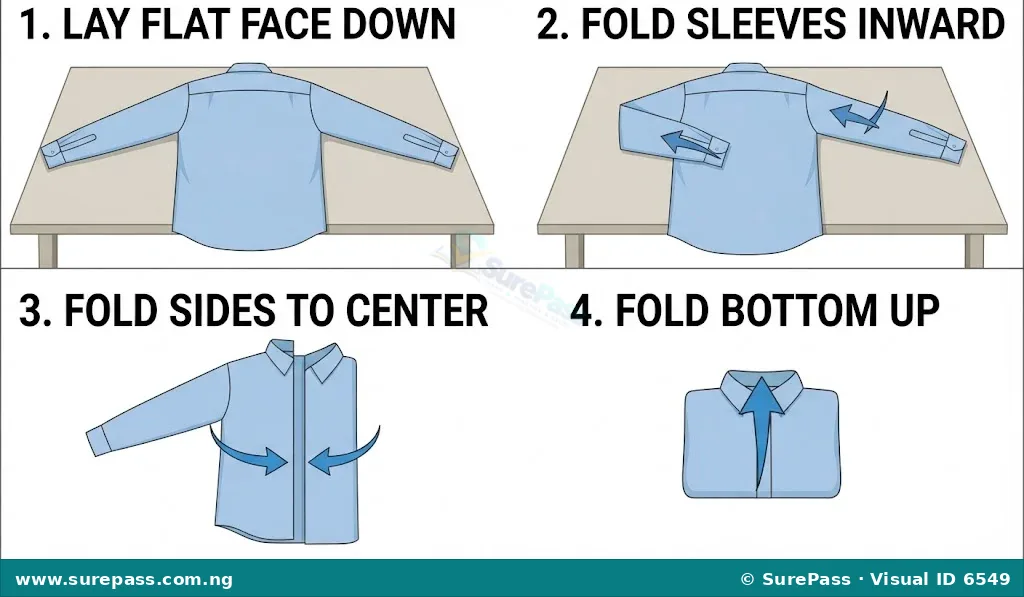
The procedure involves the following steps:
- Button the shirt completely and lay it face down on a clean, flat surface.
- Smooth out any wrinkles with clean hands.
- Fold the right sleeve and about one-third of the shirt body toward the center.
- Fold the right sleeve straight down along the fold line so it aligns with the edge of the shirt.
- Repeat the process on the left side, folding the left sleeve and one-third of the body toward the center, then folding the sleeve straight down.
- Fold the bottom hem of the shirt up by about one-third, then fold the remaining bottom section up to meet the collar.
- Turn the folded shirt over; it should form a neat, compact rectangle with the collar visible at the top.


0 comments
Open the discussion when you need it. Comments stay collapsed until requested so the initial article remains light.