


ARTICLE CONTENTSOn this page 6 sections
Concept of Entrepreneurship
Performance Objectives
By the end of the lesson, students should be able to:
- state the meaning of entrepreneurship, intrapreneur and entrepreneur;
- discuss the benefits of entrepreneurship;
- differentiate between intrapreneur and entrepreneur;
- identify the challenges of entrepreneurship practices in Nigeria.
Entrepreneurship is a vital part of economic growth and personal development. It involves identifying opportunities and creating new ventures to meet needs or solve problems. In Home Management, understanding entrepreneurship can help individuals create value, manage resources effectively, and contribute to their households and communities.
Meaning of Entrepreneurship, Entrepreneur, and Intrapreneur
Meaning of Entrepreneurship
Entrepreneurship is the process of identifying a business opportunity, gathering the necessary resources, and taking on the financial risks to start and manage a new business venture with the aim of making a profit.
It involves creativity, innovation, and a willingness to take calculated risks to bring new ideas, products, or services to the market. Entrepreneurship is not just about starting a business; it is about solving problems and creating value.

Meaning of Entrepreneur
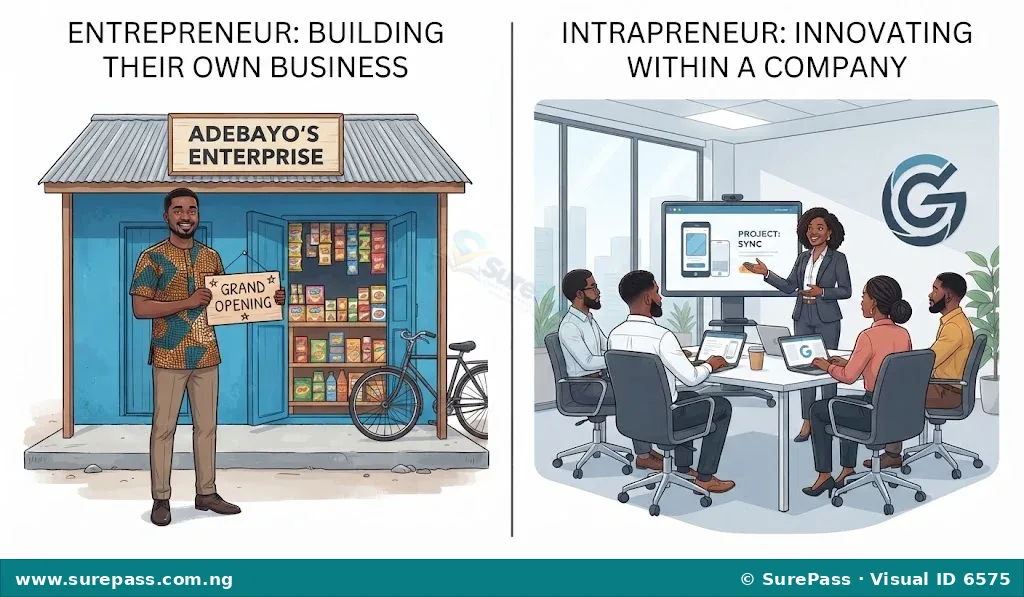
An entrepreneur is an individual who identifies a business opportunity, organises and manages a business venture, and assumes the risks associated with it in the hope of making a profit.
Entrepreneurs are often seen as innovators who introduce new products, services, or methods of production. They are independent business owners who take full responsibility for their ventures.
Meaning of Intrapreneur
An intrapreneur is an employee within a large organisation who is given the freedom and resources to develop new ideas, products, or services, acting like an entrepreneur within the company.
Intrapreneurs use their creativity and initiative to innovate from within an existing company, helping the company to grow and adapt to new market demands. They do not bear the financial risk personally, as the risk is taken by the organisation.
Benefits of Entrepreneurship
Entrepreneurship offers numerous benefits to individuals, families, and the wider society. These benefits highlight why it is an important concept to understand and encourage.
The benefits of entrepreneurship include:
- Job Creation: Entrepreneurs create jobs not only for themselves but also for others who work in their businesses. This helps to reduce unemployment in the community.
- Innovation and New Products/Services: Entrepreneurs often introduce new and improved products, services, or ways of doing things. This innovation can make life easier, solve problems, and offer more choices to consumers.
- Economic Growth: By starting new businesses and expanding existing ones, entrepreneurs contribute to the overall economic growth of a country. They generate income, pay taxes, and stimulate other sectors of the economy.
- Improved Standard of Living: The availability of diverse products and services, along with job opportunities, leads to a better quality of life for people. Entrepreneurs help meet various needs and wants in society.
- Self-Reliance and Independence: Entrepreneurship allows individuals to be their own bosses, make their own decisions, and control their financial future. This fosters a sense of independence and self-reliance.
- Wealth Creation: Successful entrepreneurs can accumulate wealth, which can be reinvested into their businesses or used to support their families and communities.
- Community Development: Entrepreneurs often invest in their local communities, supporting local suppliers, providing services, and sometimes engaging in social initiatives.
Understanding the Entrepreneur and Intrapreneur
Differentiating Between an Entrepreneur and an Intrapreneur
While both entrepreneurs and intrapreneurs are innovative and driven, their roles and environments have key differences. Understanding these differences helps to clarify their unique contributions.
The main differences between an entrepreneur and an intrapreneur are:
- Risk Bearing: An entrepreneur bears the full financial risk of their venture, while an intrapreneur’s financial risk is borne by the parent company.
- Independence: An entrepreneur operates independently, making all decisions for their business. An intrapreneur operates within the structure and policies of an existing organisation.
- Resources: An entrepreneur must source all resources (capital, labour, materials) themselves. An intrapreneur uses the resources (funding, equipment, staff) provided by the company.
- Ownership: An entrepreneur owns the business they create. An intrapreneur does not own the new venture or product they develop; it belongs to the company.
- Focus: An entrepreneur’s focus is on creating a new company and market. An intrapreneur’s focus is on innovating within an existing company to improve its products, processes, or services.
Characteristics of Entrepreneurs and Intrapreneurs
Both entrepreneurs and intrapreneurs share certain traits that enable them to succeed in their respective roles. These characteristics are essential for driving innovation and growth.
Common characteristics include:
- Visionary: They have a clear vision of what they want to achieve and can see opportunities where others see challenges.
- Innovative: They are creative thinkers who can come up with new ideas, products, services, or processes.
- Risk-Takers: They are willing to take calculated risks to pursue their ideas, understanding that failure is a possibility but not a deterrent.
- Proactive: They take initiative and do not wait for things to happen; they make things happen.
- Determined and Persistent: They show strong willpower and do not give up easily when faced with obstacles or setbacks.
- Problem-Solvers: They are skilled at identifying problems and finding effective solutions.
- Self-Confident: They believe in their abilities and ideas, which helps them to convince others and overcome challenges.
- Adaptable: They can adjust to changing circumstances and learn from their experiences.
Skills and Competencies for Entrepreneurship
To be successful, entrepreneurs and intrapreneurs need a range of skills and competencies. These abilities help them to manage their ventures, lead teams, and navigate challenges.
Important skills and competencies include:
- Leadership Skills: The ability to guide, motivate, and inspire others towards a common goal.
- Communication Skills: The ability to clearly express ideas, listen effectively, and build strong relationships with customers, employees, and partners.
- Problem-Solving Skills: The ability to identify issues, analyse them, and develop practical solutions.
- Decision-Making Skills: The ability to make timely and effective choices, often under pressure.
- Organisational Skills: The ability to plan, prioritise tasks, manage time, and coordinate resources efficiently.
- Financial Management Skills: The ability to manage money, understand budgets, track expenses, and make sound financial decisions.
- Marketing and Sales Skills: The ability to understand customer needs, promote products or services, and close deals.
- Networking Skills: The ability to build and maintain relationships with other professionals, mentors, and potential collaborators.
- Technical Skills: Knowledge and ability related to the specific industry or product being developed.
Functions of Entrepreneurs and Intrapreneurs
Entrepreneurs and intrapreneurs perform several key functions that are crucial for the success of their ventures or projects.
The main functions include:
- Opportunity Identification: Both identify gaps in the market or areas where improvements can be made.
- Innovation: They develop new ideas, products, services, or processes to meet identified needs.
- Resource Mobilisation: They gather and organise the necessary resources, such as capital, human resources, technology, and raw materials.
- Risk Bearing/Management: Entrepreneurs personally bear the financial risks, while intrapreneurs manage project risks for the company. Both assess and mitigate risks.
- Decision Making: They make critical decisions regarding the direction, operations, and strategies of the venture or project.
- Management and Coordination: They oversee the daily operations, coordinate activities, and manage teams to ensure goals are met.
- Strategic Planning: They develop long-term plans and strategies for growth and sustainability.
Factors Influencing Intrapreneurs and Entrepreneurs
Several factors can influence the success and emergence of both intrapreneurs and entrepreneurs. These factors can be internal to the individual or external from their environment.
Key influencing factors include:
- Access to Capital/Funding: The availability of financial resources is crucial for starting a business (entrepreneur) or funding a new project within a company (intrapreneur).
- Supportive Environment: For entrepreneurs, this means government policies, mentorship, and a culture that encourages business. For intrapreneurs, it means a company culture that values innovation, provides resources, and allows for experimentation.
- Education and Training: Relevant knowledge and skills acquired through education or vocational training can significantly boost their capabilities.
- Personal Drive and Motivation: An individual’s passion, determination, and desire to succeed are powerful internal motivators.
- Market Opportunities: The presence of unmet needs or gaps in the market provides fertile ground for new ventures or innovations.
- Availability of Resources: Access to skilled labour, technology, raw materials, and infrastructure can greatly influence their ability to execute ideas.
- Networking Opportunities: Connections with other professionals, investors, and mentors can provide valuable advice, support, and resources.
- Risk Tolerance: An individual’s willingness to take and manage risks plays a significant role in their entrepreneurial or intrapreneurial journey.
Challenges of Entrepreneurship Practices in Nigeria
Despite the numerous benefits, entrepreneurs in Nigeria face several significant challenges that can hinder their success and limit economic growth. Addressing these challenges is crucial for fostering a thriving entrepreneurial ecosystem.
The major challenges include:
- Funding:
- Lack of Access to Capital: Many aspiring entrepreneurs struggle to secure loans from banks due to high interest rates, strict collateral requirements, and a general reluctance of financial institutions to fund small and medium-sized enterprises (SMEs).
- Limited Personal Savings: Most Nigerians have limited personal savings, making it difficult to self-fund a new business venture.
- Scarcity of Venture Capital: There are not enough venture capital firms or angel investors willing to provide seed funding for innovative startups.
- Basic Infrastructure:
- Unreliable Power Supply: Inconsistent electricity supply increases operational costs for businesses, as they have to rely on generators, which are expensive to fuel and maintain.
- Poor Road Networks: Bad roads make transportation of goods and raw materials difficult and costly, affecting supply chains and market access.
- Limited Access to Internet and Technology: In some areas, internet connectivity is poor or expensive, hindering businesses that rely on digital communication, online marketing, or e-commerce.
- Inadequate Water Supply: Lack of consistent water supply can affect businesses that require water for production or daily operations.
- Lack of Skills and Values:
- Inadequate Entrepreneurial Education: Many educational institutions do not adequately equip students with practical entrepreneurial skills, business management knowledge, or financial literacy.
- Shortage of Technical and Vocational Skills: There is a gap in the availability of skilled labour in various trades, making it difficult for businesses to find qualified employees.
- Poor Work Ethic and Values: Some employees may lack dedication, integrity, or a strong work ethic, which can negatively impact business productivity and growth.
- Limited Mentorship and Guidance: A lack of experienced mentors and business advisors means new entrepreneurs often struggle to navigate challenges and make informed decisions.





0 comments
Open the discussion when you need it. Comments stay collapsed until requested so the initial article remains light.