


ARTICLE CONTENTSOn this page 8 sections
Family house
Performance Objectives
By the end of the lesson, students should be able to:
- explain the meaning and importance of family house;
- identify different types of family houses;
- describe how to care and maintenance of the family house.
Meaning of the Family House
A family house is a physical structure or building that provides shelter, security, and a permanent living space for members of a family.
It serves as the physical environment where family life is centered. Within this structure, family members live together, share resources, interact, and carry out daily domestic activities. While a house refers to the physical building, it becomes a home when emotional bonds, love, and mutual care are nurtured among the occupants.
Importance of the Family House
The family house is one of the most basic needs of individuals and families. It plays a critical role in the physical, social, and psychological development of family members.
The main reasons for the importance of a family house include:
- Provision of shelter: It protects family members from harsh weather elements such as rain, extreme sunlight, wind, cold, and heat.
- Security and protection: It offers safety from external hazards, wild animals, criminals, and intruders.
- Privacy: It provides a private space where family members can rest, sleep, and discuss personal matters without external interference.
- Social status and identity: It gives family members a sense of belonging, dignity, and recognition within the community.
- Storage of possessions: It serves as a secure place for keeping family properties, such as clothes, furniture, documents, food, and tools.
- Center for family activities: It provides space for essential daily functions, including cooking, eating, bathing, recreation, and child-rearing.
Types of Family Houses
Families live in different kinds of buildings depending on factors such as income, family size, location, and personal preference. These structures vary in design, size, and construction materials.
The common types of family houses include:
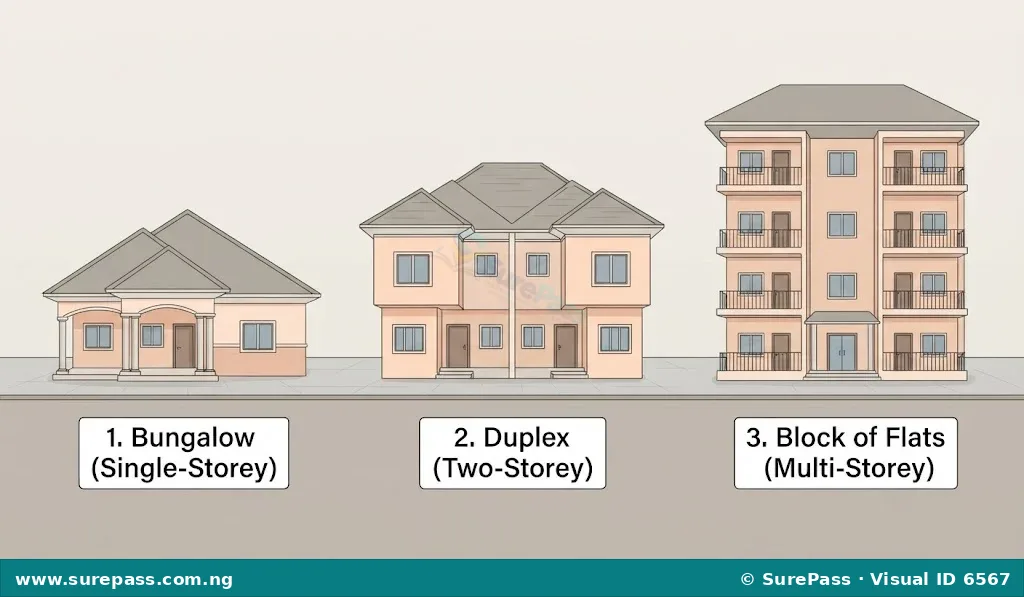
- Bungalow: A single-storey building where all the rooms are located on the ground floor. A bungalow can be detached (standing alone in its own compound) or semi-detached (sharing a common wall with another bungalow).
- Duplex: A house divided into two separate living units, typically built as a two-storey building with an internal staircase connecting the ground floor to the upper floor.
- Block of Flats: A large, multi-storey building containing several self-contained apartments (flats). Each flat is occupied by a different family, but they may share common areas like staircases, parking spaces, and security gates.
- Tenement House: A building containing single or double rooms rented out to different families. The occupants of a tenement house (popularly called “face-to-face” in Nigeria) usually share communal facilities such as kitchens, bathrooms, and toilets.
- Traditional House: A house constructed using locally sourced materials such as mud, bamboo, wood, and thatch or corrugated iron sheets. These houses are more common in rural communities.
Observe the diagram below to see the structural differences between common family houses.
Care and Maintenance of the Family House
Care and maintenance refer to the regular cleaning, repairs, and preservation activities carried out to keep the house in a good, safe, and attractive condition.
Regular care and maintenance of the family house are necessary for several reasons:
- To maintain a healthy and hygienic living environment, which prevents the spread of diseases.
- To prevent the breeding of household pests such as cockroaches, rats, mosquitoes, and bedbugs.
- To preserve the structure of the building and prolong the lifespan of household furniture and equipment.
- To prevent accidents and injuries by keeping floors dry, staircases clear, and structures intact.
- To maintain the aesthetic beauty and neatness of the home, making it welcoming for occupants and visitors.
Cleaning Agents and Equipment
To care for the house effectively, appropriate cleaning agents and tools must be used. Using the correct materials prevents damage to household surfaces.
Common cleaning agents include:
- Water: The universal solvent used for washing, rinsing, and wiping surfaces.
- Detergents and soaps: Used to remove dirt, grease, and stains from floors, walls, and fabrics.
- Disinfectants: Chemical substances used to kill germs and bacteria, especially in toilets, bathrooms, and kitchen floors.
- Abrasives: Substances like scouring powder or steel wool used to scrub stubborn stains from hard surfaces.
- Polishes and waxes: Used to protect and shine wooden furniture, leather, and certain floor types.
Common cleaning tools and equipment include:
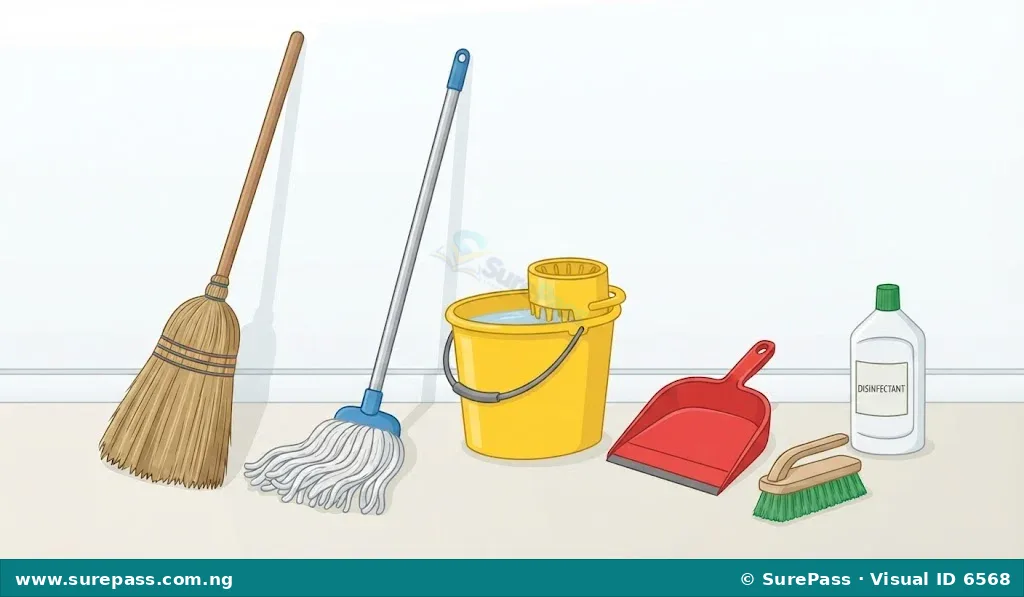
- Brooms: Soft brooms are used for sweeping indoor floors, while hard brooms are used for outdoor compounds and rough surfaces. Long-handled brooms are used to remove cobwebs from ceilings.
- Brushes: Scrubbing brushes are used for floors, and specialized brushes are used for cleaning toilet bowls.
- Mops and buckets: Used for washing and damp-mopping hard floors.
- Dustpans and dusters: Dustpans are used to collect swept dirt, while dusters (cloth or feather) are used to wipe dust off furniture and appliances.
- Protective wear: Items such as hand gloves and aprons protect the body from harsh chemicals and dirt during cleaning.
Look at the cleaning tools shown below.
Cleaning Routines for the Family House
To keep the family house in excellent condition, cleaning tasks should be organized into daily, weekly, and periodic routines.
Daily Cleaning Routine
Daily cleaning tasks keep the home tidy and prevent the accumulation of dirt and germs. The daily routine involves the following steps:
- Open windows and doors early in the morning to allow fresh air and sunlight into the rooms.
- Make the beds and arrange bedrooms neatly.
- Sweep the floors of all bedrooms, living rooms, passages, and the compound.
- Dust furniture, shelves, and electronic appliances with a clean, dry duster.
- Wash dishes, clean kitchen counters, and empty the kitchen dustbin to prevent pests.
- Clean and disinfect the toilets and bathrooms.
Weekly Cleaning Routine
Weekly cleaning is more thorough than daily cleaning and targets areas that require deeper attention. The weekly routine involves the following steps:
- Remove cobwebs from walls, ceilings, and corners using a long broom.
- Sweep and thoroughly mop all hard floors with warm water, detergent, and disinfectant.
- Wash bedsheets, pillowcases, and kitchen towels.
- Clean windows, glass panes, and mirrors with appropriate glass cleaners.
- Clean the refrigerator, cooker, and other kitchen appliances thoroughly.
- Clear weeds, sweep the immediate surroundings of the house, and clean the gutters.
Periodic or Seasonal Maintenance
Periodic maintenance is done occasionally (monthly, quarterly, or yearly) to preserve the structure of the building. Common periodic maintenance tasks include:
- Painting the walls to protect them from dampness and improve the appearance of the house.
- Repairing leaking roofs, broken pipes, cracked walls, and damaged electrical fittings.
- Polishing wooden furniture and floors to maintain their shine and durability.
- Washing heavy curtains, rugs, and blankets.
- Clearing drainage systems thoroughly to prevent flooding and mosquito breeding.
How to Sweep and Mop a Floor Safely
Sweeping and mopping are fundamental skills in home management. Performing these tasks correctly ensures a clean floor and prevents accidents like slipping.
The procedure for sweeping and mopping a tiled or concrete floor involves the following steps:
- Clear the floor area by moving light furniture, toys, and obstacles out of the way.
- Hold the broom firmly and sweep from the corners of the room towards the center or towards the exit.
- Collect the swept dirt into a dustpan and dispose of it in a waste bin.
- Fill a bucket with clean water and add a suitable amount of detergent and disinfectant.
- Dip the mop into the soapy water and wring out excess water to prevent flooding the floor.
- Mop the floor systematically, starting from the farthest corner of the room and working backwards towards the door.
- Rinse the mop in clean water, wring it dry, and mop the floor a second time to remove soapy residue.
- Allow the floor to dry completely before walking on it or replacing the furniture to prevent slip hazards.
- Wash, rinse, and dry the cleaning tools before storing them in a designated place.




0 comments
Open the discussion when you need it. Comments stay collapsed until requested so the initial article remains light.